Advertising

Covers AI-driven advertising across paid search, paid social, programmatic, display, and creative production — including Google Performance Max, Meta Advantage+, AI-generated ad creative, and smart bidding strategies. Includes platform-specific deep dives, step-by-step campaign setup guides, and real brand examples with sourced outcomes. Excludes organic content distribution (covered in Content Marketing) and SEO. Serves paid media managers and growth marketers who need platform-native guidance, not generic overviews. Notes platform feature changes with last-reviewed dates.

Covers: AI-driven paid search, paid social, programmatic, display, and creative production — Google Performance Max, Meta Advantage+, AI-generated ad creative, and smart bidding. All articles carry a last-reviewed date. Excludes organic content distribution and SEO.

Google AdsMeta AdsPerformance MaxAdvantage+programmatic advertisingAI creativesmart biddingad copyB2B advertisingretargetingAI-generated adsplatform updates
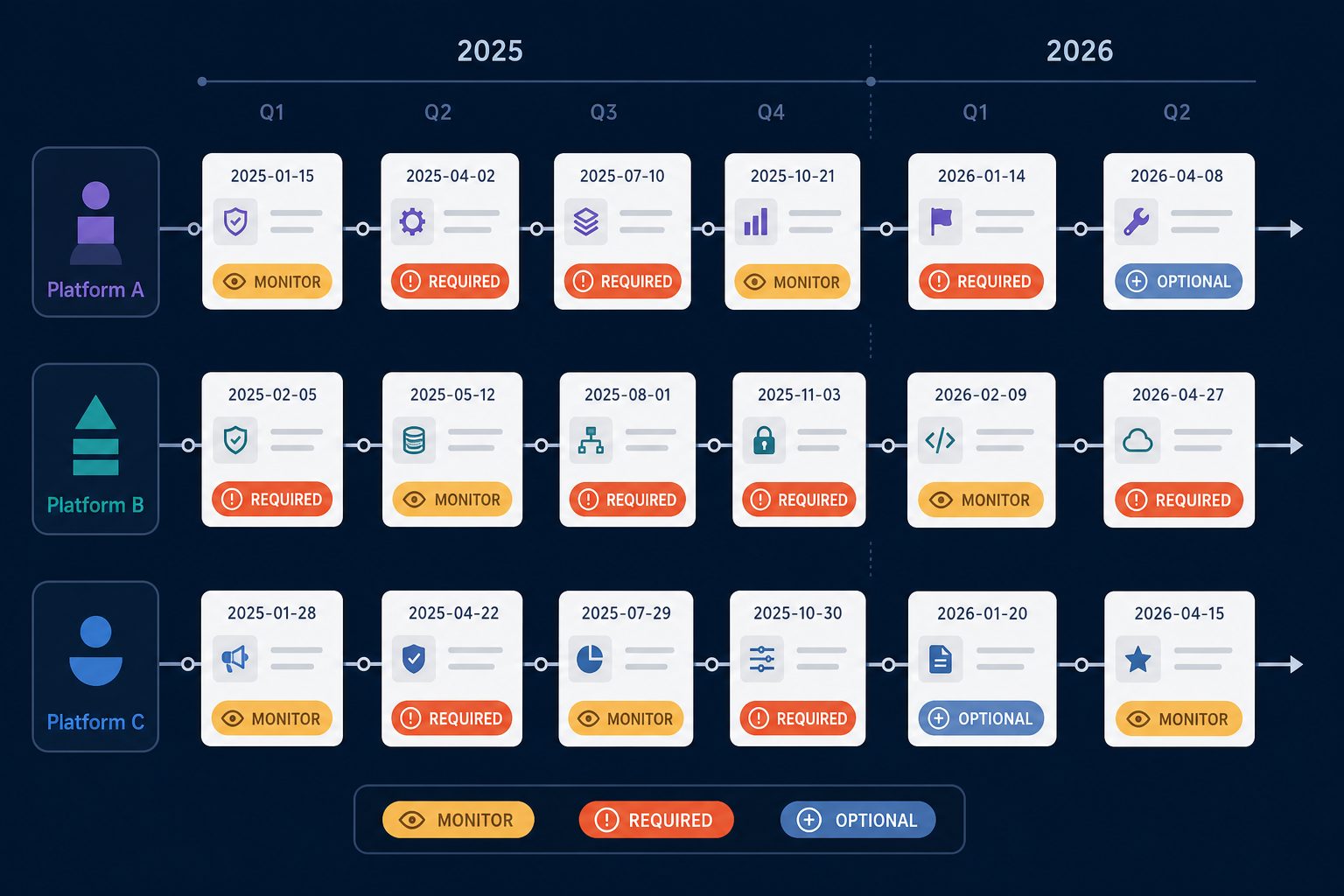
  • Cross-Platform ML Changelog: Google Ads, Meta, and HubSpot 2025–2026

    A dated practitioner changelog documenting confirmed machine-learning-driven behavior changes across Google Ads, Meta, and HubSpot in 2025–2026 — covering what changed, when, the ML mechanism involved, and whether action is required.

    Google Ads, Meta Ads Manager, HubSpot
  • Salesforce Einstein AI Marketing Features: 2024 Changelog

    A dated changelog of Salesforce Einstein AI feature changes across Marketing Cloud, Pardot, and Data Cloud through 2024 — covering new capabilities, modifications, and deprecations that affect how marketing teams configure campaigns, scoring, and personalization.

    Salesforce
  • Google Ads Performance Max AI Features: 2024 Changelog for Marketers

    A dated changelog of every significant AI capability change in Google Ads Performance Max during 2024 — covering asset generation, audience signal updates, campaign-level controls, and what each change means for practitioners managing live accounts.

    Google Ads
  • Google Ads Performance Max AI Update: What Changed for Advertisers

    A changelog record covering Google's 2025–2026 AI-driven updates to Performance Max campaigns — what actually shifted in bidding logic, asset generation, search term reporting, and campaign controls, and what it means for how you manage PMax today.

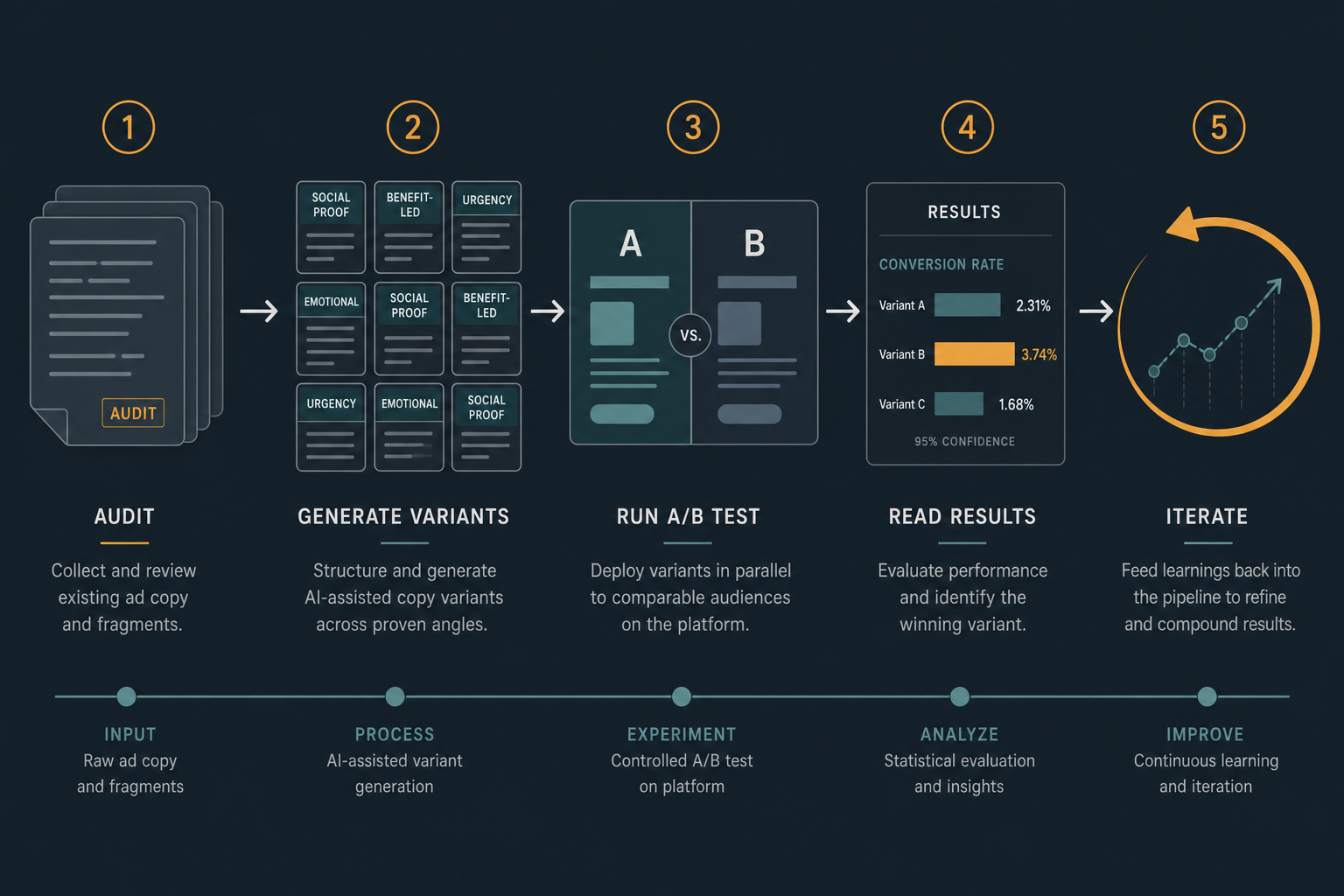
  • AI Ad Copy A/B Testing: A Step-by-Step Workflow for Paid Media Managers

    Most ad copy tests fail before the first impression because weak, undifferentiated variants enter the test — not because the test mechanics are broken. This guide walks paid media managers through a repeatable five-step AI-assisted loop: auditing existing copy, generating hypothesis-driven variants with an LLM, setting up platform-native tests on Meta and Google, reading results correctly, and feeding winners back into the next cycle.

    Meta Ads, Google AdsRSA, Meta Experiments, Google Campaign ExperimentsIntermediate
  • The Right Order for Testing AI Ad Copy

    Most AI ad copy tests fail because they test the wrong variable first. This framework outlines a three-rung ladder that prioritizes audience-intent alignment before headline wording, so each test cycle produces a clear learning.

    Google AdsintermediateReviewed: 2026-07-05
  • The AI Ad Perception Gap: What Marketers Get Wrong About Consumer Trust

    Most ad executives believe consumers love AI-powered ads, but the data shows a growing 37-point gap in perception. This article explains why the disconnect exists and how brands can rebuild trust through disclosure, quality-focused creative, and hybrid human-AI approaches.

    Cross-platformintermediateReviewed: 2026-06-25
  • Best AI Advertising Campaigns: 5 Bottlenecks That Separate Results from Hype

    This article cuts through the hype of AI advertising campaigns by introducing a five-bottleneck framework that helps you choose the right approach based on your campaign's actual constraint—whether it's speed, personalization, creative limits, brand credibility, or cost.

    Cross-platformIntermediateReviewed: 2026-06-25
  • AI Advertising Companies: A Practical Category Guide for Paid Media Teams

    The AI advertising market is crowded, but most evaluations fail because they treat all vendors as comparable. This guide maps companies by functional category — creative generation, campaign automation, signal-based targeting, platform-native AI, and measurement — so paid media teams can match company type to use case with realistic criteria.

    Cross-platformintermediateReviewed: 2026-06-26
  • The AI Attention Stack: How Advertising Is Moving into New AI Surfaces

    Advertising is entering a new environment shaped by three AI surface layers—search-embedded AI, assistant-native AI, and retail commerce AI—each with its own monetization trajectory and trust barriers. This article provides a structured framework for understanding these emerging surfaces and what marketing leaders should do to prepare before they scale.

    Cross-platformAdvancedReviewed: 2026-06-25
  • What Actually Makes AI Marketing Campaigns Work: The Operating System, Not the Tool

    Most teams that test AI for advertising never move beyond initial testing. This article examines five real brand campaigns to show why the operational system around the AI—structured briefs, brand voice documentation, modular assets, review gates, and feedback loops—is the real differentiator, and what a repeatable workflow looks like.

    Cross-platformIntermediateReviewed: 2026-06-25
  • AI for Marketing Campaigns: What the 2026 ROI Data Actually Shows

    Using 2026 data from McKinsey, HubSpot, and Salesforce, this article separates documented AI campaign ROI from vendor overclaims. It pinpoints the specific levers where AI delivers measurable returns and explains why the measurement gap is the real story.

    Cross-platformintermediateReviewed: 2026-06-25
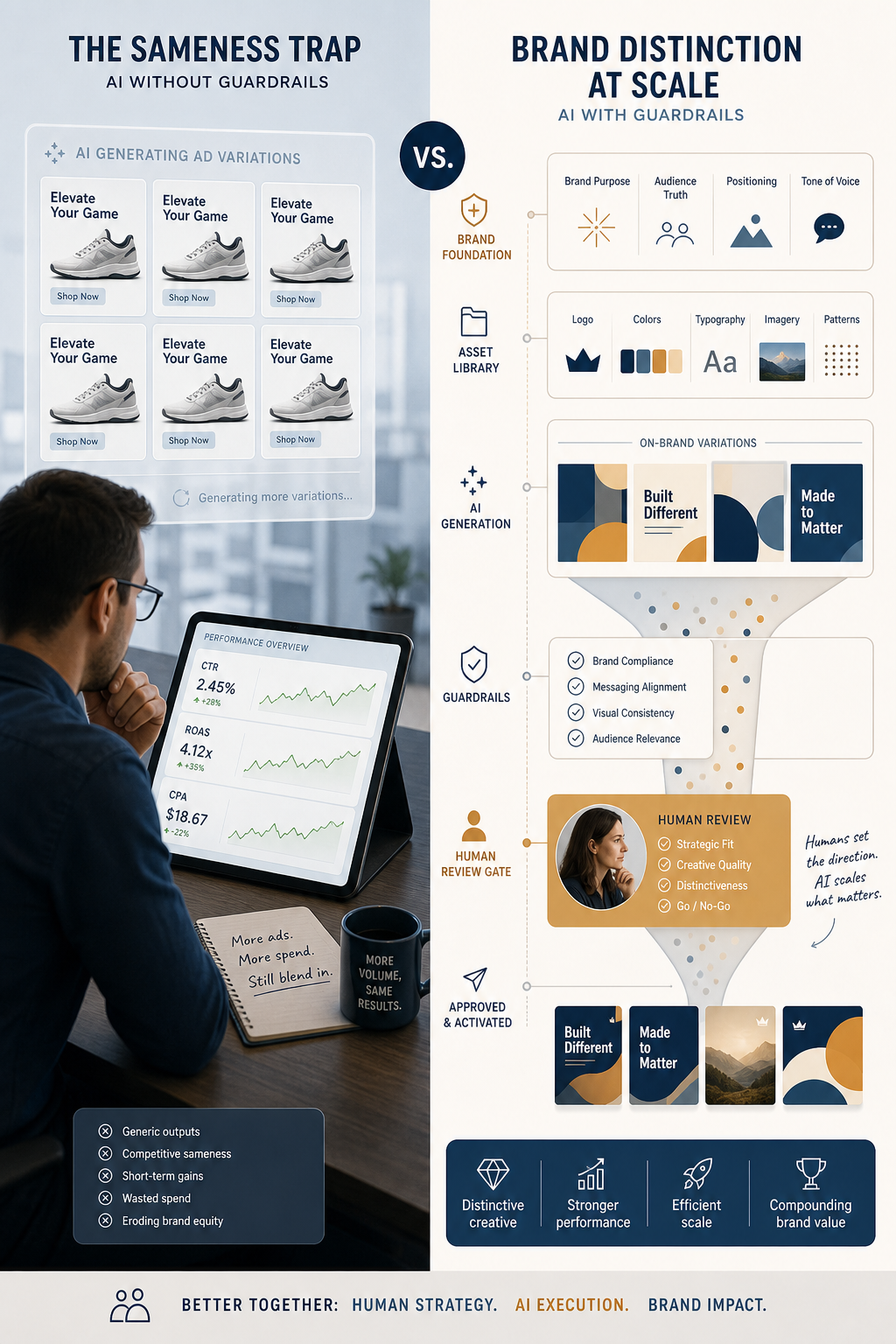
  • The Sameness Trap: Why Most AI-Generated Ads Look Alike and How to Fix It

    Three in four marketers worry AI creative makes brands indistinguishable. This article explains why brand homogenization is the real risk in AI advertising, and provides a governance framework — built on proprietary source material, brand guardrails, human review gates, and defined use cases — to maintain brand voice at scale.

    Cross-platformAI creative governanceadvanced

Platform updates and ad AI guides

Stay current on Google, Meta, and programmatic AI features — weekly digest.

Subscribe →
Blogarama - Blog Directory