

AI for Marketing Campaigns: What the 2026 ROI Data Actually Shows
Using 2026 data from McKinsey, HubSpot, and Salesforce, this article separates documented AI campaign ROI from vendor overclaims. It pinpoints the specific levers where AI delivers measurable returns and explains why the measurement gap is the real story.
What the 2026 numbers actually say
When leadership asks what ai for marketing campaigns is actually delivering, the honest answer is split. McKinsey found AI-driven campaigns produced about 32% more conversions and 22% higher ROI, but HubSpot's State of Marketing 2026 says the share of marketers who can actually attribute ROI to AI fell from 49% to 41% year over year [1][2]. The technology is creating value in some places; the reporting stack is still failing to prove it in many others.
That gap changes how the budget conversation should sound. The measurable gains are mostly operational: more variants, faster testing, shorter launch cycles, and cheaper production. In McKinsey's framing, variant count mattered more than some abstract improvement in creative intelligence, which is a useful reminder for anyone being asked to defend spend in a review [1].
Where the return is easiest to defend
The cleanest evidence sits in production cost. Nestlé reported a 60% cost reduction, and Adidas reported a 91% reduction on personalized email creative [3][4]. Those are the kinds of numbers a manager can put on a slide without pretending the brand learned something profound. They say the assembly line got faster and cheaper. They do not say the positioning got sharper.
A narrower breakdown of copywriting-specific savings is in What the 2026 Data Actually Says About AI Copywriting ROI.
Salesforce's 2026 marketing survey points in the same direction: 78% of marketers say they need more personalized content than they can produce, and 75% turn to AI to close that gap [6]. High-performing marketers are also 2.2x more likely to have optimized for AI search and 2.8x more likely to use customer data for relevant experiences [6]. That reads less like a creativity story than a throughput story: the teams getting value are the ones using AI to make more relevant versions faster, not the ones outsourcing brand judgment.
What the numbers do not support
The boundary matters because the same models that speed production also make sameness easier. One 2026 data point says 72% of marketing leaders worry AI-generated content is hurting brand distinctiveness [5]. That should not be treated as nostalgia. It is a warning that if everyone can generate variants at the same speed, advantage shifts to the things models cannot own: proprietary data, governance, and human judgment on hook concepts and brand voice. For a deeper framework on that problem, see The Sameness Trap: Why Most AI-Generated Ads Look Alike.
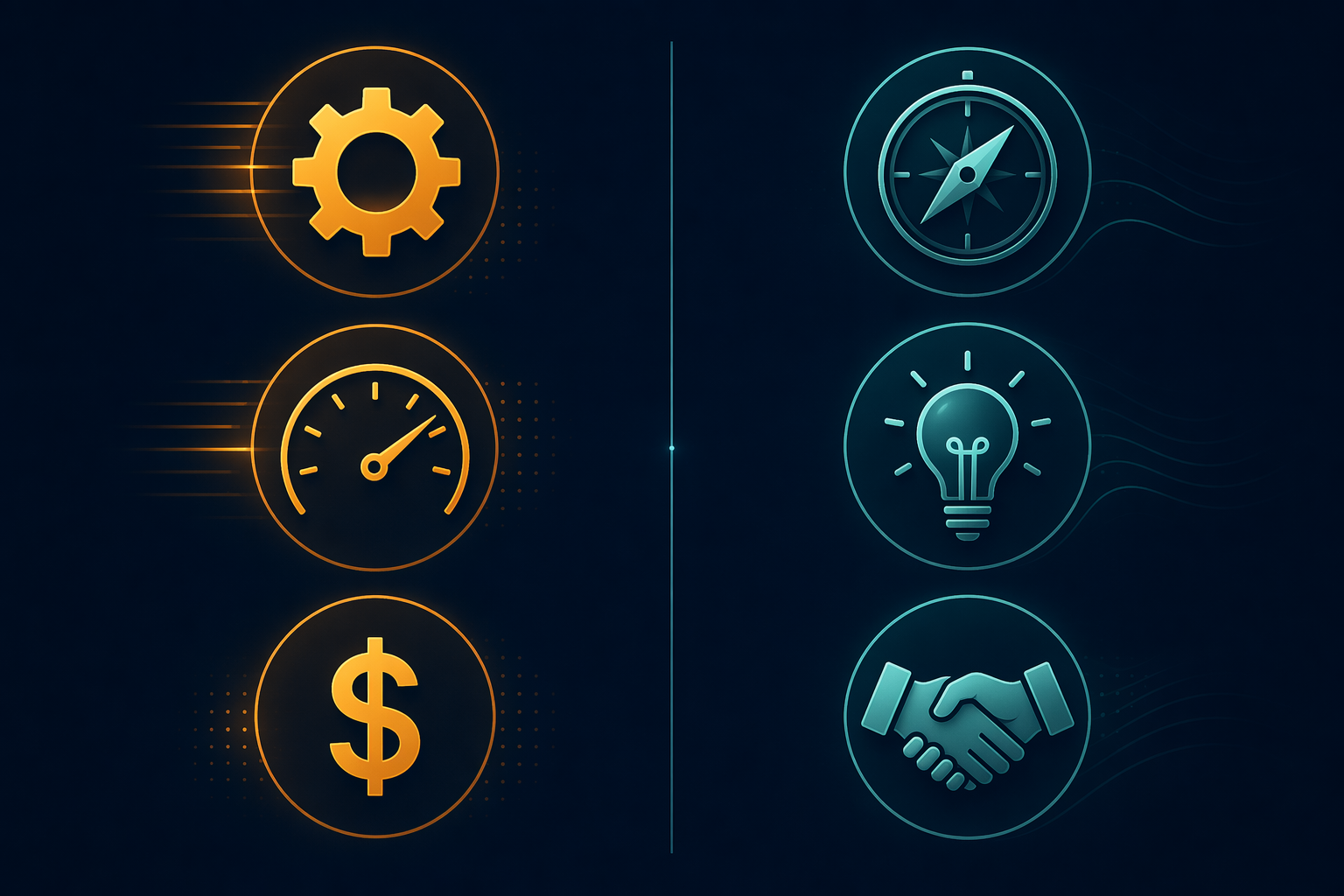
The same caution applies to complex B2B nurture and regulated campaigns. AI can draft, adapt, and route content, but the available evidence does not support a claim that it can own strategic positioning or replace the judgment calls that turn messy buying committees into a coherent message. In those workflows, the safer reading is support tool, not decision-maker.
Why the measurement gap keeps growing
HubSpot's drop from 49% to 41% in marketers who can attribute ROI to AI is the clearest sign that adoption outran measurement [2]. The problem gets worse when teams add tools faster than they simplify process. In B2B tool-sprawl data, organizations using 11-25 marketing tools report about 90% unclear ROI, while teams using 6-10 tools cut that to 62% [7]. That does not prove tools cause bad measurement, but it does explain why dashboards become a pile of activity before they become evidence.
The crawl data points the same way: in July 2025, Mailchimp was detectable on 313,840 domains, versus 41,764 for OpenAI [8]. AI is often reaching marketers as features inside platforms they already use, not as a clean standalone stack. That makes audit discipline more important, not less, because value can hide inside a paid suite long before anyone names it as an AI program.
The budget boundary that holds up
The practical answer for next quarter is not to back away from AI for marketing campaigns. It is to separate production leverage from strategic judgment. Fund the parts that reduce creative production cost, increase variant throughput, accelerate personalization, and shorten time-to-launch; keep humans on positioning, hook concepts, and brand voice; consolidate overlapping tools; and measure incrementality from day one. That is a defensible spend story. Anything broader needs better proof before it reaches a leadership slide. If the measurement setup still needs work, the mechanics are laid out in How to Prove AI Marketing ROI When Productivity Metrics Fall Short.
References
- McKinsey data on AI-driven campaigns. McKinsey.
- State of Marketing 2026. HubSpot. 2026.
- Nestlé cost reduction case.
- Adidas personalized email creative cost reduction case.
- 72% of marketing leaders worried AI-generated content is harming brand distinctiveness.
- State of Marketing 2026. Salesforce. 2026.
- B2B tool-sprawl data on unclear ROI.
- TechnologyChecker detection crawl, July 2025. TechnologyChecker.
Comments
Join the discussion with an anonymous comment.