
Multiple brands
After analyzing 119 documented AI marketing case studies, five consistent patterns emerge about where AI delivers reliable results, where it falls short, and which applications senior marketers should prioritize. This article distills those patterns into a framework for smarter AI investment decisions.
Outcome
Internal productivity and scaled creative production deliver most consistent measurable returns across 119 case studies — source: Leonardo M database, 2026
AI Tools Used
This outcome is independently verified via the primary source linked above.
Senior marketers do not have a shortage of artificial intelligence marketing examples. They have the opposite problem: too many examples that describe different kinds of work as if they belonged in the same bucket. A media buying tool that shifts spend between audiences is not doing the same job as a recommendation engine inside a streaming product. A chatbot that answers balance questions is not the same operational bet as a creative system that turns one concept into hundreds of localized assets.
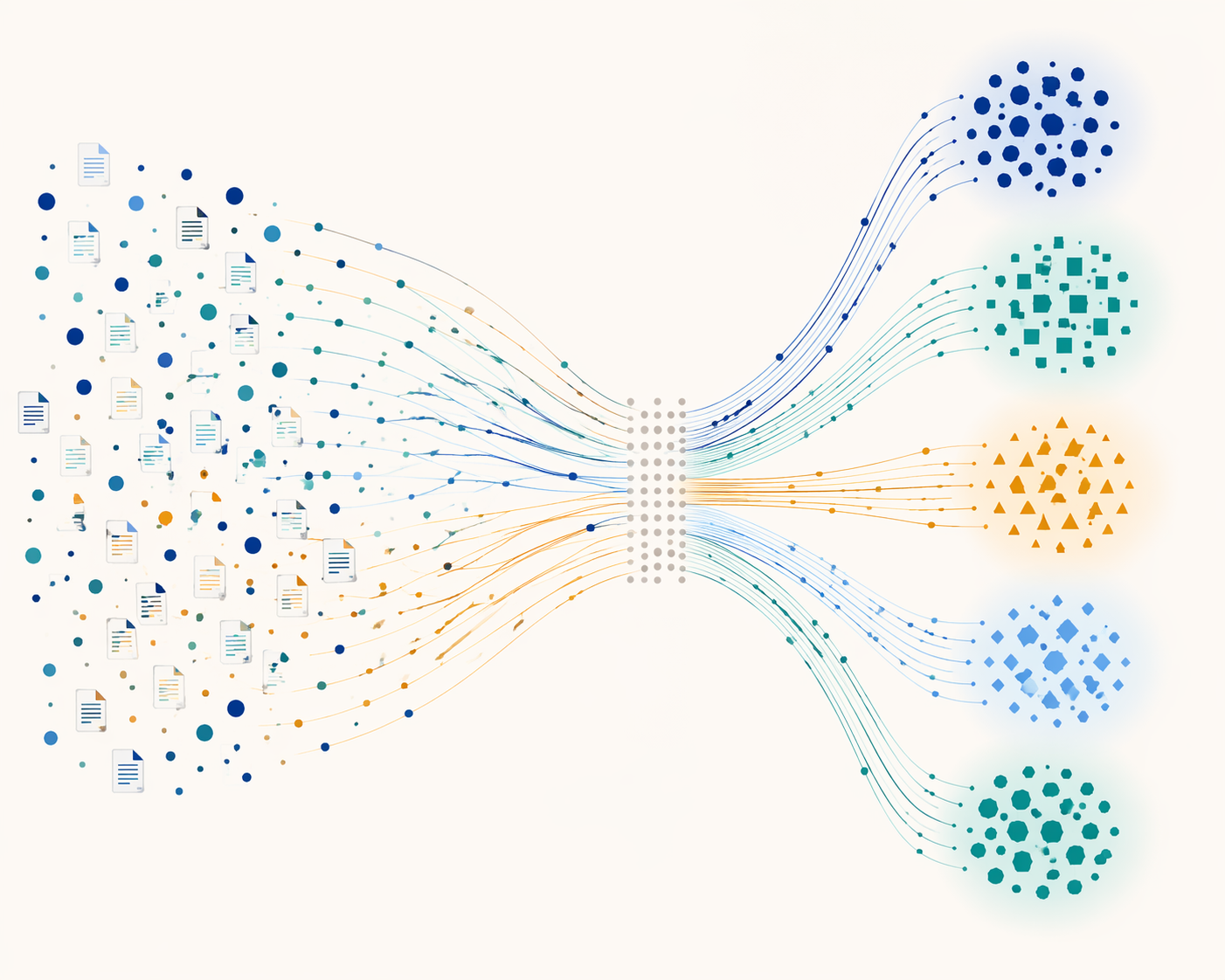
That distinction matters because the strongest cases are not always the loudest ones. Across the 119-case Leonardo M database, the more useful pattern is not “brands are using AI.” It is that AI performs very differently depending on whether it is optimizing media, multiplying creative, personalizing a product experience, handling service demand, or making internal work faster.[1]
The database is useful for breadth, not as a substitute for primary evidence. It is maintained by a single marketer rather than a formal research institution, so individual high-value claims deserve heavier scrutiny where primary or near-primary sources are available. Still, as a way to group many brand examples by the kind of work AI is doing, it gives marketers a practical map: which AI applications tend to produce measurable gains, which ones mostly improve an existing process, and which ones create new operational risk if treated as replacements for people too early.
The five patterns are not equal
The cases fall into five broad patterns. They are often discussed together under “AI marketing,” but they do not carry the same level of strategic weight.
| Pattern | What AI is actually doing | How to read the evidence |
|---|---|---|
| Ad platform automation | Optimizing targeting, bids, creative combinations, and spend allocation inside paid media platforms | Repeatable and measurable, but usually incremental |
| Scaled creative production | Reducing the cost and time required to make many asset variations | One of the strongest areas for measurable operating leverage |
| Personalization infrastructure | Ranking, recommending, matching, and sequencing experiences at the user level | Often becomes part of the product itself, not a campaign add-on |
| Customer service automation | Answering, triaging, routing, or resolving service demand | Works best when designed as hybrid service architecture |
| Internal productivity enablement | Giving employees AI tools to draft, analyze, summarize, search, and collaborate faster | Quietly compounding because it touches many teams and workflows |
The practical implication is uncomfortable for teams that have been asked to “show AI” in the customer journey as quickly as possible. The strongest economic cases often sit behind the scenes: fewer production hours, lower unit costs, faster internal work, more versions shipped, and better routing of decisions.
Ad platform automation is the baseline, not the main event
Paid media automation is the easiest AI category for many marketing teams to adopt because it is already embedded in the platforms they use. Meta Advantage+, Google Performance Max, LinkedIn Accelerate, and TikTok Symphony all point in the same direction: the platforms are taking more responsibility for targeting, bid decisions, creative assembly, and budget movement.
The benchmark range in the case set is useful: ad platform automation commonly reports gains in the 13–25% range, with Meta Advantage+ cited at a 22% return-on-ad-spend lift and 70% year-over-year growth.[1] That is a meaningful number for a media team managing serious spend. It can pay for testing, improve marginal economics, and reduce some manual campaign management work.
It should not be confused with a reinvention of marketing. These systems usually optimize within the platform’s own boundaries. They are helpful precisely because the task is narrow enough to measure: allocate spend, test combinations, find buyers, and reduce waste. The marketer still has to decide what the business is trying to sell, what constraints matter, what creative territory is acceptable, and whether platform-reported lift is enough to justify the broader budget mix.
For readers comparing budget choices, this is where AI media tools belong in the stack: use them, measure them, and avoid turning a solid optimization layer into a transformation story. For a broader budget framing, the AI sales and marketing budget allocation discussion pairs naturally with this kind of evidence.
The sharpest savings show up when AI changes creative unit economics
Creative production is where the case set starts to get more interesting. Not because AI makes a prettier ad in a demo, but because it changes the cost of producing many fit-for-purpose versions. That matters more than most “AI creative” conversations admit. Modern marketing does not need one asset; it needs dozens or hundreds of assets across segments, channels, markets, languages, offers, sizes, and lifecycle moments.

Adidas is the cleanest example in the materials. Its personalized email creative work is reported to have reduced creative costs by 91% while increasing sales by 37%.[1] The cost reduction is the more important signal. Sales lift can be influenced by offer, timing, audience, merchandising, and channel conditions. A 91% reduction in the cost of making personalized email creative points directly to changed production economics.
That is the difference between an AI experiment and an operating model. If a lifecycle team can afford to make more versions for more moments without adding equivalent headcount or agency hours, personalization stops being a planning aspiration and becomes something the calendar can actually support. The value is not that AI “made creative.” It is that the team could make the right amount of creative without turning every campaign into a production bottleneck.
The same pattern repeats elsewhere. Unilever is reported to produce 17 times more content per campaign with AI-enabled workflows, while Nestlé is cited for a 60% reduction in production time.[1] H&M’s case is narrower but economically concrete: a 25% reduction in per-SKU photography cost.[1] Those are not all the same metric, and they should not be flattened into one generic “AI improves content” claim. Together, though, they show the area where AI repeatedly attacks a real marketing constraint: asset volume.
This is also where human review remains non-negotiable. More output is not automatically better output. If teams use AI to flood channels with weak variants, they have simply moved the bottleneck from production to QA, brand governance, legal review, or performance cleanup. The valuable version of scaled creative production has a workflow around it: approved claims, locked brand rules, clear versioning logic, human sampling, and performance feedback that decides what gets reused.
The most durable savings come when AI reduces repetitive production labor without hiding a new review tax. A retailer with thousands of SKUs, a global brand localizing campaigns, or a lifecycle team building segmented email flows has a different problem from a brand looking for one breakthrough film. AI is better suited to the former. That may be less glamorous, but it is a serious business case.
This is also the place to be careful about content-quality shortcuts. Teams looking at generative production should pair the case-study optimism with the risks outlined in the AI content quality trap, because the operational win only holds if the brand can maintain standards while increasing throughput.
Personalization is infrastructure now
The personalization examples are sometimes described as marketing, but several of them are really product infrastructure. Netflix, Spotify, Airbnb, and Stitch Fix are not merely using AI to personalize a message after the product is built. They use recommendation, ranking, matching, and selection systems to shape what the user experiences in the first place.
Netflix is the clearest case. Its recommendations are reported to drive 80% of discovery and generate more than $1 billion in annual retention savings.[1] Spotify is cited as driving 75% of listening through personalization.[1] Airbnb is reported to have seen 25% more bookings from its AI-enabled personalization work, and Stitch Fix is cited as making 75% of selections through AI.[1]
The lesson is not that every brand needs a Netflix-style recommendation engine. It is that mature personalization is rarely a campaign layer pasted onto a static experience. It depends on data capture, feedback loops, inventory or content depth, ranking logic, and a clear definition of what better matching means. In some businesses, that means discovery. In others, it means replenishment, next-best action, merchandising, offer sequencing, or customer education.
This is why personalization investments can be misread. A subject-line test and a recommendation system both use AI language in vendor decks, but they do not have the same compounding effect. The more personalization becomes part of the product or customer account layer, the more it can improve experience repeatedly rather than only lift one campaign.
Customer service automation works when it is honest about the handoff
Customer service is where the AI story needs the most discipline. The tempting version is simple: a bot handles the work, the company saves money, and customers get faster answers. Sometimes the first part is true. The rest depends on how the service system is designed.

Klarna is the most useful caution in the case set because it did not stay inside the clean replacement narrative. The company initially made prominent claims around AI replacing human service work, then shifted toward a hybrid human-AI model after customer satisfaction issues.[1] That does not prove all AI service automation fails. It does show that replacement language can outrun service reality.
Other service examples are more encouraging, but they are encouraging in a specific way. Bank of America’s Erica is reported to have handled 2 billion interactions.[1] Wendy’s FreshAI is cited at more than 86% accuracy.[1] Delta is reported to have reduced call volume by 30%.[1] These are meaningful outcomes, especially when the use case is bounded: answer common questions, route demand, complete routine tasks, or reduce unnecessary calls before they reach a person.
The pattern is not “AI can replace service.” It is more precise: AI can absorb first-pass demand when the company has a real service architecture underneath it. That means escalation paths, human authority for exceptions, quality monitoring, customer sentiment tracking, and a clear definition of which issues should never be trapped in automation.
A simple password reset, order-status question, or appointment change is a different service moment from a billing dispute, a travel disruption, a medical concern, or a high-value account problem. Treating all of those as chatbot opportunities is how savings become leakage: repeat contacts, lower satisfaction, social complaints, refunds, churn, and more expensive human recovery later.
This is where trust research and operational design meet. Teams planning customer-facing AI should also read the consumer-trust context in the AI marketing trust gap, because a service interaction is not just an efficiency event. It is one of the places where customers learn whether the company is using automation to help them or to avoid them.
Internal enablement is where enterprise AI starts to compound
The least theatrical category may be the most important. Internal AI enablement does not always produce a clean customer-facing demo. It shows up as fewer hours spent drafting, summarizing, searching, preparing, coordinating, translating, analyzing, and reworking.
JPMorgan Chase’s LLM Suite rollout is the strongest enterprise signal in the materials: roughly 200,000 employees are reported to have access, with 30–40% efficiency gains cited.[1] Microsoft is reported to save $500 million annually through AI-related productivity and operational improvements, while EPAM is cited for a 20% reduction in collaboration hours.[1]
These examples matter because internal enablement touches the unglamorous middle of work. A marketing organization is not only the public campaign. It is the brief, the research synthesis, the competitive scan, the meeting recap, the first draft, the legal question, the reporting pull, the localization note, the agency feedback, the CRM segment logic, the product-marketing handoff, and the post-campaign analysis.
When AI reduces friction across those steps, the gain is not confined to one campaign. It compounds across teams. A creative operations lead gets fewer manual versioning requests. A lifecycle marketer drafts more variants before review. A strategist can summarize more customer evidence before a planning meeting. A service manager can inspect more conversation themes before deciding what to fix. None of that needs to look futuristic to be valuable.
This is also why internal enablement deserves stricter measurement than it often gets. “Employees like the tool” is not enough. The useful questions are operational: Which recurring task took less time? Which review queue got shorter? Which handoff needed fewer revisions? Which analyst or producer stopped doing repetitive work? Which output quality measure stayed stable while throughput increased?
For teams turning these patterns into a plan, the next layer is not another inspiration deck. It is a sequencing decision. The AI marketing strategy framework and 90-day AI marketing roadmap are more useful once the organization has decided whether its first constraint is production volume, internal time, personalization infrastructure, media efficiency, or service demand.
What to prioritize first
The 119 cases do not point to one universal AI playbook. They point to a hierarchy of reliability.
- Prioritize internal enablement when the organization loses time to drafting, summarizing, analysis, handoffs, knowledge search, reporting, or coordination. The gains are less visible, but they can compound across many teams.
- Prioritize scaled creative production when asset volume is the constraint. The strongest cases are about reducing production cost and time while maintaining governance, not about replacing creative judgment.
- Invest in personalization infrastructure when matching, ranking, recommendations, or sequencing materially improve the product or customer journey. Treat it as a data and experience system, not a one-off campaign tactic.
- Use ad platform automation for steady media gains. It is worth doing, but its benchmark performance belongs in the optimization column rather than the transformation column.
- Design customer service AI as hybrid from the beginning. Let automation triage, route, answer routine questions, and reduce avoidable volume; keep human support available for ambiguity, emotion, exceptions, and value-sensitive moments.
That order will not fit every company. A bank with enormous service volume may rationally begin with authenticated self-service. A marketplace may get more value from ranking and matching. A global consumer brand may start with localization and creative versioning. The better question is not which AI example is most impressive; it is which workflow has enough repetition, cost, data, and review structure for AI to improve it without pushing hidden cleanup onto people downstream.
For additional brand-level examples, the sourced roundup of brands using AI for marketing can extend the case library. The ROI-focused companion on real generative AI marketing ROI is the more useful next read for teams that need to defend investment by application rather than by hype cycle.
The strongest artificial intelligence marketing examples are often the ones that make less noise: a production queue gets shorter, a personalization system makes discovery easier, a service bot routes the right issue to the right place, or 200,000 employees get a faster way to move through repetitive knowledge work. That is where the evidence is most persuasive. Not because it looks like magic, but because it changes the economics of work.
References
- AI for Brands: 119 Real-World Examples, Leonardo M

Comments
Join the discussion with an anonymous comment.