

AI Marketing Services
A structured framework for mid-market marketing managers evaluating whether to invest in AI SaaS tools, an AI agency retainer, or internal capability — based on team size, primary use case, and data maturity rather than brand or feature comparisons.
Marketing Categories
⚠ Notable Limitations
Assumes clear workflows; ineffective without process maturity
Search for ai marketing services and you will not get one category of answer. You will get software vendors selling content generation, analytics, media optimization, and automation. You will get AI-native agencies offering campaign execution or workflow redesign. You will get consultants, platform integrators, fractional specialists, and hiring advice. Those are not interchangeable purchases, even when the landing pages use the same language.
The first decision is not which brand has the best demo. It is what shape of help your team actually needs: a tool subscription, an agency retainer, or internal capability. Each one changes cost, speed, control, data access, and the amount of coordination work that lands on your team after the contract is signed.
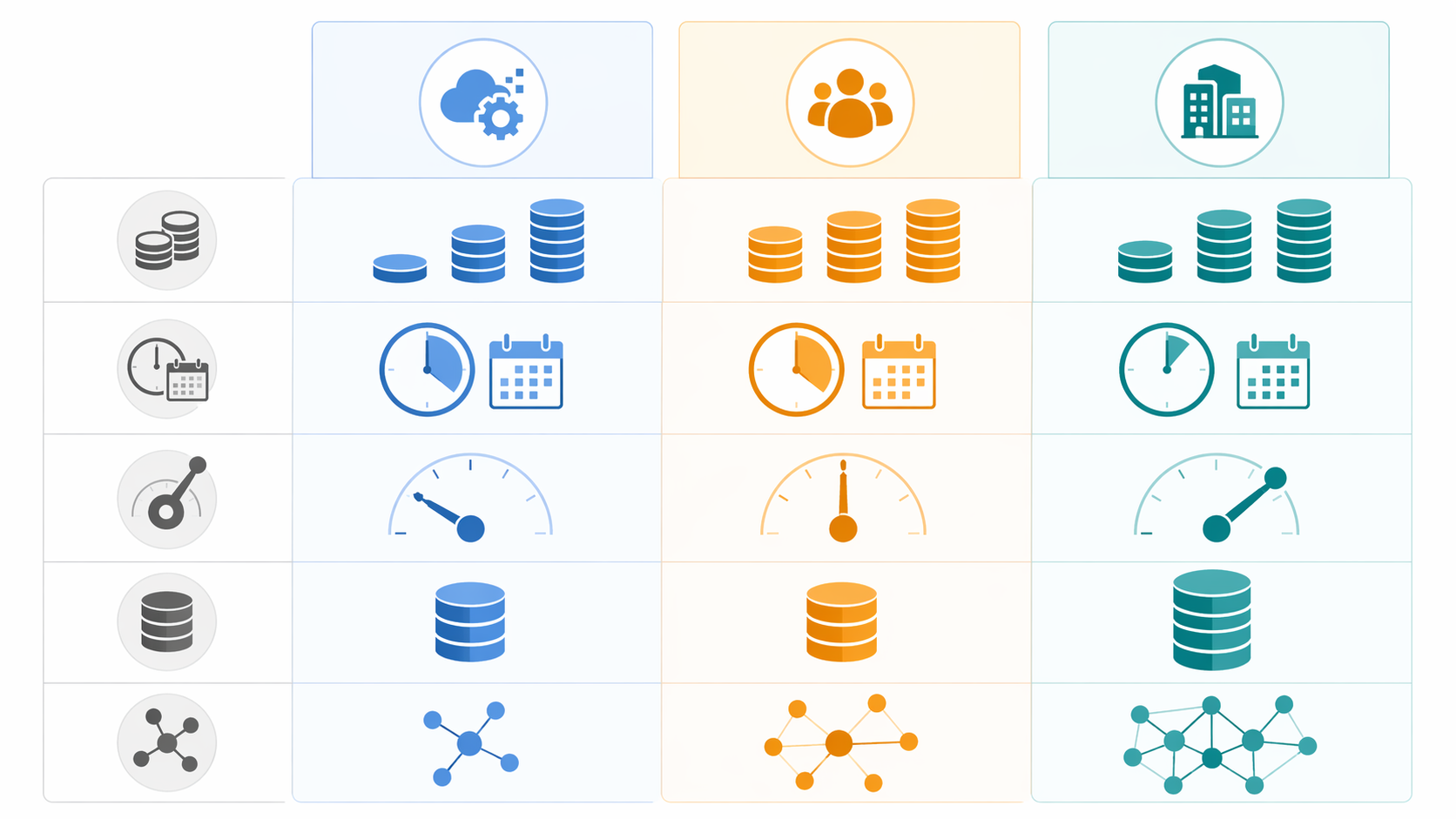
| Buying route | Best fit | Typical cost profile | Time-to-value | Control | Management burden |
|---|---|---|---|---|---|
| AI SaaS tools | Repeatable workflows with clear users and accessible data | $150-$3,400 per month for many mid-market teams | Fast for narrow tasks; slower for cross-functional adoption | Medium to high, depending on configuration | Falls on internal owners to govern, train, and connect workflows |
| AI agency or specialist retainer | High-value workflows the team cannot yet redesign or run well | $3,000-$15,000+ per month | Fastest when the agency brings a tested process and the team can provide inputs | Medium; you trade some control for execution depth | Requires strong briefs, reviews, access, and vendor management |
| In-house capability | Repeated, strategic use cases tied to proprietary data and long-term process ownership | $8,000+ per month per specialist, plus tools | Slowest at first; strongest once workflows are embedded | Highest | Requires training, governance, data access, and executive patience |
That distinction matters because the category is already large enough to be noisy. One 2026 synthesis estimates the AI marketing services market at about $62 billion, but that figure spans tools, agencies, and internal-build spending rather than one clean product category.[1] The size of the market explains the confusion; it does not make the buying decision simpler.
Usage Is Not the Same as Capability
Most marketing teams are already using AI somewhere. Salesforce reported in its 2026 State of Marketing research that 87% of marketers use generative AI in at least one workflow.[2] That is adoption, not operational maturity.
A different benchmark shows the gap more clearly: Supermetrics’ 2026 Marketing Data Report, based on 435 respondents, found that only 6% had fully embedded AI.[3] Those two numbers are not contradictory. One measures whether marketers are using generative AI at all. The other points to whether AI is governed, repeatable, integrated into workflows, and measurable enough to survive beyond individual experimentation.
That gap is where many mid-market teams get stuck. A channel manager may use AI to draft ad variants. A content lead may summarize interviews. A demand gen manager may use it to clean campaign briefs. Useful, yes. But the team still may not have shared instructions, approved data sources, QA rules, CRM connections, or a way to say which AI-supported workflow reduced cycle time or improved performance.
If you are already in that middle zone, a vendor comparison alone will not solve the problem. The better question is whether your next dollar should reduce task friction, redesign a workflow, or build durable internal ownership. For broader context on adoption and ROI patterns, see AI in digital marketing benchmarks.
The Three Purchases Hidden Inside “AI Marketing Services”
AI SaaS tools win when the workflow is already clear
Tools are the cleanest purchase when the team knows the workflow, knows who owns it, and needs speed or consistency inside a defined lane. That might mean content repurposing, first-draft email variants, meeting-to-brief conversion, reporting assistance, paid search query analysis, or creative testing support.
The failure mode is buying software to compensate for an unclear process. If campaign data lives in too many places, lifecycle definitions are contested, or the approval process changes by stakeholder, a tool will usually expose the mess rather than fix it. The subscription may still be useful, but the team inherits the integration and governance work.
Cost is part of the appeal. Digital Applied’s 2026 synthesis places many mid-market AI SaaS tool costs between $150 and $3,400 per month, and notes that blended mid-market AI spend rose from about $1,200 to $3,400 per month from Q1 2025 to Q1 2026.[1] The range is manageable compared with a hire or a large retainer, but it can become expensive when every team buys its own point solution.
A tools-first path works best when three conditions are already true: the workflow repeats often, the user group is identifiable, and the data needed for the task is either available inside the tool or easy to connect. If you are at the platform-selection stage, a deeper buyer’s guide to the AI marketing cloud is more useful than a generic feature checklist.
Agencies win when the team needs a redesigned workflow, not another login
An AI agency or specialist retainer is a different purchase. You are not only paying for access to models or tools; you are paying for pattern recognition, workflow design, production capacity, and judgment. The right agency should reduce the number of decisions your internal team has to invent from scratch.
This path is strongest when the workflow is valuable but not yet mature internally: SEO content systems, creative testing operations, paid media experimentation, lifecycle personalization, analytics automation, or AI-assisted conversion research. In those cases, an agency can bring templates, QA methods, operating instructions, and execution muscle while the internal team learns what should eventually be owned in-house.
Retainers are also more expensive. RZLT’s guide benchmarks AI agency retainers at roughly $3,000 to $15,000+ per month.[4] That spend can make sense when the work is tied to a high-value bottleneck. It is harder to defend when the agency is simply operating tools the internal team could have used with better process and training.
The case evidence should be read with source boundaries. RZLT’s agency guide cites Monks’ work with Headspace, reporting a 62% higher conversion rate after rebuilding workflows rather than merely bolting AI onto the existing process.[4] That is a useful example of the kind of lift agencies claim when they change the operating model, but it is still presented through an agency-authored guide, not an independent controlled study.
The agency red flag is the opposite of that example: a vendor that has added “AI” to the offer but still depends on the same slow handoffs, unclear inputs, generic outputs, and manual reporting. If your internal team must brief, correct, reformat, re-check, and re-explain everything, the retainer has not removed enough work.
In-house capability wins when the use cases are repeatable and strategic
Building internally is the right direction when AI touches proprietary data, core customer journeys, repeatable campaign operations, or workflows that leadership expects to compound over time. It gives the team the most control over data access, governance, model use, QA standards, and change management.
It is also the easiest path to romanticize. An internal specialist costing $8,000+ per month still needs software, clean data access, stakeholder cooperation, legal or security guidance, and enough repeated work to justify the fixed cost. Hiring before the use cases are stable can turn one person into a help desk for scattered AI requests.
Training is the underpriced constraint. Salesforce and IMPACT report that only 17% of marketers have received proper AI training.[5] That does not mean in-house builds are wrong. It means many teams underestimate the enablement layer required before an internal AI owner can create durable leverage.
In-house makes the most sense after the organization can name the workflows that matter, identify who owns them, provide access to the required systems, and measure whether the work improved. If that foundation is missing, a 90-day phased plan for AI marketing strategy implementation is usually a better starting point than a job description.
A Decision Matrix for Mid-Market Teams
The practical decision comes down to three variables: team size, primary use case, and data maturity. Brand reputation matters later. At the structure stage, these variables tell you what kind of purchase can actually work.
| Condition | Lean toward SaaS tools | Lean toward agency | Lean toward in-house |
|---|---|---|---|
| Small team, limited ops support | Yes, if the workflow is narrow and owned by one role | Yes, for one expensive bottleneck the team cannot staff | Usually too early unless AI is core to the business model |
| Mid-market team with several channels | Yes, as a standardized core stack | Often yes, for 1-2 high-value workflows | Maybe, if repeatable use cases and data access already exist |
| Large or complex marketing org | Yes, but governance matters more than tool count | Yes, for specialized execution or transformation support | Yes, if there is enough volume and executive support |
| Content and creative production | Strong fit for drafting, repurposing, and workflow support | Strong fit when quality systems, brand voice, and testing need redesign | Strong fit once brand, data, and approval standards are mature |
| Performance marketing and experimentation | Useful for analysis, variants, and monitoring | Useful when testing operations or creative loops are broken | Strong fit if spend, data, and governance justify ownership |
| Reporting and marketing data | Useful when sources are clean and definitions are stable | Useful for setup, audit, and dashboard/process redesign | Strong fit when analytics is strategic and cross-functional |
| Low data maturity | Use only for low-risk, low-integration tasks | Often best for diagnostic and process design work | Usually premature |
| High data maturity | Strong fit for automation and embedded workflows | Best used selectively for specialized depth | Strong fit for durable capability |
Team size changes the management burden
A small marketing team does not need a dozen AI tools just because each one solves a real problem. Every tool adds procurement, permissions, training, workflow documentation, data handling questions, and renewal decisions. If there is no marketing ops or RevOps capacity, a tools-first strategy should stay deliberately narrow.
For many mid-market teams, the danger is different. They have enough budget to accumulate subscriptions but not enough operating discipline to standardize them. The result is a stack that looks innovative in screenshots and confusing in actual work. One manager sees better content velocity; another sees duplicated outputs, inconsistent brand rules, and no source of truth.
Larger teams can absorb more complexity, but they also create more governance needs. Legal, data security, channel ownership, brand review, and CRM administration become part of the AI services decision. At that point, the question is less “Which tool is best?” and more “Which operating model can keep people from creating parallel systems?”
The use case should decide the buying route
AI use cases do not carry the same operational weight. Drafting social copy, generating first-pass briefs, and summarizing calls can often start inside SaaS tools. They are useful, but they usually do not justify a major services commitment by themselves.
Workflows tied to revenue, customer data, or channel performance deserve more structure. Paid media testing, lifecycle personalization, sales enablement content, SEO systems, and marketing analytics all create downstream consequences. Bad inputs can waste media spend, distort reporting, or create customer-facing inconsistency. For those use cases, the team may need agency help or internal ownership sooner.
This is also where ROI conversations should become specific. Do not ask whether AI marketing services “deliver ROI” in general. Ask whether the use case reduces production time, increases test volume, improves conversion quality, cuts reporting effort, or makes an underused data asset usable. A separate guide to AI marketing use cases that deliver ROI is the better place to compare those patterns.
Data maturity is the gate most teams hit first
The least glamorous question is often the deciding one: can the team actually activate the data needed for the workflow? Digital Applied reports that only 33% of marketers can activate their data effectively.[1] That finding narrows what AI can do operationally. A personalization tool cannot personalize well if segments are unreliable. A reporting assistant cannot explain performance if campaign taxonomy is inconsistent. A content workflow cannot improve conversion insight if sales feedback is trapped outside the system.
Low data maturity does not mean doing nothing. It means starting with lower-risk workflows, using an agency or consultant to diagnose data and process gaps, and avoiding expensive promises that depend on integrations the team cannot maintain. High data maturity changes the calculation. Once clean data, stable definitions, and access controls exist, SaaS tools and in-house builds become much more defensible.
Why Hybrid Is Often the Most Defensible Mid-Market Answer
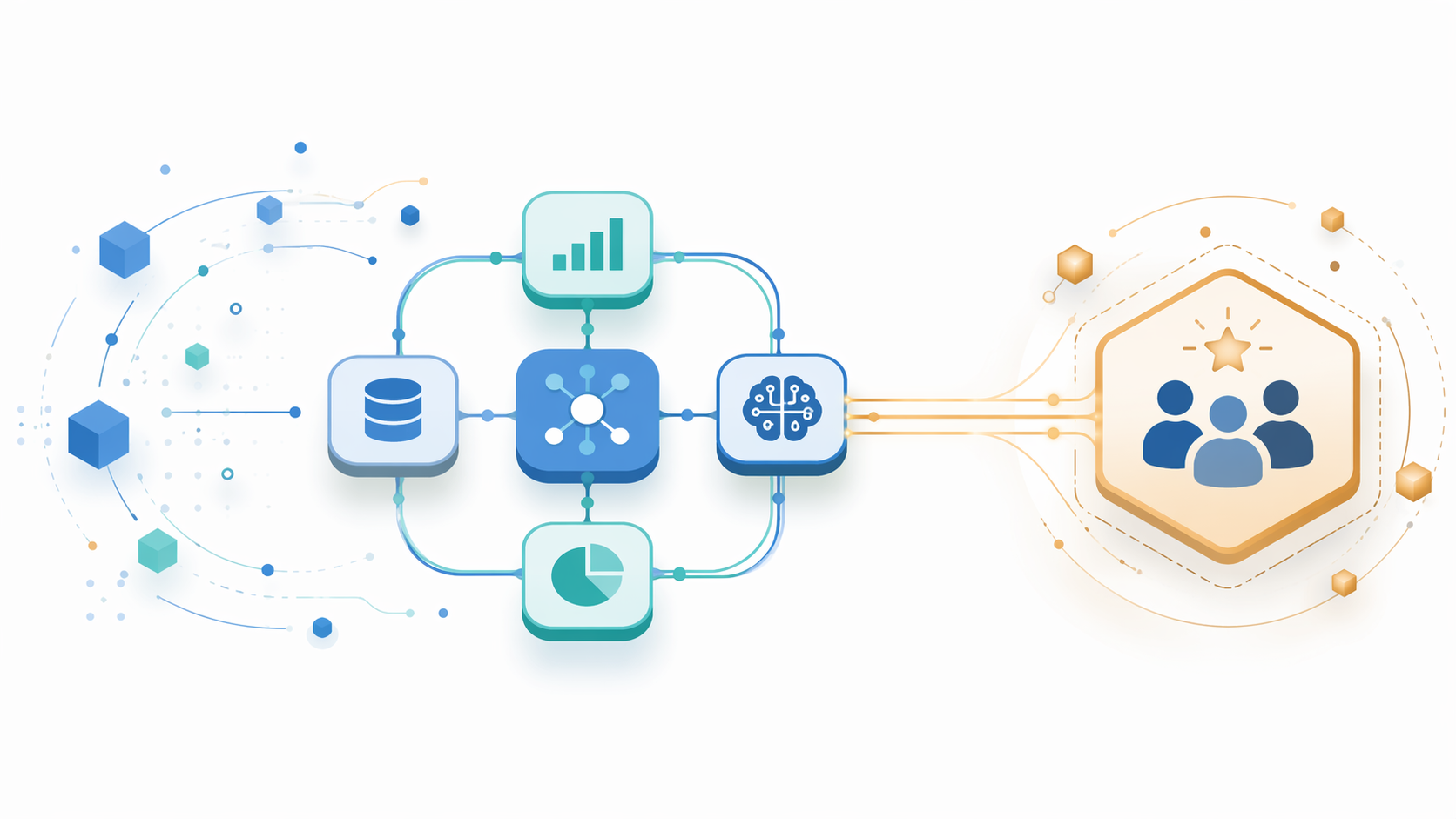
For many mid-market teams, the realistic answer is not pure software, pure agency, or pure in-house. It is a small, standardized core stack plus one specialty agency for the workflows the team cannot yet run well. That structure is less exciting than an all-in transformation narrative, but it is easier to defend in a renewal meeting.
The tool-count evidence supports restraint. Digital Applied cites ZoomInfo data indicating that mid-market teams using 3-5 well-chosen tools outperform teams with 12+ point solutions by 44% in productivity.[1] That does not prove every team should own exactly five tools. It does support the operational point: beyond a certain point, tool sprawl starts creating coordination work that offsets the gains.
A durable hybrid model usually separates responsibilities clearly. Internal owners control data access, governance, approved workflows, and performance measurement. Tools handle repeatable tasks where the workflow is stable. The agency handles a narrow set of high-value work where outside expertise changes the process, not just the output.
- Use SaaS tools for repeatable production, analysis, and workflow support that internal users can operate consistently.
- Use an agency for one or two workflows where process design, testing methodology, or specialized execution matters more than access to another tool.
- Keep governance, data definitions, approval rules, and performance measurement inside the company.
- Delay full in-house hiring until the team has enough repeated use cases, training maturity, and data access to make the role productive.
This is not a compromise for teams that lack ambition. It is often the operating model that matches the actual constraints: limited headcount, uneven data maturity, pressure to show progress, and a CFO who will eventually ask why twelve AI line items did not create one coherent capability.
How to Read Pricing Without Buying the Wrong Thing
The headline price rarely reflects the full management cost. A $500 monthly subscription can become expensive if three teams duplicate it, nobody owns adoption, and the outputs require heavy review. A $10,000 retainer can be efficient if it removes a revenue-critical bottleneck. An $8,000 monthly specialist can be a bargain or a waste depending on whether the organization has enough repeatable work and authority for that person to change.
| Cost line | What the invoice shows | What to budget mentally |
|---|---|---|
| SaaS tools | $150-$3,400 per month for many mid-market teams | Administration, training, integrations, prompt/workflow standards, QA, renewals |
| Agency retainer | $3,000-$15,000+ per month | Briefing, reviews, access management, stakeholder alignment, dependency risk |
| In-house specialist | $8,000+ per month per specialist, plus subscriptions | Hiring ramp, enablement, governance, data access, executive sponsorship |
The lowest line item is not automatically the lowest-cost path. The right comparison is cost per operational bottleneck removed. If a tool eliminates hours of manual formatting but leaves the campaign planning process unchanged, value is narrow. If an agency redesigns a conversion workflow that the internal team can later run, value may persist after the engagement. If a hire builds reusable systems across channels, the fixed cost may become easier to defend over time.
Signals That You Are Choosing the Wrong Route
Wrong-route decisions usually show up before performance reporting does. The team starts spending more time coordinating AI work than benefiting from it. Reviews get longer. Channel managers create their own versions. Finance sees new recurring costs but no clean explanation of what changed.
- You need SaaS tools, not an agency, when the workflow is simple, repeated often, and blocked mainly by speed or consistency.
- You need an agency, not another tool, when the workflow itself is broken and nobody internally has the time or pattern library to redesign it.
- You need internal capability, not a long-term outsourced workaround, when the work depends on proprietary data, recurring decisions, and cross-functional governance.
- You need process cleanup before expansion when every AI output triggers manual correction, unclear approvals, or disputed source data.
Performance marketing deserves particular caution because weak guardrails can turn faster execution into faster waste. If AI is touching budget allocation, audience logic, creative testing, or conversion interpretation, the team should define review rules before scaling. For examples of where the failure modes appear, see when AI performance marketing fails.
A Practical Buying Sequence
Before shortlisting vendors, write down the operating decision in plain language. The form is simple: “We are buying AI marketing services to improve [workflow], owned by [team], using [data], measured by [business or operating metric], with [governance rule].” If that sentence is hard to complete, the team is not ready for a vendor bakeoff.
- Name the workflow, not the technology category. “Improve paid social testing velocity” is more useful than “adopt AI creative.”
- Identify the internal owner. If nobody owns the workflow, the vendor will not magically create accountability.
- Check data readiness. Confirm where the required inputs live, who can access them, and whether definitions are stable.
- Choose the buying route. Use tools for clear repeated work, an agency for workflow redesign or specialized execution, and in-house capability for strategic repeatable systems.
- Limit the first expansion. Standardize the core stack before adding more point solutions.
If the answer points to tools, compare tools by role and job-to-be-done rather than broad rankings. A role-based guide to the best AI for marketing can help after the operating model is clear. If the answer points to a tool for copy or content, use a use-case-driven copywriting tool framework rather than a generic “best” list.
If the answer points to an agency, evaluate whether the agency can explain the workflow it will change, the inputs it needs, the review process it expects, and what your team will be able to run after the engagement. If the answer points in-house, make sure the job is attached to a portfolio of repeatable use cases rather than a vague mandate to “do AI.”
The Default Recommendation for 2026
For most mid-market teams in 2026, the defensible structure is a small set of core AI tools, one specialty agency for high-value workflows the team cannot yet run well, and internal ownership over data, governance, and measurement. That setup avoids the two common traps: buying software when the process is the problem, or outsourcing so much that the company never builds capability.
Build in-house when the use cases repeat, the data is accessible, training is real, and the work is strategic enough to justify fixed cost. Until then, keep the stack smaller than feels fashionable, make the agency’s scope narrower than its sales deck, and judge every AI marketing services purchase by the coordination work it removes.
Last reviewed: June 25, 2026.
References
- Digital Applied synthesis of 2026 industry surveys, Digital Applied, 2026.
- State of Marketing 2026, Salesforce, 2026.
- 2026 Marketing Data Report, Supermetrics, 2026.
- AI agency guide, RZLT, 2026.
- AI training benchmark, Salesforce/IMPACT, 2026.

Comments
Join the discussion with an anonymous comment.