

AI Compute Deals for Marketing
Marketing teams evaluating AI compute costs face two very different deal paths: startup cloud credits worth up to $500K or inference APIs at cents per million tokens. This guide compares real dollar values, expiration risks, and build-versus-buy considerations so you can choose the right path for your team.
Marketing Categories
⚠ Notable Limitations
GPU credits expire and may lead to high post-credit costs; inference API prices change frequently
“AI computing power deals for marketing” can mean two very different things. One path is startup cloud credits: GPU hours, cloud commitments, accelerator programs, and a future bill that may arrive after the pilot looks successful. The other path is inference: paying an API or SaaS vendor to run models for copy, research, reporting, enrichment, chat, scoring, or analysis.
Those paths should not be evaluated with the same spreadsheet. GPU credits are useful when compute is part of what your company sells or delivers. Inference APIs and AI SaaS are usually the cleaner route when marketing is trying to improve internal workflows.
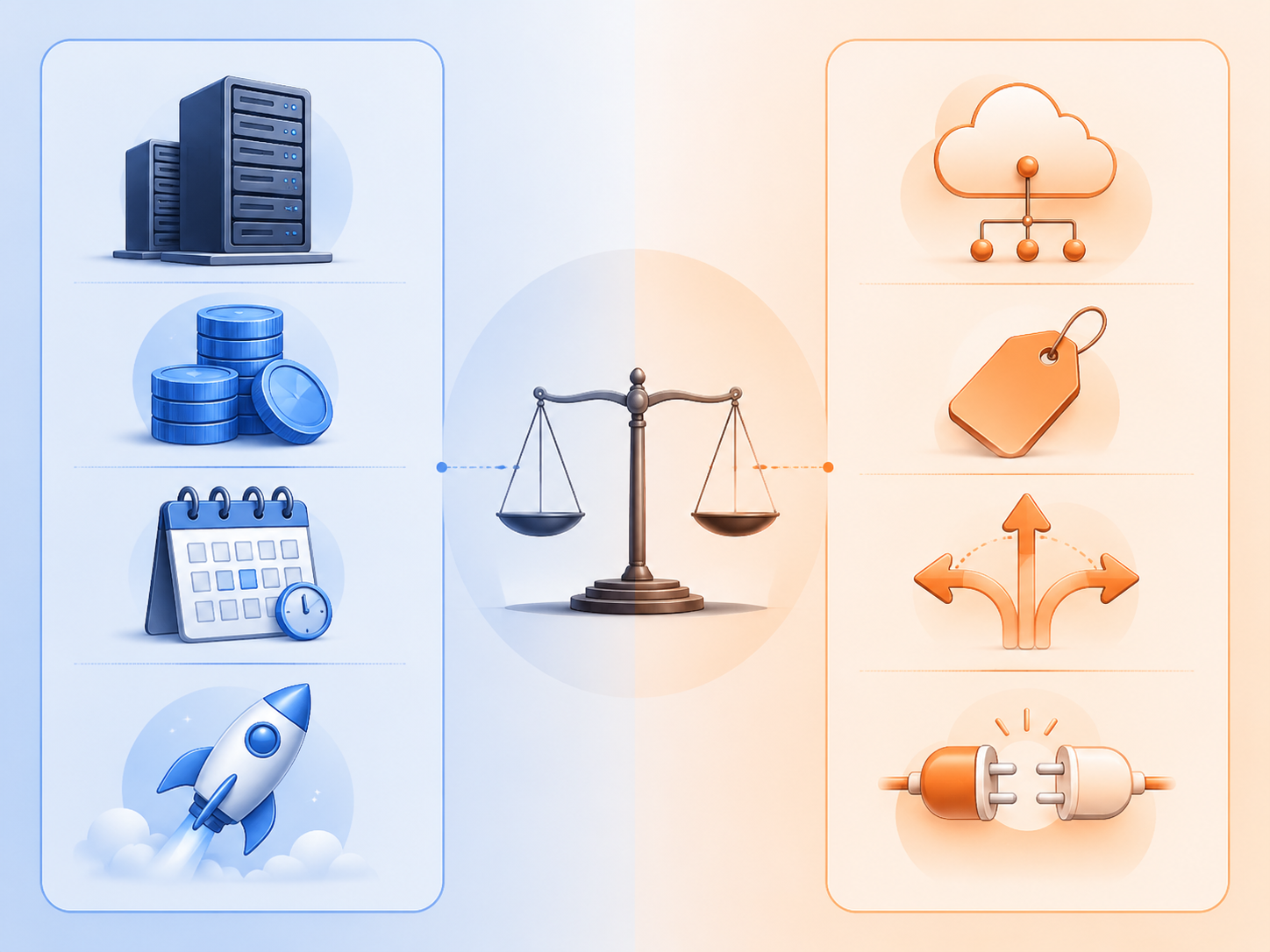
The Two Deal Paths Are Not Substitutes
A marketing team can use AI without ever renting a GPU directly. If your team uses an AI writing tool, research assistant, enrichment platform, analytics copilot, or campaign QA workflow, the compute is usually bundled into the subscription or passed through as usage. You still pay for it, but you do not own the infrastructure problem.
GPU credit programs sit on the other side. They make sense when a startup needs to train, fine-tune, host, or serve models as part of a product. That product might be a marketing analytics platform, a creative generation service, an agentic workflow sold to clients, or a vertical AI tool where model performance is part of the customer promise.
| Decision point | Startup GPU credits | Inference APIs or SaaS |
|---|---|---|
| Best fit | AI is part of the product being sold or delivered | AI improves marketing workflows, reporting, content, research, or operations |
| What the deal buys | Cloud credits, GPU time, infrastructure services, startup program benefits | Model calls, output tokens, built-in inference, workflow features |
| Main risk | Credit cliff, lock-in, engineering ownership, idle infrastructure | Tool sprawl, variable usage, vendor price changes |
| Who owns the work | Engineering, ML, platform, security, finance, and product owners | Marketing ops, RevOps, procurement, admins, and vendor managers |
| Good first question | What bill appears when credits expire? | Which workflow bottleneck does this remove? |
The trap is treating a credit package as a marketing budget win before the workflow has been proven. A credit can reduce cash spend during the test window, but it does not remove architecture choices, migration work, monitoring, security review, vendor terms, or the next renewal conversation.
What the Big Credit Stack Actually Means
The obvious attraction is the headline stack. In mid-2026 published program terms, NVIDIA Inception is free to join and can unlock eligibility for other programs; Microsoft Founders Hub offers up to $150,000 with no VC requirement but verified traction; Google for Startups AI can offer up to $350,000 for VC-backed companies; AWS Activate can offer up to $200,000; and Nebius AI Lift can offer up to $150,000 through Inception eligibility. In combination, the available headline credits can reach $500,000 or more, depending on eligibility and program overlap.[1]
That number is not fake, but it is not the same as $500,000 of neutral purchasing power. Credits are usually tied to a vendor, a cloud, a marketplace, an expiration window, and sometimes a stage or backing requirement. They are easiest to justify when the company already knows it needs that infrastructure path.
Expiration matters more than the award amount. Spheron’s 2026 credit guide describes Google’s AI Startups tier as covering 100% in Year 1 and only 20% in Year 2, which means a workload can move from “covered” to mostly paid while the team is still calling the pilot successful.[1]
The uncomfortable line item is not the application form. It is the first real bill. Spheron gives the example of an 8x H100 node left running after credits expire producing a bill of about $40,000 per month.[1] That is the kind of expense that turns an internal AI experiment into a finance review, especially if no one can clearly say which revenue, retention, or operating metric it changed.
There is also a valuation problem. Spheron’s GPU cloud pricing comparison estimates that $200,000 at AWS list pricing buys about 29,000 H100 GPU-hours, while the same cash on a neocloud buys about 99,500 H100 hours, a 3.4x spread.[2] So when a hyperscaler credit says “$200,000,” the useful question is not whether the number is large. It is how much compute it buys at that vendor’s rate, and whether you would have chosen that vendor with cash.
Build When Compute Is Part of the Product
A marketing company building an AI product has a different burden than a marketing department trying to speed up campaign work. If the model is part of the customer experience, compute is not merely an operating expense. It shapes latency, reliability, data handling, feature scope, gross margin, and sometimes pricing.
That is where credits can be rational. A startup building a client-facing creative testing product, an AI research platform, or a vertical marketing agent may need to control model selection, hosting patterns, fine-tuning, evaluation, and data pipelines. In that setting, credits can buy time to test architecture before revenue catches up.
Even then, the credit should be attached to a migration plan and an owner. Someone needs to know what happens when the free tier expires, whether workloads can move, what utilization looks like, how idle nodes are shut down, which models must remain on a given cloud, and how margin changes if the customer base grows faster than expected.
The warning is not theoretical. Forbes reported that 84% of companies experience measurable gross-margin erosion from AI infrastructure and that 80% miss AI infrastructure forecasts by more than 25%, citing a 2025 State of AI Cost Management Report.[3] Those figures should be read as context rather than a forecast for every marketing team, but they are a useful reminder that AI infrastructure budgets are easy to underestimate.
Compute supply also sits inside a wider market, not inside your annual plan. Data center capacity, power constraints, and cloud availability can affect the tools marketers rely on. If that is the part of the problem you are evaluating, the adjacent issue is how AI data center moratoriums may affect your marketing tech stack, not only which startup program has the friendliest landing page.
Buy or Use APIs When the Workflow Is the Productive Unit
Most marketing use cases do not need a team to own GPU infrastructure. They need a dependable way to summarize calls, draft variants, classify accounts, enrich briefs, analyze survey responses, generate reporting narratives, or support sales enablement without adding another half-maintained system.
For those jobs, the first decision should be the workflow boundary. Is the bottleneck ideation, production, QA, routing, approval, analysis, personalization, or reporting? If that question is still vague, buying compute is just a more technical version of buying another tool. A practical starting point is to pick the AI marketing tool around the real bottleneck before pricing infrastructure.
Inference APIs are compelling here because the unit of purchase is closer to the unit of use. Perkstack’s 2026 ranking lists providers such as DeepInfra, Novita, and OpenRouter with prices around 4 to 90 cents per 1 million output tokens, depending on model and provider.[4] That does not make every workflow cheap, and it does not include the cost of building the application around the API. But it is a very different risk profile from reserving or operating GPU nodes.
There are also usage levers that fit marketing workloads. Perkstack notes that batch discounts can cut some frontier-model bills in half, while caching can reduce costs by 30% to 50%.[4] A weekly report summary, a large tagging job, or a reusable product-description analysis may tolerate batching or benefit from caching. A real-time sales assistant may not.
Do not freeze those prices into a yearly plan without a volatility note. Perkstack reported updating 36 of 88 model prices in a single weekly check.[4] That is exactly why live rankings are more useful than a static “cheapest model” claim. Use current prices for vendor comparison, but budget with movement in mind.
SaaS can be the right wrapper when the operational problem is bigger than the model call. A premium copywriting, research, or reporting tool may charge more than raw API usage because it includes permissions, templates, brand controls, integrations, evaluations, audit trails, and support. That can still be cheaper than assigning internal engineering time to rebuild those pieces. The relevant comparison is not API token price versus SaaS subscription price; it is total workflow cost versus total workflow value. For stack design, the choice between point solutions, workspace platforms, and hybrid AI marketing stacks is covered in AI marketing stack architecture.
The Cost Question to Ask Before Any Demo
The cleanest way to compare the paths is to move past the demo budget and ask where the bill lands later. That means after credits expire, after the pilot grows, after the model changes, after the initial builder leaves, and after procurement asks why five separate AI subscriptions are doing adjacent work.
- If the team wants credits, ask what workload will run, what cloud it will live on, who owns uptime, and what monthly cost appears when the credit balance reaches zero.
- If the team wants APIs, ask which workflow generates the calls, how usage is capped, whether batching or caching applies, and who monitors price changes.
- If the team wants SaaS, ask what compute is included, what usage triggers overages, what data is retained, and which existing tool it replaces.
- If the team wants to build internally, ask whether the capability is a product differentiator or just a custom interface around a commodity model.
The last question is where many marketing AI plans get expensive. A team can spend serious engineering time creating an internal content, research, or reporting system that still depends on the same external models a SaaS product uses. Unless the custom layer removes a specific constraint, it can become another maintenance obligation. That pattern is close to the broader problem of AI marketing projects failing to show ROI: the technology works, but the operating case was never tight enough.
There is an opposite mistake too: buying SaaS subscriptions so freely that every team solves the same problem in a different interface. Inference bundled into a subscription is still compute spend. If no one owns usage, permissions, renewals, and overlap, cheap monthly tools become the same cost bleed described in the hidden price of AI marketing tool sprawl.
A Practical Decision Rule
Choose the GPU credit path when AI compute is part of the product being sold or delivered, the team has technical ownership, and there is a post-credit cost plan. The right use case can justify the lock-in and the migration work. A client-facing AI platform, a vertical model workflow, or a compute-heavy product feature belongs in that conversation.
Choose inference APIs when the team needs flexible AI capability inside a workflow and can manage usage without building infrastructure. This is often the strongest fit for marketing ops teams building internal automations, analysis pipelines, content QA, campaign research, or reporting assistants.
Choose SaaS when the real value is not the model call but the surrounding product: collaboration, approval flows, brand governance, templates, integrations, and support. This is why two tools that both use foundation models can have very different prices. The question is what you are actually paying for in the workflow, not whether the vendor also pays for inference behind the scenes; that issue shows up clearly in AI copywriting tools and similar packaged products.
For most marketing teams using AI to improve campaigns, content, research, reporting, or operations, APIs or SaaS with inference bundled are the lower-risk deal. GPU credits are not bad deals. They are conditional deals. They are valuable when the company can turn subsidized compute into a product capability and still defend the bill after the subsidy disappears.
References
- Free GPU Cloud Credits 2026, Spheron
- GPU Cloud Pricing Comparison 2026, Spheron
- AI Compute Surpasses Human Costs, Enterprise Budgets Shift, Forbes, April 29, 2026
- Cheapest AI Inference API 2026, Perkstack

Comments
Join the discussion with an anonymous comment.