
How Nvidia's Q2 earnings tie AI demand to ad platform costs
Nvidia's record Q2 FY27 print sits atop the AI capex chain now driving ad-platform pricing and automation defaults. Media buyers get a dated H2 2026 read on auction costs and default-on changes, with reported figures kept separate from the analytical link between Nvidia and their accounts.
- Platform
- Google Ads0 Meta Ads
- Campaign type
- AI Max, Performance Max0 Advantage+
- Spend range
- Macro-level
- Timeframe
- H0 2026
- Average price per ad
- 0% YoY
- Verdict
- mixed
- Last reviewed
- 0-08-28

The Aug. 28 read: strong AI demand, tighter platform economics, more automation
Nvidia’s Q2 FY27 report does not tell a media buyer what next month’s CPA will be. It does provide a dated view of the spending cycle behind the systems that set auction exposure, generate recommendations, and increasingly change campaign defaults. The useful question for Q3 and Q4 2026 is therefore not whether Nvidia had a good quarter. It is how much infrastructure spending is moving through hyperscalers and into Google, Meta, and other advertising platforms—and what those platforms are doing while that investment absorbs cash.
| Date / period | Reported result or guidance | What it means for account planning |
|---|---|---|
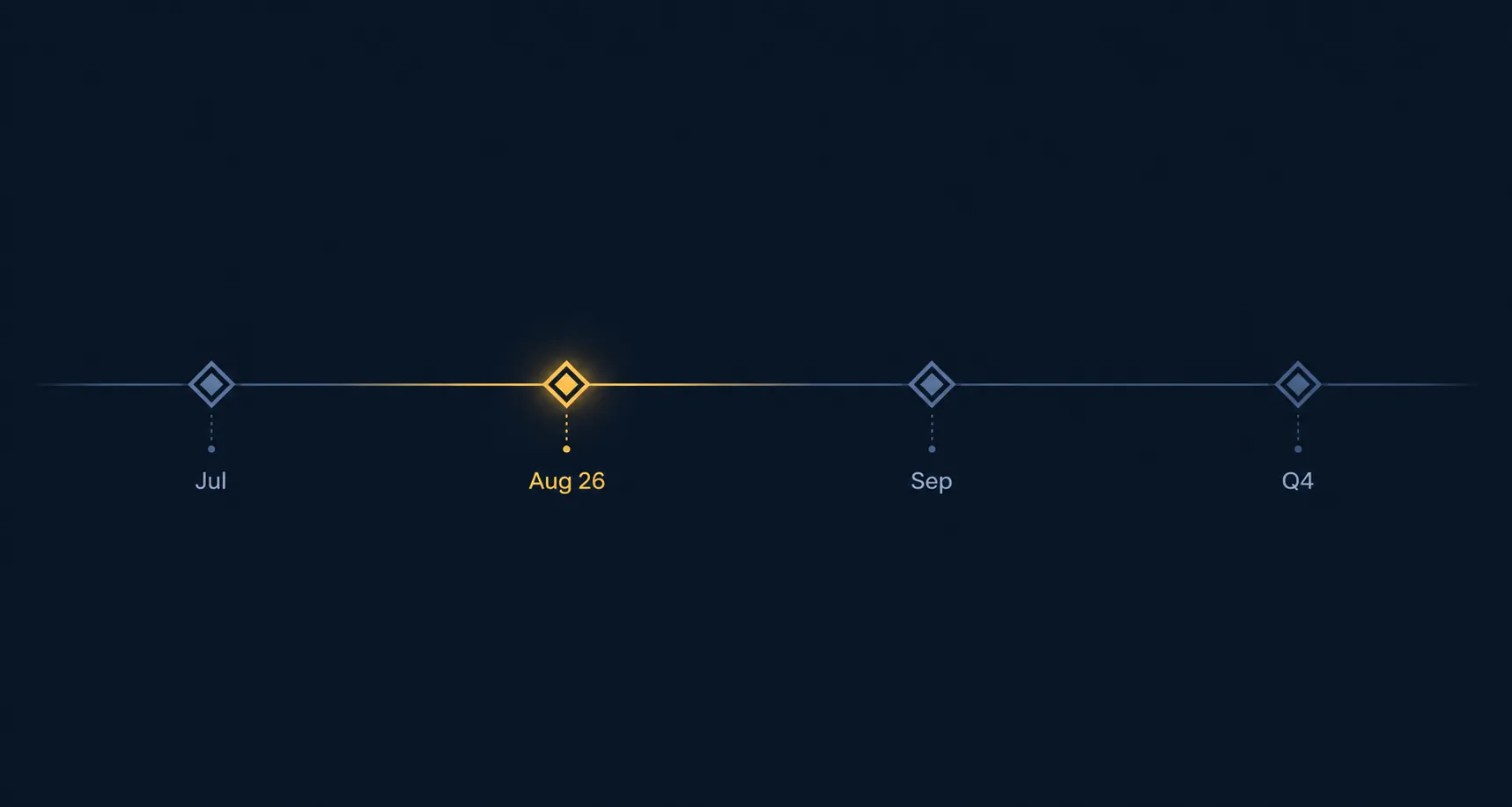
| Nvidia Q2 FY27, quarter ended Jul. 26; reported Aug. 26, 2026 | Revenue was $96.22 billion, up 106% year over year. Data Center revenue was about $89 billion, up 117% and representing roughly 92% of total sales.[1] | The infrastructure demand signal is concentrated in the part of Nvidia’s business most directly tied to AI systems. |
| 2026–2027 hyperscaler outlook | Nvidia CFO Colette Kress said top-five hyperscaler capital expenditure could rise from $800 billion in 2026 to $1.3 trillion in 2027. Goldman Sachs expected $1.2 trillion in 2027 as context.[1] | Large buyers are still budgeting for rapid capacity expansion, which keeps pressure on the AI supply chain visible into 2027. |
| Meta Q2 2026, reported Jul. 29 | Ad revenue reached $59.4 billion, with impressions up 14% and average price per ad up 12%. Free cash flow fell about 91% to $784 million while $31.1 billion of quarterly capex consumed about 98% of $31.86 billion in operating cash flow.[2] | Higher auction prices and heavy infrastructure spending are appearing in the same company results, although the results do not prove one caused the other. |
| Alphabet Q2 2026, reported Jul. 22 | Total revenue was $119.8 billion, Search and other ads were $63.3 billion, and total advertising was $81.6 billion. Quarterly capex was $44.9 billion, roughly twice the year-earlier level; full-year capex guidance rose to $195–205 billion from $180–190 billion.[3] | Google is scaling the infrastructure supporting advertising and AI while continuing to adjust how Search inventory is automated. |
| Google, September 2026 | Google said legacy Search features would begin migrating to AI Max in September, with Dynamic Search Ads following.[4][5] | A default-on change can alter query matching, expansion, reporting, and the role of existing bid and budget assumptions even before performance data stabilizes. |
Nvidia also guided to $108 billion of Q3 FY27 revenue, plus or minus 2%, versus a $104.2 billion consensus, excluding China data-center revenue. Its gross margin held at 75% for a second consecutive quarter, with guidance for 74% in Q3 and a 71–72% bottom in Q4, partly because of memory prices. Kress also described roughly 70% expected FY2028 revenue growth, compared with analysts’ 44% expectation.[1] Those details matter here only because they show that infrastructure demand remains strong while the cost of supplying it is not static.
The money chain—and where the evidence stops
The observable sequence is straightforward. Nvidia reported exceptional Data Center demand. Hyperscalers are expected to spend hundreds of billions of dollars on additional capacity. Alphabet and Meta are reporting large AI- and infrastructure-related capital commitments. Those systems support the models and delivery infrastructure used across products such as Google’s AI Max, Meta’s Advantage+ and Andromeda-related systems, and Amazon’s broader cloud and advertising technology stack.
The next link is analytical. If platforms are building more expensive AI infrastructure while free cash flow is under pressure, they have an incentive to make that infrastructure productive across more of the advertising workflow: prediction, targeting, creative selection, query expansion, ranking, and delivery. Expanding automation defaults is one way to increase utilization and reduce the number of decisions left to manual campaign structures. It is a reasonable interpretation of the sequence, but no company in the supplied results says that Nvidia’s quarter caused Google’s AI Max migration.

The same discipline applies to Meta’s pricing number. Meta reported a 12% increase in average price per ad, but its CFO attributed that movement to performance gains, macroeconomic conditions, foreign-exchange effects, and mix.[2] That explanation belongs beside the capex analysis, not beneath it. Nvidia’s demand and platform infrastructure spending may help explain the environment in which auction prices rise; the results do not establish that chip costs directly caused Meta’s higher average price per ad.
Alphabet’s figures make the cash-investment side of the chain harder to ignore. Advertising remained a large revenue engine while quarterly capex reached $44.9 billion and full-year guidance moved up to $195–205 billion.[3] Meta’s $31.1 billion quarterly capex and $784 million of free cash flow show the sharper short-term tension in the supplied data.[2] That does not mean either platform must immediately raise every advertiser’s costs. It does mean that account-level buyers should treat auction inflation, monetization changes, and automation expansion as connected items on the same H2 planning screen.
Amazon belongs in the hyperscaler frame because its infrastructure investment helps define the broader capacity race. The available material does not verify a separate Amazon advertising-segment result, so there is no basis here for assigning Nvidia’s print a specific Amazon ad-price effect.
What changes in an account during H2 2026
For a buyer running Performance Max, AI Max, or Advantage+, the practical implication is not a new Nvidia-derived bid adjustment. It is a higher need to separate market pressure from platform behavior. If CPM, CPC, or cost per conversion rises, the account record should show whether the change came with more auction competition, a shift in inventory or query mix, broader automation, weaker conversion rates, or a budget that stopped reaching the intended marginal opportunities.
Rising auction pressure is most useful as a monitoring hypothesis. Compare impression share, lost-to-budget and lost-to-rank indicators where available, average costs, conversion volume, conversion value, and the mix of placements or search themes. A higher average price with stronger conversion quality is a different planning problem from a higher price accompanied by unchanged or deteriorating outcomes. The Nvidia result can justify closer observation of the market; it cannot identify which of those account conditions is present.
The September AI Max migration deserves separate treatment because it matters even if the capex chain is wrong. Google’s stated timing means a legacy Search setup may change through a product-default transition rather than through a buyer’s deliberate rebuild.[4][5] Before the migration, preserve the baseline: campaign and asset settings, search-term or query diagnostics where available, exclusions, conversion definitions, budget allocation, bid strategy, and weekly performance by brand, nonbrand, geography, and major landing-page group. Afterward, record what changed before judging whether the new system improved results.
The budget question is equally concrete. A plan built on stable CPCs and fixed query coverage may understate the cash required to maintain volume if auction prices rise. A plan built on manual control may overstate the value of those controls after a default expands matching or delivery. Reforecast with ranges, then identify the threshold at which incremental spend no longer clears the account’s contribution-margin or payback requirement. Keep that threshold tied to observed conversion value, not to the Nvidia headline.
- Record the pre-change baseline before Google’s September migration and before material budget changes.
- Track cost, volume, and value separately by inventory or query mix so an average can be explained rather than merely reported.
- Flag any default-on expansion, recommendation acceptance, asset change, audience change, or bid-strategy change in the same log as budget movements.
- Review whether Meta’s price increase is accompanied by the performance gains Meta cited, rather than treating the 12% figure as a universal cost forecast.
- Use a defined reforecast trigger for Q4 instead of assuming that more AI infrastructure automatically produces better account economics.
When comparing an AI Max benchmark with an older Search baseline or assessing Advantage+ against a manually constrained setup, the relevant question is not whether automation is good in the abstract. It is whether the added reach, model usage, or creative and query flexibility produced enough verified value to justify the control surrendered.
For a deeper account-level treatment, the AI data-center transmission channels separate verifiable links from inference, while the AI-driven digital ad-cost audit is useful for checking competing explanations for cost inflation.
A dated framework, not a causal shortcut
Nvidia’s Aug. 26 print strengthens a planning framework for the rest of H2 2026: heavy AI investment, large hyperscaler capacity plans, constrained platform cash generation, rising reported ad prices, and wider automation defaults should be watched together. It does not prove that chip or memory costs caused Meta’s higher average price per ad. It does not prove that Nvidia caused Google’s September AI Max migration. Those are analytical connections built across separately reported events.
Use the pre-print Nvidia tracker as the before record, then compare it with the transmission-channel analysis, existing ad-cost audits, and the AI Max benchmark records. This article is macro context in the benchmarks category, not a Signal & Convert campaign result.
References
- NVIDIA Announces Financial Results for Second Quarter and Fiscal 2027 — NVIDIA, Aug. 26, 2026
- Meta Reports Second Quarter 2026 Results — Meta Investor Relations, Jul. 29, 2026
- Alphabet Announces Second Quarter 2026 Results — Alphabet Investor Relations, Jul. 22, 2026
- We're upgrading Dynamic Search Ads to AI Max — Google Ads & Commerce Blog, 2026
- Google to auto-migrate Dynamic Search Ads to AI Max starting in September — Search Engine Land, 2026
Built on this evidence
No Bidding tactic or Creative record currently cites this case file. Compare it against other results in Benchmarks.
Related benchmark reading
Report a corroborating or contradicting result
Seeing something different in your own account? Feed the data-integrity loop instead of leaving an open comment.