
Why Callaway approved the Good Good ad that backfired
Callaway approved a Good Good Golf ad that was pulled within hours and triggered public apologies from both companies, plus removed Quantum driver listings — this dated post-mortem breaks down what shipped, what the backlash cost the launch and the partnership, and the approval and audience-data checks media buyers should run before any creator-led campaign.
- Platform
- Good Good social channels
- Campaign type
- Creator-led co-branded launch
- Spend range
- No published spend
- Timeframe
- Aug. 0–25, 2026
- Documented public consequence
- Ad pulled; apologies; listings removed
- Verdict
- loss
- Industry vertical
- Golf equipment
- Last reviewed
- 0-08-26
Last reviewed: Aug. 26, 2026. The Callaway x Good Good Quantum launch belongs in the failure file because the approval gate existed and still let the asset ship. The public record does not support a paid-media loss calculation; it does support a tighter, more useful verdict: a creator-led launch went live, was deleted within hours, triggered apologies from both companies, led Callaway to remove related product listings, escalated to the CEO, and left a PGA Tour title-sponsor review unresolved.
| Record field | Entry |
|---|---|
| Last reviewed | Aug. 26, 2026 UTC |
| Timeframe | Aug. 21–25, 2026. The “96-hour” label is this site’s calculation from the first reported post on Aug. 21 to Callaway CEO Chip Brewer’s public apology on Aug. 25, not a duration published by the sources. [1][2] |
| Platform | Good Good social channels, tied to the co-branded Callaway x Good Good Quantum product launch. [2] |
| Published spend and paid metrics | Not published in the reviewed sources. No campaign spend, impressions, CPM, ROAS, paid reach, or attributed sales figure is available. |
| Verdict | Failure / loss |
| Documented public consequence | Pulled ad, public apologies, Callaway product-listing removals, CEO apology, and a PGA Tour sponsorship review still described as fluid. [1][3][4] |
| Failure cause | Creative governance failure and missing audience-mix validation before approval. |

The collapse timeline
The timeline matters because it separates this case from the usual vague “people got mad online” recap. The sequence shows an approved creator asset entering the market, being removed, then forcing multiple layers of brand response.
| Date | What happened | Why it matters for approval governance |
|---|---|---|
| Fri., Aug. 21, 2026 | Good Good posted a 15-second ad on its social channels for the Callaway x Good Good Quantum driver launch. The ad showed a woman pushed to the ground during the spot and was deleted within hours after backlash. [1][2] | The asset had already passed the point where internal taste, partner review, and launch readiness were supposed to catch the issue. |
| Sat., Aug. 22, 2026 | Good Good apologized roughly 24 hours later, saying the ad did not align with the brand’s values. Callaway issued its first statement late Saturday. [2][4] | The first-response window was already being used for damage control rather than launch amplification. |
| Mon., Aug. 24, 2026 | Callaway removed Quantum driver listings from callawaygolf.com, with Inc. reporting that two driver models and a balls line were taken down; the products remained on Good Good’s site as of Tuesday morning. [3] | The problem moved from social creative into commerce operations. Product pages, not just posts, had to be touched. |
| Tue., Aug. 25, 2026 | Callaway CEO Chip Brewer apologized publicly at about 1 a.m. ET and wrote that “the video was produced by Good Good, it was approved by Callaway prior to posting. That approval should never have happened.” [1] | This is the key governance admission. The issue was not lack of a gate; it was a gate that certified the wrong thing. |
| As of Aug. 25–26, 2026 | USA Today reported that the PGA Tour review around the Good Good Championship remained a “fluid situation,” while Callaway confirmed the partnership would continue and Good Good remained title sponsor. [4] | The campaign’s consequences were still active at the sponsorship level when this record was reviewed. |
That Brewer sentence is why this is an approval-system case, not only a creative-taste case. “Approved by Callaway prior to posting” removes the easiest excuse. The brand side had a chance to stop the asset. The creator side produced it. The shared process let it through.
There is also a boundary worth keeping clean: no reviewed source publishes the media plan. If there was paid support, the spend is not in the record. If impressions were lost, the count is not in the record. If sales shifted, the revenue effect is not in the record. The documented cost is operational and reputational: deletion, apology drafting, executive escalation, product-page removal, sponsor-review uncertainty, and a launch conversation that moved from equipment to judgment.
The audience miss was not abstract
The campaign did not merely irritate a random edge of the market. It alienated the segment that current participation data says golf should be taking seriously before approval: women and girls.

The National Golf Foundation reported on May 28, 2026 that from 2020 to 2025, the number of female on-course golfers rose 45%, a net gain of 2.5 million to more than 8.1 million. Over the same period, men’s on-course participation rose 12%. Women and girls accounted for 52% of net green-grass participation gains, and women reached a record 28% share of traditional golfers, up from 20% in 2012. [5]
Those numbers should have changed the approval conversation. A buyer looking at the ad before launch would not need a philosophy debate to flag the risk. The basic question is more mechanical: does this creative treat a fast-growing participation group as a target audience, a bystander, or a prop? In this case, the public reaction made clear which answer many women golfers heard.
Audience-mix validation is not the same as asking whether the core fan base will understand the bit. Good Good CEO Matt Kendrick later said on LinkedIn that the concept was intended as a parody of a scene from the movie “Obsession” and that “the execution missed the mark.” ABC News also reported, citing a person close to Good Good, that leaders planned to donate to an organization supporting women, bring more voices into the creative process, and upgrade approval systems. [8]
That context may explain the intent. It does not solve the buyer’s problem. Campaign approval has to judge the asset that ships, not the reference deck behind it.
This was too scaled to call a small creator mistake
The size of the partnership changes the standard. Callaway announced its Good Good partnership on Jan. 4, 2023, when Good Good had more than 1.1 million YouTube subscribers. [6] By the time of the 2026 backlash, CNN described Good Good as having more than 2 million YouTube subscribers and Callaway as a $2.8 billion equipment company. [2] Good Good had also announced a $45 million investment round on Mar. 20, 2025 to expand across media, commerce, and live experiences. [7]
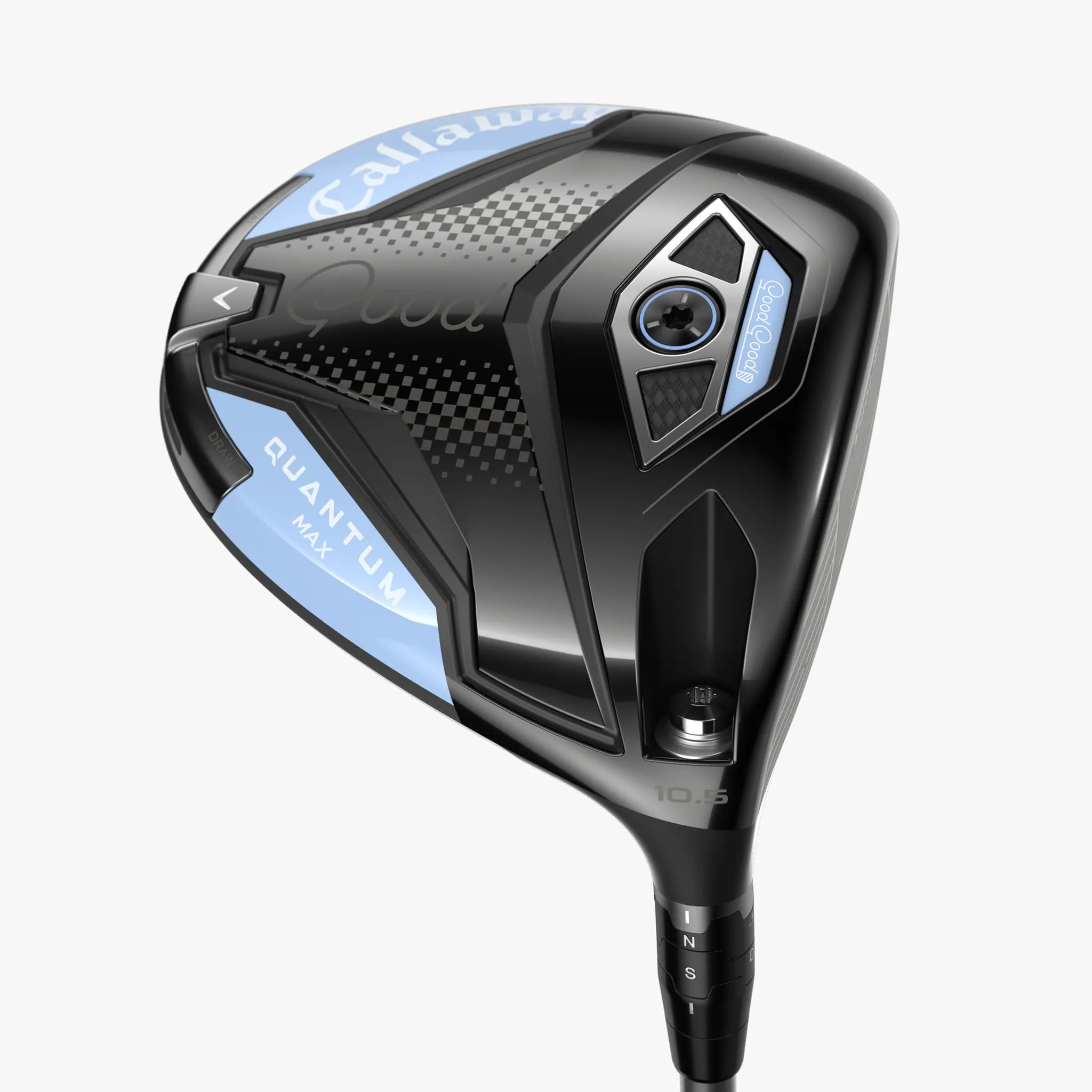
That does not mean every creator asset needs to be sanded into committee-safe blandness. It means the approval model has to match the scale of the downside. A co-branded product launch between a major equipment maker and a heavily funded creator-commerce company is not the same operating environment as a one-off organic post.
The product record also stayed messy after removal. Inc. reported that Callaway removed listings for two driver models and a balls line from its own site, while related products remained available on Good Good’s site as of Tuesday morning. [3] Pricing references in the public record were not clean enough to use as a finding here: Callaway product-page snippets and third-party social posts pointed to different figures, and the listing environment was changing during the review window. The safer conclusion is narrower: commerce surfaces had to be changed after the creative failed.
What Callaway’s approval actually means for buyers
When a brand says it approved a creator asset, buyers should read that as a process claim, not a safety guarantee. The useful follow-up is: what exactly did approval test?
A legal review can catch rights issues and claims language. A product review can catch spec errors. A brand review can catch logo misuse and tone. None of those automatically catches an audience-mix error. That check has to be assigned to someone, backed by current participation or customer data, and completed before the post is scheduled.
| Buyer check | What should be verified before launch |
|---|---|
| Current audience mix | Who is growing the category now, not only who historically over-indexed in the creator’s comments. |
| Affected growth segments | Whether the creative uses a growth audience as the joke, obstacle, prop, or collateral damage. |
| Brand-side approval authority | Who can stop the asset after creator approval, and whether that person is reviewing final cut, not concept notes. |
| Creator-side control | Who owns scripting, casting, editing, posting, captioning, replies, and deletion access. |
| Escalation path | Who drafts the first statement, who approves it, and when an executive response becomes mandatory. |
| Launch-day takedown ownership | Who can pull social posts, product pages, paid boosts, affiliate links, email modules, and retail assets without waiting for a full meeting. |
For teams building this into their own launch QA, this record pairs with our broader creator-led campaign and audience-backlash file and the brand-safety verification work in deepfake ad creative brand safety, AI-generated video detection, and paid-ad safety for hallucinated chatbot claims. The common thread is not the format of the creative. It is whether the final asset was checked against the people most likely to bear the consequence of a bad approval.
The narrow verdict
Callaway did have an approval gate. Brewer’s apology makes that explicit. The structural gap was that approval did not appear to require a live audience-data check against the golf market of 2026. The campaign failed because the process certified the asset without testing it against the audience reality of the sport it was trying to sell into.
References
- Callaway CEO apologizes for controversial Good Good ad — Golf.com, Aug. 25, 2026.
- Good Good Golf and Callaway apologize after controversial ad — CNN, Aug. 25, 2026.
- Callaway Removes Good Good Driver Listing After Backlash to Needlessly Violent Ad — Inc.
- Callaway, Good Good Golf ad apology backlash — USA Today, Aug. 25, 2026.
- The Record Rise of Female Golf — National Golf Foundation, May 28, 2026.
- Callaway announces partnership with Good Good Golf — Golf.com, Jan. 4, 2023.
- Good Good Golf Secures $45M Investment to Fuel Expansion Across Media, Commerce, and Live Experiences — Good Good Golf, Mar. 20, 2025.
- Good Good Golf, Callaway Golf apologize for ad showing woman being pushed to ground — ABC News.
Built on this evidence
No Bidding tactic or Creative record currently cites this case file. Compare it against other results in Benchmarks.
Related benchmark reading
Report a corroborating or contradicting result
Seeing something different in your own account? Feed the data-integrity loop instead of leaving an open comment.