
Tyga's 0.0 AI Album Backlash Is a Warning for AI Ad Creative
Tyga's 0.0-rated AI album is the latest case of the AI-content backlash, and it reads as a leading indicator for ad creative. The analysis shows audiences punish AI that visibly subtracts craft or signals cost-cutting, not AI use per se, so media buyers should enforce quality thresholds and holdout-test AI creative against human versions.
- Platform
- Meta Advantage+ Creative
- Creative type
- AI image and video ads
- Failure type
- Perceived loss of craft
- Last reviewed
- 0-08-25
Tyga’s $TARFACE is useful to marketers because the backlash is unusually clean. The album drew a rare 0.0 from Pitchfork, and the review framed the failure less as a technical scandal than as a creative one: it said the record “confuses loving music with prompt engineering.”[1] NPR described the score as Pitchfork’s first 0.0 in about 20 years, with the previous one arriving in 2006.[2]
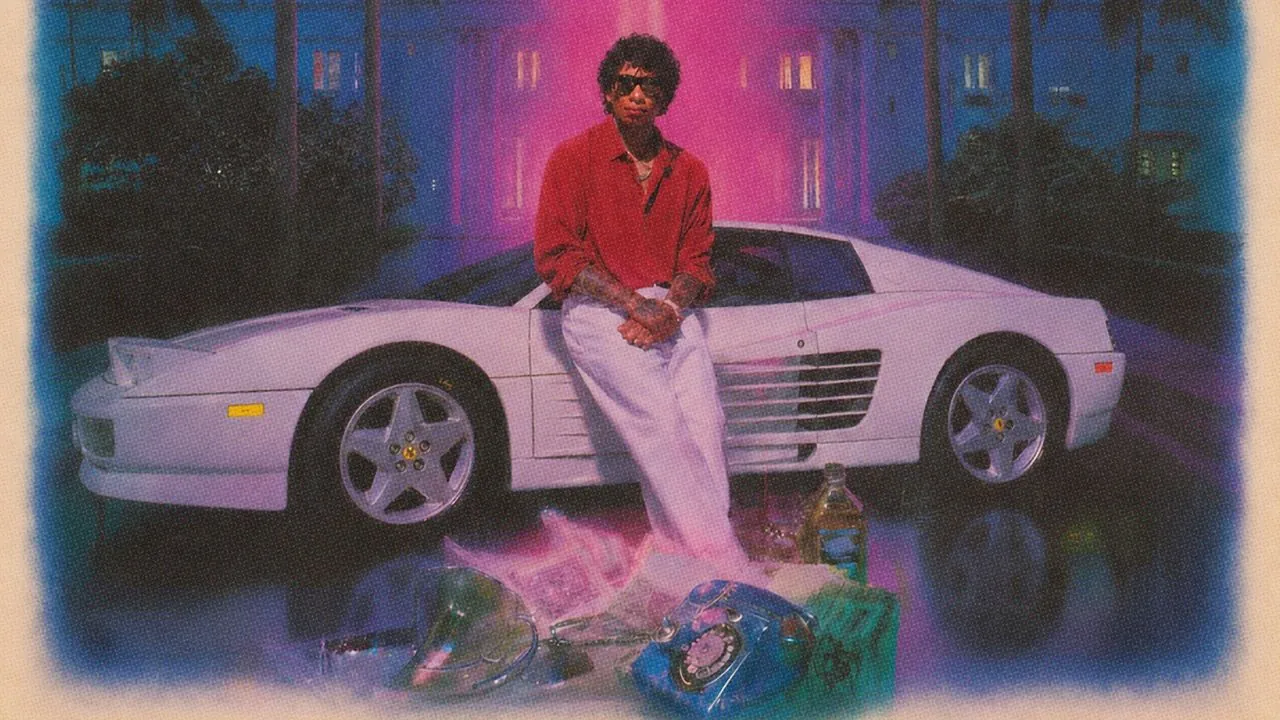
The cleaner part is not the score by itself. It is the arc. After public criticism, Tyga later told Vibe that AI was “definitely used as a tool” on the album.[3] Vice also reported his dismissive response to critics, including “I don’t know what Pitchfork is.”[4] The public read was simple: this did not feel like an artist using a new instrument; it felt like the work had been thinned out and then defended after the fact.
That matters for ad creative, but not because a music review proves anything about Meta, YouTube, Performance Max, or TikTok conversion ads. The bridge from Tyga to advertising is analysis. The cited music sources do not claim that AI ads will fail. What they do show is a backlash mechanism that paid-social teams already recognize: audiences get louder when automation appears to replace taste, effort, authorship, or basic review.
For buyers, that is the useful distinction. “AI was involved” is not the same problem as “this looks cheap,” “this looks uncanny,” “this looks undisclosed,” or “nobody checked what the platform changed.” The second group is where performance risk begins.
The backlash is about lost craft, not the file’s origin
The easiest bad takeaway from $TARFACE is that consumers hate AI creative. That is too broad. The sharper takeaway is that people punish the visible loss of craft. In the Tyga case, the review’s “prompt engineering” line landed because it named the thing audiences suspected: not that software existed somewhere in the process, but that the process had become the work.
Advertising has been hitting the same wall. Digiday reported that marketers were reconsidering AI ad approaches as backlash built, including criticism of Coca-Cola’s AI holiday work and McDonald’s Netherlands pulling an AI-generated spot after it was labeled “AI slop.”[5] Those cases do not prove that every AI-generated ad depresses performance. They do show how quickly a brand asset can become a public referendum on whether the company tried to save money by removing humans from the parts people still expect humans to care about.
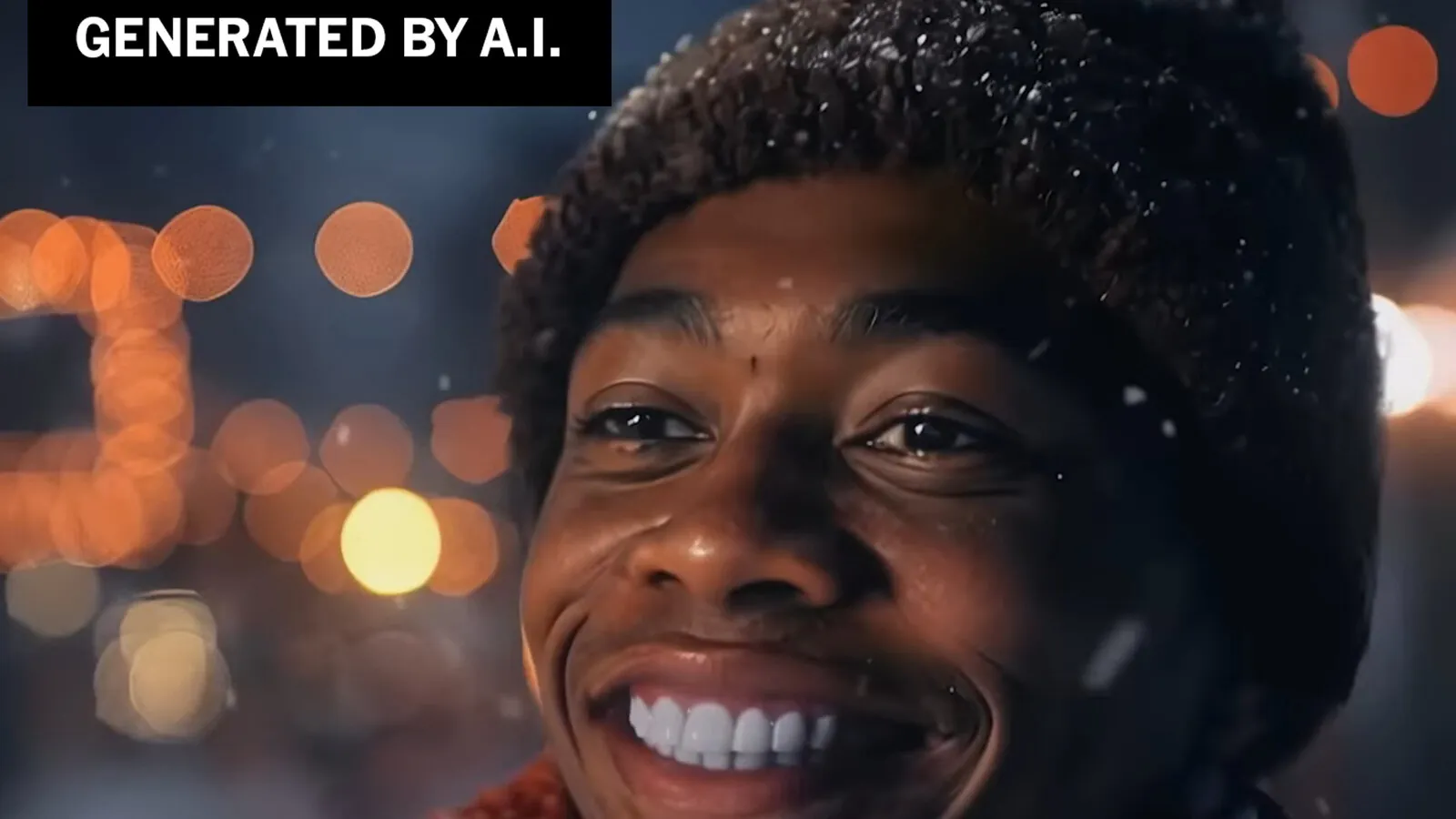
The ad-side research points in the same direction when it is read narrowly. IAB and Sonata Insights found a 37-point gap between executives and consumers on AI in advertising: 82% of executives said they were optimistic or excited, compared with 45% of consumers, and the gap had widened from 32 points in 2024.[6] That is not a conversion-rate forecast. It is a warning about the room where the decision gets made. The people approving automation are more comfortable with it than the people receiving the output.
DoubleVerify’s 2026 Global Insights data is more operationally useful because it separates sloppy AI cues from polished execution. Advanced Television reported that 42% of EMEA consumers felt negatively toward brands using AI for low-quality or uncanny ads, while only 29% of UK consumers felt negatively when AI ads looked polished.[7] Those are different markets and should not be averaged into a single backlash number. The directional point is still hard to ignore: the visible quality cue changes the trust reaction.
Kantar’s real-people reaction work makes the same distinction from the creative-testing side. Its analysis argues that AI can support ideation and production, but ads that are obviously AI-generated can lose branded cut-through, especially when faces, emotion, and brand memory do not land cleanly.[8] Nielsen Norman Group’s analysis of failed AI ads focuses on the uncanny-valley problem: people notice distortions, generic affect, and mismatched human cues faster than teams expect when reviewing assets in production tools.[9]
That is why the Tyga case travels. The backlash was not a lab-measured ad response, but the complaint was familiar: the work felt like the human part had been reduced below the audience’s threshold.
Do not turn the backlash into a no-AI rule
A no-AI rule is clean in a deck and mostly useless in an ad account. Platforms are already pushing automated generation, resizing, text variation, image expansion, voice tools, product-background edits, and asset combinations into normal campaign setup. The practical question is not whether AI touched the asset. It is whether the resulting ad clears the same bar as the human control.
The counterweight matters here. A field experiment reported through EurekAlert found that AI-generated display ads roughly matched or beat human-designed ads on click-through rate when quality was controlled.[10] That result should keep the argument honest. AI generation is not inherently a performance liability. Low-quality generation, careless enhancement, and weak review are the liabilities.
This is where teams often cheat themselves. They compare a polished human ad to a first-pass AI variant and call AI weak, or they compare a tired human control to a novelty AI variant and call AI proven. Neither read is useful. If the campaign is going to use synthetic assets, they need to compete inside the same structure: same offer, same audience, same landing path, same budget logic, and enough separation that one variant does not cannibalize learning from the other.
| Question | Bad read | Usable read |
|---|---|---|
| Did AI improve performance? | The AI ad had the highest CTR in a mixed ad set. | The AI variant beat a human-made control under a planned split or holdout. |
| Did the audience reject AI? | Comments said “AI slop.” | Negative comments clustered around visible quality problems, disclosure, or brand-fit issues. |
| Did automation save time? | The team produced more assets. | The team produced more assets that passed review and did not increase moderation, comment cleanup, or brand escalation work. |
| Did the platform enhancement help? | It was enabled by default or recommended in setup. | The enhanced version was reviewed against the original and tested where the change was material. |
Where media buyers should tighten the process
AI creative review should start before upload, not after the comments go weird. The lowest-friction process is to separate generation, enhancement, disclosure, and testing. If those are treated as one blob called “AI creative,” nobody knows which part failed.
Set a visible-quality threshold before the media test
A paid-social team does not need an ethics committee for every image expansion. It does need a rejection standard. Faces, hands, product geometry, packaging, claims, price presentation, UI screenshots, before-and-after scenes, and anything implying a real customer outcome should get stricter review than abstract backgrounds or rough ideation frames.
- Reject the asset if the product is physically altered, even slightly, in a way the buyer could notice after purchase.
- Reject the asset if a face, gesture, or expression creates the uncanny cue that becomes more memorable than the offer.
- Reject the asset if the brand’s distinctive assets are softened into generic category codes.
- Reject the asset if the AI version only exists because no one wanted to pay for the shot, the edit, or the copy pass the concept actually needed.
That last point is not sentimental. It is the part audiences tend to notice. Tyga’s album became a useful case because the criticism attached to perceived subtraction. The same thing happens when an ad uses synthetic people to imitate warmth, synthetic holiday nostalgia to imitate craft, or generated testimonials to imitate evidence.
Treat platform enhancements as new creative, not formatting
Automated enhancement is easy to underrate because it appears inside the campaign workflow instead of the concepting workflow. But if the tool changes the crop, background, text treatment, motion, color, or implied context, the buyer is no longer running the reviewed asset. They are running a derivative.
This is especially important for brand-sensitive accounts. A vendor blog from AdMove says Meta Advantage+ Creative Enhancements are on by default for new Sales, Leads, and App campaigns as of February 2026; that default-on claim should be treated as vendor-reported unless confirmed against Meta’s own documentation or a dated settings record.[11] Teams should also confirm current AI-label and enhancement defaults in the platform before spend scales.

The buyer’s review habit should change accordingly. Save the uploaded original. Save the platform-modified preview where the platform exposes it. If the enhanced version materially changes the ad, label it in the naming convention and review it as its own variant. A resized asset is not the same thing as a reinterpreted asset.
Make disclosure a trust decision, not a panic response
The deny-then-admit rhythm is where brands make the backlash worse. Tyga later framed AI as a tool, which may be true, but the public sequence had already become part of the story.[3] In advertising, the same pattern turns a production choice into a trust issue. If the audience is likely to notice synthetic construction, the brand is usually better off deciding its disclosure posture before launch.
Disclosure does not have to read like a legal confession. The exact requirement depends on platform policy, jurisdiction, format, and claim type. But hiding obvious automation is a bad creative bet. If the concept depends on “look what AI imagined,” say so. If AI was used for production assistance on a conventional product ad, keep records of what changed and make sure the asset does not imply false human evidence, false real-world footage, or a customer result that never existed.
Hold out human controls instead of arguing taste in Slack
Creative teams can spend three days debating whether an AI variant feels “soulless.” Sometimes that debate is worth having; often it is just an expensive way to avoid designing the test. The clean version is to keep a human-made control live, introduce the AI-made or AI-enhanced variant with a clear naming convention, and decide in advance which metrics can override the room’s preference.
- Use CTR as an early read on attention, not proof of business impact.
- Watch thumb-stop, video hold, landing-page continuation, conversion rate, CPA, and comment quality together.
- Segment brand-sensitive placements from lower-risk direct-response placements where possible.
- Keep the human control long enough to detect whether novelty is doing the work.
- Document whether the winning variant was generated from scratch, lightly assisted, or platform-enhanced after upload.
If the AI variant wins on CTR but loses on conversion quality, the ad may be creating cheap curiosity. If it wins on CPA with no comment or brand-safety penalty, the file origin is not the issue. If it performs until the comments fill with “AI slop,” the team has a creative-quality problem that the dashboard may show late.
What to stop doing after the Tyga backlash
Stop launching AI creative because the platform can generate it. Generation capacity is not a quality signal. More variants only help if the additional assets create genuinely different hooks, angles, objections, or visual treatments that a buyer would be willing to put next to the human work.
Stop letting AI polish human drafts past the point of brand fit. A human concept can survive a production assist; it can also get sanded into generic platform gloss. When every face looks like stock, every room looks like a render, and every headline sounds like a prompt template, the team has not scaled taste. It has scaled sameness.
Stop treating negative comments as separate from performance. For some direct-response offers, comment noise is tolerable. For trust-heavy categories, recruiting, financial services, healthcare, education, luxury, creator-led brands, and any campaign using founder or customer likeness, visible AI suspicion can become part of the conversion path. Someone still has to answer the comments, brief support, and explain why the brand looks cheaper than it did last week.
Stop hiding automation when the audience is likely to notice. The backlash pattern is harsher when people feel they had to discover the AI use themselves. A clear production frame, visible human oversight, or concept-level disclosure can preserve more trust than a defensive explanation after the asset has already been mocked.
Stop accepting platform enhancements without review. If a tool expands the frame, swaps the background, adjusts the text, generates motion, or changes the asset’s context, the buyer should know what changed before spend scales. The fact that the option sits near campaign setup does not make it operationally harmless.
And stop reading Tyga’s 0.0 as a forecast that consumers will reject AI ads. That is not what the evidence supports. The better warning is narrower and more useful: audiences punish visible loss of craft faster than marketers expect, especially when the brand acts as if nobody will notice. AI creative deserves the same treatment as bidding automation or landing-page testing: controlled comparisons, documented settings, quality gates, and enough human review that nobody downstream has to pretend cost-cutting was innovation.
References
- Tyga Admits to Making New Album $TARFACE With AI: “I Don’t Care”, Pitchfork
- Tyga and A.I. in music, NPR, August 15, 2026
- Tyga Reveals ‘$TARFACE’ Album Used AI As A Tool, Vibe
- Tyga Claps Back at Critics After Backlash Over His AI-Assisted Album: “I Don’t Know What Pitchfork Is”, Vice
- With AI backlash building, marketers reconsider their approach, Digiday
- The AI Ad Gap Widens, IAB
- Study: AI slop poses growing risk to brand trust, Advanced Television, August 6, 2026
- Rethinking AI-generated advertising, Kantar
- Why AI Ads Fail, Nielsen Norman Group
- AI-generated ads can perform as well as or better than human-designed ads, EurekAlert
- Meta Advantage+ Creative Best Practices for 2026, AdMove
This is a record of what happened and what was tested, not legal advice. Compliance determinations require qualified counsel.