
Where Do AI Chatbot Hallucinations Hit Paid-Ad Brand Safety?
A two-point map of where AI chatbot hallucinations actually expose paid-ad spend: AI-generated creative that fabricates claims, and ads served next to hallucinated answers inside answer engines. Only the creative/supply side has working controls today, so that is where media buyers should concentrate verification effort.
- Platform
- Google Ads and Meta Ads
- Creative type
- AI image, video0 and copy
- Disclosure status
- Partial; about half labeled in 0 study sample
- Failure type
- Fabricated claims in AI creative; hallucinated answer adjacency
- Last reviewed
- 0-08-05
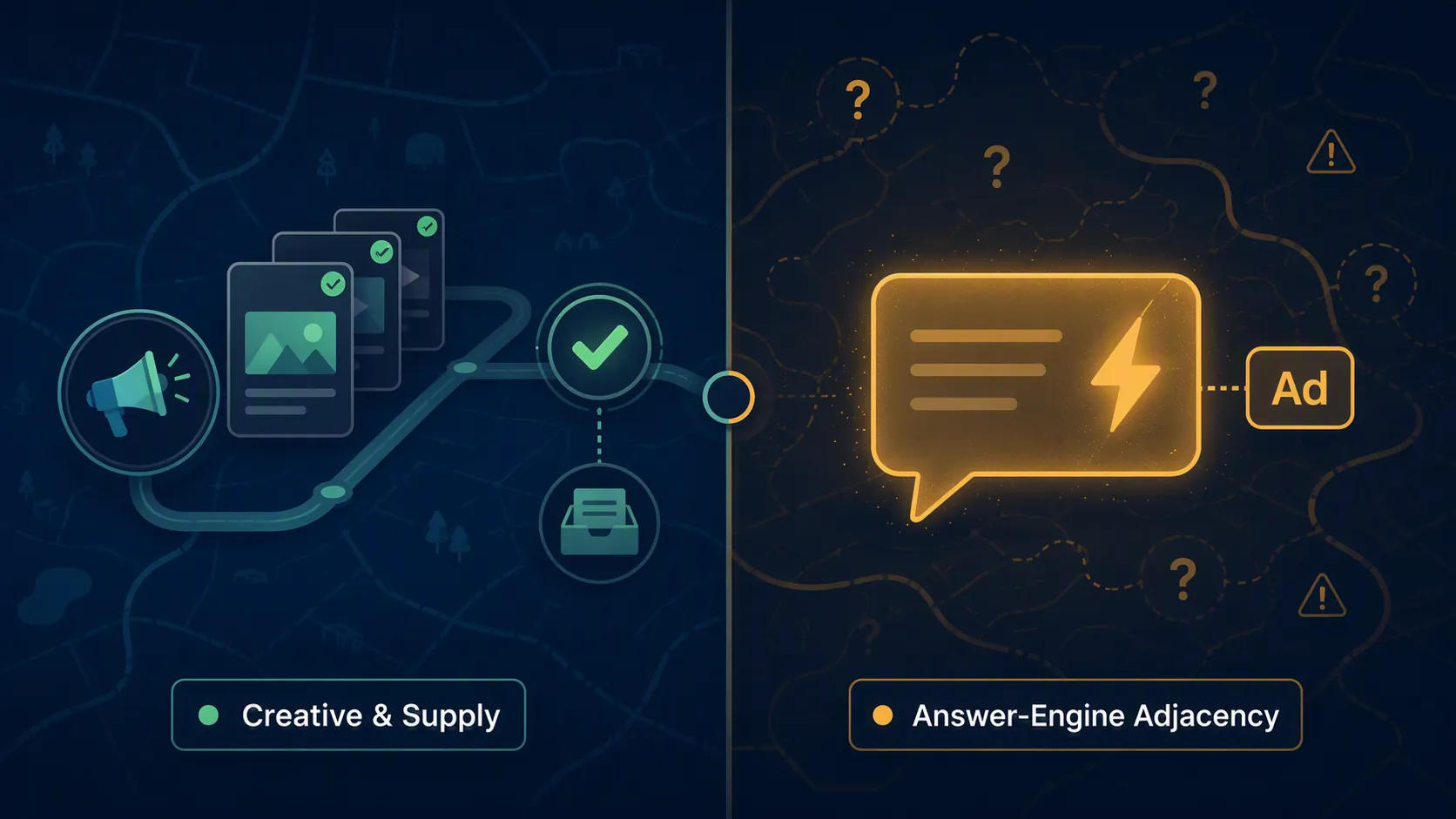
AI chatbot hallucination hits paid-ad brand safety in two places, and they should not be managed as the same problem.
The first exposure point is inside the ad supply itself: AI-written copy, generated assets, auto-created extensions, review generators, and platform creative automation that invent product claims or evidence and then push those claims into paid distribution. The second is the surrounding context: an ad appears inside or beside an AI answer, and the generated answer contains false brand information, a false comparison, or a made-up recommendation. The first can be reviewed, restricted, edited, documented, and stopped before or shortly after spend starts. The second is still mostly a test-and-log risk because the page-like object around the ad is generated at serving time.
The problem is already operational, even if the available data is not yet large enough to treat as a market census. In an IAB survey of 125 U.S. advertising-industry executives fielded in July 2024, more than 70% reported at least one AI incident, 40% said ads were paused or pulled as a result, and only 6% believed current safeguards were sufficient; the sample is small, but the direction is hard to ignore for anyone who has had to explain why a campaign went dark mid-flight.[1]
| Exposure point | What goes wrong | What a buyer can do today |
|---|---|---|
| AI-generated creative and supply | Generated copy, assets, reviews, or platform-created text fabricate claims that enter paid media. | Verify before spend; restrict or edit generated text where platform controls exist; keep approval records; monitor live asset combinations. |
| AI answer-engine adjacency | A paid placement appears inside or beside a generated answer that may contain false or damaging brand information. | Run as limited tests; capture screenshots, query logs, placement evidence, and escalation notes; do not treat it like fully controllable page inventory. |
The controllable problem: hallucinated claims inside AI-generated ad supply
Most paid-media teams meet AI hallucination first through production pressure, not through an abstract chatbot failure. A product marketer asks for more variants. A search campaign needs landing-page-aligned headlines. A Performance Max or AI Max setup wants assets. A Meta Ads setup suggests copy options. A review tool turns sparse inputs into polished testimonials. Nobody on the buying side wants to hand-write every permutation if the machine can create useful drafts.
That is also why this exposure point deserves the most boring kind of attention. If a generated headline says a supplement is “clinically proven” when the substantiation file does not support it, the issue is not that the model hallucinated in some general sense. The issue is that a paid system may now be amplifying an unapproved claim, with spend, targeting, screenshots, and reporting attached.
FTC enforcement makes that line uncomfortable for advertisers that treat “the AI wrote it” as a meaningful defense. In Operation AI Comply, announced September 25, 2024, the FTC brought actions involving allegedly deceptive AI claims and schemes; the announcement included a case against Rytr over an AI tool that generated fake reviews and a DoNotPay settlement requiring $193,000, among other terms.[2] The useful takeaway for paid media is narrow: AI-assisted generation does not create an exemption for deceptive claims, fake reviews, or unsupported performance promises.
The review point is not only the final ad preview. In AI-assisted accounts, hallucinated claims can enter through several doors:
- AI copy tools that turn product notes into stronger claims than the source material supports.
- Auto-generated headlines, descriptions, sitelink text, and asset combinations created from landing-page or feed signals.
- AI image or video variants that imply certifications, endorsements, ingredients, outcomes, or use cases the brand cannot prove.
- Review-generation or testimonial tools that create synthetic social proof instead of summarizing real customer language.
- Localized or verticalized variants that introduce claims legal approved in one market, category, or audience but not another.
This is why “brand safety” is too soft a label by itself. A bad generated claim is not just an adjacency concern. It can become ad copy, a landing-page claim, a feed-derived asset, a review snippet, or a screenshot in a regulator’s file. The operational question is whether the team can see it before launch, limit where it can appear, and prove who approved it.
Google’s AI Max text guidelines are a useful control signal, not a universal safety net
Google’s September 10, 2025 AI Max announcement matters because it names generated text as a control point. Google said “text guidelines” for AI Max for Search campaigns would roll out globally that fall, giving advertisers a way to guide generated ad text with brand and business-specific instructions.[3] That is a dated platform-control milestone, not proof that every account now has the same mature switch in the same place or that every generated asset becomes safe when the switch is used.
A buyer should treat that kind of feature as part of the pre-flight evidence trail. If the account has text guidelines, document what was entered, when it changed, and which campaigns it covered. If the account does not have the control, or if availability differs by campaign type, that gap belongs in the launch note rather than in someone’s memory.
| Control layer | What to check | Why it matters |
|---|---|---|
| Source claim file | Approved product claims, substantiation, disclaimers, restricted words, market-specific limits. | The generated asset needs a reference point outside the model. |
| Platform generation settings | AI-created assets, text-guideline availability, final URL expansion, asset automation, account-level exclusions where available. | The safest review queue is still weak if the platform can create unreviewed variants around it. |
| Creative approval record | Screenshots or exports of approved assets, prompt instructions where used, reviewer, date, and legal notes. | When a claim is challenged, the team needs more than a memory of what was meant. |
| Post-launch asset monitoring | Live combinations, policy disapprovals, search terms where available, landing-page changes, and spend on newly generated assets. | Generated systems can change the mix after the initial launch check. |
The platform controls are not a substitute for legal review, and legal review is not a substitute for platform controls. The former can reject a claim; the latter can determine whether new text gets created after approval. In an AI-assisted campaign, those two records need to meet.
Labels help less than buyers want them to
Disclosure is worth tracking, but it is not a complete control. A University of Kansas study published in February 2023 found that only about half of 1,375 AI-generated programmatic ads in its sample were labeled as AI-generated, with news and publishing sites labeling the least.[4] That finding is about labeling in a studied sample, not a clean measure of whether labeled AI ads perform better or whether consumers reliably act differently when they see a label.
For paid-media governance, labels sit downstream of the real question: did the claim have permission to run? A clearly labeled AI-generated ad can still contain an unsupported claim. An unlabeled AI-generated draft can still be acceptable if every claim is sourced, approved, and constrained. The review process should care more about substantiation than about whether a disclosure badge makes everyone feel safer.

Sort the response by when you can intervene
A useful AI brand-safety process does not need to become a 40-page policy before it helps an account. It needs to separate what can be verified before spend from what can only be monitored after launch and what should be logged as experimental exposure.
- Verify before spend: generated headlines, descriptions, display copy, video scripts, review language, product claims, feed-derived wording, and campaign settings that allow the platform to generate or expand assets.
- Monitor after launch: live asset combinations, disapproved assets, high-spend generated variants, unusual query clusters, landing-page changes, comments from sales or support teams, and any screenshots from customers or competitors.
- Log as experimental exposure: paid placements in AI answer environments where the surrounding answer cannot be pre-reviewed impression by impression.
That last bucket matters because it is tempting to borrow the language of classic brand-safety controls and overstate what is actually available. A placement exclusion list, a publisher report, and a keyword blocklist make sense when the ad appears on inventory that can be classified ahead of time. A generated answer is different. The ad may be attached to an interaction, a query, or an answer surface that did not exist as a fixed page before the user asked for it.
Answer-engine adjacency is not classic placement brand safety
In a normal display or video buy, adjacency risk usually means the ad appears near content the advertiser would rather avoid. That is already messy enough, but the content is at least something the platform can crawl, classify, demonetize, exclude, or report with some inventory logic.
LLM-hosted ads change that control surface. AdExchanger’s May 2026 framing of the AI chat ad frontier emphasized that brand-safety control shifts when ads sit in generated conversational environments rather than against a stable page of known content.[5] The paid placement can feel embedded in the answer flow. If the answer says something false about a brand, a competitor, a product category, or a purchase recommendation, the advertiser’s ad may read to a user like part of that experience, even when the advertiser did not create the answer.
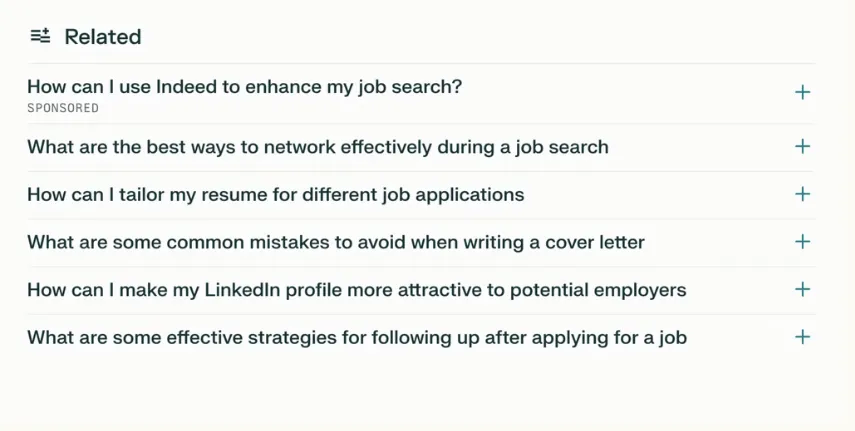
The screenshot-worthy risk is not hard to imagine: a user asks an answer engine about a brand’s refund policy, safety record, pricing, or product compatibility. The generated answer gets a fact wrong. A sponsored prompt, product ad, or related paid module appears nearby. The brand now has an explanation problem even if the media team never approved the generated sentence.
There is also a bidding wrinkle. Raconteur, citing Gartner TrustOps research, reported an estimate that roughly 2% of brand information generated by AI may be false and described a loop in which a hallucination-driven traffic spike can cause automated bidding systems to bid on related ad space, effectively making a brand fund attention around a negative or false narrative.[6] That sourcing should be kept in view: this is Gartner via Raconteur, not an independently reproduced open benchmark. Still, the mechanism is familiar to anyone who has watched automated systems chase fresh demand without understanding why demand appeared.
This is where paid-search and paid-social reflexes can mislead the team. The buyer can add negatives, check search terms where the platform still exposes them, exclude placements where controls exist, and pause campaigns when screenshots arrive. But those actions do not become pre-impression verification of the generated answer itself. They are containment and documentation tools.
What to log when testing AI answer placements
If the media plan includes answer-engine placements or sponsored prompts inside AI answer products, the test plan should look more like an experimental surface than a normal brand-safe placement package. Before launch, define the queries, topics, competitor terms, and brand terms that deserve manual checks. During the test, capture the evidence a platform report may not preserve.
- Screenshots showing the full answer environment, the paid unit, timestamp, device, geography where relevant, and visible disclosure.
- The exact query or prompt that produced the answer.
- Campaign, ad group, creative, URL, and tracker identifiers tied to the placement.
- Whether the answer included brand claims, competitor claims, pricing, medical, legal, financial, safety, or policy language.
- Escalation notes: platform contact, ticket ID, requested remedy, response, and pause decision if any.
This is not as satisfying as a clean exclusion list. It is more honest. Until these environments offer dependable controls for the generated context around the ad, the buyer’s job is to limit the test, preserve evidence, and keep the spend small enough that a bad answer does not become a large invoice.
Where the budget owner should spend attention
The highest-return work is still on the creative and supply side. That is where a team can compare claims to substantiation, use platform controls where they exist, restrict asset generation, document approvals, and pause or edit specific creative. It is also where enforcement exposure is clearest when generated language crosses into fake reviews or deceptive claims.
Answer-engine adjacency deserves a separate line in the media plan, not a false promise in the brand-safety slide. Mark it as experimental exposure. Add tracker links and campaign-record links from the account’s own change log. Keep query logs, screenshots, spend limits, and escalation notes with the campaign record. If a client or legal team asks what could be verified before paid spend amplified it, the answer should be clear: generated creative was verified; answer-engine context was tested, logged, and bounded.
References
- AI Adoption Is Surging in Advertising, but is the Industry Prepared for Responsible AI? — IAB, Aug 2025
- FTC Announces Crackdown on Deceptive AI Claims and Schemes — Federal Trade Commission, Sep 25, 2024
- Google AI Max expands globally — Google, Sep 10, 2025
- Study finds only about half of AI-generated ads are labeled, unknowingly driving consumer behavior — University of Kansas, Feb 2023
- The AI Chat Ad Frontier: What LLMs Change About Brand Safety And Control — AdExchanger, May 2026
- How to respond when AI-generated hallucinations smear your brand — Raconteur, Jul 2026
This is a record of what happened and what was tested, not legal advice. Compliance determinations require qualified counsel.