
How Progressive treats Wake Forest football as a media buy
Progressive's 13-school field-logo program is being framed as a scaled media buy with no disclosed pricing and no published measurement. The Wake Forest node in full: assets, third-party cost bands, debut timing, and what to watch after the August 29 kickoff before any verdict is assigned.
- Platform
- College football field inventory via Learfield
- Campaign type
- Field-logo sponsorship as media buy
- Spend range
- Market estimate $0M–$15M; deal undisclosed
- Timeframe
- 0-08-29 debut; multiyear program
- Exposure
- Unverified
- Verdict
- mixed
- Industry vertical
- Insurance
- Last reviewed
- 0-08-26
Record before the Wake Forest kickoff
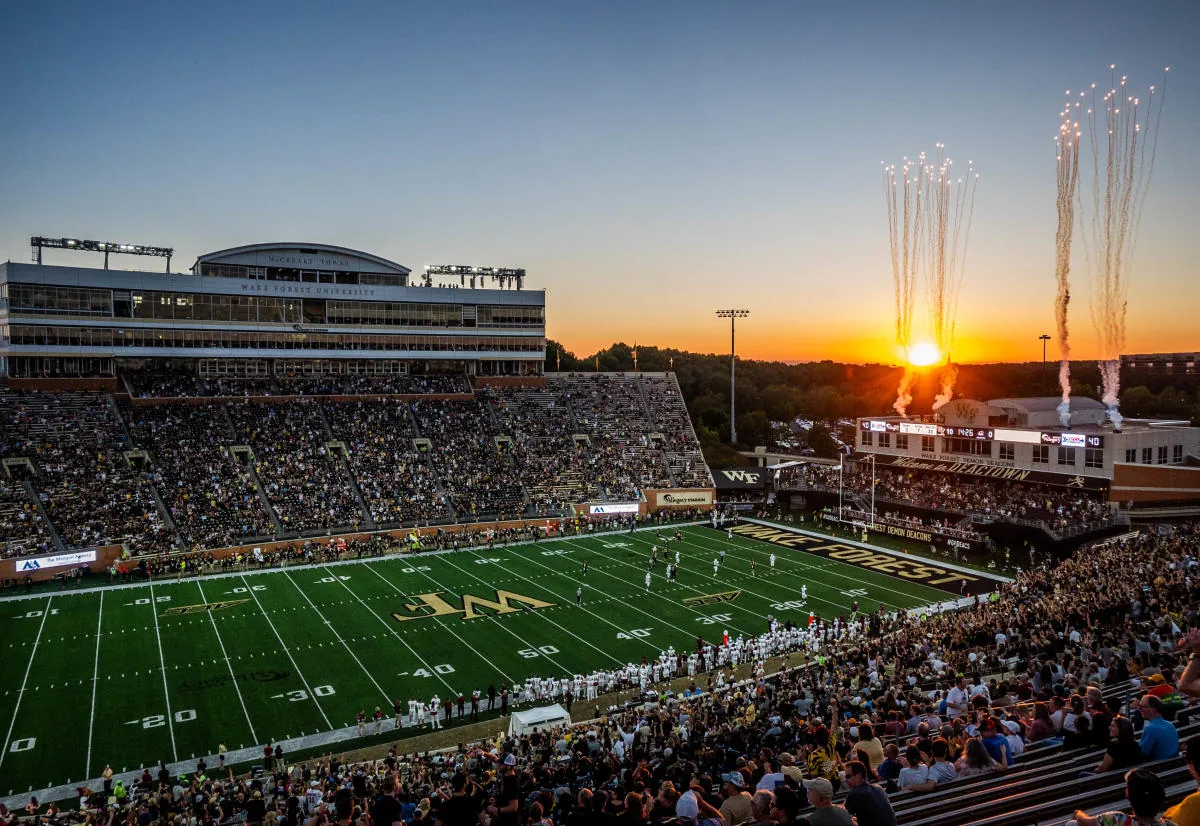
Wake Forest is the cleanest place to start because the placement is no longer abstract. Progressive’s Wake Forest football sponsorship ads were announced on Aug. 20, 2026, with the program set to appear as Wake Forest opens the season against Akron on Aug. 29 at Allegacy Federal Credit Union Stadium.[1] The Wake Forest deal is one node in a 13-school, Learfield-coordinated college football field-logo program that Progressive and its partners are rolling out for the 2026 season.[2][3][4]
| Field | Record |
|---|---|
| Platform | College football field inventory via Learfield, including Wake Forest |
| Spend | Undisclosed |
| Timeframe | Multiyear program, debuting with the 2026 season |
| Wake Forest debut context | Wake Forest vs. Akron, Aug. 29, 2026 |
| Primary metric implied by the buy | Exposure |
| Metric value | Unverified |
| Verdict | TBD |
That record is more useful than the usual sponsorship announcement language. A field mark, videoboard feature, LED unit, and social integration can all create attention. The harder question is whether the buyer can later reconcile that attention against media channels that at least attempt to return cost, delivery, reach, frequency, and outcome reporting. Right now, the Progressive program has a strong media-buy shape and a weak public measurement file.
What Wake Forest is actually putting into the package
At Wake Forest, the inventory is not just a painted logo. Wake Forest Athletics said the partnership includes on-field signage, in-game videoboard features, in-venue LED signage, digital integrations, and social integrations.[1] That matters because the unit being sold is not a single field asset; it is a game-day visibility bundle wrapped around the football environment.
- On-field signage: the most visible asset, especially if it falls into repeated broadcast camera angles.
- In-game videoboard features: controlled in-venue exposure that can be scheduled but still needs reporting on frequency and duration.
- In-venue LED signage: repeatable stadium media, useful for reach inside the venue but difficult to compare with paid digital delivery unless impressions are modeled.
- Digital and social integrations: the part of the bundle most likely to generate conventional delivery metrics, though those metrics would not validate the field exposure by themselves.
Wake Forest also described the Progressive agreement as the most substantial non-naming-rights sponsorship in the school’s athletic history.[1] That is a meaningful institutional claim, but it should stay attributed. It does not tell us the price, term value, guaranteed media delivery, or whether Progressive will receive a post-campaign report that would survive comparison with TV, streaming, paid social, search, or programmatic video.
The useful question, then, is not simply whether the logo exists. It is what Progressive gets at Wake Forest, how often those assets appear during live play and game-day programming, and whether anyone publishes enough evidence to treat the exposure as bought media rather than as a prestige sponsorship with a media vocabulary.
The 13-school layer is what makes this more than a local sponsorship
Progressive’s national program includes Boise State, Colorado, Georgia, Iowa, Kansas State, Ole Miss, Oregon, Purdue, SMU, Syracuse, Texas Tech, USC, and Wake Forest.[2] Learfield positioned the rollout as a single expansion of Progressive’s game-day presence across college football, while Sports Business Journal framed it in media-buy terms rather than as a conventional one-school sponsorship story.[3][4]
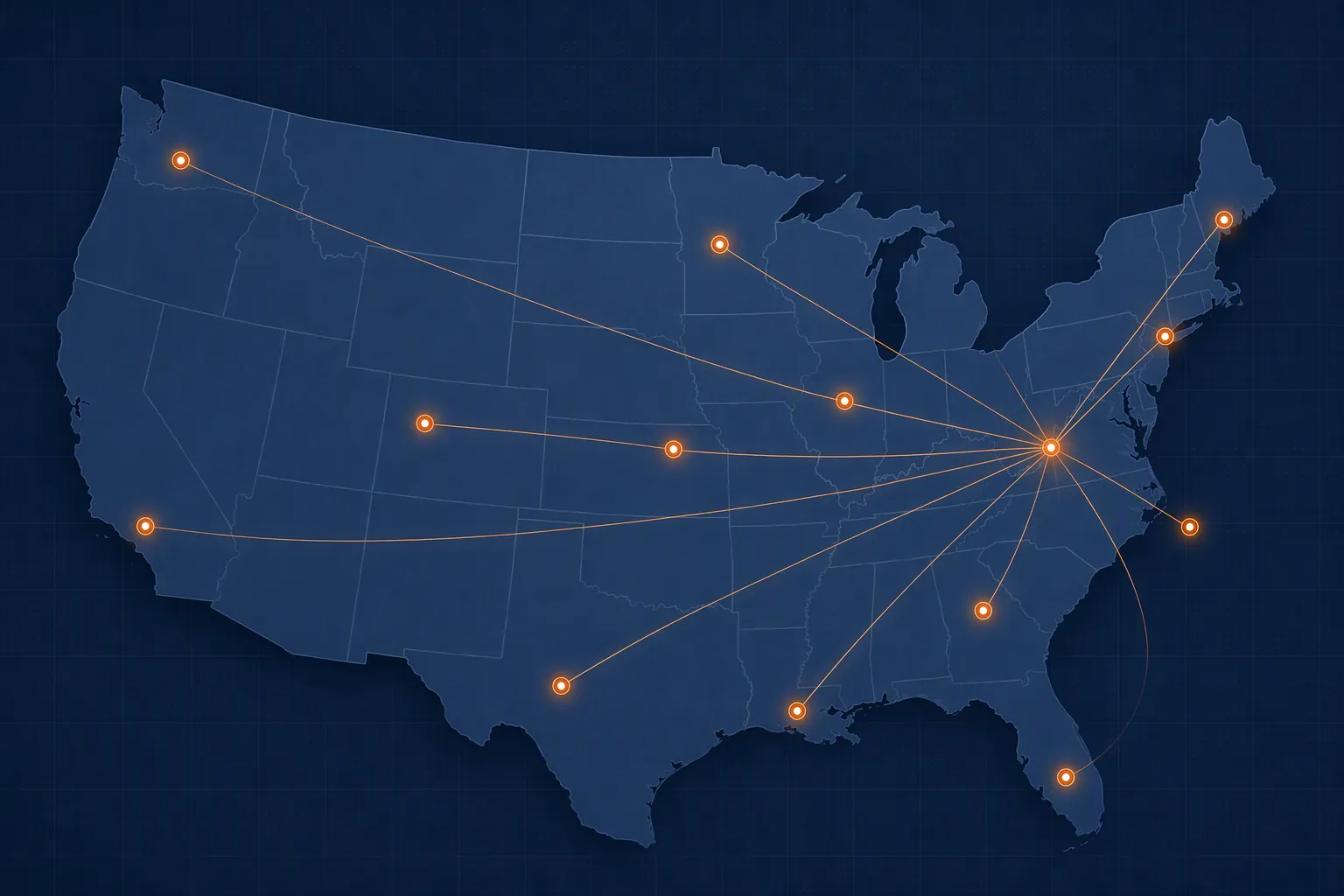
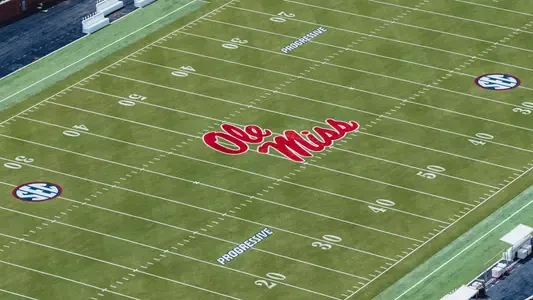
That distinction is deserved. Buying one school can be explained as alumni affinity, regional presence, executive preference, or a relationship asset. Buying 13 fields through a national rights network starts to look like standardized reach packaging. Sports Business Journal reported that the structure is coterminous and multiyear, with logo placement varying by school from the sideline to the 50- and 25-yard lines.[3]
The same report quoted Learfield EVP Shawn Hegan saying the school selection was analytics-driven and that a brand scaling “one solution” across 13 fields was “one of a kind.”[3] That is the line that turns this from a nice sponsorship deck into something a media team should have to defend. If the logic is scale, consistency, and analytics-driven selection, the follow-up has to be delivery, not just visibility.
The price context is useful, but it is not the deal price
No party has disclosed financial terms for the Progressive program. That should be the first constraint on any valuation. Insurance Journal, citing Bloomberg and Sports Business Journal context, described a roughly $3.5 million annual going rate for some on-field college football logo placements, with some schools reaching as high as $15 million.[5] Those figures help frame the market. They do not price Wake Forest, and they do not price the 13-school Progressive package.
The temptation is obvious: take a reported market range, multiply it by 13, and call the result a national deal estimate. That would be tidy and probably wrong. The schools are not interchangeable media units. A midfield placement is not the same as a sideline mark. A national broadcast window is not the same as a smaller distribution window. A bundled sponsorship with videoboard, LED, digital, and social assets is not reducible to a paint-on-turf CPM.
The more defensible reading is narrower: third-party market estimates suggest this category can command meaningful annual fees, especially at high-profile programs, but the Progressive-Wake Forest price and the total Progressive-Learfield package value remain undisclosed. That puts the deal in the same measurement pattern as other sponsorship records where the public asset list is far cleaner than the outcome file, including the site’s prior notes on sponsorship ROI measurement gaps and undisclosed local-market sponsorship terms.
Why the field logo can be treated like media
A college football field logo is not a banner ad, but the media-buy argument is not silly. The asset appears inside the game environment, can be visible during live play, can repeat across possessions, can travel through broadcast and highlight clips, and can be bundled with in-stadium and owned-channel inventory. If the same advertiser buys the format across 13 programs, the placement starts to resemble distributed visual reach.
The strongest version of the buy is elegant. Progressive does not need to negotiate 13 disconnected brand moments and hope they add up. It can use Learfield’s school relationships to secure repeated in-game inventory across different conferences, time slots, fan bases, and broadcast contexts. For an insurance brand that already depends on frequency and mass-market salience, football field exposure is at least strategically coherent.
But strategy fit is not measurement. A media buyer eventually has to answer basic questions: what was bought, what delivered, how much did it cost, who saw it, how often did they see it, and what moved afterward? The public record currently answers the first question only partially and the rest barely at all.
Where the audit breaks
The missing pieces are not exotic. They are the normal files a buyer would want before grading a channel.
- Price: no disclosed Wake Forest fee, per-school fee, total package value, or asset-level allocation.
- Exposure model: no published estimate of broadcast impressions, in-stadium impressions, highlight exposure, or social amplification tied specifically to the field inventory.
- Duration: no public exposure-minutes model showing how long the logo is expected to be visible during game action and related coverage.
- Placement normalization: no public adjustment for midfield versus sideline placement, camera angle, broadcast partner, game time, opponent, or expected audience.
- Outcome plan: no published brand-lift study, search-lift plan, quote-start analysis, aided-recall work, or incrementality test.
- Contract visibility: no public contract package that would let outsiders compare promised assets with delivered assets.
Some of this may exist privately. It would be surprising if Progressive and Learfield did not have internal exposure assumptions. The problem is that the public announcement record does not show them. That makes the program easy to admire as packaging and hard to grade as media.
This is where sponsorship inventory consistently becomes uncomfortable for performance teams. A paid social plan can still overstate incrementality. A search campaign can still misattribute demand. A TV plan can still lean on modeled reach. None of those channels are perfectly clean. They are simply accustomed to producing a delivery file. The Progressive field-logo program has not yet produced one.
For a stricter comparison, the same questions that appear in a verification scorecard apply here: what is claimed, what is independently observable, what is disclosed by the vendor, and what remains unverifiable? The Wake Forest node is concrete enough to track. It is not yet concrete enough to score.
What to watch after Aug. 29
The Wake Forest-Akron opener gives the first dated checkpoint. The useful evidence after that weekend will not be another quote about partnership or fan experience. It will be observable delivery.
- Aug. 29 broadcast visibility: where the Progressive mark sits on the field, how often it appears in live game shots, and whether the camera language gives it meaningful dwell time.
- Wake Forest game-day execution: whether the on-field signage is accompanied by the promised videoboard, LED, digital, and social integrations.
- Postgame or post-weekend reporting: whether Wake Forest, Progressive, Learfield, or a third party publishes any estimate of impressions, exposure minutes, media value, or engagement tied to the placement.
- Cross-school consistency: whether the other 12 schools produce comparable visual units or whether placement differences make the package harder to normalize.
- Outcome evidence later in the season: whether Progressive connects the program to brand lift, quote starts, regional search behavior, recall, or any other business-facing measure.
Progressive’s 13-school field-logo program deserves to be analyzed as a scaled media buy. The Wake Forest piece has enough defined inventory to make that analysis possible: field signage, videoboard, LED, digital, social, a debut date, and a named game context. What it does not have yet is the reporting layer that would let anyone outside the deal audit the spend.
Until the Aug. 29 debut weekend produces observable exposure and someone publishes measurement beyond the asset list, the only honest verdict is TBD.
References
- Wake Forest Athletics Partners with Progressive Insurance to Enhance Football Gameday Experience — Wake Forest Athletics, Aug. 20, 2026
- Progressive Insurance® Expands Game-Day Presence Across 13 of College Football’s Biggest Stages — Progressive Newsroom, Aug. 18, 2026
- Progressive to add field logos across 13 college football programs — Sports Business Journal, Aug. 18, 2026
- Progressive Insurance Expands Game-Day Presence Across 13 of College Football’s Biggest Stages — Learfield, Aug. 18, 2026
- Progressive to Add Field Logos Across 13 College Football Programs — Insurance Journal, Aug. 20, 2026
Built on this evidence
No Bidding tactic or Creative record currently cites this case file. Compare it against other results in Benchmarks.
Related benchmark reading
Report a corroborating or contradicting result
Seeing something different in your own account? Feed the data-integrity loop instead of leaving an open comment.