
DeepSeek V4 API pricing vs OpenAI for ad workloads
A dated, workload-by-workload cost comparison of DeepSeek V4 vs OpenAI APIs for the jobs media buyers actually run: ad copy variants, localization, and agentic account analysis. Based on the Aug 1, 2026 rate cards, it shows where the 10-35x headline gap holds, where OpenAI's July 30 cuts erase it, and how to compute a defensible cost per acceptable variant.
- Platform
- DeepSeek API0 OpenAI API
- Campaign type
- Ad copy generation
- Spend range
- $0-$1,050/month API spend
- Timeframe
- 0-08-01
- Cost per variant
- V0-Flash: $0.0098 per 100 variants
- Verdict
- mixed
- Last reviewed
- 0-08-01
Verified Aug. 1, 2026: one price gap, several advertiser decisions
The honest answer starts with the date. As of Aug. 1, 2026, DeepSeek V4-Flash lists at $0.14 per 1M input tokens and $0.28 per 1M output tokens; V4-Pro lists at $0.435 input and $0.87 output, with the Pro level described as the permanent post-May 31, 2026 rate after a 75% cut. OpenAI’s live pricing page still showed GPT-5.6 Sol at $5 input and $30 output, while InfoWorld reported July 30 cuts that move GPT-5.6 Terra to $2/$12 and Luna to $0.20/$1.20. The OpenAI discrepancy matters: if a finance reviewer pulls the live card before it updates, the same model family can look five times more expensive than the reported post-cut rate for Luna. Re-check the live OpenAI card before purchase approval, and do not bury the date in the appendix. [1][2][3][4]

| API model | Input price per 1M tokens | Output price per 1M tokens | What advertisers should notice |
|---|---|---|---|
| DeepSeek V4-Flash | $0.14 | $0.28 | The cheapest listed option in this comparison for short copy and bulk generation. [1] |
| DeepSeek V4-Pro | $0.435 | $0.87 | Still far below OpenAI Sol; no longer automatically cheaper than post-cut Luna on every short-copy mix. [1][2] |
| OpenAI GPT-5.6 Luna | $0.20 reported post-cut; $1 shown on OpenAI page at crawl | $1.20 reported post-cut; $6 shown on OpenAI page at crawl | The July 30 reported cut puts Luna close enough to V4-Flash that copy-variant cost stops being the main issue. [3][4] |
| OpenAI GPT-5.6 Terra | $2 reported post-cut; $2.50 shown on OpenAI page at crawl | $12 reported post-cut; $15 shown on OpenAI page at crawl | Still much pricier than DeepSeek for output-heavy jobs, but less dramatic than pre-cut Luna/Terra comparisons. [3][4] |
| OpenAI GPT-5.6 Sol | $5 | $30 | This is where the headline DeepSeek multiple looks enormous, especially on output-heavy work. [3] |
The headline “10–35x cheaper” claim is directionally real when DeepSeek is compared with OpenAI’s flagship Sol tier. It is a poor shortcut for a media buyer choosing where to route 80 headline variants. Once Luna’s reported July 30 rate is in the comparison, the decision gets less dramatic and more operational: how many tokens are in the job, how much output is being produced, how much input can be cached, whether the job can wait for batch processing, and whether the model’s output survives review.
Short-form ad variants: the per-token gap is emotionally large and operationally tiny
Meta’s own guidance keeps the creative unit small: roughly 125 characters for primary text and 40 characters for headlines. In API terms, a single Meta-style copy variant commonly lands in the 50–150 output-token range, before any extra explanation, scoring, or formatting requested from the model. [5]
Here is the rate-card math for an illustrative short-copy call: 500 input tokens for the brief, product facts, guardrails, and examples; 100 output tokens for one variant. This is not a measured ad-quality benchmark. It is just the kind of small text job that makes per-million-token pricing look scarier than the invoice line.
| Model | Cost for 1 illustrative variant | Cost for 100 variants | Multiple vs V4-Flash on this token mix |
|---|---|---|---|
| DeepSeek V4-Flash | $0.000098 | $0.0098 | 1.0x |
| DeepSeek V4-Pro | $0.0003045 | $0.03045 | 3.1x |
| OpenAI GPT-5.6 Luna, reported post-cut | $0.00022 | $0.022 | 2.2x |
| OpenAI GPT-5.6 Terra, reported post-cut | $0.0022 | $0.22 | 22.4x |
| OpenAI GPT-5.6 Sol | $0.0055 | $0.55 | 56.1x |
That Sol multiple looks massive. The money still does not. On this tiny short-copy job, moving 100 variants from Sol to V4-Flash saves about 54 cents in pure text-generation cost. Moving from reported post-cut Luna to V4-Flash saves about 1.2 cents per 100 variants.
That is why a cheap model can still lose the workflow. If V4-Flash produces more variants that legal, brand, or the media buyer rejects, the token discount gets eaten by review time. The metric to defend is not “cost per generated variant.” It is cost per acceptable variant, including the human pass that deletes near-duplicates, unsupported claims, off-brand hooks, and copy that simply will not fit the placement.
The n8n workflow example of generating 100 ad variations from one image lists roughly $4.60 per 100 variations. That is not a DeepSeek-versus-OpenAI text-only benchmark; it includes a broader automation chain. It is still useful as a reality check because the full creative pipeline can cost dollars while the LLM text portion costs cents or fractions of cents. [6]
If your current use case is “give me 30 new primary-text options and 50 headlines,” the DeepSeek price gap is real but usually not the budget lever to fight over first. The review queue, brief discipline, brand constraints, and the model’s first-pass accept rate will usually move more money than the token line.
Localization at scale is where output price starts to matter
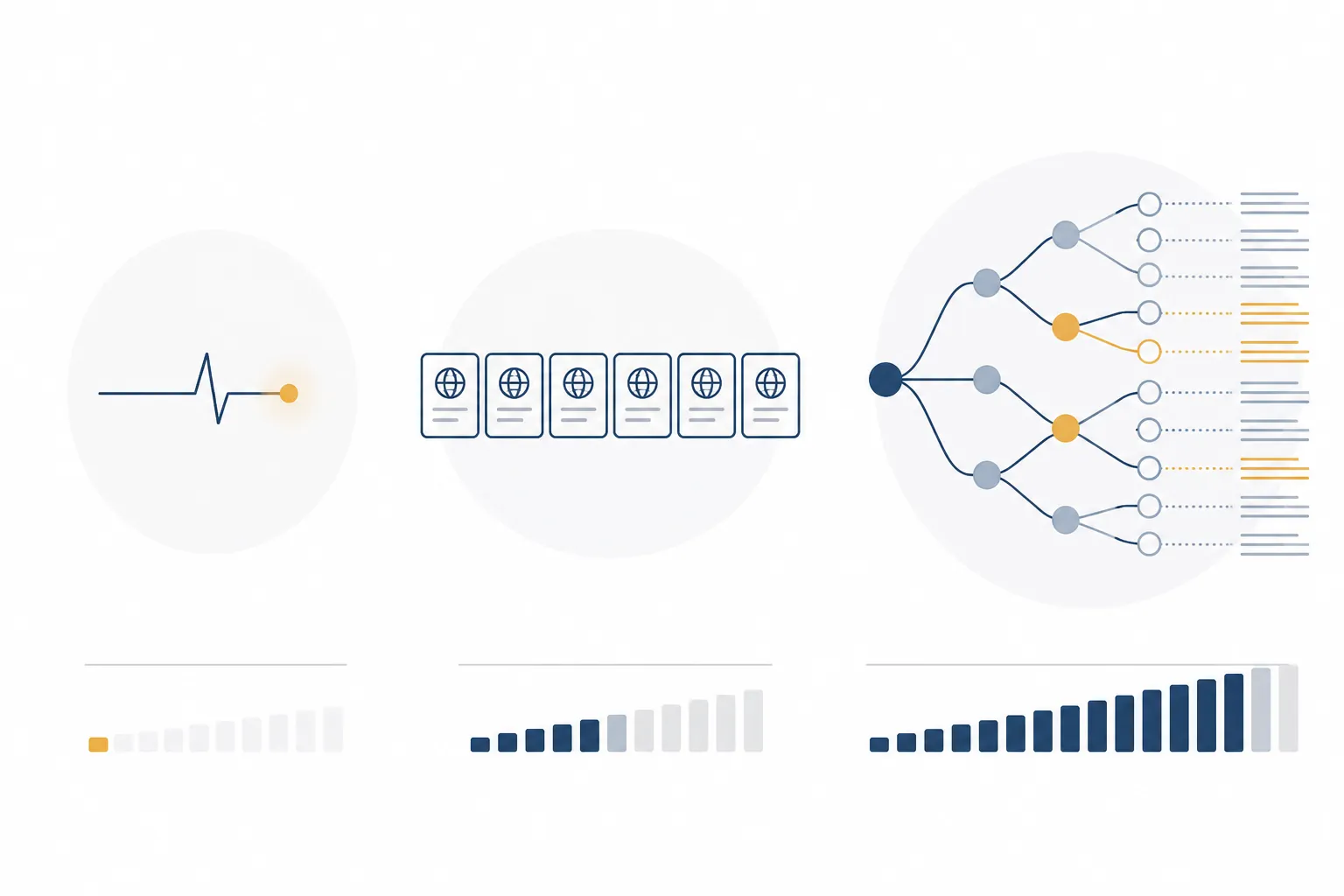
Localization changes the shape of the job. You are no longer asking for one short English variant; you may be asking the model to adapt claims, tone, currency phrasing, exclusions, and character length across many markets. The input template may stay stable, but the output grows. That is exactly where the output-token column stops being trivia.
| Illustrative monthly localization shape | V4-Flash | V4-Pro | GPT-5.6 Luna, reported post-cut | GPT-5.6 Terra, reported post-cut | GPT-5.6 Sol |
|---|---|---|---|---|---|
| 1M input + 1M output tokens | $0.42 | $1.305 | $1.40 | $14 | $35 |
| 1M input + 5M output tokens | $1.54 | $4.785 | $6.20 | $62 | $155 |
The interesting comparison is not Sol versus V4-Flash; that one is obvious. The useful comparison is V4-Pro versus reported post-cut Luna. At a balanced 1M-in/1M-out workload, they are close: $1.305 for V4-Pro versus $1.40 for Luna. At a 1M-in/5M-out workload, the gap opens: $4.785 for V4-Pro versus $6.20 for Luna. That is not a 35x routing decision. It is a quality-and-throughput decision with a smaller cost nudge.
Terra and Sol are different. If your localization workflow is output-heavy and you do not need a flagship OpenAI model for quality, their output prices can turn a small automation into a visible monthly line. In that case, DeepSeek’s lower output price is no longer just a nice chart; it can decide which jobs you run freely and which jobs get throttled.
There is still no source here proving that DeepSeek or OpenAI will produce better localized ad copy. Treat the table as a cost boundary. The performance question still has to be tested on your own briefs, markets, review criteria, and final paid-media outcomes.
The Solvimon workload shows how the flagship comparison can mislead
Solvimon’s standardized example uses 1,000 requests per day, each with 1,000 input tokens and 1,000 output tokens. On that shape, it estimates DeepSeek V4-Flash at about $12.60 per month versus GPT-5.6 Sol at about $1,050 per month. That is the clean version of the “huge gap” story. Add reported post-cut Luna, though, and the same workload lands around $42 per month. The comparison moves from “DeepSeek is about 80x cheaper than Sol” to “DeepSeek is roughly one-third of Luna on this balanced workload.” [7]
That difference still matters if the job runs every day and scales across accounts. It just does not support lazy routing rules like “always send ad creative to DeepSeek because it is 35x cheaper.” The multiple depends on which OpenAI model you would actually use after the July 30 cuts.
Agentic account analysis: long context and repeated input change the bill
Account-analysis agents are not just copy generators with a longer request. They may ingest campaign exports, naming conventions, landing-page notes, creative history, offer rules, and prior test results before producing a recommendation. The output can also be longer: diagnosis, priority list, rewritten ads, test matrix, and caveats.
| Illustrative analysis run | V4-Flash | V4-Pro | GPT-5.6 Luna, reported post-cut | GPT-5.6 Sol at standard rate | GPT-5.6 Sol long-context meter |
|---|---|---|---|---|---|
| 200K input + 5K output tokens | $0.0294 | $0.09135 | $0.046 | $1.15 | Not applied in this row |
| 500K input + 10K output tokens | $0.0728 | $0.2262 | $0.112 | Not the right Sol meter if above the long-context threshold | $5.45 |
OpenAI’s Sol long-context pricing is listed at $10 per 1M input tokens and $45 per 1M output tokens above 200K context, while DeepSeek’s V4 card is framed around a flat 1M-context rate. That is the kind of meter difference that can matter more than the base short-copy comparison. A copywriter asking for ten hooks is not the same buyer as an agent reading account history all afternoon. [1][3]
If the analysis job can run on reported post-cut Luna within the context and quality envelope you need, Luna can be very competitive. If it has to move to Sol because the input is huge or because the team trusts Sol’s analysis more, DeepSeek’s flat long-context economics become much more interesting.
List price is only the first pass
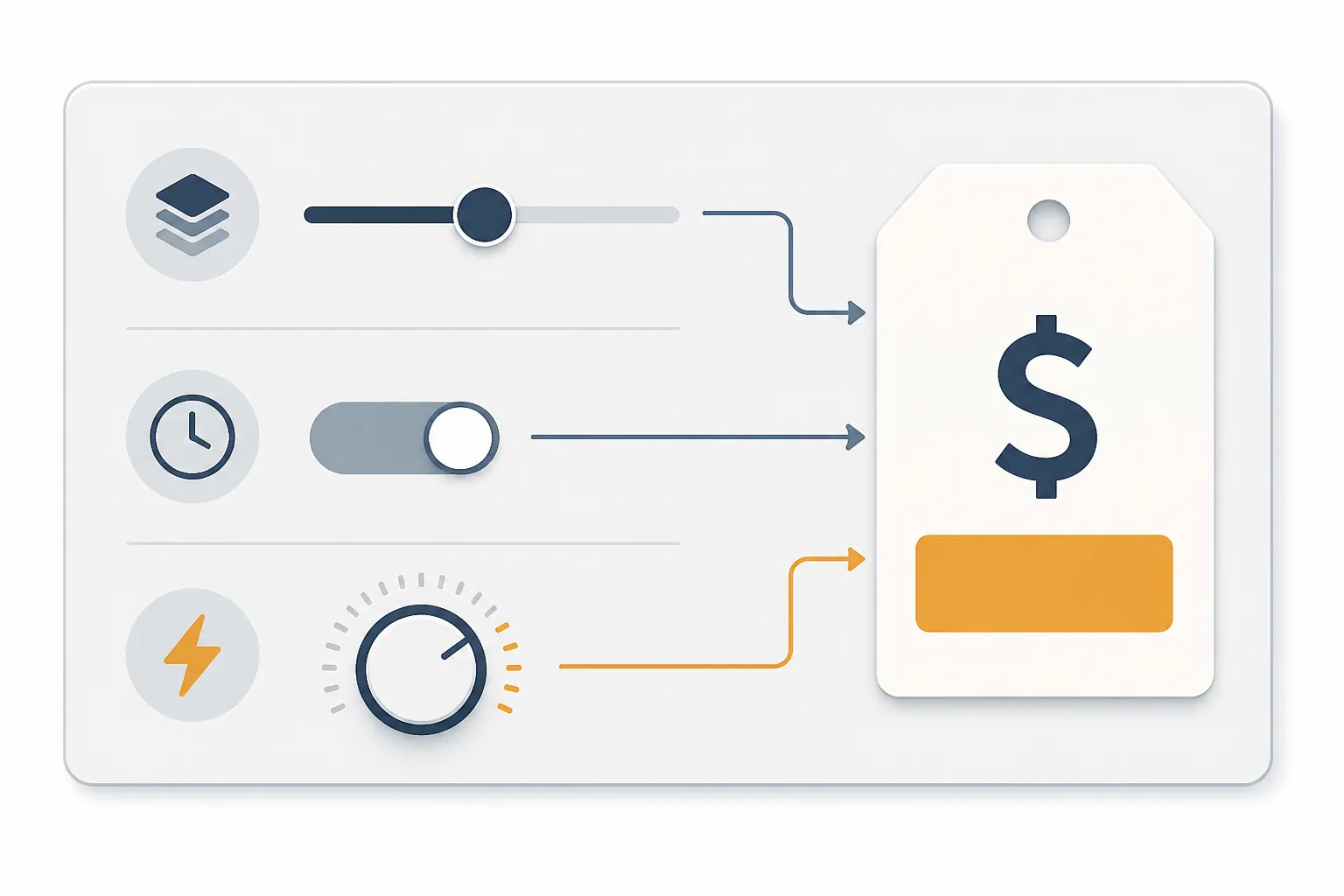
The simple tables above use list prices. Production pipelines rarely pay exactly the simple-table price for every job. Three levers can move the effective bill enough to change the routing rule.
Prefix caching favors repeated briefs
DeepSeek’s automatic prefix caching prices cached input far below cache-miss input: $0.0028 per 1M cached input tokens for V4-Flash and $0.003625 for V4-Pro. No opt-in is required. If the first 80% of your request is the same brand rules, offer details, compliance language, and formatting instruction, that repeated prefix can make DeepSeek cheaper than the already-low list-price table suggests. [1]
Batch pricing can narrow OpenAI’s gap
OpenAI’s Batch API offers a flat 50% discount. That matters for non-urgent creative production: overnight localization, weekly variant refreshes, account-summary drafts, or backlog rewrites. A job that does not need a live response should not be priced like an interactive chat call. [3]
DeepSeek’s peak surcharge is announced, not active in the cited window
DeepSeek announced a 2x peak-hour API surcharge on June 30, 2026, but reporting from the July 25–31 window said it was not yet active. That status needs a same-day re-check before a buyer locks in a routing rule. If the surcharge switches on during the hours your pipeline runs, some of the DeepSeek advantage disappears unless the job can be scheduled off-peak. [8]
Concurrency decides whether bulk jobs finish cleanly
DeepSeek’s documented limits are concurrency-based: 2,500 concurrent requests for V4-Flash and 500 for V4-Pro, with no listed RPM or TPM cap in the cited pricing context. For a bulk creative pipeline, that is not a footnote. It affects whether 40,000 variations finish before the team starts review or whether the queue backs up and creates a different kind of cost. [1]
Benchmarks are a quality gate, not an ad-performance answer
The public benchmark context is useful, but only up to a point. DataCamp reports GPT-5.5 leading many shared benchmarks while V4-Pro does well on long-context retrieval. VentureBeat’s launch framing emphasizes DeepSeek V4 as near state-of-the-art at about one-sixth the cost of Opus 4.7 and GPT-5.5. Those points can help decide what to test first; they do not prove either model writes better Meta ads, clears review faster, or improves CPA. [9][10]
For advertiser stacks, there is also a procurement and policy layer when using a Chinese model provider. That belongs in the routing checklist, not in a token-cost table. If that constraint is live for your business, start with the site’s Chinese AI ban tracker and the related ad-tech benchmark record. For the broader open-weight adoption context, see the open-weight ad creative benchmark.
A defensible routing rule for the next budget review
Use DeepSeek V4-Flash as the default cost-pressure test for high-volume, low-risk generation where review catches the bad variants and the instruction prefix repeats. It is hard to beat on list price, and prefix caching improves the case when brand instructions stay stable.
Keep reported post-cut GPT-5.6 Luna in the test set for short-form copy. On a small 500-in/100-out variant, Luna is close enough to V4-Flash that output quality, brand fit, and reviewer time can dominate the bill. If Luna gives the team cleaner first drafts, the few cents saved per hundred variants will not justify extra cleanup.
Be more aggressive with DeepSeek routing on output-heavy localization and long-context account analysis, especially when the OpenAI alternative is Terra or Sol rather than Luna. That is where the rate card starts to create real monthly separation.
Do not turn this into a self-hosting decision unless your volume and engineering constraints justify it. The build-versus-buy API question is covered separately in the GPT API versus dedicated ad creative tools comparison. If you are evaluating open-weight or self-hosted savings, use the open-weight AI ad creative cost analysis instead of mixing that argument into this API-vs-API comparison.
Run the decision as a two-week parallel evaluation. Send the same briefs, same product inputs, and same placement constraints through the candidate models. Track generated variants, accepted variants, edits required, rejected-claim types, review time, total API cost, cache or batch usage, and final cost per acceptable variant. Re-check on the day you start: OpenAI’s live Luna/Terra card, DeepSeek’s peak-surcharge status, and any context-meter changes.
References
- DeepSeek API Docs Pricing, DeepSeek.
- DeepSeek’s steep V4-Pro price cut escalates AI pricing war, InfoWorld.
- API Pricing, OpenAI.
- OpenAI drops GPT-5.6 Luna and Terra API prices by up to 80%, InfoWorld.
- Meta Business Help Center, Meta.
- Generate 100 Ad Variations from one image with Fal.ai Nano Banana and GPT-5, n8n.
- OpenAI vs DeepSeek, Solvimon.
- DeepSeek peak-hour API surcharge V4 price war, The Next Web.
- DeepSeek V4 vs GPT-5.5, DataCamp.
- DeepSeek V4 arrives with near state-of-the-art intelligence at 1/6th the cost of Opus 4.7, GPT-5.5, VentureBeat.
Built on this evidence
No Bidding tactic or Creative record currently cites this case file. Compare it against other results in Benchmarks.
Related benchmark reading
Report a corroborating or contradicting result
Seeing something different in your own account? Feed the data-integrity loop instead of leaving an open comment.