
Is the Roborock-Real Madrid sponsorship good marketing?
Sponsorships are usually reported in reach, not outcomes, so ROI claims stay unverifiable against performance budgets. A three-layer framework — reach, engagement, business impact — plus a reusable checklist pressure-tests any deal, with the Roborock–Real Madrid partnership as the worked case: strong inputs, zero published outcomes.
- Platform
- Real Madrid
- Creative type
- brand sponsorship
- Failure type
- non-measurement
- Last reviewed
- 0-08-04
If the Roborock Real Madrid sponsorship is sitting in the same budget meeting as Performance Max, Advantage+, retail media, or another round of creator testing, the fair answer as of August 4, 2026 is this: the deal has strong inputs, credible activation assets, and no published deal-level business outcomes. That means unproven. Not proven, not failed.
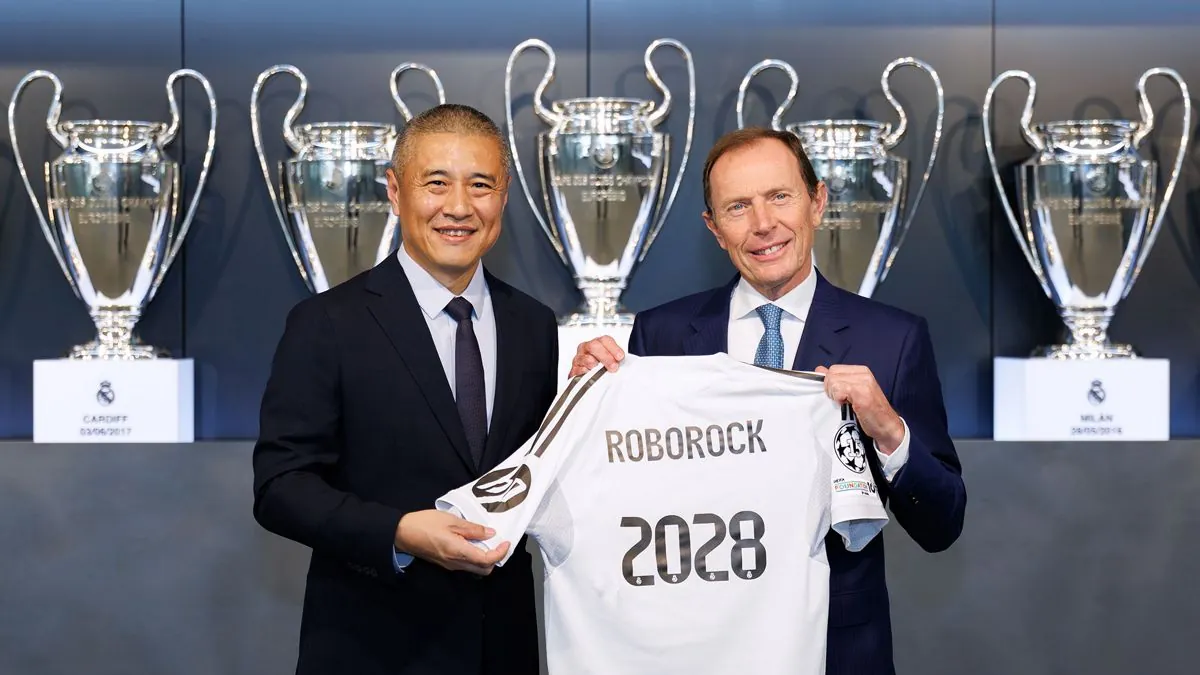
The compact fact file is already covered in the companion Roborock–Real Madrid sponsorship piece: announced January 2, 2026, undisclosed fee, global strategic partnership, cleaning-vacuum category rights, and a multi-year term running through 2028. Real Madrid and Roborock both positioned the agreement around innovation, premium brand fit, and access to the club’s global audience.[1][2] Seven months later, the public record still shows assets and activity, not sales lift.
That distinction matters because sponsorship is not automatically soft money. Nielsen reported an average purchase-intent lift of about 10% across 100 sponsorships in seven markets during 2020–21.[3] Infront cites Kearney research putting average sponsorship ROI in a 3:1 to 6:1 range, and also cites World Economic Forum research saying 81% of consumers view sports sponsorship as credible brand communication.[4] Those are real reasons not to dismiss the channel.
They are not, however, Roborock’s results. A cross-industry average cannot be booked as incremental revenue for one vacuum brand in one football partnership. VISUA, citing McKinsey, gives the useful tension: brand strength may contribute 60% to 80% of overall sales, while roughly one third to one half of U.S. companies have no system to measure sponsorship ROI.[5] That is the operating problem. Brand value may be real, while the proof system is missing.
The evidence matrix: reach, engagement, business impact
For a media buyer, the sponsorship should be read in three layers. Each layer can be useful. Only the last one can carry an ROI claim.
| Layer | What counts as evidence | Roborock–Real Madrid public record | What it can and cannot prove |
|---|---|---|---|
| Reach | Rights package, audience access, owned-channel inventory, social distribution, broadcast-adjacent visibility | Real Madrid and Roborock claim access to a global fan base; Roborock’s U.S. partnership page logs campaign assets and product tie-ins; public materials cite Real Madrid’s very large social audience | Shows scale of opportunity. Does not prove attention quality, duplication, incremental reach, or sales. |
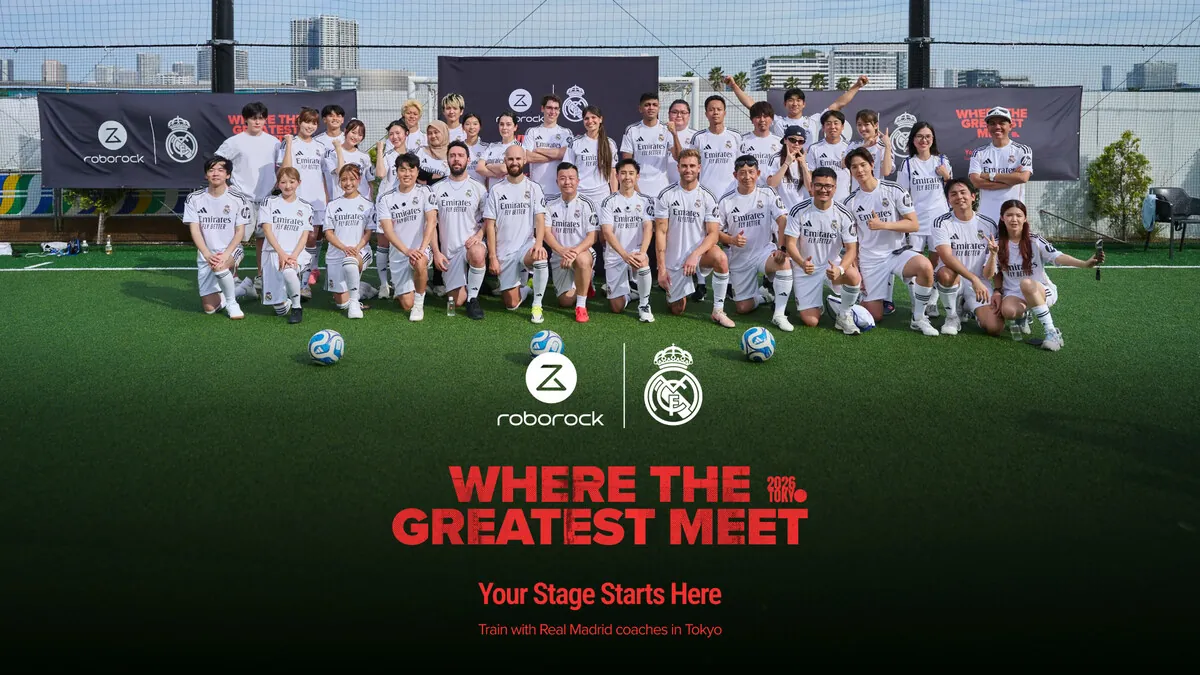
| Engagement | Events, demos, clinics, product trials, partner-market participation, signups, retailer meetings, qualified traffic | Tokyo “Where the Greatest Meet” activation on May 18–19, 2026 showed six products, drew about 200 attendees, and included a football clinic with more than 40 participants from six APAC markets | Shows that the sponsorship moved into countable activation. Does not prove incremental purchase or profitable demand. |
| Business impact | Incremental sales, category share, retailer conversion, margin effect, acquisition-cost movement, brand-lift study tied to exposed vs. control audiences | No published deal-level outcome study, sales lift, category-share movement, retailer effect, or acquisition-cost change has been released | This is the missing layer. Without it, the public verdict stays inputs-only. |
Reach is a serious asset, but it is still an input
The reach case is not thin. Real Madrid is one of the few sports properties that can credibly offer global relevance, premium context, and recurring content inventory. The club described the Roborock agreement as a strategic global alliance, while Roborock framed it as a brand-growth move tied to innovation and excellence.[1][2]
Roborock’s official U.S. partnership page also shows why a brand team would want the asset. It is not just a logo-on-a-banner arrangement. The page packages the partnership through product storytelling, campaign visuals, event updates, and Real Madrid association across multiple touchpoints.[6] That is usable inventory. It can support local launches, distributor decks, retail confidence, trade-show storytelling, and social content.
But reach claims need labels. “Hundreds of millions of fans” and Real Madrid’s 660M-plus social following are useful context when they come from the parties’ own materials or sponsorship marketplace discussion. They are not independent proof that Roborock reached incremental buyers, reached them at an efficient frequency, or reached them in markets where the brand needed demand.
That is where sponsorship decks often make the budget conversation worse than it needs to be. A large audience number is allowed to stand in for a measured media plan. In performance media, nobody would accept “the platform has billions of users” as proof that a campaign worked. The same discipline should apply here.
The cost context reinforces why this scrutiny is reasonable. Real Madrid reported record 2025–26 operating revenue of €1,221 million and marketing revenue of €539 million.[7] GlobalData portfolio context cited by Sportcal put Real Madrid at 27 sponsors in 2023/24, with the top five accounting for 84% of sponsorship income and adidas estimated at about $142.94 million per year.[8] Those figures do not price the Roborock deal. They simply show the commercial neighborhood Roborock entered.
Asia Sponsorship News also described the Roborock partnership as running through 2028 and cited a roughly US$14.7 million quarterly average for consumer-electronics industry football sponsorship spend in Asia.[9] Again, that is category context, not a fee estimate. The Roborock fee has not been disclosed, and unverified fan speculation should stay out of the model.
Engagement is where the case becomes more concrete
The best public evidence for Roborock is not the fan-count language. It is the activation record.
On May 18–19, 2026, Roborock held the “Where the Greatest Meet” event in Tokyo with Real Madrid. The company said the activation unveiled six flagship products, drew about 200 attendees, and included a Real Madrid football clinic with more than 40 participants from six APAC markets.[10] That is still not ROI, but at least it is countable.
Countable matters because it gives marketing operations something to reconcile. Which products were shown? Which markets attended? How many people were in the room? Was the clinic consumer-facing, partner-facing, media-facing, or some mix? Did those attendees move into remarketing pools, retail appointments, distributor meetings, earned coverage, or product demo requests?
The public record answers only the first half. It tells us that the activation happened, that it had APAC participation, and that Roborock connected Real Madrid rights to a product launch moment.[10] It does not tell us whether the event produced qualified pipeline, retailer conversion, higher assisted search volume, stronger product-page conversion, or more efficient paid retargeting.
That still makes the Tokyo event valuable evidence. It moves the sponsorship from “we bought association” to “we used association.” A lot of brand partnerships never get that far in public. The mistake would be treating attendance and clinic participation as if they already answered the finance question.
The business-impact layer is still blank
Roborock has a plausible strategic reason to spend on a premium global sports platform. The company reported 2025 revenue of RMB 18.695 billion, up 56.51%, while net profit fell 30%. It also reported overseas revenue of RMB 10.442 billion, equal to 56% of total revenue.[11] That combination points to a company scaling internationally while absorbing pressure elsewhere in the P&L.
A separate financial press item from Futunn said Roborock’s sales expenses for the first nine months of 2025 grew by more than 100% year over year, while revenue grew by about 72%.[12] That kind of spread is exactly why sponsorship spend needs a measurement plan. If marketing investment is rising faster than revenue, the board will eventually ask which dollars are expanding the category, defending premium pricing, or lowering future acquisition costs.
There are discrepancies in translated financial press coverage around some margin figures, including Futunn’s nine-month gross-margin discussion and other Chinese-market summaries. For a public ROI review, the safer move is to rely on Roborock’s official release for the 2025 revenue, profit, and overseas-mix figures, then treat third-party translated margin commentary as directional rather than definitive.[11][12]
The sponsorship could help with problems that a last-click dashboard struggles to capture: premium memory, retailer confidence, local-market credibility, distributor enthusiasm, and launch storytelling. A Real Madrid association can make a sales deck easier to open. It can give regional teams a reason to convene partners. It can make a product demonstration feel less like another appliance demo and more like a category statement.
But none of those benefits have been published as measured outcomes for this deal. There is no public exposed-versus-control brand-lift study tied to Roborock and Real Madrid. No reported incremental sales lift. No category-share movement. No retailer sell-through effect. No evidence that paid search, paid social, retail media, or marketplace conversion became cheaper because of the sponsorship.
That is the point where the label has to stay disciplined. The sponsorship may be good marketing. The public evidence does not yet show that it is good investment on an ROI basis.
Why benchmarks help, then stop helping
The Nielsen, Infront, Kearney, WEF, Teads, VISUA, and McKinsey materials are useful because they prevent a lazy conclusion: “sponsorship cannot be measured, so it is waste.” That is not supported. Sponsorship can lift purchase intent, generate credible communication, and contribute to sales through brand strength.[3][4][5]
They stop helping when they are used as substitutes for Roborock measurement. Nielsen’s finding was an average across 100 sponsorships in seven markets during 2020–21.[3] Infront’s ROI range is a cited average from Kearney research, not a vacuum-category, Real Madrid, APAC-launch, 2026 Roborock result.[4] VISUA’s point about weak ROI systems describes the industry measurement gap; it does not fill the gap for this deal.[5]
This is the same verification habit used when looking at ANA’s Chiikawa jet asset file and the broader ANA Chiikawa campaign analysis: assets promised and assets deployed are not the same as results achieved. The same separation appears in the Adidas and Tate McRae collaboration review, where verifiable claims and unverifiable narrative have to be held apart.
The useful discipline is a ledger, not a mood. The same logic behind the OpenAI ad-buying tracker item applies here: record what changed, who claimed it, and what evidence would update the status. And as the AI ad creative backlash piece makes plain in another category, vendor narratives should not be accepted just because they are confidently packaged.
What would make the sponsorship defensible against a performance budget?
A sponsorship does not need to beat paid search on last-click ROAS to be defensible. That would be the wrong test. It does need a declared job and a measurement plan that fits that job.
If the job is awareness, then Roborock needs independently measured reach, frequency, and brand lift in priority markets, ideally with exposed and control groups. If the job is premium positioning, it needs brand-tracking movement against named competitors, not just a larger impression count. If the job is retail enablement, it needs retailer adoption, sell-through, conversion, or distribution effects. If the job is demand efficiency, it needs changes in branded search, direct traffic, marketplace conversion, assisted revenue, or paid-media acquisition cost after controlling for product launches and seasonality.
The Tokyo activation gives Roborock a usable middle layer for that plan. A clean follow-up would ask whether the six showcased products saw measurable movement in APAC markets that participated in the event, whether attendees entered qualified partner or customer journeys, and whether launch-period performance differed from a comparable baseline. Publicly, those answers are not available.
There is also a timing issue. At roughly seven months, many sponsorship effects would still be developing. Brand memory, retail confidence, and regional sales enablement do not always show up in the first reporting cycle. That is a fair caveat. It does not turn an unmeasured effect into a measured one.
A media-buyer checklist for the next sponsorship argument
Use this before a sponsorship number is allowed to sit next to performance-channel ROI.
- What did the sponsor actually buy? Separate category rights, marks, player or club access, event rights, hospitality, content inventory, retail usage, and market exclusions.
- Who is making the reach claim? Label whether fan counts, social following, broadcast exposure, and audience size come from the rights holder, the sponsor, a vendor, or an independent measurement source.
- What exposure can be independently verified? Look for third-party media valuation, audited distribution, platform delivery data, search movement, or controlled brand-lift research.
- Which engagement actions are countable? Events, demos, signups, product trials, partner meetings, clinic participation, qualified leads, retailer appointments, and remarketing-pool growth belong here.
- What business metric was supposed to move? Do not let “brand” remain generic. Pick the intended movement: awareness, consideration, premium perception, category share, retailer conversion, sell-through, direct traffic, branded search, margin, or acquisition cost.
- What was the baseline before the deal? Without pre-period data, the post-period number becomes storytelling.
- What else changed at the same time? Product launches, discounts, distribution changes, retail media, PR, macro category growth, and competitor activity can all be mistaken for sponsorship impact.
- What evidence would change the verdict after the next reporting window? Decide in advance what would upgrade the status from inputs-only to supported impact.
Applied to Roborock–Real Madrid, the checklist produces a clean status. The sponsor bought a serious premium sports platform. The parties have documented a global partnership, category fit, campaign inventory, and at least one countable activation. Roborock’s international growth and profit pressure make the strategic rationale plausible. But the public evidence still stops before business impact.
So the working verdict remains: Roborock–Real Madrid may be good marketing, but public evidence only supports “strong inputs, no documented outcomes” today.
References
- El Real Madrid y Roborock firman una alianza estratégica global — Real Madrid, January 2, 2026
- The Greatest Meeting the Greatest: Roborock Joins Hands with Real Madrid in Strategic Partnership with Innovation at the Core — Roborock Newsroom
- Sports sponsorships are raising more than just brand awareness — Nielsen, 2022
- Sponsorship ROI in sport: How to measure and maximise value — Infront
- How to measure sports sponsorship ROI — VISUA
- Roborock x Real Madrid Partnership — Roborock US
- Real Madrid closes the 2025-2026 financial year with the highest revenue and EBITDA in its history — Real Madrid, July 28, 2026
- Top 10 sponsor partners: Real Madrid CF — Sportcal
- Roborock scores Real Madrid partnership — Asia Sponsorship News
- Roborock Unveils New Flagship Product Lineup and Hosts “Where the Greatest Meet” Football Event in Partnership with Real Madrid — PR Newswire, May 2026
- Roborock Reports 56.51% Revenue Growth in 2025; Q1 2026 Revenue Up 23.31% — Roborock Newsroom
- Roborock experiences revenue growth without profit increase: rising marketing investment — Futunn
This is a record of what happened and what was tested, not legal advice. Compliance determinations require qualified counsel.