
Why Roborock's Real Madrid sponsorship is a category play
Roborock's Real Madrid sponsorship has no disclosed price tag, but its vacuum-only contract scope, activation record, and Roborock's IDC figures reveal what the deal is actually for: a category-transcendence bet, not a vanity logo play. You get a clear line between the documented facts and the ROI claims those undisclosed numbers can't support.
- Platform
- cross-platform
- Creative type
- brand sponsorship
- Last reviewed
- 0-08-03
The marketing reason behind the Roborock Real Madrid sponsorship cannot be proved from a payback model, because the price tag is not public. That is the first boundary. The useful question is narrower: given the documented contract scope, category position, and activation record, what problem was this sponsorship built to solve?
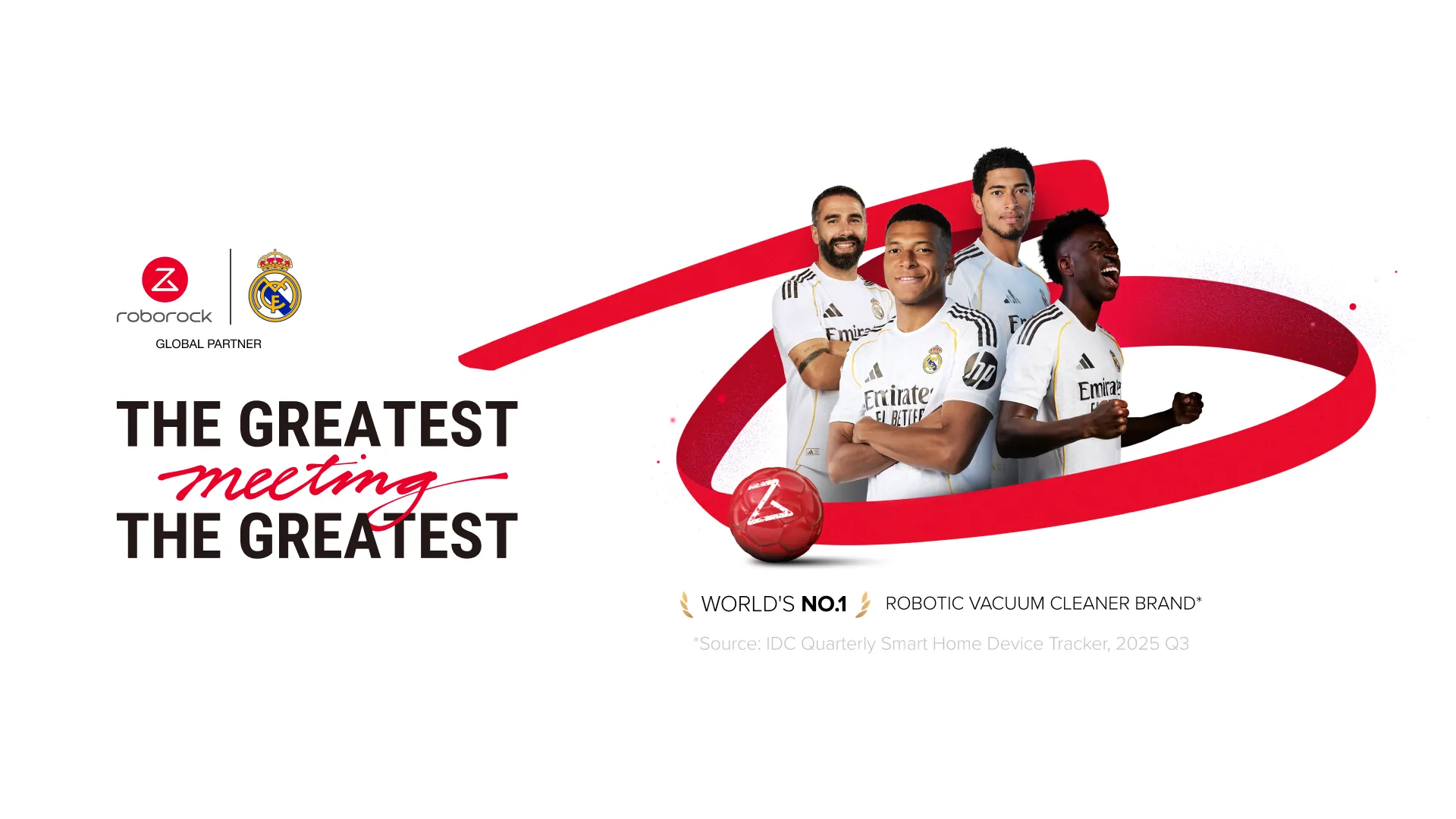
The answer starts with a detail that is easy to miss if the deal is treated as generic football glamour. Roborock was announced on Jan. 2, 2026, as Real Madrid’s official global partner in the cleaning vacuum category, with the partnership covering both the men’s and women’s teams; financial terms were not disclosed.[1][2][3] A later CES announcement made the category boundary sharper: the agreement covers vacuum products only and explicitly excludes Roborock’s other product lines.[4]
| Claim type | What can be said |
|---|---|
| Known from primary or company release material | Announced Jan. 2, 2026; official global partner in the cleaning vacuum category; covers Real Madrid men’s and women’s teams; vacuum-only scope later stated in CES material.[1][2][4] |
| Known from financial-news coverage | Financial terms were not disclosed.[3] |
| Attributed, not independently verified here | Roborock’s IDC-based claims of global smart-cleaning robot leadership and market-share figures are company-attributed IDC figures, not measurements independently re-run in this article.[5] |
| Not knowable from the public record | The deal’s actual fee, payback period, and sponsorship-attributable ROI. |
| Term-language caution | The primary releases cited here establish the partnership and category scope; any through-2028 reading depends on secondary sponsorship coverage rather than the Roborock or Real Madrid primary announcements.[1][2] |
The important word is “vacuum”
If Roborock had bought a company-wide halo, the strategic read would be simpler: a rising consumer-tech brand uses Real Madrid to look larger, more global, and more premium. The vacuum-only scope makes the move more specific. It says the official rights are attached to the category that built the company’s reputation, even as Roborock was also pushing into adjacent home-robotics territory.
That scope cuts both ways. It focuses the asset: Roborock can make the robot-vacuum category feel more emotionally loaded without pretending every product line is officially covered. It also limits the asset: lawnmowers, washer-dryers, and other non-vacuum lines cannot simply inherit Real Madrid rights as if the sponsorship were an unrestricted corporate badge. For brand architecture, that distinction matters.
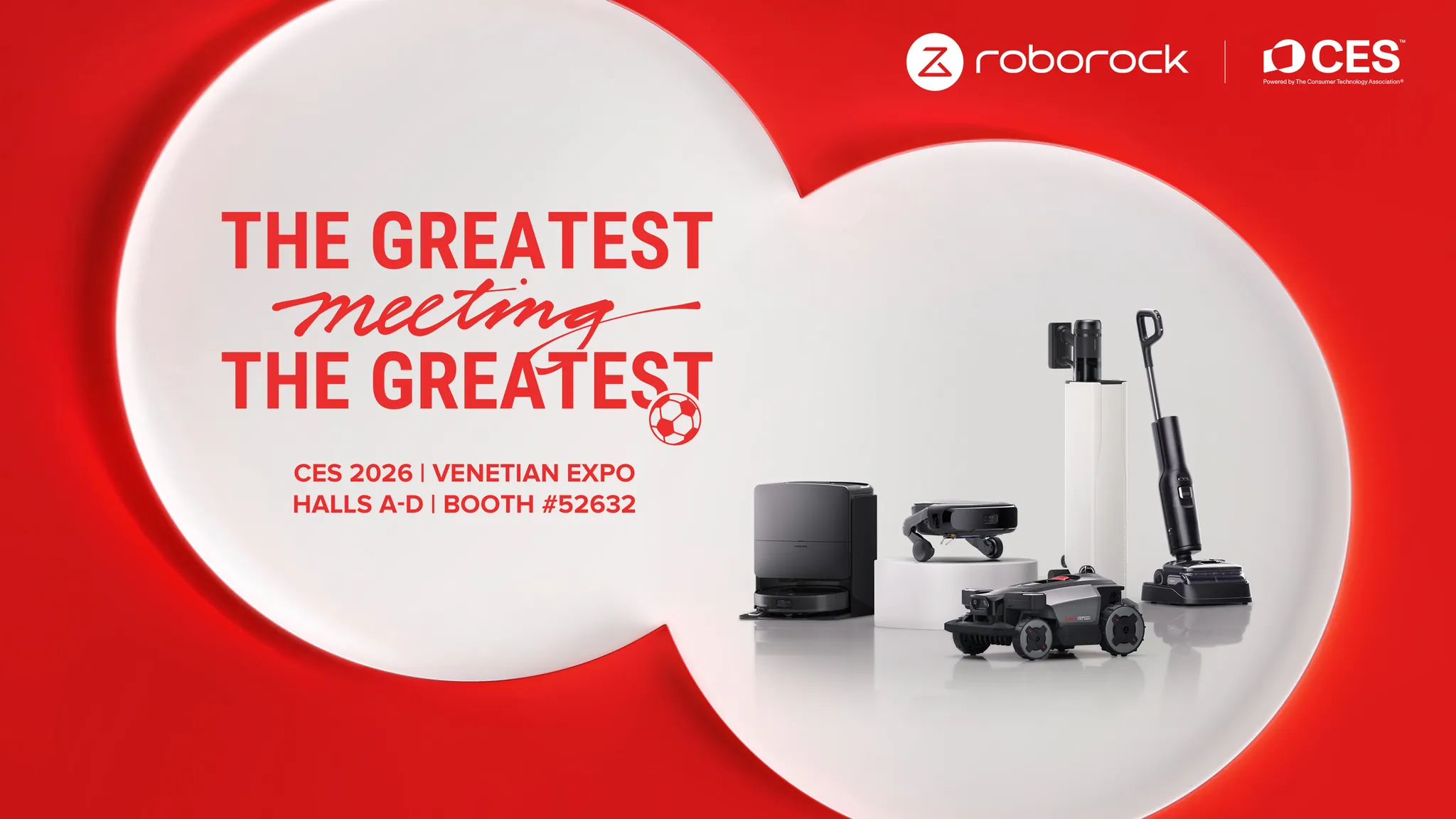
The CES 2026 material is especially revealing because it paired the Real Madrid partnership with Roborock’s release of the Saros Z70, described by the company as the world’s first mass-produced robotic vacuum with a foldable five-axis mechanical arm, and separately presented products beyond vacuums, including robotic lawnmowers and washer-dryers.[4] The Real Madrid rights sat around the cleaning-vacuum category while the broader portfolio story expanded around it.
That is why the cleanest interpretation is not “Roborock wanted a logo next to a famous club.” It is that Roborock wanted to move the vacuum category out of appliance-comparison mode and into a higher-order territory: precision, elite performance, consistency, and modern intelligence. The official rights remain technical and category-bound, but the emotional borrowing is much larger than a product spec sheet.
Why a No. 1 claim still leaves a brand problem
Roborock did not enter the deal as an unknown challenger. In a company newsroom release citing IDC, Roborock said it had become the world’s No. 1 smart-cleaning robot brand, with 5.8 million shipments and 17.7% overall share in 2025; it also cited 24.1% share in robotic vacuum cleaners and No. 1 positions in the United States, Germany, and South Korea.[5]
Those are strong claims, and they should be labeled correctly: company-attributed IDC figures. They explain the marketing logic without settling every competitive question. Once a premium category matures, leadership proof can become a permission slip rather than a decisive reason to care. “No. 1” helps a buyer trust the shortlist. It does not automatically make the next product launch feel culturally important.
That is where Real Madrid functions as a different kind of asset. Roborock’s announcement leaned into the club’s scale and symbolic weight, citing more than 660 million social followers, 15 Champions League titles, recognition by Brand Finance as the strongest football brand for three consecutive years, and the renovated Santiago Bernabéu’s reach to hundreds of millions globally.[1] Those facts do not prove sales lift. They define the halo Roborock chose to borrow.
The creative language makes the intended transfer obvious. “The Greatest Meeting The Greatest” is not a performance-media line. “Real Smart Cleaning” maps Real Madrid’s on-field precision onto Roborock’s AI navigation and cleaning intelligence.[1][2] Whether that line works in-market is a separate measurement question. Strategically, the job is clear: make robotic vacuuming feel less like a utility purchase and more like participation in an elite-performance standard.
This is the kind of move that often looks irrational if the only acceptable output is directly attributable ROAS. It is also the kind of move that can be rational when product proof has already done much of what product proof can do. The sponsorship does not replace the No. 1 claim; it gives that claim a more emotionally fluent wrapper.
The activations are doing more work than the announcement
The announcement copy is the least interesting part of the deal. The stronger evidence is that Roborock started working the partnership across product launches, events, and market-level experiences almost immediately.
| Activation | What it shows strategically |
|---|---|
| CES 2026 joint brand experience, Jan. 6–9 | Roborock tied the Real Madrid partnership to its highest-visibility product-stage moment, including the Saros Z70 vacuum launch and a broader smart-home robotics lineup.[4] |
| Tokyo “Where the Greatest Meet” clinic, May 18–19, 2026 | The partnership moved into a participatory APAC event format, with more than 40 participants from six APAC markets.[6] |
| Miami pop-up with Roberto Carlos | The asset extended beyond launch PR into football-culture programming and personality-led experience.[6] |
CES matters because it puts the sponsorship next to invention claims. Roborock was not merely saying it was associated with a famous club; it was presenting new hardware while borrowing a language of elite precision. For a premium robot-vacuum brand, that is a cleaner fit than a loose lifestyle tie-in. The product has to navigate, adapt, avoid errors, and perform repeatedly in a domestic environment. The club supplies a public metaphor for those same traits.
Tokyo matters for a different reason. A clinic with more than 40 participants from six APAC markets is not a global-media-reach number; it is a market-activation format.[6] It gives local teams something to invite customers, partners, creators, and press into. It creates content units. It gives sales and distributor ecosystems a more interesting story than a discount window or spec comparison.
Miami matters because it shows the brand using the football asset in a marketable experience layer. A Roberto Carlos appearance is not proof of conversion, but it is proof that the sponsorship was not left as a static rights announcement.[6] In sponsorship, that distinction is often where the waste begins or ends. Bought rights that never become launch context, retail theater, creator material, or partner programming are expensive wallpaper.
For comparison, multi-layer activation is also what separates coherent sponsorship systems from isolated media splashes in cases like John Deere’s Field of Dreams sponsorship activation. The read-across is not category similarity; it is the discipline of turning one narrative asset into several operating surfaces.
The performance-marketing history explains why this feels like a shift
Roborock’s move into a global football partnership is more interesting because the brand has evidence of performance-native muscle. A Meetsocial vendor case study describes Roborock’s use of Meta, Google, YouTube, TikTok, programmatic buying, localized creative, and peak-season media execution; it also reports a 3x ROAS during the 2023 peak season, along with No. 1 Germany and top-three U.S. status in that case-study frame.[7]
That source should not be treated like an independent audit. It is a vendor-framed success story. Still, it is useful context: Roborock is not behaving like a company that skipped measurable media and ran straight to prestige. It had already operated in the channels where short-term demand capture, localized creative testing, and platform optimization are the language of growth.
The Real Madrid deal answers a different constraint. Paid search can harvest demand from someone already comparing robot vacuums. Social and video can move product claims through a funnel. Programmatic can extend reach. None of those formats, by themselves, easily reposition a mature hardware category as an elite-intelligence category. That is the marketing reason the sponsorship can make strategic sense even when it cannot be reduced to a clean ad-platform report.
This is also where measurement discipline has to stay intact. Sponsorship can be modeled, but undisclosed economics make public ROI claims fragile. The right comparison set is not “can we see clicks?” but “what would the brand have needed to believe about awareness, pricing power, retail conversion, partner leverage, and launch efficiency to justify the spend?” That is the same kind of problem examined in the P&G-Kelsey Mitchell sponsorship ROI analysis and in measurement frameworks for stadium naming-rights ROI: not every valuable sponsorship effect is clickable, but that does not give anyone permission to invent certainty.
What the deal likely buys
The sponsorship appears to buy four strategic options, none of which requires pretending that public ROI exists.
- A premium shorthand. Real Madrid gives Roborock a fast, globally legible way to say excellence, precision, and ambition without adding another feature bullet.
- A category lift. The vacuum-only scope lets Roborock elevate the category that made the brand credible, rather than diluting the rights across every home-appliance line.
- A launch platform. CES, Tokyo, and Miami show the sponsorship being converted into stages, events, and content occasions rather than sitting as a passive logo asset.
- A bridge from performance proof to brand preference. Company-attributed IDC leadership can say Roborock is big; the Real Madrid association helps say why that bigness should feel premium.
The vacuum-only boundary is the hinge again. If the rights were unrestricted, the interpretation would drift toward a broad corporate-image play. Because they are category-specific, the cleaner read is category transcendence: Roborock is trying to make “robot vacuum” carry more meaning than cleaning efficiency.
That matters for future product architecture, too. A brand expanding into home robotics needs the original category to feel technologically authoritative, not merely useful. The Real Madrid partnership does not officially cover every adjacent line, but it can help Roborock make its core category feel like the proof point for a larger home-intelligence ambition.
The ROI boundary is not a footnote
There is no public deal value. Financial terms were undisclosed in available deal coverage.[3] That means no outside analyst can responsibly calculate whether the sponsorship paid back, how long payback would take, or whether incremental sales attributable to Real Madrid exceeded the fee.
Two shortcuts should be rejected. A wider consumer-electronics football-sponsorship category-spend figure is not Roborock’s deal cost. A reported fee attached to another Real Madrid sponsor is not evidence of Roborock’s economics. The difference sounds basic, but this is exactly where sponsorship commentary often turns into number laundering.
The same standard applies to effectiveness. Activations can demonstrate that the rights are being used. Company-attributed share figures can explain why the brand had permission to attempt a larger emotional move. Creative platforms can reveal intent. None of those proves sponsorship-attributable revenue.
A practical measurement stack would need pre/post brand tracking, market-level activation calendars, retail and ecommerce lift modeling, media-mix inputs, price and promotion controls, and distributor feedback. Even then, the output would be a modeled read, not a receipt. That is why comparable sponsorship cases with undisclosed economics, from Howard-McDonald’s as a local DMA channel to mega-campaign reads like Colgate’s IU campaign, are useful for reasoning about structure, not for borrowing certainty.
The clean read
The documented evidence supports a disciplined reading of the sponsorship’s marketing reason: this is a category-transcendence bet built around Roborock’s core vacuum business, not a simple vanity logo purchase. The vacuum-only scope, the company-attributed IDC leadership claims, the “Greatest Meeting The Greatest” and “Real Smart Cleaning” platforms, and the CES-Tokyo-Miami activation pattern all point in the same direction.
The move gives Roborock a way to make premium cleaning technology feel like part of a larger excellence system, while leaving the official rights tightly attached to the category that still anchors the brand. That is a coherent strategic rationale. The actual financial value and sponsorship-attributable return remain undisclosed and externally unmeasurable.
References
- The Greatest Meeting The Greatest: Roborock Joins Hands with Real Madrid in Strategic Partnership with Innovation at the Core, Roborock Newsroom, Jan. 2, 2026
- Real Madrid and Roborock sign global strategic alliance, Real Madrid, Jan. 2, 2026
- Roborock partners with Real Madrid as official cleaning vacuum sponsor, Investing.com
- CES 2026: Roborock Releases the World's First Robotic Vacuum with Wheel-Leg Architecture as It Joins Hands with Real Madrid Football Club, PR Newswire
- Roborock Becomes the World's No. 1 Smart Cleaning Robot Brand According to IDC, Roborock Newsroom
- Roborock Unveils New Flagship Product Lineup and Hosts 'Where the Greatest Meet' Football Event in Partnership with Real Madrid, PR Newswire
- Roborock, Meetsocial
This is a record of what happened and what was tested, not legal advice. Compliance determinations require qualified counsel.