
The AI ad creative backlash is real — and measurable
The AI ad creative backlash is real, but click-through data shows AI-generated ads can still beat human-made ones. Don't trust either narrative blindly: treat backlash as a measurable performance variable and test it in your own account before changing creative strategy.
- Platform
- Meta
- Creative type
- AI image and video ads
- Failure type
- consumer backlash
- Last reviewed
- 0-08-03
By Q3 2026, the useful question is no longer whether AI backlash exists. It does. The harder question for ad creative is where it shows up strongly enough to change what you ship, pause, disclose, refresh, or test.
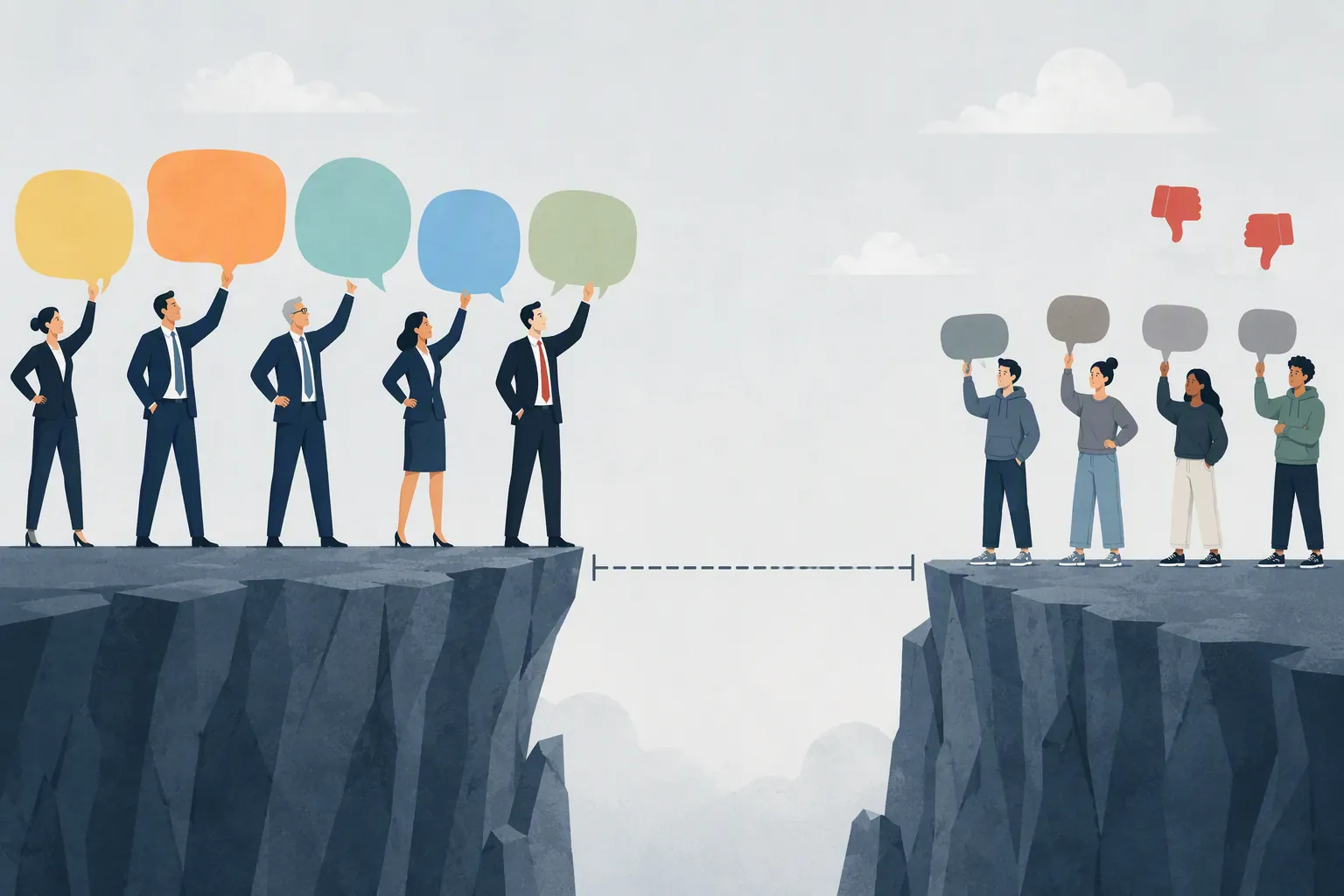
The cleanest contradiction is already measurable: ad executives are leaning into AI creative while badly overestimating how comfortable younger consumers are with it. IAB’s January 2026 report found that 82% of ad executives believed Gen Z and Millennials feel positive about AI ads, while only 45% of those consumers actually did. The gap widened from 32 points in 2024 to 37 points in 2026, even as 83% of executives reported deploying AI in creative, up from 60% in 2024. The same report found 39% of Gen Z felt negative about AI ads, compared with 20% of Millennials, and the study was scoped to 505 U.S. Gen Z/Millennial consumers and 104 ad executives, not the entire market. [1]
That should make any operator pause. It should not make them pull every generated asset. A NYU Stern research highlight on a field experiment by Ghose, Lee, Todri, and Adamopoulos reported that fully genAI ads lifted click-through rate by up to 19% versus human-expert ads, while genAI-modified human ads showed no significant gain. [2]
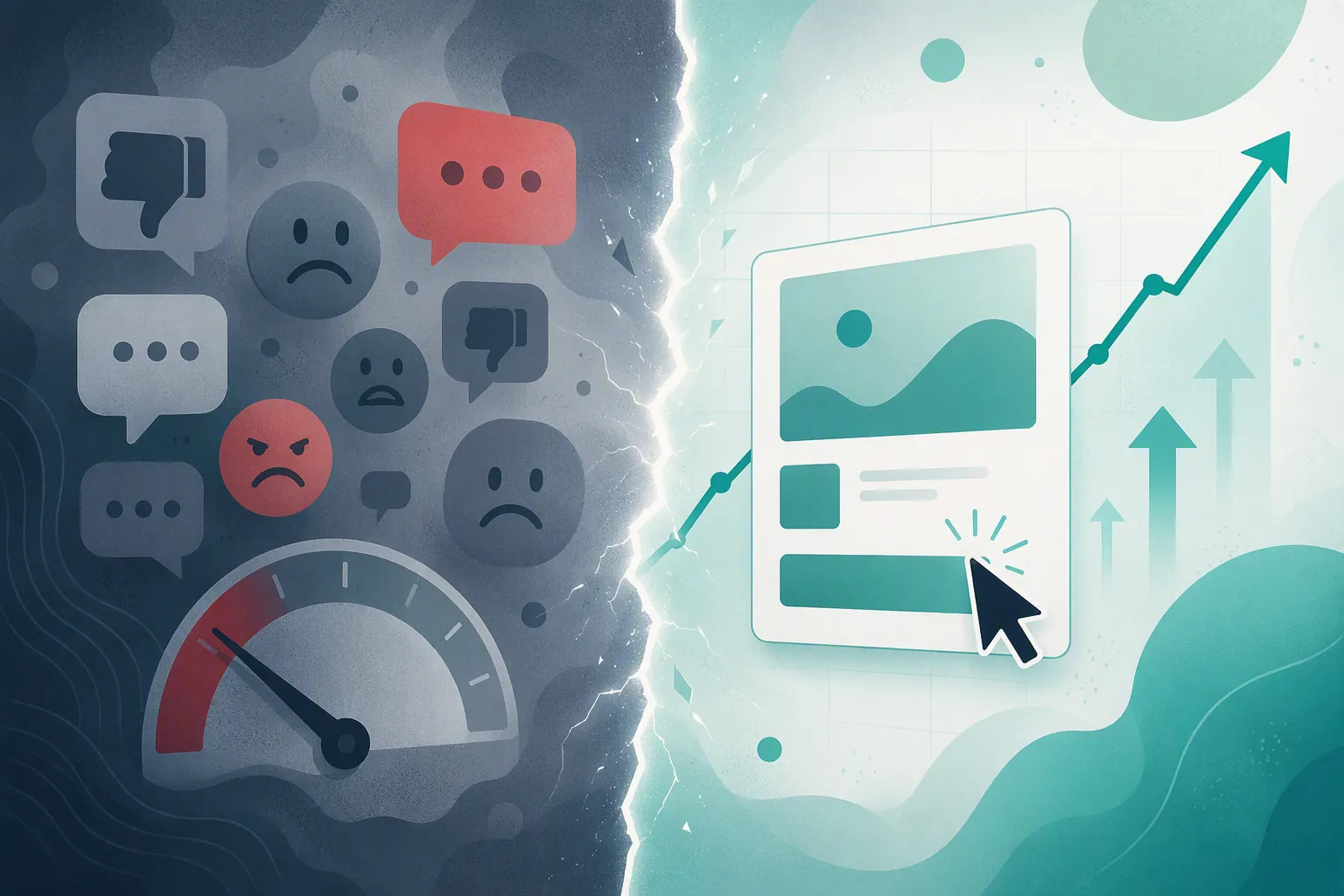
That is the click-through paradox. People can tell you they dislike AI ads, recognize them as AI-made, or find them off-putting, while certain fully generated ads still win the click in-market. The implication for ad creative is not “AI works” or “AI is toxic.” It is that survey sentiment, brand response, and auction behavior are separate measurement planes. If you only look at one, you will overcorrect.
The perception gap is not a vibes problem
The IAB numbers matter because they put a size on the assumption error. The people approving, selling, and scaling AI creative think younger consumers are much warmer to AI ads than those consumers say they are. That does not prove a buying penalty. It does prove that “consumers are fine with it now” is too loose to use as an approval standard.
NielsenIQ’s December 2024 EEG work adds a different kind of warning. The study found that consumers intuitively identified most AI ads and rated them as more annoying, boring, and confusing, with weaker memory activation and a negative halo extending to the brand. [3]
That is exactly the kind of damage a click report can miss. A generated ad may earn cheap curiosity clicks while also weakening memory, sharpening irritation, or making the brand feel less cared for. None of those effects automatically appear in platform columns labeled CTR, CPA, or ROAS. They may show up later as comment quality, rising hide/report behavior, faster fatigue, softer branded search, lower returning-user conversion, or simply longer internal approval cycles because the next AI-looking concept now has to clear a reputational objection.
The Harris Poll’s Cannes Lions 2026 framing points in the same direction without settling the performance question. It reported that 78% of consumers say a brand becomes “cringey” when it overuses AI, and 73% say AI is “happening to them, not for them.” [4] Those are attitude measures. They should influence how creative is framed and supervised, but they are not a substitute for account data.
CTR can be right and still incomplete
The NYU result is uncomfortable for both sides of the argument. It undercuts the easy brand-side claim that consumers always punish AI-generated creative in the feed. It also undercuts the platform-side habit of turning lift into permission to automate judgment. A click-through lift, even a real one, measures a specific response in a specific buying environment. It does not tell you whether the ad made the brand easier to remember, whether people trusted the offer, or whether the same asset will survive frequency.
| Signal | What it can catch | What it can miss |
|---|---|---|
| CTR | Immediate feed response, curiosity, offer clarity, visual stopping power | Brand irritation, weak memory, low-quality clicks, reputational drag |
| CPA or ROAS | Short-window conversion efficiency | Longer-term trust loss, returning-user softness, halo effects |
| Negative comments, hides, reports | Visible backlash and cheapness cues | Silent discomfort, survey sentiment, people who simply scroll past |
| Frequency and CPM drift | Fatigue, narrowing delivery, rising cost pressure | Whether the fatigue came from AI execution or ordinary creative wear-out |
| Brand search and direct traffic | Possible downstream interest or softness | Clean causality unless paired with a test design |
This is why the conversation has to move from opinion to test design. A generated asset can beat a human-made asset on CTR and still be the wrong ad to keep scaling if it is creating negative engagement, flattening memory, or forcing the brand team into avoidable review cycles. The reverse is also true: an AI-made ad can attract a few loud complaints and still be the better performer if the complaints do not translate into fatigue, lower-quality traffic, or conversion damage.
One useful counterweight comes from Digiday’s February 2026 reporting, which cited VML Intelligence data that only 21% of people said they would like a campaign less if they learned it was AI-generated. [5] That does not cancel the IAB, NielsenIQ, or Harris findings. It narrows them. The backlash is real, but it is selective. Execution, disclosure, category, and brand context decide how much it matters.
Where backlash concentrates
The cases that matter are not proof that AI creative is doomed. They are failure-mode maps.
Coca-Cola’s AI holiday backlash is useful because the brand context was unusually emotional. Forbes’ May 2026 discussion framed the issue less as a pure quality failure and more as a mismatch between a high-emotion brand asset and visible, impersonal technology. [6] That distinction matters. A holiday memory cue asks the audience to feel continuity, warmth, and human nostalgia. If the execution makes the production method louder than the feeling, the technology becomes the idea whether the campaign intended that or not.
The same pattern is visible in the site’s Raising Cane’s AI Chuck Norris backlash benchmark: the operational value is not that one backlash case predicts every restaurant ad. It is that a checkable, dated case lets teams separate the creative variables. Was the problem the use of AI, the visible synthetic treatment, the borrowed celebrity equity, the joke quality, the disclosure context, or the mismatch between brand tone and execution?
McDonald’s Netherlands and Valentino belong in the same discussion, but with a caveat. The cases are cited here through a McGraw Hill Education blog that points to other reporting; it describes an AI Christmas ad from McDonald’s Netherlands and AI handbag ads from Valentino being pulled in December 2025. Because those are secondary-sourced cases here, they should be treated as pattern evidence, not primary case proof. [7]
The pattern is still worth tagging: backlash appears to concentrate when AI is visible as the message, when the work feels cheap rather than intentional, when emotional equity is borrowed without being earned, or when a prestige or nostalgia context makes synthetic weirdness harder to forgive. That is a different risk profile from using AI as an invisible production aid to resize, iterate, localize, or explore combinations that still pass human review.
Turn backlash into a field in the creative test log
The account-level response is not complicated, but it does require discipline. Do not create one bucket called “AI creative” and compare it with one bucket called “human creative.” That hides the variables that actually seem to matter.
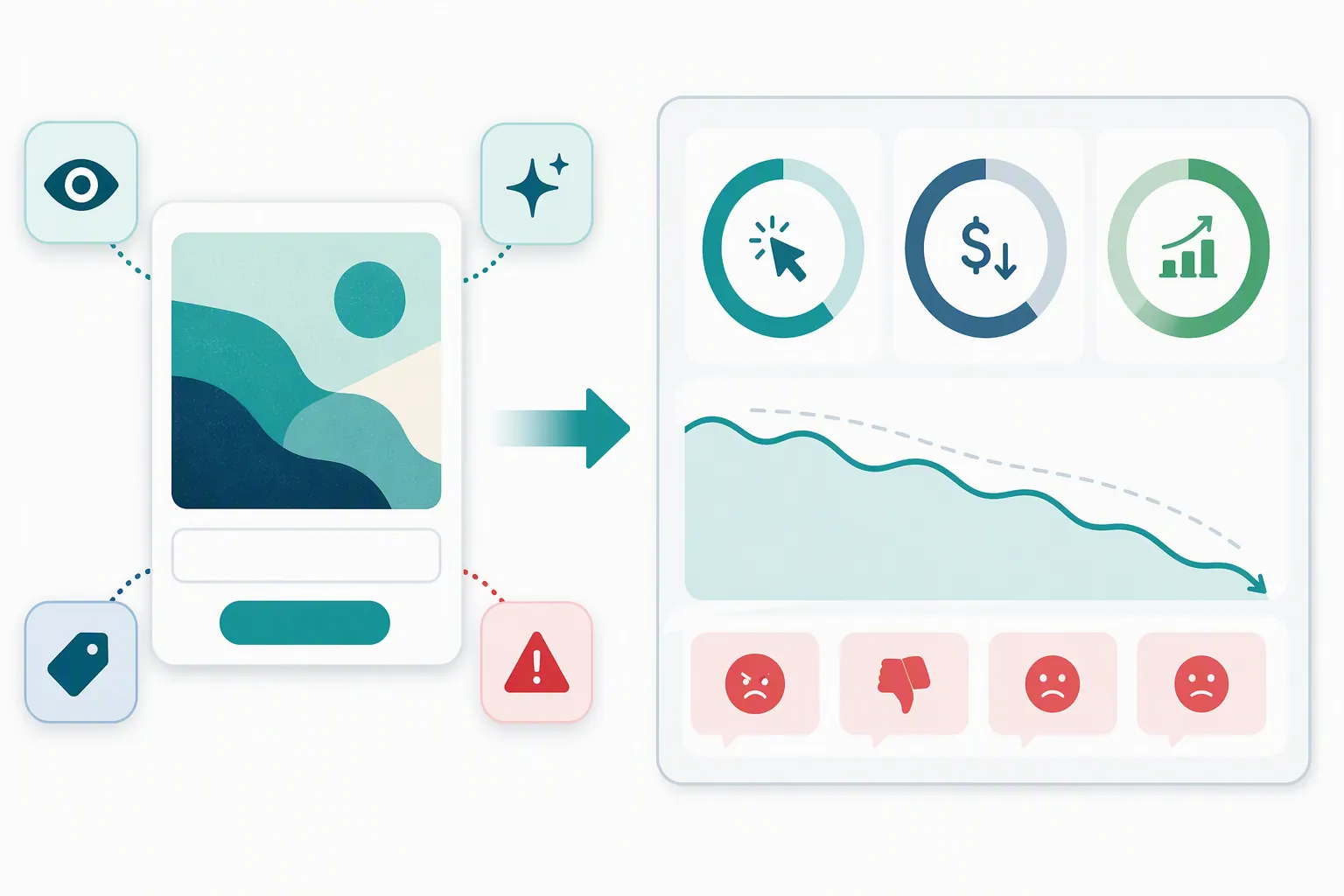
Tag the creative before it spends. At minimum, give every tested asset fields for visible-AI execution, cheapness cues, disclosure status, brand-context fit, and whether AI is the concept or merely the production method. Then read those tags against CTR, CPA, ROAS, frequency, CPM drift, negative engagement, comment quality, and fatigue. If you already use a structured copy and creative test process, this is an extension of the same workflow, not a separate AI ethics exercise; the AI ad copy A/B testing workflow is the right place to attach those fields.
| Creative tag | How to mark it | Why it changes the read |
|---|---|---|
| Visible AI | The ad looks or says it was AI-made; synthetic style is part of the message | Separates backlash to AI-as-concept from ordinary production automation |
| Cheapness cue | Uncanny hands, plastic faces, warped objects, generic voiceover, slop-like backgrounds, awkward copy | Helps distinguish anti-AI sentiment from low craft tolerance |
| Disclosure status | No label, platform label, brand-led disclosure, legally required disclosure | Prevents disclosure effects from being mixed with creative effects |
| Brand-context fit | Low-emotion utility offer, high-emotion heritage asset, prestige context, humor context, crisis-sensitive category | Explains why the same AI treatment may be acceptable in one ad and jarring in another |
| AI role | Generated from scratch, AI-modified human work, AI-assisted copy, AI-resized or localized asset | Matches the NYU distinction between fully generated ads and genAI-modified human ads |
The test should protect against the two easiest mistakes. The first is pausing AI-made ads because a backlash headline made the CMO nervous, even though your own account has not shown fatigue, negative engagement, or conversion softness. The second is accepting a platform lift claim because the model has more signals, even though your own test has no holdout, no clean creative tagging, and no read on brand-risk proxies.
For Meta-heavy accounts, this matters because creative automation is no longer a side setting. The Meta AI advertising and Advantage+ automation guide is the better framing than a blanket allow/block policy: decide where automation can explore and where human approval stays in the loop. The same logic applies to default-on enhancement settings; the Advantage+ Creative Enhancements context is a reminder that “the platform changed the asset” is not a satisfying answer after a sensitive ad goes live.
A practical readout
A clean account read does not need a huge taxonomy. It needs enough structure to prevent post-rationalizing. Before launch, decide what would count as a backlash signal and what would count as a normal performance loss.
- If visible-AI assets have higher CTR but also materially worse negative engagement, faster fatigue, and weaker conversion quality than non-visible-AI variants, treat the backlash as performance-relevant.
- If AI-assisted assets outperform on CTR, CPA, and ROAS without worse comment quality, frequency fatigue, or brand-search softness, do not pull them just because the category discourse is loud.
- If the only losing variants are the ones with obvious slop cues, the problem is not necessarily AI. It may be craft, QA, or approval speed.
- If disclosure-labeled variants perform differently from unlabeled variants, separate the disclosure effect from the creative-quality effect before changing the whole AI policy.
- If high-emotion brand assets draw a different response than offer-led utility ads, keep that context split in future tests instead of averaging it away.
Disclosure and verification deserve their own fields because they create operational risk beyond CTR. The EU AI Act Article 50 tracker is the place to follow labeling obligations, while the State Department AI map mislabel tracker is a useful reminder that verification failures can become the story even when the original creative intent was ordinary.
There is also a claim discipline issue. If a brand says an ad is AI-powered, AI-assisted, generated, or merely optimized, those words should match what happened. The Dr Pepper Fansville AI creative analysis is useful here because it keeps the question attached to evidence: what exactly was AI about the work, and what can be measured?
The operating rule
The backlash against AI ad creative is real enough to measure and selective enough to test. The perception data should stop teams from treating consumer comfort as guaranteed. The CTR data should stop teams from treating backlash as an automatic performance penalty.
Do not abandon AI creative because of backlash headlines. Do not accept platform lift claims without your own holdout or A/B evidence. Treat AI backlash as a first-party performance variable: tag visible-AI execution, cheapness cues, disclosure status, and brand-context fit in the creative test log, then read those tags alongside CTR, CPA, ROAS, fatigue, CPM drift, and negative engagement.
References
- The AI Ad Gap Widens, IAB, Jan. 15, 2026
- The AI Advertising Paradox, NYU Stern, Nov. 6, 2025
- NIQ research uncovers hidden consumer attitudes toward AI-generated ads, NielsenIQ, Dec. 12, 2024
- I Never Asked For This, The Harris Poll
- With AI backlash building, marketers reconsider their approach, Digiday, Feb. 12, 2026
- AI Ads Trigger Backlash. Here’s What Research Says Leaders Can Do, Forbes, May 28, 2026
- AI Slop Backfires in Ads, McGraw Hill Education, May 2026
This is a record of what happened and what was tested, not legal advice. Compliance determinations require qualified counsel.