
Family Approval Didn't Save the Raising Cane's AI Chuck Norris Ad
This article examines the July 2026 Raising Cane's campaign featuring an AI-generated Chuck Norris, explaining why consumer backlash erupted despite family approval and what this means for media buyers evaluating AI creative assets beyond CPA and ROAS.
- Platform
- Meta
- Campaign type
- Performance Max
- Spend range
- $0k – $1M
- Timeframe
- July 0
- CPA
- Normal
- Verdict
- loss
- Industry vertical
- QSR
- Last reviewed
- 0-07-29
Raising Cane’s had the kind of pre-launch facts that can make a creative review feel settled too early: cooperation from Chuck Norris’s family, a charitable tie-in, a clean cultural hook around National Chicken Finger Day, and a recognizable face that could move quickly across TV, in-store, digital, and social. Then the ad met the market.
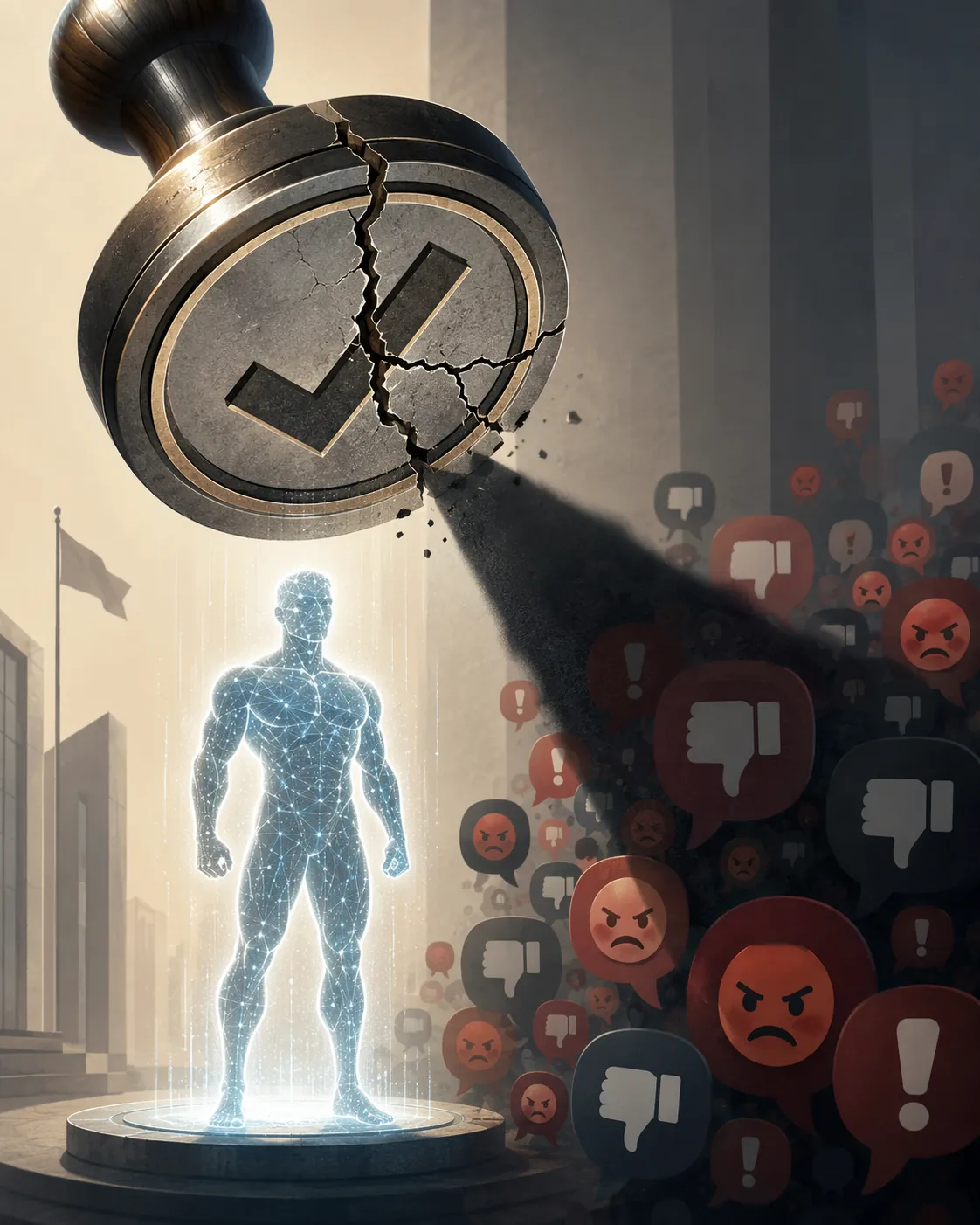
The problem was not that the family had been ignored. The problem was that family approval answered only one question. It did not answer whether consumers wanted to see an AI-generated version of a recently deceased celebrity selling chicken fingers in their feeds.
For anyone searching “raising canes ai chuck norris ad backlash what happened,” the short version is this: Chuck Norris died in March 2026; Raising Cane’s launched an AI-generated Norris campaign in mid-July with family involvement and a donation pledge to Kickstart Kids; by National Chicken Finger Day on July 27, the campaign had become a social backlash story, with users calling the creative “dystopian,” “disgraceful,” and boycott-worthy.[1][2][3]
The Timeline Made the Creative Risk Harder to Shrug Off
The campaign’s timing matters because audience reaction was not happening in some abstract debate about synthetic performers. Norris had died only a few months earlier, with outlets reporting his death around March 19–20, 2026.[1] Raising Cane’s and founder Todd Graves joined the Norris family on July 14 to announce the National Chicken Finger Day campaign and a $1-per-Box-Combo donation to Kickstart Kids, capped at $1 million.[2]
That is a narrow window. By July 27, when the chicken finger promotion reached its natural peak, many viewers were not encountering a nostalgic archive clip. They were encountering a newly generated commercial image of someone whose death was still recent enough to feel current.
| Date | What Happened | Why It Matters For Creative Review |
|---|---|---|
| March 19–20, 2026 | Chuck Norris’s death was reported by multiple outlets. | The campaign used the likeness of a recently deceased public figure. |
| July 14, 2026 | Raising Cane’s, Todd Graves, and the Norris family announced the National Chicken Finger Day campaign and Kickstart Kids donation pledge. | Approval and charitable intent were part of the campaign record from the start. |
| Mid-July 2026 | AI-generated Norris creative appeared across TV, in-store, digital, and social placements. | The asset was not contained to a low-reach experiment or internal test. |
| July 27, 2026 | National Chicken Finger Day promotion peaked, and backlash coverage centered on negative social reaction. | The media moment amplified both the campaign and the criticism. |
Ad Age described the work among new commercials and reported an estimated $819,904 in TV spend, citing iSpot.tv data and characterizing that as 24% of industry spend in the tracked context.[4] That number should be treated as directional, not as an independently verified full campaign budget. iSpot.tv also tracked the TV spot tied to National Chicken Finger Day.[5]
For a media buyer, the distribution detail is not trivia. A questionable synthetic asset behaves differently when it is trapped in a small organic post than when it is backed by paid TV, store signage, digital inventory, and social reach. The more surfaces it touches, the harder it is to separate “the ad” from “the brand decided this was acceptable.”
Consent Solved Clearance, Not Acceptance
The family’s participation matters. It changes the ethical and legal read of the campaign, and it would be irresponsible to write about the ad as if Raising Cane’s simply grabbed a likeness without permission. But consent is not the same as market acceptance.
That distinction becomes sharper because the Norris family had previously condemned other AI-generated videos that spread false information about Norris’s death.[6] Their approval here was specific to this campaign. It was not a general public blessing for AI resurrection as an advertising format, and viewers were not obligated to treat it that way.
This is where a lot of AI creative reviews go soft. The approval path asks, “Can we run it?” The audience asks, “Why did you make me look at this?” Those are different tests, and the second one usually arrives after spend is already live.
The backlash reporting gives the emotional texture, not a clean measurement of the whole customer base. Today.com summarized reactions under the headline “The Internet Reacts to Raising Cane’s AI Chuck Norris Ads: Dystopian,” while The Takeout framed the response as “Raising Cane’s Chuck Norris Ads Disgust The Internet — Makes Me Not Want To Go Back.”[3][7] Reddit and X comments are not survey data. They are also not meaningless just because they are messy.
In paid social, high-arousal disgust travels well. A campaign can keep acquiring customers while also training a broader audience to associate the brand with something uncanny, opportunistic, or emotionally careless. That damage will not always show up in the same dashboard as conversion cost.

The IAB Gap Was Already Warning Advertisers
The Raising Cane’s reaction looks less surprising when set against the IAB and Sonata Insights data from January 2026. The report found that 83% of ad executives were deploying AI in creative, up from 60% in 2024.[8] Adoption, in other words, was already mainstream inside the industry.
Consumer positivity was nowhere near that level. Only 45% of consumers said they felt positive about AI ads, while 82% of advertisers believed consumers felt positive, creating a 37-point perception gap.[8] The same gap had been 32 points in 2024, so the industry’s confidence was not converging with consumer comfort.[8]
The age split makes this especially relevant to social distribution. Gen Z was nearly twice as likely to feel negative about AI ads as Millennials, at 39% versus 20%, and 30% of Gen Z consumers called brands using AI ads “inauthentic.”[8] That does not mean every Gen Z viewer rejected the Raising Cane’s spot, and it does not prove that AI caused each negative comment. It does mean the campaign entered a market where a meaningful part of the audience was already primed to read AI advertising as fake.
That is the signal a creative lead wants before launch, not after the comments get screenshotted into a post-mortem deck. If advertisers generally overestimate consumer comfort with AI ads, then family approval should not be treated as a sentiment proxy. It is one input in a risk review, not the review itself.
Why CPA and ROAS Would Miss the Incident
Performance reporting is built to answer whether a campaign bought outcomes efficiently. It is much weaker at catching whether the same campaign made the next audience colder, the next comment section more hostile, or the next creative test harder to interpret.
An AI-generated celebrity asset can produce normal-looking direct-response numbers and still create a contaminated remarketing pool. People who clicked because the ad was strange may not be the same people who trust the brand. People who commented angrily may increase engagement while worsening the environment around the ad. People who watched long enough to understand the gimmick may be counted as useful video viewers even if their actual takeaway was disgust.
None of that necessarily breaks CPA on day one. In some accounts, outrage can even make the early engagement layer look deceptively alive. The risk is downstream: polluted retargeting segments, more negative replies under paid posts, reduced trust in lift-test reads, and a brand team that later asks why a campaign that “worked” on paper made the next launch feel harder.
That is why AI creative needs a separate reputational-risk read before it goes into automated distribution. Platform systems can assemble, resize, enhance, and rotate assets faster than most teams can manually inspect every context. The same discipline behind a Meta Advantage+ Creative Controls framework belongs in the AI likeness review: decide what automation is allowed to change, where sensitive assets can appear, and when brand safety overrides incremental performance.
The same issue shows up in broader creative assembly. In Performance Max and similar systems, variety can help the machine find working combinations, but variety also increases the number of contexts where a sensitive asset can be recombined or placed beside the wrong message. A Performance Max creative strategy should treat AI-generated likenesses as constrained inputs, not just more raw material for the system.
This Was Not an Isolated Pattern
Raising Cane’s was not the first brand to discover that AI-generated advertising can test the audience’s tolerance faster than it demonstrates creative innovation. Coca-Cola faced backlash around AI-generated holiday work in 2024 and 2025, McDonald’s Netherlands drew criticism in 2025, and Toys R Us faced a similar response in 2024.[9][10][11]
Those examples are not interchangeable. A holiday ad, a fast-food campaign, and a synthetic version of a deceased celebrity create different problems. The shared pattern is narrower and more useful: consumers may reject the AI medium even when the brand believes the concept is affectionate, efficient, or visually novel.
Academic work on AI-advertising aversion points in the same direction. Sands and coauthors examined how consumers respond to AI advertising and how brands might ease that aversion, which is a different claim than saying AI ads simply fail.[12] Some AI variants do outperform tired human-made assets. The issue is that effectiveness depends on context, disclosure, perceived authenticity, and the emotional job the creative is trying to do.
The Law Is Moving, but Legal Clearance Is Still the Smaller Test
New York’s June 2026 AI transparency and deceased-likeness context is a useful signal that regulators are paying attention to synthetic identity, consent, and disclosure.[6] But the Raising Cane’s post-mortem does not turn on a claim that the company obviously lacked clearance. The public record points the other way: the family was involved in the campaign announcement.[2]
For media buyers, that makes the case more important, not less. The cleanest legal path can still leave a campaign exposed to audience rejection. If the only gate is “Do we have permission?” the team can miss “Will this feel exploitative when it appears between normal social posts?” and “Will people read the donation as sincere, or as reputational cover for the creative choice?”
The Kickstart Kids donation may have been genuine. The available materials do not show the final amount raised from July 27 Box Combo sales, and the campaign had concluded only shortly before this publication date. But charitable intent did not carry the same blast radius as the synthetic performer. The ad format did.
What Should Have Been Reviewed Before Spend Went Live
A practical AI creative review does not need to become a philosophy seminar. It needs to catch the risks that normal performance QA will not catch.
- Source date: how recently did the person die, and is the audience still processing that loss?
- Consent scope: who approved the likeness, for which use, in which channels, and with what public context?
- Creative format: does the AI execution simulate performance, speech, endorsement, or physical presence?
- Distribution scale: will the asset run in controlled placements, or will it be pushed across TV, retail, social, and automated digital systems?
- Audience mismatch: are the viewers most likely to see the ad also the viewers most likely to read AI creative as inauthentic?
- Measurement blind spot: what signal will be reviewed beyond CPA, ROAS, click-through rate, and video completion?
The last question is the one that gets skipped when launch pressure is high. It should not. Comment sentiment, hide rates, negative reply themes, earned-media tone, brand-search changes, unsubscribes, and remarketing quality can all matter when the asset is reputationally sensitive. They are not replacements for performance metrics. They are the missing safety gauges.
The lesson from the Raising Cane’s AI Chuck Norris backlash is not “never use AI.” It is that cleared AI creative can still be unsafe at market exposure. That risk gets larger when the ad depicts deceased people, familiar public figures, or nostalgia-coded assets that viewers feel some ownership over. If a campaign needs the audience to accept the medium before it can enjoy the message, CPA and ROAS are too late in the review process.
References
- Chuck Norris, Martial Arts Star and ‘Walker, Texas Ranger’ Actor, Dies, CNN, March 2026
- Raising Cane’s Founder Todd Graves Joins Chuck Norris’ Family to Kick Off National Chicken Finger Day Campaign, Celeb Secrets, July 14, 2026
- The Internet Reacts to Raising Cane’s AI Chuck Norris Ads: Dystopian, Today.com, July 2026
- New commercials: Raising Cane’s Chuck Norris, Nature’s Own, Progressive and more, Ad Age, July 2026
- Raising Cane’s TV Spot, National Chicken Finger Day: Chuck Norris, iSpot.tv, July 2026
- New York AI transparency and deceased-likeness legal context materials, New York State Senate, June 2026
- Raising Cane’s Chuck Norris Ads Disgust The Internet — Makes Me Not Want To Go Back, The Takeout, July 2026
- The AI Ad Gap Widens, IAB/Sonata Insights, January 2026
- With AI backlash building, marketers reconsider their approach, Digiday, February 2026
- AI Ads Trigger Backlash: Here’s What Research Says Leaders Can Do, Forbes, May 2026
- Why AI-Generated Holiday Ads Fail, Nielsen Norman Group, December 2025
- Easing AI-Advertising Aversion, International Journal of Advertising, 2025
Built on this evidence
No Bidding tactic or Creative record currently cites this case file. Compare it against other results in Benchmarks.
Related benchmark reading
Report a corroborating or contradicting result
Seeing something different in your own account? Feed the data-integrity loop instead of leaving an open comment.