
What's actually AI about Dr Pepper's Fansville ads?
Dr Pepper's Fansville engine reportedly builds up to 3,000 versions of each ad, but that brand-reported figure is not the auto-variant AI creative running in Performance Max and Advantage+. Media buyers get a checklist for auditing “AI creative at scale” claims and a clear line between what transfers from the campaign and what doesn't.
- Platform
- Google/Meta
- Creative type
- AI video ads
- Last reviewed
- 0-08-02
The number belongs on the table first: Dr Pepper’s Fansville engine has been reported as capable of creating up to 3,000 versions of each ad. That is an impressive claim, and it is also a brand-side, paywalled trade-press claim rather than an independently measured benchmark for AI ad performance or paid-social auto-variant output.[1]
That distinction matters for anyone searching the Dr Pepper Fansville Brian Bosworth ad campaign and trying to understand what is actually “AI” about it. Fansville is Dr Pepper’s long-running college-football ad universe, with repeatable characters, town rules, game-day rituals, and enough continuity that a personalization system has something to personalize. But the useful media-buyer question is narrower: is this the same machinery as Performance Max, Advantage+, or AI Max generating and testing creative inside an auction? Based on the available reporting, no.
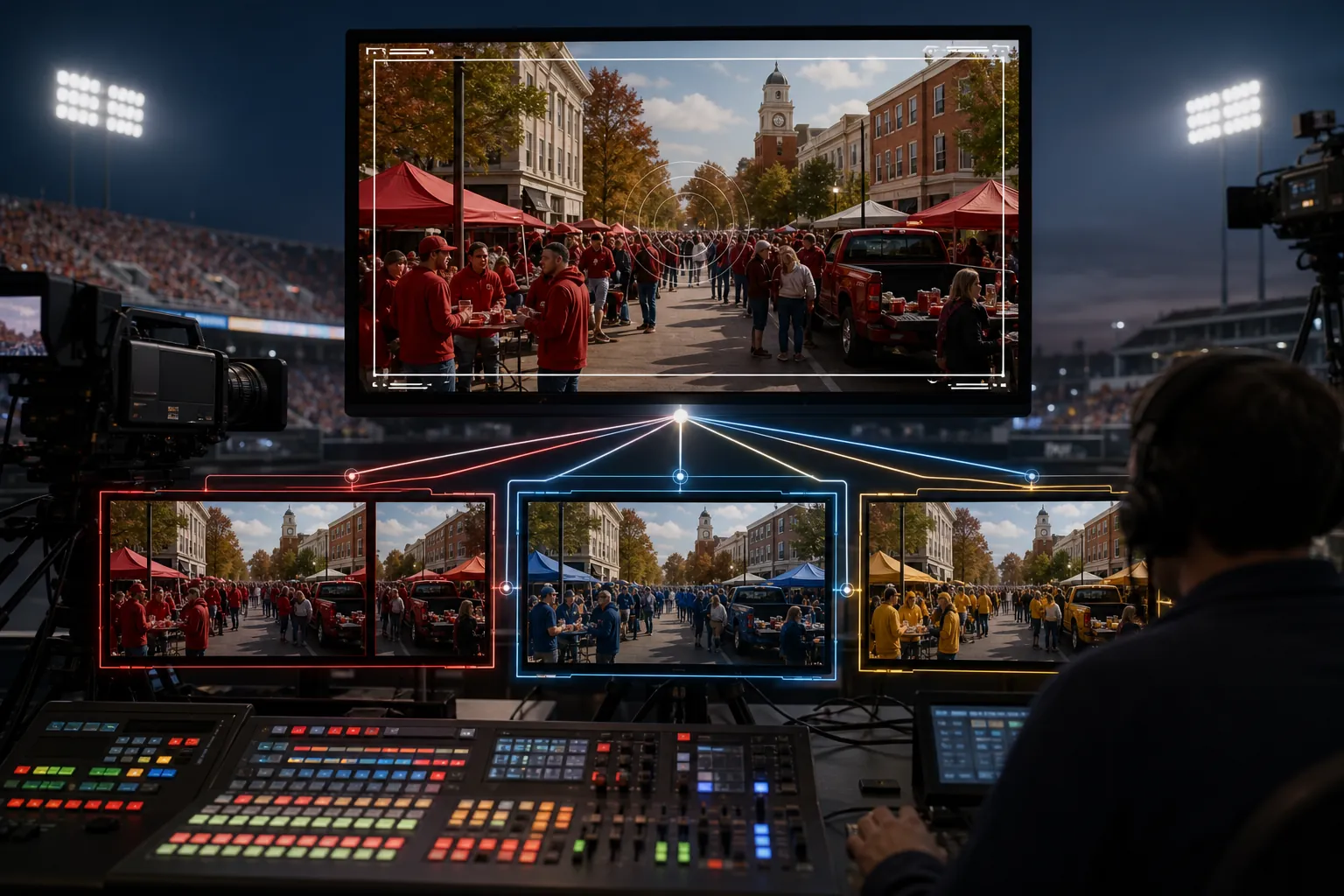
The Fansville example looks less like a platform black box recombining headlines, crops, and videos at delivery time, and more like a controlled brand-personalization system: approved masters, fan-data layers, broadcast and streaming inventory, mixed-reality integrations, and creative timing around live games. That is still sophisticated. It is just not the same category of automation as the default-on creative changes buyers fight inside Meta or Google.
What the reported Fansville engine appears to do
The Ad Age-reported “up to 3,000 versions” figure gives the campaign its scale story.[1] The Forbes reporting gives the machinery more shape: Dr Pepper expanded its Disney Advertising collaboration by combining Disney fan data with Dr Pepper’s own data, then using those layers to tailor ads differently for groups such as SEC fans and Georgia fans.[2]
That is a very different sentence from “the platform made 3,000 ads.” It suggests a system that starts with a recognizable creative architecture and uses audience context to decide which approved version, reference, treatment, or placement belongs in front of a given fan segment.
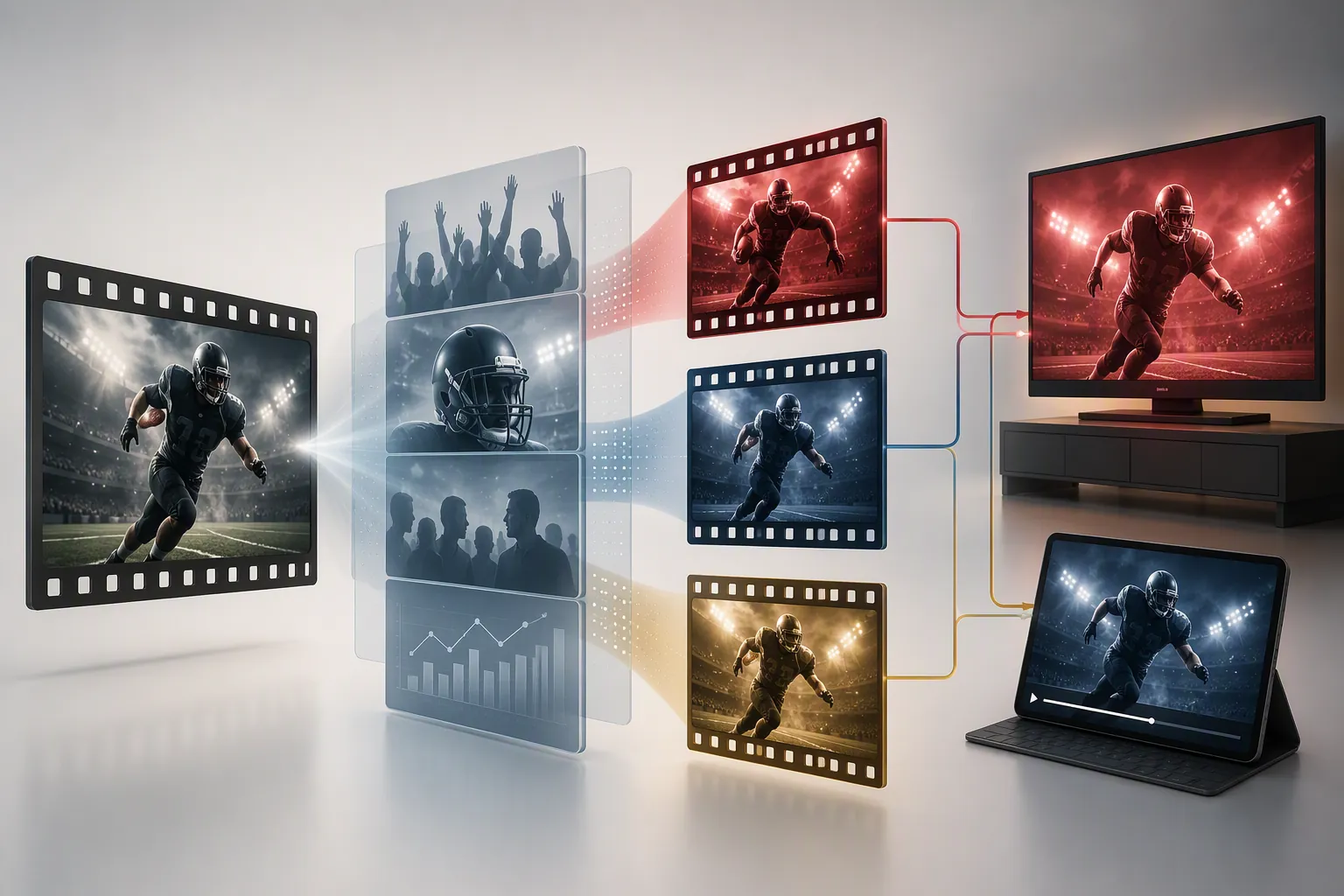
Forbes also reported that Season 8 brought Fansville into live broadcasts through mixed reality for the first time.[2] That detail is more important than it may look. Mixed-reality broadcast work carries constraints that a feed ad usually does not: timing, rights, approvals, visual continuity with the broadcast, talent or character likenesses, and the simple fact that a bad insert can look much worse on a national sports telecast than in a buried social placement.
The campaign roadmap points in the same direction. Dr Pepper CMO Drew Panayiotou described a move from scheduled mixed-reality elements toward more reactive, in-the-moment units tied to live game developments, such as acknowledging a coach’s “hot seat” while a game is slipping away.[2] That is not merely resizing a cutdown. It is a versioning system with editorial timing.
This is where Fansville has an advantage over many “creative at scale” pitches. The brand is not trying to personalize from a blank asset folder. It has a world. A recurring character such as Brian Bosworth’s sheriff works because the campaign has conserved elements: a town, a college-football obsession, recognizable roles, and rules for what can happen there. Personalization can then vary the matchup, fan cue, line, insert, or placement without making the ad feel like a different brand every time.
That same conserved-versus-variable discipline is the point in our benchmark on AI vaccine lessons for ad creative: the highest-leverage systems usually protect a small number of brand elements while allowing controlled variation around them. Fansville is useful because it appears to have that architecture before the version count arrives.
Why 3,000 versions is not a Performance Max or Advantage+ benchmark
A buyer running Performance Max, Advantage+, or AI Max should not take the Fansville number and paste it into a media plan as a new creative-volume target. The channel machinery is different.
| Question | Fansville-style reported system | Platform AI creative environment |
|---|---|---|
| Where does the system operate? | Brand-led college-football creative across broadcast and streaming contexts | Inside ad platforms such as Google or Meta delivery systems |
| What appears to be scaled? | Approved ad versions, tailored masters, audience-specific references, mixed-reality or reactive units | Combinations, crops, text treatments, enhancements, generated assets, or delivery-selected variants |
| When does variation happen? | Largely before distribution or around planned/reactive broadcast moments | Often during campaign delivery, optimization, or auction-adjacent assembly |
| Who carries the brand-safety burden? | Brand, agency, media partner, and broadcast approval process | Advertiser plus platform defaults, account settings, review systems, and post-launch monitoring |
| What does the version number prove? | That the campaign can support a large planned personalization matrix, if the reported number is accurate | Nothing by itself about auction-level lift, platform-generated quality, or account performance |
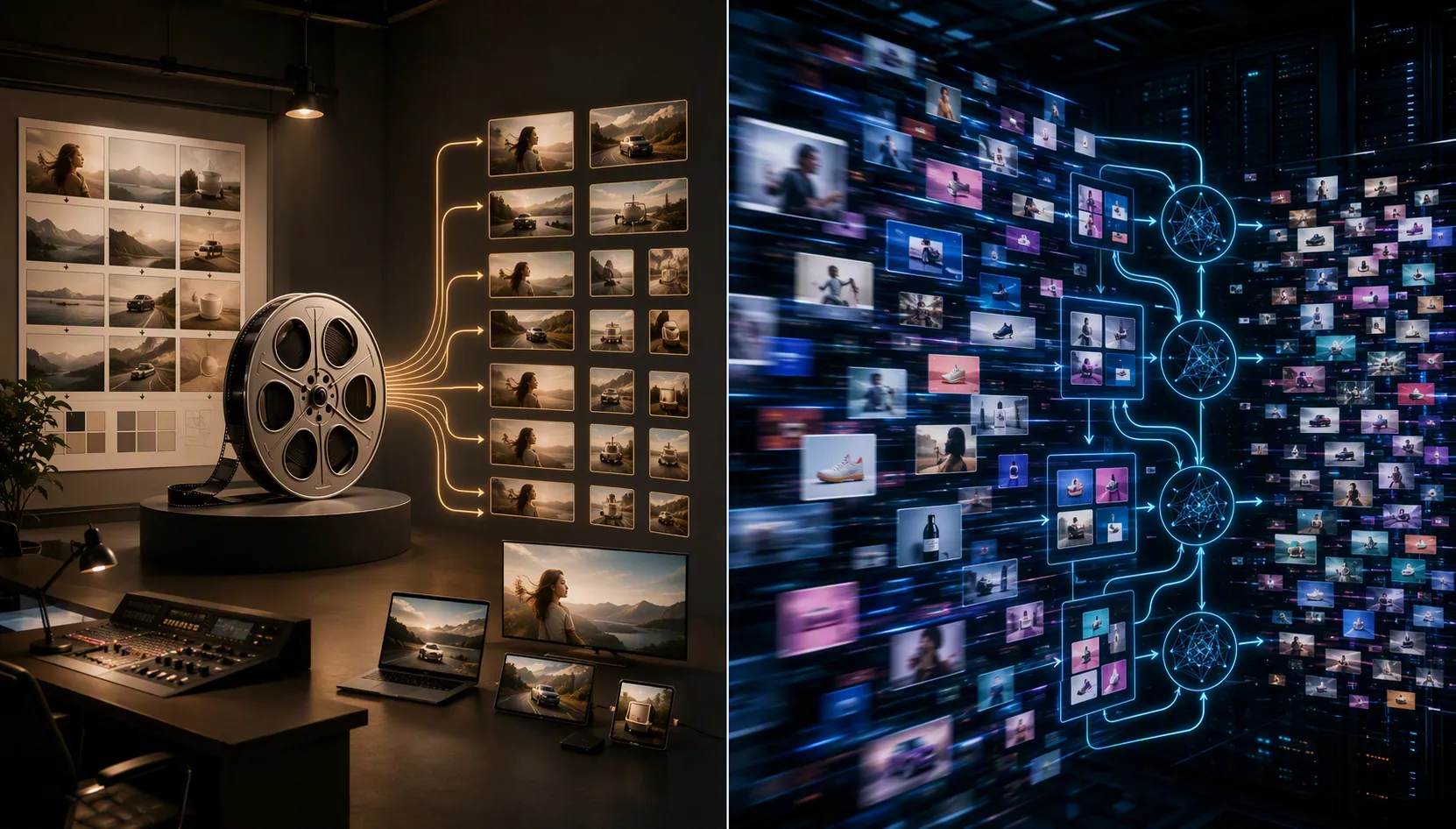
Performance Max and Advantage+ can change the shape of creative much closer to delivery. Depending on settings and product surface, platform systems may crop, resize, enhance, combine, rewrite, or generate elements from advertiser inputs. The buyer’s problem is not only “how many versions exist?” It is also “who made the version, under what permission, and can I inspect what ran?”
That is the direct contrast with default-on creative automation. In our record on Advantage+ Creative Enhancements, the operational issue is not a spectacular campaign universe; it is the quiet expansion of platform permissions that can alter ad presentation. In our benchmark on AI video creative campaign results, the pattern is similar: measured outcomes still depend on human judgment, source material, review, and the match between creative variation and buying context.
The Fansville case is more comfortable to admire because the brand system is visible. A buyer can see the universe. A broadcast partner can see the placement. A creative director can approve the treatment. That does not make it simple, and it does not prove performance lift. But it does make the type of automation easier to audit than a delivery system that silently recombines components across placements.
The transferable part is the architecture, not the version count
The wrong lesson is that every brand now needs thousands of AI-generated ad variants. The better lesson is that high-volume personalization needs a stable creative skeleton before it needs a generator.
Fansville can support versioning because the campaign gives the machine—or the team operating the machine—clear decisions to make. Which fan segment? Which conference or school cue? Which broadcast moment? Which character or town rule? Which visual treatment can change without breaking the campaign? Which elements must remain fixed so the ad is still recognizably Dr Pepper?
Most paid-social accounts are not missing a 3,000-variant factory. They are missing that decision map. They have too many interchangeable hooks, too few protected brand assets, and no clean record of which elements were human-approved, platform-generated, or vendor-supplied. When volume rises without provenance, reporting gets weaker instead of stronger.
That is why our benchmark on creative volume versus testing discipline and provenance checks is a better companion to this case than a generic AI-ad trend piece. More assets only help if the buyer can tell what changed, why it changed, where it ran, and whether the observed result belongs to creative, audience, placement, budget, or timing.
A smaller advertiser can copy the control logic
A regional retailer, B2B software company, or healthcare advertiser will not have Disney fan data, a national college-football universe, or mixed-reality broadcast inventory. That does not make the Fansville case irrelevant. It just means the copyable unit is smaller.
- Keep a small set of conserved assets: brand voice, offer framing, visual system, proof points, approved claims, and any recurring character or spokesperson rules.
- Define the variable fields before production: audience segment, geography, product use case, seasonality, offer, objection, testimonial type, or landing-page match.
- Build approved masters or modular templates before turning on automated expansion.
- Label every asset by source and permission: human-made, AI-assisted, platform-generated, vendor-generated, licensed, or unverified.
- Separate “more versions shipped” from “incremental performance proven.”
That last line is where many AI creative pitches get slippery. Adoption is easy to show. A vendor can show the asset count. A platform can show that enhancements were enabled. A brand can show a personalization matrix. None of that isolates lift.
How to audit the next “AI creative at scale” claim
Use the Fansville claim as a starting point for better questions, not as a yardstick. When a platform rep, vendor, agency, or internal stakeholder says a brand created thousands of AI ad versions, the first job is to identify what kind of system produced the number.
| Audit question | What you are trying to separate |
|---|---|
| Who reported the number? | Independent measurement, trade reporting, brand claim, agency claim, vendor case study, or platform sales material |
| Is the number independently measured? | A verified count of delivered creative versus a claimed capacity or production estimate |
| What counts as a “version”? | A new video master, a localized end card, a copy swap, a crop, a thumbnail, a generated variation, or a delivery combination |
| Which channel does it run in? | Broadcast, streaming TV, YouTube, Meta, search, display, retail media, or a cross-channel content system |
| Does generation happen at auction time? | Platform assembly during delivery versus prebuilt and approved versions distributed through planned media |
| What data layer controls personalization? | Declared audience data, partner fan data, first-party data, contextual triggers, platform inferred signals, or no clear data layer |
| What approvals remain? | Legal, brand, claims, likeness, rights, compliance, broadcast, platform review, or post-launch human monitoring |
| Was lift isolated? | A controlled incrementality test or brand-lift study versus a performance story mixed with spend, placement, seasonality, and media weight |
The checklist should feel almost boring. That is the point. The more spectacular the claim, the more valuable the dull questions become.
It is especially important when the system touches regulated claims, licensed material, geography, maps, public institutions, or anything that can become a trust failure. Our tracker entries on AI copyright grey zones in ad creative, AI map errors for advertisers, and the State Department AI map blunder are not parallel stories to Fansville. They are reminders that provenance and review do not become less important when creative output scales.
Compliance-sensitive categories should be even less casual about borrowing the language of AI-scale creative. In our benchmark on PMax, Advantage+, and AI Max defaults rewriting creative in practice, the buyer risk is not that the system lacks output. The risk is that automation changes claims, emphasis, or presentation in ways the advertiser may not have meant to approve.
Where Brian Bosworth and Fansville lore actually matter
The celebrity and lore layer matters only insofar as it gives the versioning engine durable material. Brian Bosworth’s recurring presence is useful to a media buyer because it signals continuity: the campaign has characters, expectations, and a shared joke with college-football viewers. That is a stronger base for personalization than a one-off spot with no repeatable rules.
It would be easy to overread that into a general lesson about celebrities, mascots, or fictional towns. The more practical read is simpler: if the audience cannot recognize what stays the same, the buyer cannot safely vary very much. Fansville gives Dr Pepper a container. The reported dynamic engine fills that container with audience-specific and moment-specific treatments.
The Aug. 2, 2026 read
As of Aug. 2, 2026, Dr Pepper’s Fansville engine is best treated as a strong case of brand personalization at scale, not as a clean benchmark for AI-generated paid-social creative. The reported “up to 3,000 versions” figure is worth watching, but it remains a sourced claim under test rather than an independently verified performance standard.[1]
What transfers is the discipline: build a recognizable creative universe, decide which elements can vary, layer data in a way that matches the media context, preserve human approvals, and keep timing close to the audience moment. What does not transfer is the permission to tell a Performance Max or Advantage+ account that it should now produce thousands of variants because a national college-football campaign reportedly can.
Copy the system logic. Do not copy the volume number.
References
- Dr Pepper's college football marketing playbook includes mixed reality, AI and Pat McAfee. Ad Age. Aug. 29, 2025.
- Dr Pepper's Fansville Adds Jerry Jones, Mixed Reality And More. Forbes. Sep. 13, 2025.
This is a record of what happened and what was tested, not legal advice. Compliance determinations require qualified counsel.