
How the State Department AI Map Blunder Repeats in Your Ads
A dated incident record of the State Department's AI-generated Africa map blunder and the July 30 apology behind it, plus the editorial case that the same zero-verification pipeline is producing AI-modified ads in live accounts today. Advertisers get the checkable facts and process lessons to audit their own default-on AI creative before errors ship.
- Platform
- Meta
- Change category
- creative
- Effective date
- 2026-07-30
- Change type
- default-on change
- Impact level
- high
Last reviewed: July 31, 2026.
The State Department AI map blunder apology matters to advertisers because the department did not merely publish a bad image. It published a replacement asset that, by its own later account, was changed too late and checked too lightly before reaching a public screen.
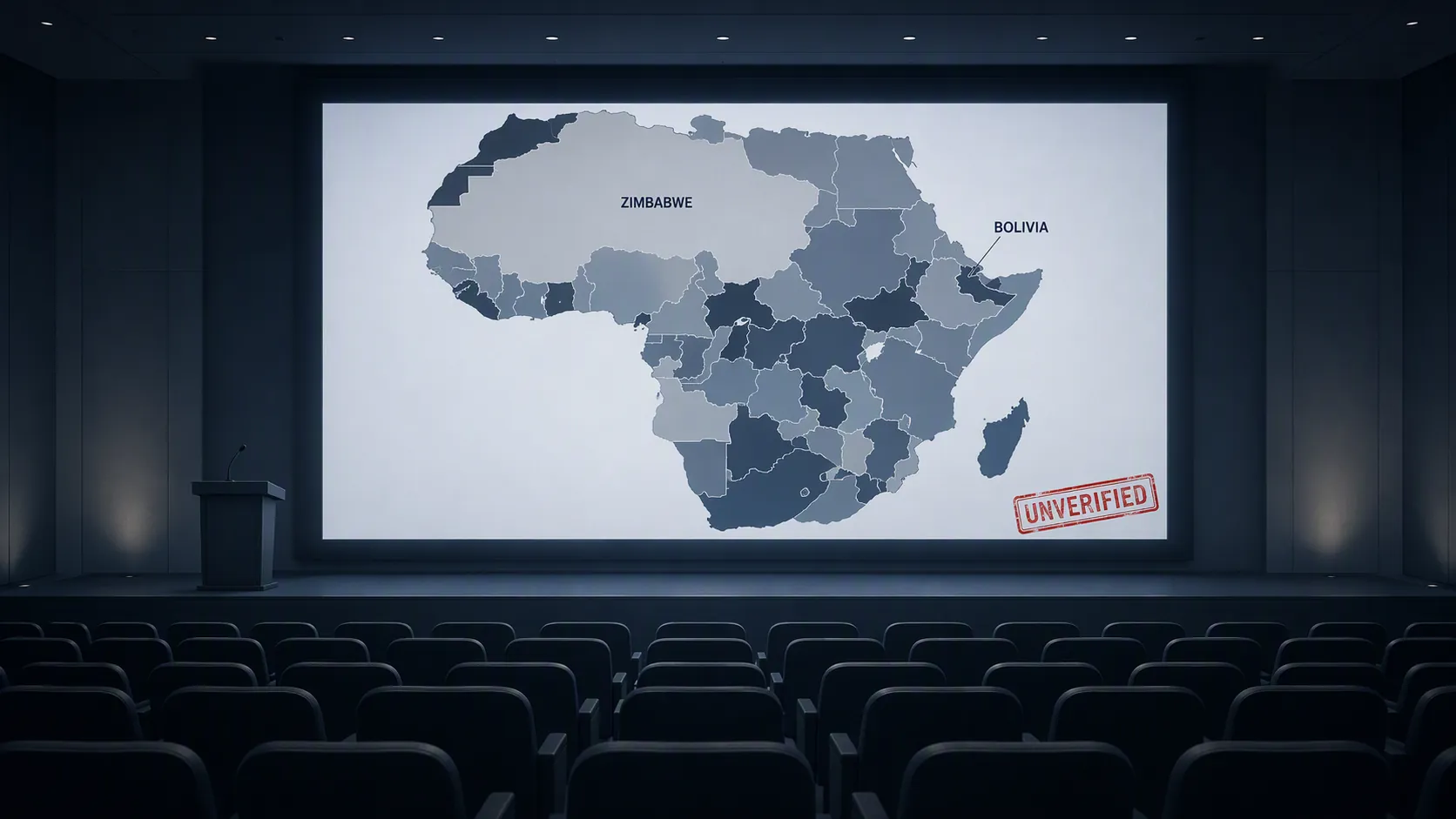
On July 26, 2026, during an AIDS 2026 presentation in Rio de Janeiro, a U.S. State Department slide showed a map of Africa with country names placed in the wrong locations. On July 30, the department apologized for what it called an “unfortunate error” and said a team member had “hastily altered the slide deck immediately before the presentation.” Reuters reported that explanation the same day.[1]
The dated record is more useful than the AI spectacle
There is no need to dramatize the obvious part. Generative AI can produce a confident-looking wrong image. The useful part of this incident is the sequence: a presentation existed, a slide was altered immediately before delivery, the altered slide contained checkable errors, and the asset still reached the conference audience.
The geography errors were not subtle. Reuters described Nigeria appearing landlocked in the Sahara, Mozambique shifted toward the Horn of Africa, Côte d’Ivoire appearing on the wrong side of the continent, and Cameroon labeled without corresponding territory.[1] Those are not matters of interpretation, brand taste, or visual preference. They are source-of-truth failures.
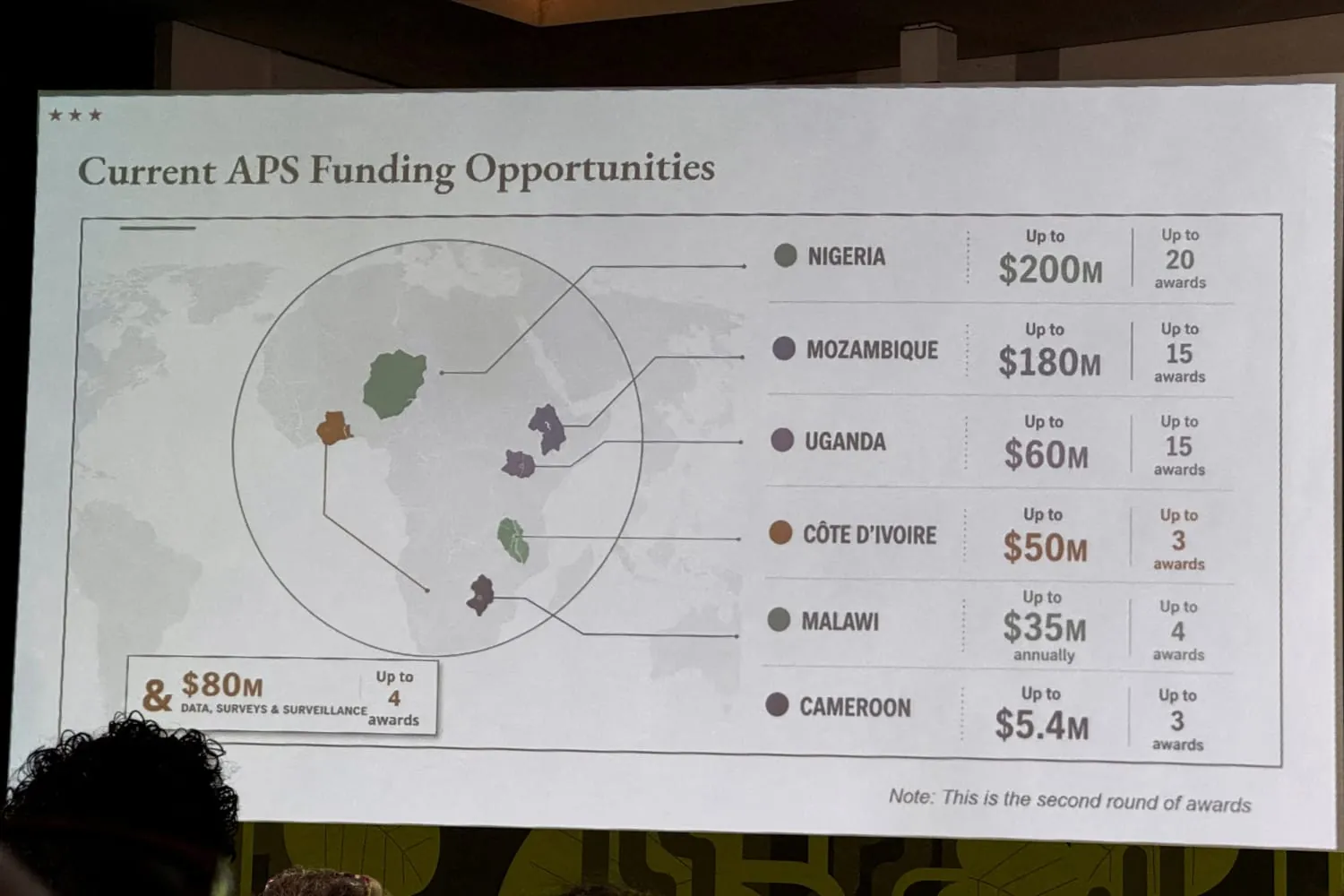
That distinction is why the apology sentence carries more weight than a general warning about hallucinations. A wrong map in a public-health presentation is bad. A wrong map substituted at the last minute without a verification step is the operational fact advertisers should recognize.
Some details remain bounded. Reuters reported that its analysis of the presentation video found an OpenAI watermark, but the public record does not establish the exact tool, prompt, source image, approval path, or generation workflow behind the slide.[1] That uncertainty should not be filled in with a neat story about one model “causing” the error. The confirmed record is narrower and more useful: a last-minute alteration displaced what should have been a reviewable asset.
The advertiser parallel: same verification gap, different evidence
The comparison to ad platforms is an editorial judgment, not a claim that the State Department incident and a Meta campaign are the same event or the same kind of evidence. The public-record incident shows an institutional asset reaching a public audience after an unverified late change. Live ad-account examples show platform-modified creative entering delivery with errors that the advertiser, not the platform, is expected to catch.
Business Insider reported in July 2026 that advertisers had seen Meta’s AI creative changes produce visible product errors, including an REI bicycle ad with two sets of handlebars, a pajama dress altered into a shirt-and-pants set, and garbled text appearing on product images. The same report said Meta treated review of AI outputs as the advertiser’s responsibility.[2]

Those Business Insider examples should not be inflated into controlled performance research. They are live-account warning signs. The useful lesson is procedural: an image can leave the advertiser’s source file, pass through platform automation, and return as a deliverable ad that no longer matches the product.
The default setting makes the ad version harsher than a one-off image mistake. Flighted described Meta’s Advantage+ creative enhancements as on by default and said Meta expected about 40% of creative ads to be AI-enhanced in 2026.[3] At that scale, the review problem is no longer “Did someone test the AI tool?” It is “Which modified assets entered delivery without being compared back to product truth?”
Why the apology will not map cleanly onto your ad account
A government agency apologizes when the error is public, embarrassing, and institutional. A platform-modified ad usually fails more quietly. It spends budget, collects impressions, maybe damages trust among people who notice, and then waits for a buyer, founder, client, or customer to send the screenshot.
That is the practical weight of Meta’s position. If review of AI outputs is the advertiser’s responsibility, then the account team owns the last human comparison between the modified creative and the source of truth. The platform may have changed the image, but the advertiser is the party left explaining why the product in the ad has the wrong structure, wrong text, wrong packaging, or wrong claim.
The same pattern shows up in less visual forms. A platform-generated variant can soften a regulated claim, sharpen it past what legal approved, add unsupported urgency, crop out required context, or reframe a product for the wrong audience. None of those require the model to be unusually bad. They require only a delivery system where modified assets move faster than review.
For more on how liability attaches when an authoritative AI output is wrong, see the Signal & Convert tracker entry on AI output liability and documentation. The useful discipline is the same: record what the system changed, who reviewed it, and what source material was used to approve or reject it.
The industry context is already uncomfortable
The available survey data is not a Q3 2026 field read, but it is still useful context. IAB reported findings from a July 2024 survey of 125 U.S. ad executives, published in August 2025: 70% said they had experienced at least one AI-related incident, 40% said they had paused or pulled ads because of AI issues, and about 90% still said they felt prepared to handle AI risk. IAB described that gap as a “false sense of security.”[4]
That combination is familiar inside ad accounts: teams know incidents happen, but the workflow still depends on someone noticing the bad preview at the right time. The danger is not ignorance. It is a review process built around hope, screenshots, and whoever happened to be online before launch.
What to verify before AI-modified creative ships
The State Department map failed against geography. A product ad fails against product reality. A regulated campaign fails against approved language. The check has to match the asset’s source of truth, not the platform’s preview layout.
| Review point | What the buyer or account lead should compare |
|---|---|
| Product truth | Shape, count, material, packaging, color, fit, included parts, and any feature the customer will expect to receive. |
| Text legibility | Generated or altered copy inside images, labels, packaging, disclaimers, buttons, and background signage. |
| Claims and compliance | Price, discount, financing, health, safety, income, availability, guarantees, and any regulated or substantiation-sensitive statement. |
| Geography and identity | Maps, locations, flags, landmarks, languages, cultural references, and named communities. |
| Brand context | Situations the platform may treat as engagement-friendly but the brand would treat as misleading, tasteless, or off-position. |
| Default-on settings | Which AI enhancements were enabled automatically, who left them on, and whether the client or internal owner approved that setting. |
This does not require turning every launch into a legal review. It does require separating “the ad looks good” from “the ad still represents the approved thing.” A clean preview can still contain a wrong product. A high-performing variant can still contain an unsupported claim. A polished map can still move a country.
Default settings deserve their own note in the launch record. If Advantage+ creative enhancements or similar automation are active, document that they are active. If they are turned off, document who turned them off and why. If they are allowed only for some campaigns, record the boundary. The same issue appears in compliance-heavy categories; Signal & Convert’s benchmark on AI ad automation and reverse mortgage compliance is a useful adjacent example of why default settings cannot be treated as neutral.
For teams auditing broader platform claims, keep the verification problem separate from the performance story. A vendor can report efficiency gains while an account still needs asset-level controls. The benchmark on Google AI advertising results versus marketing claims is the cleaner place to pressure-test platform performance language.
Where the control point actually sits
The State Department apology is useful because it names the weak point: the slide was altered immediately before the presentation. In ad accounts, the weak point is often less dramatic. A box is checked by default. A creative enhancement is left on. A variant is generated after upload. A resized or rewritten asset enters delivery. Everyone assumes the preview was reviewed by someone else.
That assumption is what has to go. Assign the review to a named role before launch. Make that person compare AI-modified assets against the product page, approved claims, original photography, legal notes, and brand exclusions. Keep the rejected examples when they show a recurring failure mode. They are not clutter; they are evidence for turning a default off later.
If the platform’s automation is expanding because the economics push in that direction, treat the defaults as a standing item, not a one-time setup task. Signal & Convert tracks that pressure in its benchmarks on AI debt funding and the dated checklist of ad platform defaults to challenge. For brand-context misses, the Cracker Barrel AI blind spot analysis is a reminder that systems can misread attention as approval.
The State Department apologized because the failure was public and institutional. Advertisers should assume their equivalent failure will simply keep spending until someone catches it.
References
- US government map of Africa mislabels every country at global conference — Reuters, July 30, 2026.
- Meta's AI ads push causes chaos for brands — Business Insider, July 13, 2026.
- Meta’s Advantage+ AI Creative Enhancements: Each One Explained — Flighted, July 16, 2026.
- AI Adoption Is Surging in Advertising, but Is the Industry Prepared for Responsible AI? — IAB, August 2025.
Primary source: https://www.reuters.com