
State Dept's AI Map Mislabel Is a Warning for Advertisers
The State Department's AI-generated Africa map mislabeled all six countries it identified at the AIDS 2026 pre-conference; an AI watermark trail was the only reason its origin was provable. This dated incident record gives media buyers the operational lesson: provenance checks and human factual review are two separate gates, both required before AI creative ships.
- Platform
- Google Ads, Meta0 TikTok
- Change category
- creative
- Effective date
- 0-07-26
- Change type
- default-on change
- Impact level
- High
Tracker entry: 2026-07-26
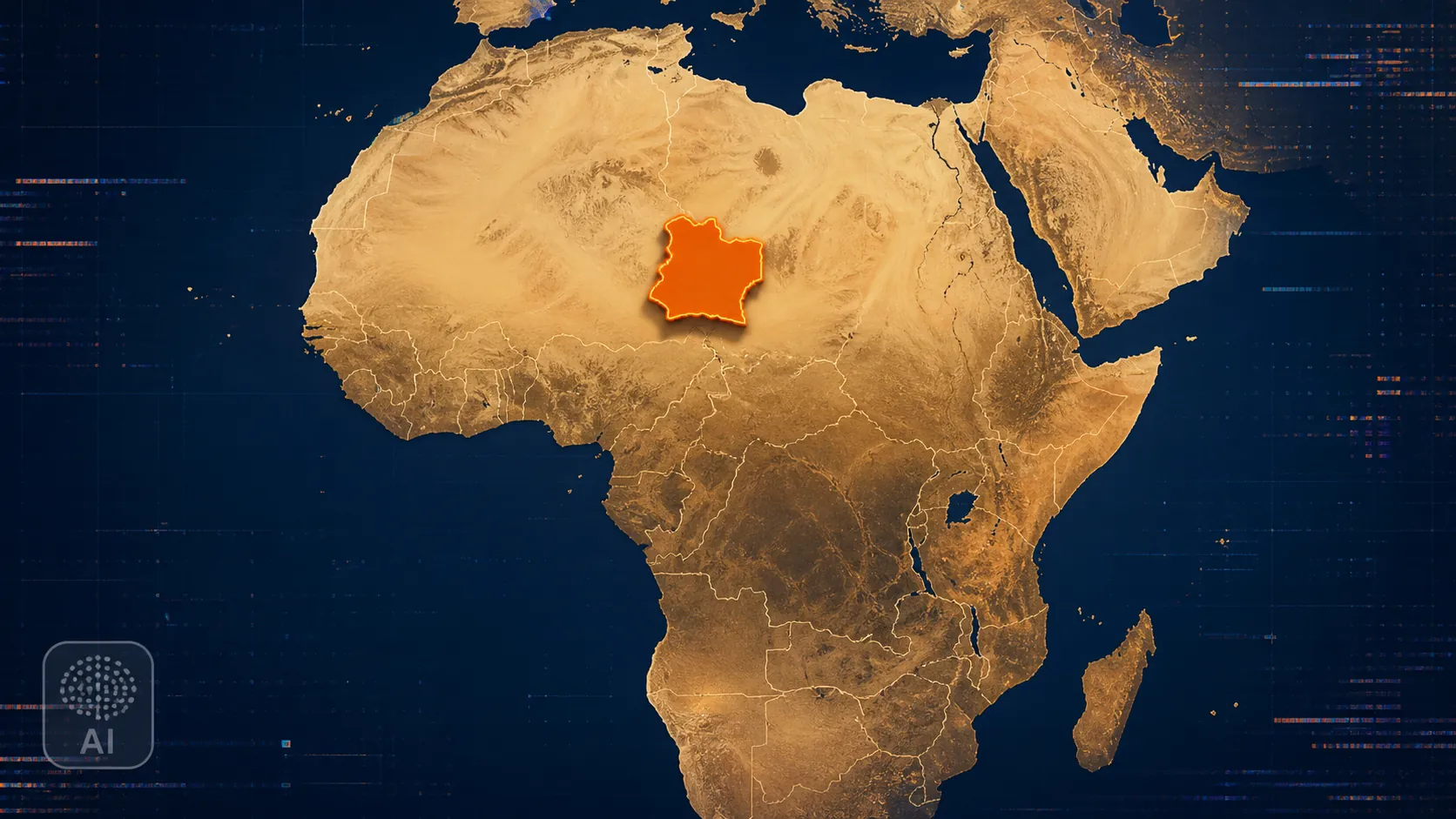
On July 26, 2026, at the AIDS 2026 pre-conference in Rio de Janeiro, Jeff Graham, the senior U.S. official overseeing PEPFAR, presented a slide deck that included an Africa map later traced by Reuters to AI tools. The map mislabeled every country it identified; CNN framed the error set as six countries: Nigeria, Mozambique, Uganda, Côte d’Ivoire, Malawi, and Cameroon.[1][2]
That is the operational center of the incident: the public failure was not that an AI asset was detectable. The public failure was that a factually broken image reached an audience before anyone with responsibility stopped it.
What was wrong on the map
The safest way to read the incident is narrowly. Reuters and CNN reported that every country the map identified was mislabeled. CNN specified six countries. The New York Times and Africanews documented the visible geography errors that made the slide indefensible once people looked at it closely.[1][2][3][4]
- Nigeria was shown as landlocked in the Sahara, despite having an Atlantic coast.[3][4]
- Mozambique was shifted to the Horn of Africa.[3][4]
- Côte d’Ivoire, also referred to in coverage as Ivory Coast, appeared on the wrong side of the continent.[3][4]
- Uganda and Malawi were shown with wrong borders.[3][4]
- Cameroon appeared in the legend but was absent from the map.[3][4]
- One country shape appeared without a name.[3][4]
This was not a typo buried in speaker notes. It was a visual claim about where African countries are, shown during a public health conference session tied to U.S. global HIV policy. The error was instantly legible to people who know the continent and instantly shareable to people who did not need to understand the policy context to understand the insult.
The watermark helped after publication, not before it
Reuters reported that its analysis found an AI watermark on the image signaling OpenAI tools, and OpenAI said it was investigating. That is the limit of the available record here: the watermark trail helped identify the likely tool path after the slide was public; it does not establish that OpenAI caused the geography mistakes, and no resolution from OpenAI was available in the tracker record as of July 31, 2026.[1]
For a media buyer, that distinction is not academic. Provenance is one question: where did this asset come from, what tool touched it, and what disclosure or platform-policy issue follows? Factual review is another question: are the labels, claims, people, places, prices, product statements, health references, financial representations, map boundaries, and localized elements true enough to publish?
The Reuters watermark finding gave the post-mortem a handle. It would not have caught Nigeria in the Sahara before launch unless someone treated the map as a factual object rather than a decorative asset.

The escalation ran faster than the approval chain could explain
Emily Bass documented the map in a same-day Substack post on July 26, 2026.[5] From there, the mistake moved into professional and political visibility: Reuters reported LinkedIn virality, including one post with roughly 40,000 views, and The New Republic also covered the online spread.[1][6]
By the time the State Department responded, the issue was no longer a slide-deck defect. The department took “full responsibility for the confusion and misrepresentation it caused for attendees, including our African partners,” called it “an unfortunate error,” and said a team member had “hastily altered” the slide deck.[1][2]
The criticism landed on approval, not just generation. Matt Petit of the Atlantic Council said, “Whoever created and approved this slide did not know where countries in Africa are and did not care to check their work.” Cameron Hudson, a former State Department and National Security Council official, also criticized the episode, while International AIDS Society president-elect Kenneth Ngure called the map “disheartening.”[1][2][3][4]
That sequence is the part advertisers should keep. A senior official presents the slide. The error is documented the same day. Social platforms amplify it. Major outlets verify it. The institution apologizes not only for confusion, but for misrepresentation. Nobody in that chain gets to recover credibility by saying the asset was watermarked.
The advertising control this points to
Advertisers do not need to run State Department slide decks to inherit the same failure pattern. Advantage+, Performance Max, and Symphony-style workflows can generate, resize, remix, localize, and vary assets quickly enough that “someone glanced at it” is not a control. The people who inherit the fallout are often downstream: the media buyer whose campaign ID is attached, the brand lead answering the client, the partner shown incorrectly, the compliance reviewer who was never asked to look at the final version.
The practical change is two separate gates, owned by named people.
- Provenance gate: identify whether AI tools generated or materially altered the asset, whether the origin needs disclosure, whether the platform or client has a policy requirement, and whether the file carries signals that should be retained or documented.
- Factual gate: have a human reviewer check every factual claim and visual assertion in the asset, including labels, geography, product claims, regulated language, testimonial implications, before-and-after visuals, prices, dates, locations, partner names, and localized copy.
Those gates cannot be collapsed into one approval checkbox. A provenance reviewer can tell the team that an image appears to have been generated or altered by AI. That person may still have no idea whether a map is accurate, whether a medical claim is compliant, or whether a local-market reference is insulting. A factual reviewer can catch the bad map and still miss whether the client needs an AI disclosure trail. The incident only looks like one mistake after it ships.
Where this fits in the tracker
Treat the July 26 State Department map as an anchor record for the failure pattern “AI creative reaches a public audience unverified.” It sits next to other records where generated output, automated assembly, or AI-managed distribution changes who has to verify what before launch.
For adjacent Signal & Convert context, see the tracker entry on OpenAI-output harm and ad-platform liability, the brand-reputation case on the Cracker Barrel rebrand AI blind spot, the benchmark on AI ad automation and reverse-mortgage compliance, the automation-timeline tracker on Altman, the singularity, and ad platforms, and the operating guide to Performance Max creative best practices.
References
- US government map of Africa mislabels every country at global conference, Reuters, July 30, 2026
- State Department Africa map mislabel, CNN, July 30, 2026
- State Department Map of Africa, The New York Times, July 30, 2026
- AI-generated Africa map blunder overshadows US presentation at global AIDS conference, Africanews, July 30, 2026
- The US State Department redraws the, Emily Bass Substack, July 26, 2026
- State Department Map Labels Every African Country Wrong at Conference, The New Republic, July 30, 2026
Primary source: https://www.reuters.com