
Is Mark Cuban's AI data center warning an ad-cost signal?
Mark Cuban's AI data-center overbuild warning is a media-buying signal, not abstract macro commentary: the companies building that infrastructure are the same ones selling the ads, and Meta's 91% Q2 free-cash-flow drop plus Alphabet's first cash-flow-negative quarter are the first hard evidence the build is hitting platform economics. This dated tracker entry lays out the Q3-Q4 2026 signals to watch — Meta's outlook, Alphabet's 2027 capex plans, buyback suspensions, and new automation defaults — before any budget moves.
- Platform
- Meta0 Google
- Change category
- bidding
- Effective date
- 0-07-29
- Change type
- default-on change
- Impact level
- Medium
Record date: 2026-08-03. Platform scope: Meta and Google first, with Amazon, Microsoft, and the wider hyperscaler capex cycle as context. Mark Cuban’s AI data center overinvestment warning belongs in a media-buying tracker for one narrow reason: the companies absorbing the AI infrastructure bill are also the auction owners, measurement vendors, creative-automation vendors, and sales organizations asking advertisers to trust more AI-driven products.
Cuban’s July warning is a useful entry point, not the evidence base. Business Insider reported, from the All-In podcast, that Cuban said AI efficiency gains could leave “a lot of data centers that are going to be turned into pickleball courts,” and called Big Tech’s capex plans “planning for perfection.” That quote is secondhand podcast coverage, not a transcript, so it should not carry more weight than the platform numbers that landed around it. [1]

The harder signal is what happened in Q2 2026 cash flow. Meta’s free cash flow fell to $784 million from $8.55 billion a year earlier, a 91% drop, as AI infrastructure spending climbed. [2] Fortune separately reported that Meta’s Q2 capex was $31.1 billion against $31.9 billion of operating cash flow, that Meta issued $24.9 billion in long-term debt during the quarter, and that it bought back no stock. [3] Reuters reported a week earlier that Alphabet posted its first-ever cash-flow-negative quarter. [4]
That is where Cuban’s warning stops being an abstract “AI bubble” argument for advertisers. A buyer does not need to decide whether Cuban is right about stranded data centers. The nearer question is whether AI capex is now large enough to change the incentives of the same platforms setting ad-product defaults, packaging AI features, and describing performance lift.
Why Meta’s Q2 print matters more than the pickleball line
Meta is the cleanest ad-platform case because it does not have the same cloud-business offset that Alphabet, Microsoft, or Amazon can point to. CNBC framed that investor concern in April: without a cloud escape hatch, Meta’s AI capex return has to show up elsewhere, and that mostly means increased ad revenue. [5]
That does not mean Meta has announced higher CPMs to fund data centers. No source in this record supports that claim. The operational issue is more subtle: when capex consumes operating cash flow and buybacks stop, the company has more reason to extract value from the advertising system it already controls. That can show up through more aggressive AI product adoption, more emphasis on automation, tighter packaging of measurement and creative tools, or stronger claims that the AI layer is improving outcomes.
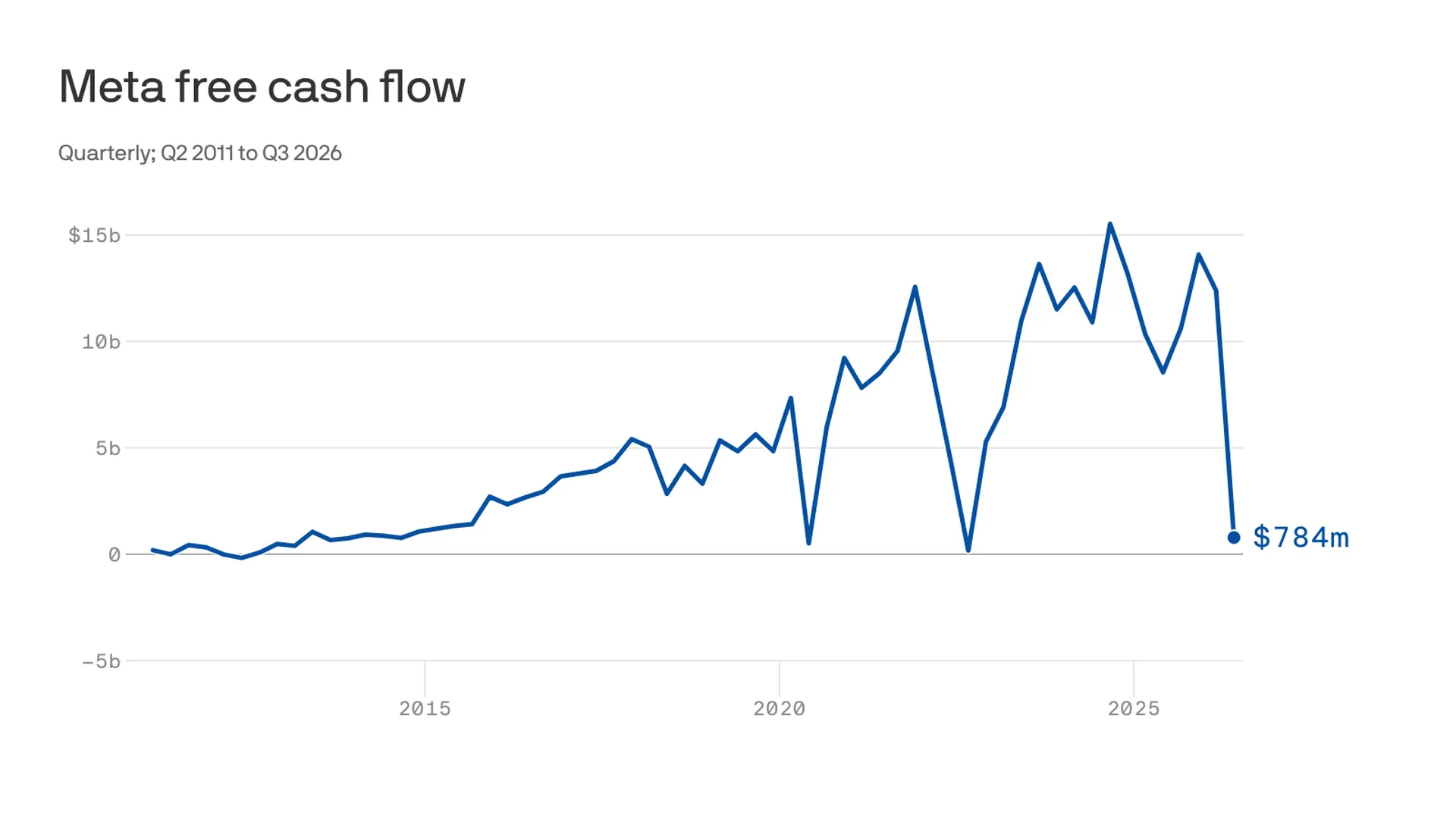
The free-cash-flow collapse also changes how buyers should read platform language. A sales deck saying an AI campaign type improved conversions may still be true for a given advertiser. But in this environment, a lift claim also arrives from a business with a stronger need to prove that AI infrastructure spending is productive. That is not a reason to reject the claim. It is a reason to ask what baseline, attribution window, incrementality method, and holdout design produced it.
There is a second reason Meta deserves extra space in the tracker: the ad-revenue race is no longer a side story. eMarketer, cited by MediaPost in April, forecast Meta would overtake Google in 2026 global digital ad revenue, with $243.46 billion versus Google’s $239.54 billion in net ad revenue. [6] If that forecast holds, the platform under the sharpest no-cloud ROI pressure is also becoming the largest digital ad seller.
The capex numbers are large, but the buyer-facing mechanism is still indirect
The broader hyperscaler numbers explain why this is not only a Meta note. CNBC reported in February that Alphabet, Microsoft, Meta, and Amazon were tracking near $700 billion in combined 2026 capex, up more than 60% from 2025. [7] By July, Reuters/LSEG put a five-hyperscaler capex figure near $730 billion and reported that hyperscalers were expected to spend more on capex than they generate in free cash flow by 2027, with about $1.57 of added investment for every $1 of added cash flow. [8]
Those are two dated estimates from different points in the year, not one blended fact. The useful read is directional: the AI infrastructure build is no longer just an income-statement promise about future products. It is now visible in free cash flow, debt issuance, and capital allocation.
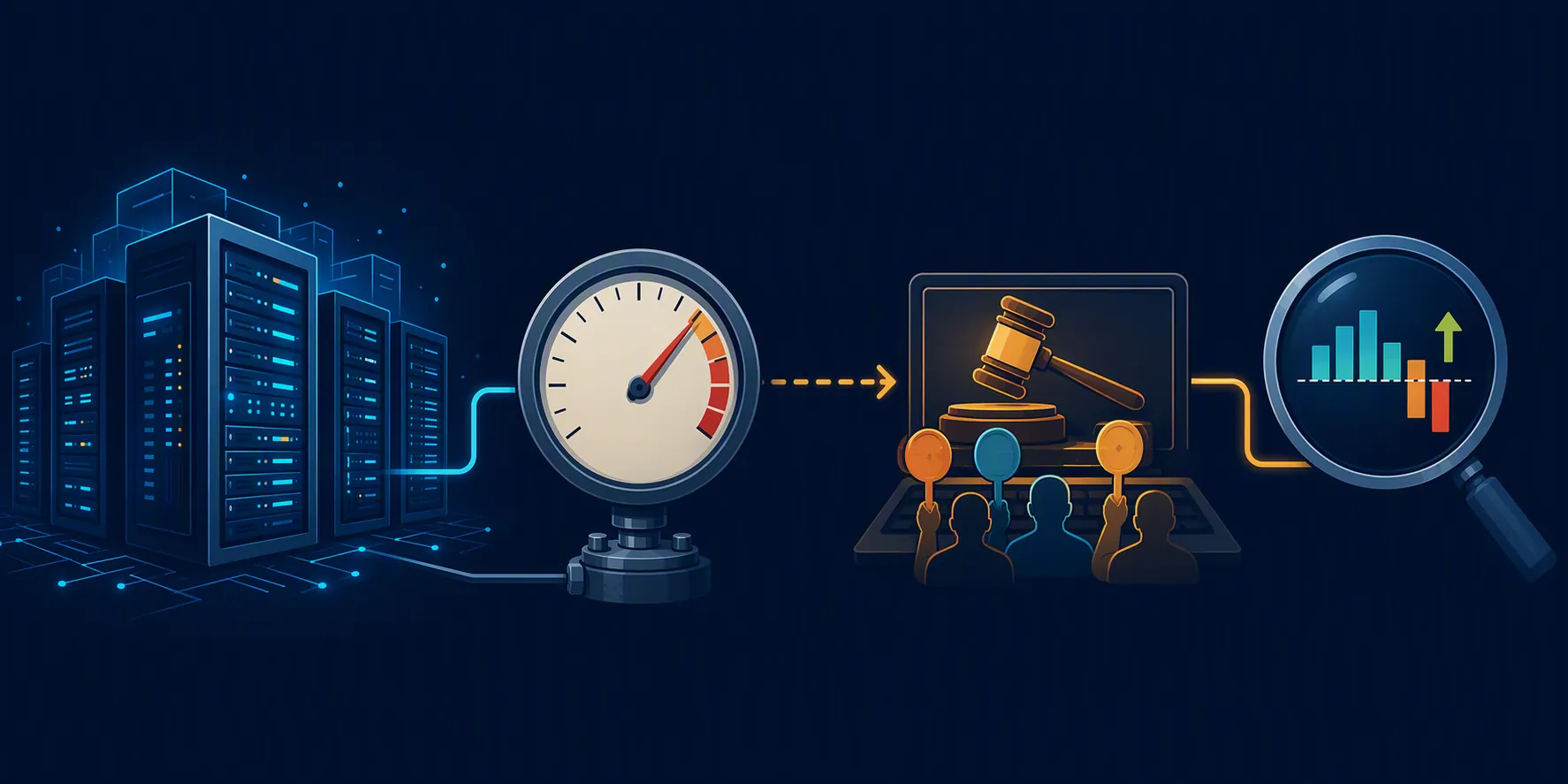
For advertisers, the chain to watch looks like this: AI capex consumes more cash flow; platform management has more reason to defend AI investment returns; the ad business remains the most direct monetization surface for Meta and a major monetization surface for Google; buyers then see more AI campaign packaging, more defaulted automation, more bundled measurement claims, or more pressure to consolidate spend inside platform-native tools.
That chain is pressure, not proven causation. It does not justify telling a client that CPC rose because a platform built too many data centers. It does justify adding capex and free-cash-flow disclosures to the same tracker where CPM, CPC, CPA, ROAS, auction overlap, attribution changes, and automation defaults already live.
That is the same discipline used in the site’s Amazon Q3 2026 earnings watch: capex is treated as a monetization-pressure signal, not as automatic proof of higher ad costs. The related Amazon AI capex advertiser benchmark and Amazon AI spending ad-cost benchmark are the structural siblings to this Meta/Google record.
What to do with Cuban’s broader warning
Cuban had already been making a broader AI-backlash argument before the data-center quote. Fortune covered that argument in late June 2026, and 24/7 Wall St. covered his $130 billion warning for AI companies in July. [9][10] Those pieces matter here only as context: Cuban is not giving a media-buying forecast, and the ad-platform signal does not depend on his personal forecast being right.
The counterframe also belongs in the record. Capex backers argue that AI infrastructure is “the foundation, not the ceiling,” and Marketplace covered that side of the debate in June. [11] Reuters reported in July that some investors were already positioning for slower hyperscaler spending growth, which means the market is not unanimously betting on an endless straight-line buildout. [12]
A buyer does not need to resolve that investment debate to act responsibly. The campaign-level question is narrower: when a platform’s economics tighten, do the buyer-facing defaults, reporting claims, and auction outcomes change in ways that are visible inside the account?
Q3–Q4 2026 watch list
| Signal to watch | Why it matters | Account-level check |
|---|---|---|
| Meta Q3 outlook and any update to 2026 capex guidance | Meta is the purest ad-platform case because AI capex has fewer non-ad monetization offsets than at cloud-heavy peers. | Compare CPM, CPC, CPA, ROAS, spend concentration, and Advantage+ or other automation adoption against pre-Q3 baselines. |
| Alphabet commentary on 2027 capex plans | Google has cloud revenue, but it also owns a major ads auction and measurement stack. A 2027 capex step-up would keep monetization pressure in view. | Separate Search, YouTube, Demand Gen, and Performance Max trends instead of averaging them into one Google Ads read. |
| Buyback suspension or resumption signals | Meta’s no-buyback Q2, alongside debt issuance, made the AI spend feel operational. A resumption would change the pressure read; continued suspension would keep it live. | Track whether platform sales narratives become more aggressive around AI budget consolidation or automated creative expansion. |
| New automation defaults or reporting-language changes | The most likely buyer-facing effect is not a posted AI surcharge. It is more defaulted automation, more AI-native packaging, or more performance claims that require verification. | Log any default changes with dates, then compare to CPM, CPC, CPA, conversion quality, incrementality tests, and attribution-window shifts. |
The verification standard should stay the same as in the platform AI-claims records: shipped product, dated disclosure, account metric, then decision. The Amazon Q2 AI ad-revenue claims tracker and Amazon Q2 AI advertising claims benchmark use that same gap between platform claim and buyer-verifiable outcome.
For accounts with stable historical data, the first check is not exotic. Pull pre-Q3 2026 baselines for CPM, CPC, CPA, ROAS, conversion rate, average order value, spend by campaign type, and share of spend under platform automation. If a platform announces stronger AI results while account-level CPA rises, the next question is whether auction price, conversion quality, attribution, targeting expansion, creative fatigue, or budget mix moved first.
Small accounts should be especially careful with noisy week-to-week reads. A single holiday, promo, creative change, or budget reset can overwhelm any platform-level capex signal. If you need a concrete comparison habit, the Friday pizza promo paid-ads benchmark is closer to the right level of evidence than an earnings-call quote: real CPM and CPC baselines first, macro interpretation second.
Do not move budget because Cuban used a vivid image. Mark the signal because Meta and Alphabet’s Q2 cash-flow prints show the AI build is now colliding with ad-platform economics. Then watch the next dated disclosures and verify any auction or performance impact against your own CPM, CPC, CPA, and ROAS baselines before changing spend.
References
- Mark Cuban says the AI data center buildout could leave a lot of data centers turned into pickleball courts — Business Insider, July 22, 2026.
- Meta narrows annual capex forecast as AI buildout grows — Reuters, July 29, 2026.
- Meta earnings: Zuckerberg hints at cloud business as free cash flow drops due to capex — Fortune, July 29, 2026.
- Alphabet’s first-ever cash-flow-negative quarter — Reuters, July 23, 2026.
- Investors trust Google more than Meta when it comes to spending on AI — CNBC, April 29, 2026.
- Meta set to surpass Google in 2026 ad revenue — MediaPost, April 14, 2026.
- Google, Microsoft, Meta and Amazon are spending big on AI while cash flow shrinks — CNBC, February 6, 2026.
- AI investment boom puts Big Tech’s free cash flow under pressure — Reuters, July 22, 2026.
- Mark Cuban says AI backlash is coming for Silicon Valley — Fortune, June 26, 2026.
- ‘Being hated is not good for business’: Mark Cuban’s $130 billion warning for AI companies — 24/7 Wall St., July 14, 2026.
- Can Big Tech’s spending spree on AI infrastructure last? — Marketplace, June 3, 2026.
- Among AI crowd, some investors position for slower hyperscaler spending growth — Reuters, July 17, 2026.
Primary source: https://www.reuters.com/technology/meta-narrows-annual-capex-forecast-ai-buildout-grows-2026-07-29/