
Amazon's Q2 earnings AI ad revenue claims, checked
Amazon's Q2 2026 ads business grew to $19.81B (+26% YoY), while the AI-ad numbers Amazon cited — Sponsored Prompts, Ads Agent, Alexa for Shopping — remained company-claimed. This dated tracker record separates reported figures from claimed AI impact and shows what independent account data actually supports, so media buyers can see the verification gap before trusting Amazon's AI numbers.
- Platform
- Amazon Ads
- Change category
- creative
- Effective date
- 0-07-30
- Change type
- default-on change
- Impact level
- moderate
Tracker entry, 2026-07-30. Amazon reported Q2 2026 advertising services revenue of $19.81 billion, up 26% year over year from $15.69 billion, and CNBC reported the figure came in above StreetAccount’s $19.43 billion estimate.[1][2] That is the clean baseline for any discussion of Amazon earnings, AI, and ad-revenue impact. The AI-ad performance figures Amazon put around that growth story — Sponsored Prompts, Ads Agent, and Alexa for Shopping — are still company-claimed numbers, not independently verified advertiser outcomes.
There is one earnings-cleanup item worth separating before the ad analysis: Amazon’s Q2 net income was $62.6 billion, and the company said that included a $53.4 billion non-operating pre-tax gain primarily related to its Anthropic investment; GAAP diluted EPS of $5.75 should not be blended with CNBC’s roughly $1.97 adjusted EPS figure.[1][2] That matters for earnings interpretation, but it should not be used as evidence that Amazon’s AI ad products improved advertiser performance.
| Tracker field | Record |
|---|---|
| Report date | 2026-07-30 |
| Platform | Amazon / Amazon Ads |
| Change category | Q2 earnings result, AI-ad product claims, and buyer-facing platform changes |
| Reported ad revenue | $19.81B in Q2 2026 advertising services revenue, +26% YoY from $15.69B, above StreetAccount’s $19.43B estimate.[1][2] |
| AI-ad products named | Sponsored Prompts, Ads Agent, Alexa for Shopping.[5] |
| Short verdict | Amazon’s ad business growth is reported and comparable. Amazon’s AI-ad lift numbers are claimed by Amazon; the available independent account-level checks for Sponsored Prompts still show very small click share. |

Claim vs. observed: what can actually be checked
| Item | What the source says | Verification status | Buyer-facing read |
|---|---|---|---|
| Q2 2026 advertising services revenue | Amazon reported $19.81B, +26% YoY from $15.69B; CNBC reported the figure beat StreetAccount’s $19.43B estimate.[1][2] | Reported financial result. | Use this as the dated revenue baseline. It says Amazon Ads grew; it does not isolate AI’s contribution. |
| Longer-series ad scale | Adweek reported Amazon’s ad revenue reached roughly $76B over the trailing 12 months; Marketplace Pulse lists FY2025 advertising services sales at $68.63B, up 22% from $56.22B in 2024.[3][4] | Reported or compiled revenue series. | Amazon Ads is already large enough that AI defaults and enrollment rules can matter operationally. |
| Sponsored Prompts performance claim | Amazon said Sponsored Prompts saw 48% higher conversion rates and a 21% increase in ad spend.[5] | Company-claimed performance figure. | Useful as a signal of where Amazon is pushing product development, not enough by itself to change bids. |
| Sponsored Prompts observed account data | Yep Ads reported Sponsored Prompts contributed under 1% of clicks in the accounts it checked, including 88 prompt clicks versus roughly 500,000 total clicks.[6] | Independent account-level observation, but not a universal marketplace benchmark. | The observed click share is too small to treat Amazon’s lift claim as automatically material in every account. |
| Sponsored Prompts beta observation | PPC Ninja reported a beta-window example from Jan. 5 to Feb. 14, 2026 with 5,000 impressions, 41 clicks, $0 spend, and $512.71 in attributed sales.[7] | Independent observed example during a free beta window. | The sales attribution is notable, but $0 spend means it cannot prove paid efficiency after normal charging begins. |
| Ads Agent | Amazon said Ads Agent delivered 8% lower CPM and 6% lower CPA.[5] | Company-claimed performance figure. | There is no independent performance check in the available material, so treat it as a product claim until account data confirms cost movement. |
| Alexa for Shopping | Amazon said Alexa for Shopping users were close to doubling and interactions were up more than 5x year over year.[5] | Company-claimed adoption and engagement figures. | This is usage momentum, not an advertiser performance result. |
| Rufus into Alexa for Shopping | Tinuiti’s platform note says Rufus was retired on 2026-05-13 and folded into Alexa for Shopping.[8] | Platform-change report, outside the earnings release. | If old Rufus language appears in client notes or internal reporting, map it to Alexa for Shopping rather than treating it as a separate current surface. |
The revenue number is firm; the AI contribution is not
The $19.81 billion ad-revenue figure deserves its weight. It is dated, reported by Amazon, comparable against last year’s $15.69 billion, and externally framed against the StreetAccount estimate CNBC cited.[1][2] It also fits the larger series: Adweek reported roughly $76 billion in Amazon ad revenue over the trailing 12 months, while Marketplace Pulse’s series shows FY2025 advertising services sales of $68.63 billion, up from $56.22 billion in 2024.[3][4]
That scale changes the practical question. AI in Amazon Ads is no longer just a demo layer on top of search ads. When a business this large adds AI-assisted placements, agent tooling, and automatic enrollment, a small reporting change can become a client-recap issue, and a default setting can become real spend.
But the revenue line still cannot answer the performance question by itself. Amazon’s advertising services revenue includes more than the named AI products. It does not tell a buyer whether Sponsored Prompts drove incremental demand, whether Ads Agent lowered costs in that buyer’s account, or whether Alexa for Shopping interactions turned into profitable ad-attributed sales.
Sponsored Prompts is the placement to watch first
Sponsored Prompts gets the most scrutiny because it is the AI ad placement in this source set with both Amazon’s lift claim and independent account-level checks. Amazon’s version is strong: 48% higher conversion rates and 21% higher ad spend.[5] Those are the sort of numbers that can travel quickly from an earnings call into a budget conversation.
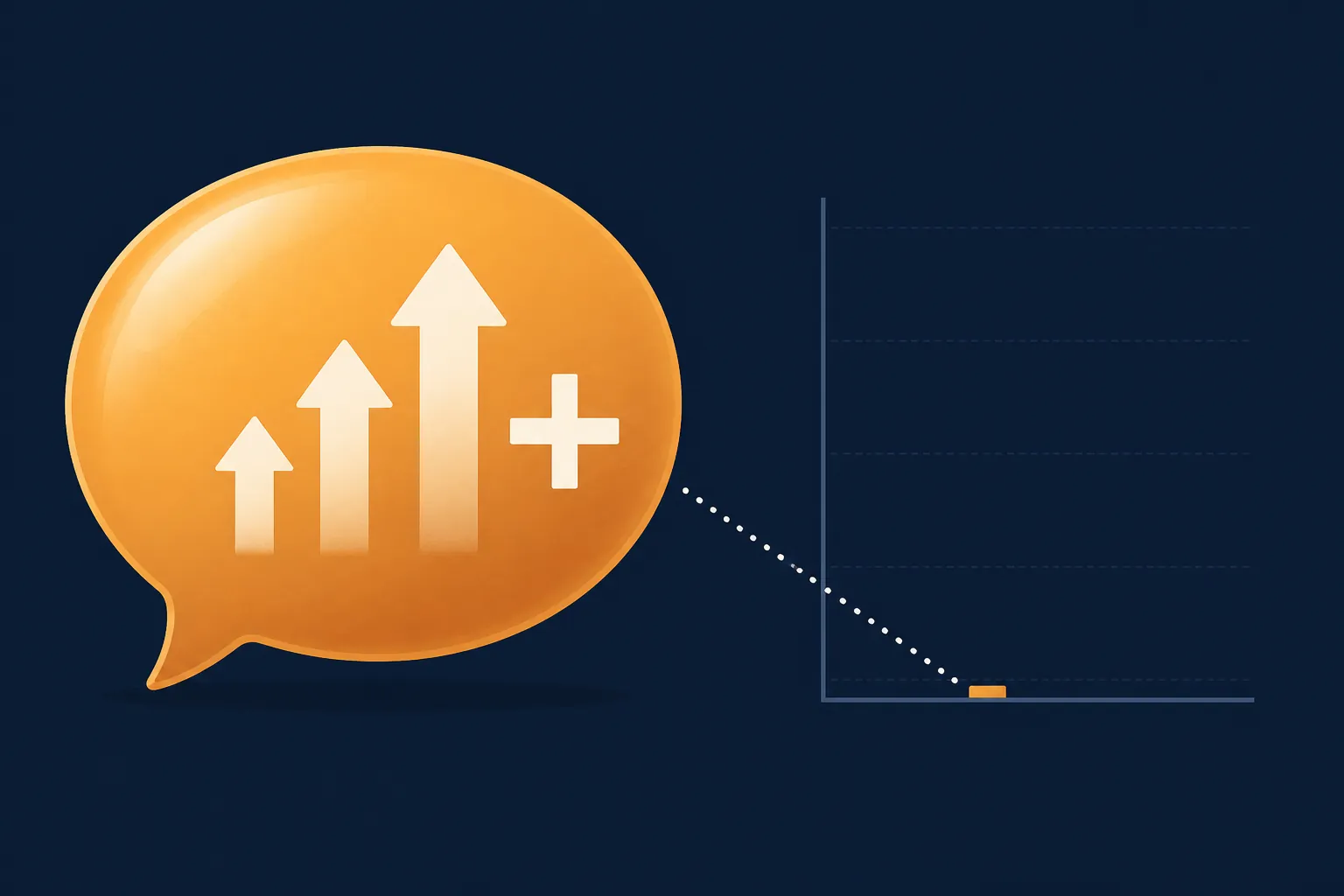
The observable counterpoint is much smaller. Yep Ads reported Sponsored Prompts contributed less than 1% of clicks in the accounts it examined, including 88 prompt clicks versus roughly 500,000 total clicks.[6] That does not prove the placement is ineffective. It does mean the available independent check supports a narrower conclusion: in those observed accounts, Sponsored Prompts was not yet producing enough click volume to explain a broad account-level performance shift.
PPC Ninja’s beta-window observation adds a different kind of caution. During Jan. 5 to Feb. 14, 2026, it reported 5,000 impressions, 41 clicks, $0 spend, and $512.71 in attributed sales.[7] The $0 spend line is the key denominator. A free beta can show that traffic and attribution exist, but it cannot tell a buyer what happens to CPA, ACOS, ROAS, or budget displacement once normal charging applies.
Sponsored Prompts also moved from experiment to operating surface before the Q2 report. Yep Ads said the placement reached general availability in the U.S. on 2026-03-25, with automatic enrollment for eligible Sponsored Products and Sponsored Brands campaigns.[6] That is the account-management issue: a buyer may need to explain Sponsored Prompts performance even if no one on the team actively chose a new campaign type.
Ads Agent and Alexa for Shopping are still mostly source claims
Ads Agent is easier to file for now. Amazon said the tool produced 8% lower CPM and 6% lower CPA.[5] Those are performance metrics, but in the available material they come from Amazon. There is no matching independent account-level check here comparable to the Sponsored Prompts observations from Yep Ads or PPC Ninja.
Alexa for Shopping is even more important to keep in its own lane. Amazon said users were close to doubling and interactions were up more than 5x year over year.[5] That is an adoption-and-engagement claim. It may matter for future ad inventory and shopping behavior, but it is not the same as showing lower CPA, higher conversion rate, or incremental sales for advertisers.
The Rufus transition belongs in platform-change notes rather than in an earnings-performance paragraph. Tinuiti reported that Rufus was retired on 2026-05-13 and folded into Alexa for Shopping.[8] For a recap, that means old Rufus references should not be treated as a separate live AI-shopping surface unless the account data or platform UI clearly separates them.
What to change in account work after this earnings report
The Q2 report is enough to justify closer monitoring of Amazon’s AI ad surfaces. It is not enough to justify a blanket budget shift toward them. The operating standard should be visible account impact: click share, spend share, conversion movement, attributed sales, and cost movement.
- For Sponsored Prompts, check whether the account is eligible and whether campaigns were automatically enrolled. The enrollment detail matters before the performance debate even starts.
- Separate prompt traffic from total Sponsored Products and Sponsored Brands performance wherever reporting allows. A 48% conversion claim is not actionable if the placement contributes a rounding-error share of clicks in the account.
- Do not use beta-window $0 spend examples as paid efficiency benchmarks. They can show early interaction; they cannot set a cost expectation.
- For Ads Agent, ask whether CPM and CPA changed after adoption and whether those changes survived normal campaign controls such as budget, targeting, seasonality, and category demand.
- For Alexa for Shopping, keep usage growth separate from ad performance. More interactions may create future inventory, but the buyer still needs attributable campaign outcomes.
A clean client recap can keep the claims in separate lanes: Amazon Ads grew to $19.81 billion in Q2; Amazon is tying that growth story to AI products; and the AI performance numbers cited on the call are Amazon’s own claims. In the independent Sponsored Prompts checks available so far, observed click share was under 1% in tested accounts.
Treat Amazon’s AI direction as real. Treat the ad-revenue growth as reported. Treat the AI lift numbers as unverified until the account shows meaningful click share, spend, conversion, and cost movement.
References
- Amazon.com Announces Second Quarter Results — Amazon.com, Inc., 2026-07-30
- Amazon (AMZN) Q2 earnings report 2026 — CNBC, 2026-07-30
- Amazon’s Ad Revenue Hits $76B Over the Past 12 Months — Adweek
- Amazon Advertising Services Sales 2020-2026 — Marketplace Pulse
- Q2 earnings: CEO Andy Jassy on what’s driving Amazon Ads growth — About Amazon
- Amazon’s AI Ads Are Here. But Are They Actually Working? — Yep Ads
- Amazon Sponsored Products Prompts: What Rufus Ads Mean for Your Brand — PPC Ninja
- Alexa for Shopping: Optimization Strategies for 2026 — Tinuiti
Primary source: https://www.aboutamazon.com/news/company-news/amazon-com-announces-second-quarter-results