
AI Skilled-Trade Jobs Are Real. Plumbers? Data Is Thin.
Is AI really creating skilled-trade jobs for electricians and plumbers? A dated, source-coded scorecard issues a verdict per metric: electrician posting growth and wage premiums are real, plumbing demand is real but under-measured, and the most-cited BLS projection is a synthesis rather than a BLS conclusion.
- Platform
- BLS
- Campaign type
- source-coded scorecard
- Spend range
- No ad spend
- Timeframe
- 0-2034
- projected employment growth
- electricians +0%, plumbers +4%
- Verdict
- mixed
- Industry vertical
- construction
- Last reviewed
- 0-08-03
Short answer, dated August 3, 2026: the claim that AI is creating skilled-trade jobs for electricians and plumbing workers is strongest for electricians, thinner for plumbers, and often misquoted when it leans on the Bureau of Labor Statistics as if BLS attributed the growth to AI. The clean version is narrower: AI data-center construction is showing up in measured labor-market demand, pay premiums, training pledges, and local construction bottlenecks. It is not yet a single occupation-level proof package for every trade named in the viral claim.
For this record, a metric gets “confirmed” only when the source directly measures the thing being claimed. It gets “directional” when the link is plausible but indirect. It gets “misattributed” when a real statistic is being assigned to AI even though the cited source did not make that attribution. “Benchmark” here means a dated, source-coded third-party evidence record, not Signal & Convert campaign data, ad-platform lift, or career advice.
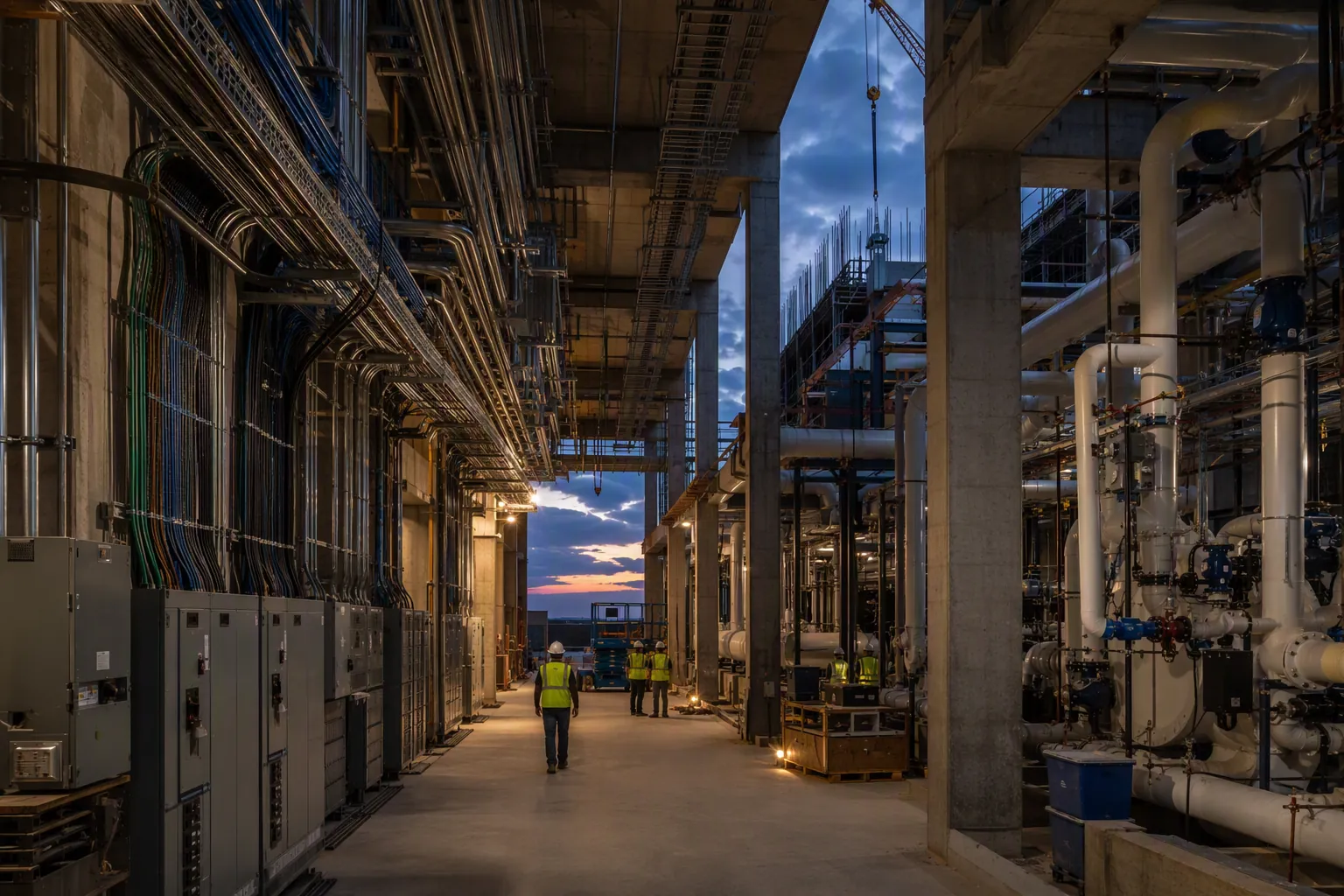
The dated scorecard

| Metric | Source and date | What it proves | What it does not prove | Verdict |
|---|---|---|---|---|
| Electrician baseline outlook | BLS Occupational Outlook Handbook: +9% employment growth projected for electricians from 2024 to 2034; about 81,000 openings per year; May 2024 median annual pay of $62,350 [1] | Electricians have an above-average official occupational growth outlook and a large replacement-and-growth openings base. | BLS does not say AI or data centers caused that +9% projection. The driver set cited in the source is electrification and renewables, not AI. | Confirmed as an electrician labor-market baseline; misattributed if written as “BLS says AI is creating electrician jobs.” |
| Plumber, pipefitter, and steamfitter baseline outlook | BLS Occupational Outlook Handbook: +4% employment growth projected for plumbers, pipefitters, and steamfitters from 2024 to 2034; about 44,000 openings per year; May 2024 median annual pay of $62,970 [2] | There is baseline occupational demand in the plumbing/pipefitting family. | It does not isolate data-center plumbing, liquid cooling, or AI infrastructure as the cause. | Confirmed as baseline demand; directional at best for AI-linked plumbing work. |
| Measured posting growth in skilled trades | Randstad USA analysis of 150M+ U.S. job postings from 2022 to 2026, published March 25, 2026 [3] | Skilled-trades demand grew about three times faster than professional roles; general trades, including electricians, welders, and construction specialists, rose 30% on average; robotics technicians rose 113.19%, HVAC engineers 77.89%; time-to-hire was 56 days for trades versus 54 for professionals [3]. | The U.S. press release’s 30% figure is a general-trades average, not a plumber-specific or electrician-only count. | Confirmed for measured skilled-trades posting growth; strongest AI-adjacent demand signal in the set. |
| Construction-worker shortage counts | ABC shortage estimate reported by CNBC; ITIF January 12, 2026 estimate; iRecruit figure relayed by dcgeeks [4][5][6] | Multiple sources point to a tight construction labor market: ABC estimated 349,000 net new construction workers needed in 2026 and 456,000 in 2027; ITIF estimated roughly 439,000 as of January 12, 2026; iRecruit’s data-center construction figure is reported as up to 499,000 [4][5][6]. | These are different scopes and methodologies. They should not be averaged, stacked, or treated as one official deficit number. | Directional confirmation of tight construction capacity; not a clean electrician-or-plumber AI job count. |
| Wage premiums around data-center work | Skillit, Kelly Services, ITIF, and Randstad evidence reported across the 2026 source set [3][4][5] | The direction is consistent: data-center and AI-infrastructure-adjacent skilled-trade work is paying above ordinary construction alternatives in several reported measures. | The exact premium depends on source, trade, geography, role seniority, and whether the figure is a wage, annualized pay, or market-wide wage trend. | Confirmed as a range-bound labor-market signal; not a universal electrician or plumber earnings promise. |
| Training investment | Google pledge reported by Fortune and WIRED; Fortune reports $15M while WIRED describes the amount as undisclosed [7][8] | A large buyer of data-center capacity is funding the electrical labor pipeline: Google pledged to train 100,000 electrical workers and 30,000 apprentices by 2030 [7]. | The reported funding amount is inconsistent across sources, and a training pledge is not the same thing as completed workers entering the field. | Confirmed as an action signal; not proof of completed labor supply. |
| Plumbing-specific AI/data-center evidence | WIRED union and association reporting; dcgeeks secondary synthesis of liquid-cooling and critical-facilities indicators [6][8] | Data centers plausibly increase demand for pipefitting, cooling, and critical-facilities work, especially as liquid cooling grows. | The source set does not provide occupation-level plumber vacancy counts tied directly to AI data centers. | Real but under-measured. |
Where the BLS claim breaks
The BLS electrician page is useful, and it is being overused. It supports a strong baseline claim: electricians are projected to grow 9% from 2024 to 2034, with about 81,000 openings per year and a May 2024 median annual wage of $62,350. It also reports a 10th percentile wage of $39,430 and a 90th percentile wage of $106,030, which matters when a single high-earning anecdote starts traveling as if it were normal pay [1].
What the BLS page does not do is attribute the electrician projection to AI. The driver language in the source set is around electrification and renewables, not data centers, generative AI, or hyperscale buildouts [1]. That distinction is not pedantic. “BLS projects electrician growth” is sourced. “BLS says AI is creating electrician jobs” is a synthesis added after the fact.
The plumbing comparison is even more important because it keeps the claim from inflating by association. BLS projects 4% growth for plumbers, pipefitters, and steamfitters from 2024 to 2034, with about 44,000 openings per year and May 2024 median annual pay of $62,970 [2]. That is a real occupational outlook. It is not a data-center plumbing count, and it does not isolate liquid-cooling work.
So the BLS record should be used as floor-setting context. It tells readers that both occupation families already have meaningful demand. It does not certify the AI-causation layer. If this were a platform-lift claim, the same rule would apply: the metric may be real while the causal label attached to it is not in the source.
Electricians have the stronger AI-infrastructure evidence
The electrician case does not need the BLS to say “AI” in order to be credible. It has a better evidence path: data centers are electrical-heavy projects; posting data shows skilled-trades demand rising; wage reports show premiums around data-center work; and major buyers are putting money into the electrical labor pipeline.
Randstad’s U.S. posting analysis is the cleanest measured demand signal in this set. The company analyzed more than 150 million U.S. job postings from 2022 to 2026 and reported that skilled-trades demand was growing about three times faster than demand for professional roles. Its general-trades category, which includes electricians, welders, and construction specialists, was up 30% on average. It also reported sharp increases for adjacent technical roles, including robotics technicians at 113.19% and HVAC engineers at 77.89% [3].
That is not the same as saying electrician postings rose 30%. Randstad’s U.S. source frames the 30% figure as a general-trades average [3]. Some news retellings break out narrower figures from the same analysis, including electrician and welder increases, but those should stay in their own lane rather than being blended back into Randstad’s general-trades headline [7][9].
The project economics also point toward electricians. WIRED reported that IBEW estimates electrical work can account for 45% to 70% of a data-center budget, a range that helps explain why electrical labor becomes an early bottleneck when hyperscale construction accelerates [8]. This is one of the few places where the physical reality of AI infrastructure cuts through the abstraction: model demand eventually becomes substations, switchgear, conduit, power distribution, and workers who can install and maintain them.
Training investment is another reason the electrician side grades stronger. Fortune reported in March 2026 that Google pledged to train 100,000 electrical workers and 30,000 apprentices by 2030, and attributed a $15 million figure to the effort [7]. WIRED also reported the worker and apprentice pledge, while describing the amount as undisclosed [8]. That funding discrepancy should be left visible. The useful fact is not the clean dollar figure; it is that a major data-center buyer is trying to increase the electrical labor pipeline.
The pay evidence points in the same direction, with the normal warning that wage figures are easy to oversell. CNBC reported Skillit data showing data-center builds at $81,800 per year, or $39.33 per hour, about a 32% premium. The same wage-premium cluster includes Kelly Services estimates of 25% to 30% for specialists moving into data-center roles, ITIF’s “up to 30%” framing, and Randstad’s report that U.S. trades wages have risen 30% since 2022 [3][4][5].
Those figures are not interchangeable, but they are directionally consistent. A premium reported as annualized pay is not the same metric as a specialist relocation premium or a broad wage trend since 2022. Still, when several separate sources point toward above-market pay for data-center-adjacent skilled trades, the conservative read is not “ignore it.” It is “treat the premium as real, range-bound, and highly dependent on role and location.”
Plumbing demand is credible, but the job evidence is thinner
The plumbing story should not be dismissed. Data centers need cooling systems, water infrastructure in some designs, piping, pumps, valves, and critical-facilities maintenance. WIRED’s reporting includes statements from the United Association and PHCC describing data centers as a major current demand source for their members [8]. That is a real signal from organizations close to the work.
But the plumbing evidence is not as well measured at the occupation level. The source set does not provide a clean count of plumber vacancies created by AI data centers. The strongest numbers are secondary-market and adjacent-technology indicators: dcgeeks relays Dell’Oro’s estimate that the liquid-cooling market was about $3 billion in 2025 and heading toward roughly $7 billion by 2029; it also relays Uptime Institute data that 46% of operators were planning adoption. The same secondary page cites a Glassdoor critical-facilities technician figure of about $90,919 in January 2026, based on 137 observations, compared with the BLS plumber median [6][2].
Those are useful indicators, not plumber-job proof. Liquid cooling can increase demand for pipefitting and mechanical skills, but a cooling-market revenue forecast is not an occupation-level vacancy series. A critical-facilities technician salary sample is not the same as a plumber wage distribution. This is where the viral claim gets ahead of the spreadsheet: the physical demand makes sense, but the measurement is not yet clean enough to call it confirmed in the same way as electrician-adjacent posting and wage signals.
Shortage numbers are real, but they are not one big deficit figure
The construction shortage figures are tempting because they look like they can settle the debate with one large number. They cannot. CNBC reported the Associated Builders and Contractors estimate that the industry would need 349,000 net new construction workers in 2026 and 456,000 in 2027 [4]. ITIF estimated a construction-worker shortage of roughly 439,000 as of January 12, 2026 in a piece focused on data-center growth [5]. A separate iRecruit figure, relayed by dcgeeks, puts data-center construction needs at up to 499,000 [6].
These figures all point toward tight capacity, but their scopes differ. One is a broad construction-labor estimate. One is a policy analysis linking shortage pressure to data-center growth. One is a data-center construction figure reported through a secondary source. Treating them as interchangeable would create the same attribution problem as the BLS claim, just with larger numbers.
Local reporting shows what shortage pressure can look like before it becomes a national occupational series. Realtor.com reported Abilene, Texas comparisons of $40-plus per hour data-center work versus $15 to $20 per hour residential work, two-month build delays, and Arizona licensed-trade cost increases of 12% to 18% over 24 months [10]. That does not prove a national plumbing hiring boom. It does show how data-center work can pull scarce licensed labor away from other construction markets.
This is also where apprenticeship and union capacity deserve more weight than a posting chart alone can carry. A job ad can appear tomorrow. A journey-level electrician or pipefitter cannot. Training throughput, instructor capacity, contractor supervision, licensing, and union dispatch rules all determine whether demand becomes completed work or just a longer queue.
The anecdotes are useful only when they stay small
The most shareable stories in this topic are also the easiest to misuse. Fortune’s Mike Rowe example of an under-30 electrician making $240,000 to $280,000 comes from one Plano, Texas project [7]. It is a vivid labor-market anecdote, not a representative earnings claim. Likewise, an IBEW Local 26 rate card showing roughly $26 per hour for an apprentice and about $59.50 per hour for a journeyman is one local scale, not a national wage distribution.
Anecdotes can still do work if they are used for the right job. The Plano example shows what can happen when a high-budget project competes for scarce skilled labor. The local union scale shows why training stage, jurisdiction, and contract structure matter. Neither should replace the BLS wage distribution, the posting analysis, or the wage-premium cluster.
The data-center surge can create work and still create risk
The strongest version of the electrician claim does not require pretending the buildout is risk-free. IBEW’s own publication warned in May 2025 about what happens when “the biggest elephant ends,” citing the Local 995 Riverbend cautionary tale and the 2008 precedent when roughly one in four IBEW construction members were out of work [11]. That warning matters because data-center demand can look permanent from inside a boom cycle and much less permanent when projects pause, financing tightens, power availability slows, or construction shifts regions.
McKinsey’s broader framing of critical trade-skill needs supports the structural side of the story: the U.S. needs more tradespeople for infrastructure, energy, manufacturing, and construction demands, not only for AI facilities [12]. AI data centers are one pressure source inside a larger skilled-labor constraint. That makes the labor-market signal more durable than a single hype cycle, but it also means AI should not receive credit for every electrician or plumber opening already visible in baseline projections.
This is the same infrastructure chain tracked in Signal & Convert’s data-center electricity and ad-costs record: AI demand does not remain confined to software. It moves into power, land, cooling, construction schedules, equipment lead times, and eventually labor markets. The verification problem is deciding which link in that chain a given source actually measured.
Final verdict as of Q3 2026
AI infrastructure is producing measurable skilled-trade demand for electricians. The evidence is strongest where it can be tied to data-center construction, posting growth, wage premiums, and explicit training investment. The BLS electrician projection belongs in the record, but only as baseline occupational context, not as an AI-causation source.
Plumbing and pipefitting demand is credible, especially around cooling and critical facilities, but it is under-measured in the available occupation-level data. The better phrasing is not “AI has confirmed a plumber jobs boom.” It is “AI data-center growth is creating plausible and reported demand for plumbing-adjacent work, while clean vacancy and wage series are still thin.”
The next signals worth watching are posting counts by exact trade, wage premiums by region and licensing level, apprenticeship starts and completions, union dispatch capacity, and whether the data-center surge keeps adding work or pulls labor away from other construction markets before cooling.
References
- Electricians, Occupational Outlook Handbook, U.S. Bureau of Labor Statistics
- Plumbers, Pipefitters, and Steamfitters, Occupational Outlook Handbook, U.S. Bureau of Labor Statistics
- U.S. Demand for Skilled Trades Grows 3x Faster Than Professional Roles, Randstad USA, March 25, 2026
- AI data center buildout jobs salary skilled traders worker shortage, CNBC, March 18, 2026
- Construction Industry Facing Worker Shortage Driven by Growth of Data Centers, Information Technology and Innovation Foundation, January 12, 2026
- Data Center Plumbing Jobs, dcgeeks
- AI data centers electrician shortage Gen Z training careers, Fortune, March 2, 2026
- The Real AI Talent War Is for Plumbers and Electricians, WIRED, January 2026
- AI skills Randstad college trades jobs pay bump, CNBC, May 20, 2026
- AI boom contractors electricians shortage home repairs, Realtor.com
- The Data Center Surge: A New Generation of IBEW Jobs, IBEW, May 2025
- Tradespeople wanted: The need for critical trade skills in the US, McKinsey & Company
Built on this evidence
No Bidding tactic or Creative record currently cites this case file. Compare it against other results in Benchmarks.
Related benchmark reading
Report a corroborating or contradicting result
Seeing something different in your own account? Feed the data-integrity loop instead of leaving an open comment.