
How many AI data center construction jobs are real
Sourced, checkable numbers on what the AI data center buildout actually does to construction jobs: jobs per dollar, jobs per megawatt, temporary versus permanent headcount, and wage premiums. The verdict: a large, well-paid surge that is mostly temporary, sitting on a thin permanent-operations base.
- Platform
- General
- Campaign type
- Benchmark Study
- Spend range
- >$0B monthly (Jan 2026)
- Timeframe
- Q0 2026
- Construction Jobs
- 0 peak construction jobs per $10B campus (Meta Lebanon)
- Verdict
- mixed
- Industry vertical
- Data Centers
- Last reviewed
- 0-08-03
Benchmark answer as of Q3 2026
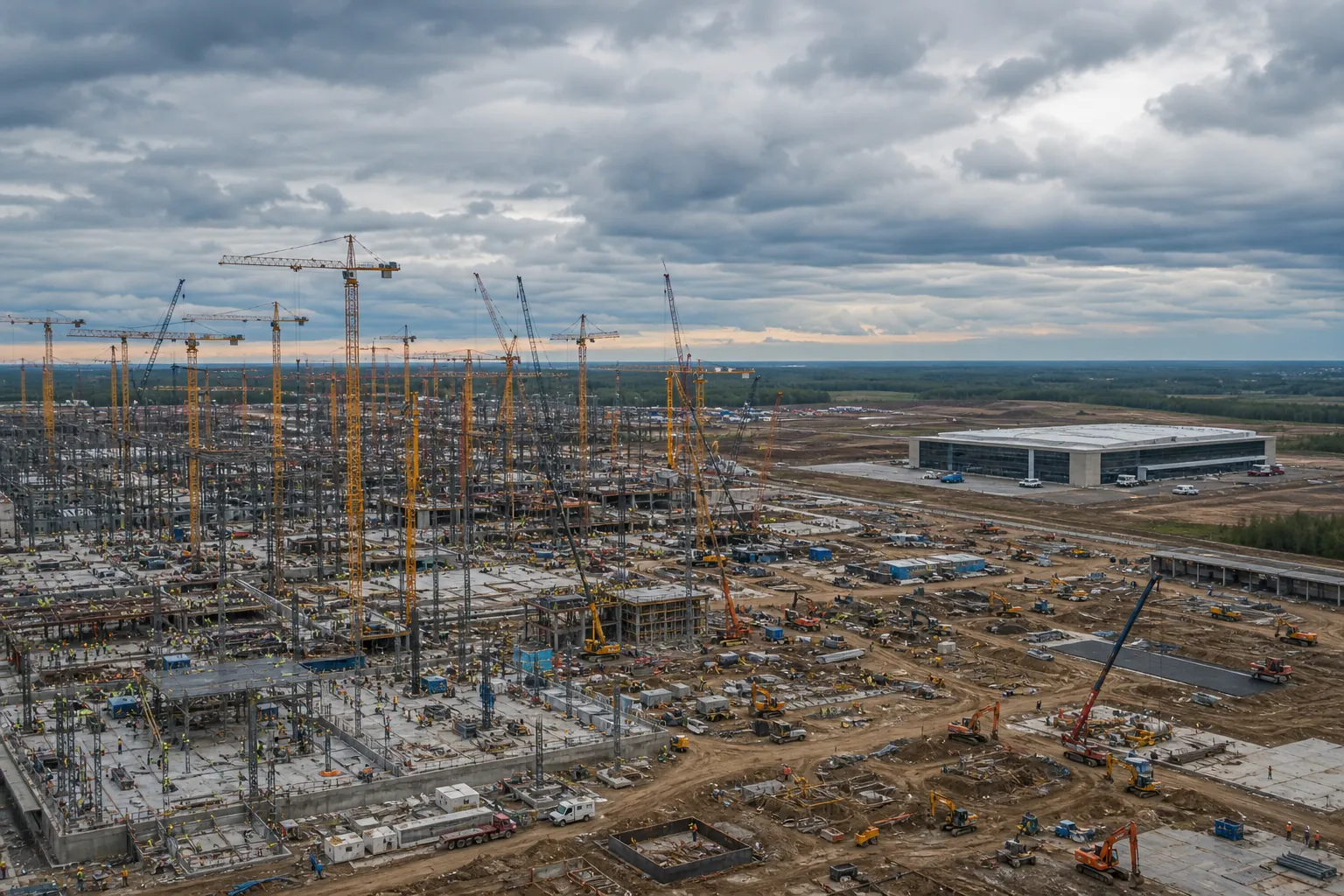
The jobs impact from AI data center construction is real, large, and mostly temporary. Census QWI data show U.S. data-center employment rising from 306,000 workers in 2016 to 501,000 in 2023, while Census-based construction-spending series show data center building spending above $2.4 billion in January 2026 and roughly 16 times the early-2014 level [1][2][3]. Brookings then gives the more useful labor-market test: in counties that received a first large data center, construction employment rose 11%, information-sector employment rose 22%, wages rose 3–4%, and a typical 98,000-worker county added roughly 2,000–4,000 jobs [4].
That is a strong construction story. It is not, by itself, a strong permanent-employment story. The clearest facility example in this record is Meta’s $10 billion Lebanon, Indiana campus: about 4,000 construction jobs at peak versus about 300 permanent roles once operating, or roughly one permanent job per $33 million of announced investment [5]. The pay evidence is also real: Skillit data cited by Fortune put the same trades at an average of $81,800 on data center work versus $62,000 elsewhere, about 32% higher [6]. The disputed part starts when temporary construction peaks, permanent payroll, suppliers, and induced consumer spending are rolled into one “jobs” number.
| Number or claim | What it measures | How to treat it |
|---|---|---|
| 306,000 to 501,000 workers, 2016–2023 [1] | Census QWI employment growth in the data-center category | Useful baseline for the sector; not a construction-only count. |
| More than $2.4 billion in January 2026 construction spending; roughly 16x early 2014 [2][3] | Monthly building-spending boom | Strong evidence of physical buildout; spending is not the same as headcount. |
| +11% construction employment, +22% information employment, +3–4% wages, about 2,000–4,000 added jobs in a typical 98,000-worker county [4] | Brookings causal county-level estimate after a first large data center | Best evidence in this record for local employment effects. |
| About 4,000 peak construction jobs vs. about 300 permanent roles at Meta Lebanon [5] | One large campus example | Concrete ratio; not a national average. |
| $81,800 average for the same trades on data center work vs. $62,000 elsewhere [6] | Trade wage premium reported from Skillit data | Strong pay evidence; does not mean every worker earns six figures. |
| 4.7 million temporary construction jobs and roughly 697,000 permanent jobs [7] | American Edge Project projection reported by CBS | Advocacy-group claim to benchmark, not a verified national total. |
What the firmer employment baseline actually says
Start with the Census QWI series because it gives a dated employment baseline rather than a podium number. Employment in the data-center category grew by 195,000 workers from 2016 through 2023, from 306,000 to 501,000, a gain of more than 60% [1]. That does not answer how many electricians, pipefitters, equipment operators, concrete workers, or apprentices are on data center construction sites today. It does show that the sector was expanding before the 2026 spending spike became the headline.
The spending series is the second anchor. Our World in Data, using Census construction data, put U.S. data center construction spending above $2.4 billion in January 2026 [2]. Construction Executive, also working from Census-based measures, described the buildout as up 2,657% since 2014 and roughly 16 times the early-2014 level [3]. Those are not soft numbers. They are the sort of numbers that leave purchase orders, utility work, concrete pours, union dispatches, subcontractor invoices, crane rentals, and local inspection records.
The spending evidence still has a limit: dollars do not tell you how many workers are local, how long they stay, or whether a subcontractor is moving the same crew from one campus to the next. A $10 billion campus and a $10 billion payroll are different things. The labor question needs a county-level denominator.
Why the Brookings county estimate carries more weight
Brookings is the load-bearing study here because it is not just adding up promised jobs. The researchers examined roughly 770 facilities and used a synthetic-control approach to estimate what changed after a county received its first large data center [4]. That matters. It tries to compare a data center county with a constructed counterfactual rather than taking an announcement at face value.
The findings are material but bounded: construction employment rose 11%, information-sector employment rose 22%, wages rose 3–4%, and a typical 98,000-worker county gained about 2,000–4,000 jobs [4]. The construction figure is exactly where one would expect the shock to show up first. The information-sector gain captures the operating-side and related employment channel, but it is not the same as saying thousands of people will permanently work inside each facility.
That distinction is not pedantic. If a county adds thousands of jobs during the build cycle, the local labor market feels it: overtime rises, apprentices get hours, specialty crews travel in, and competing contractors have to pay up. But a county-level employment bump during and around construction does not prove that the completed facility will support the same headcount after the cranes leave.
Peak construction is not permanent employment
The Meta Lebanon campus makes the ratio visible. The project was described as a $10 billion data center campus with about 4,000 construction jobs at peak and about 300 permanent jobs [5]. That is one peak construction slot per roughly $2.5 million of announced investment, and one permanent role per roughly $33 million. The first number belongs to the build phase. The second belongs to the operating facility.
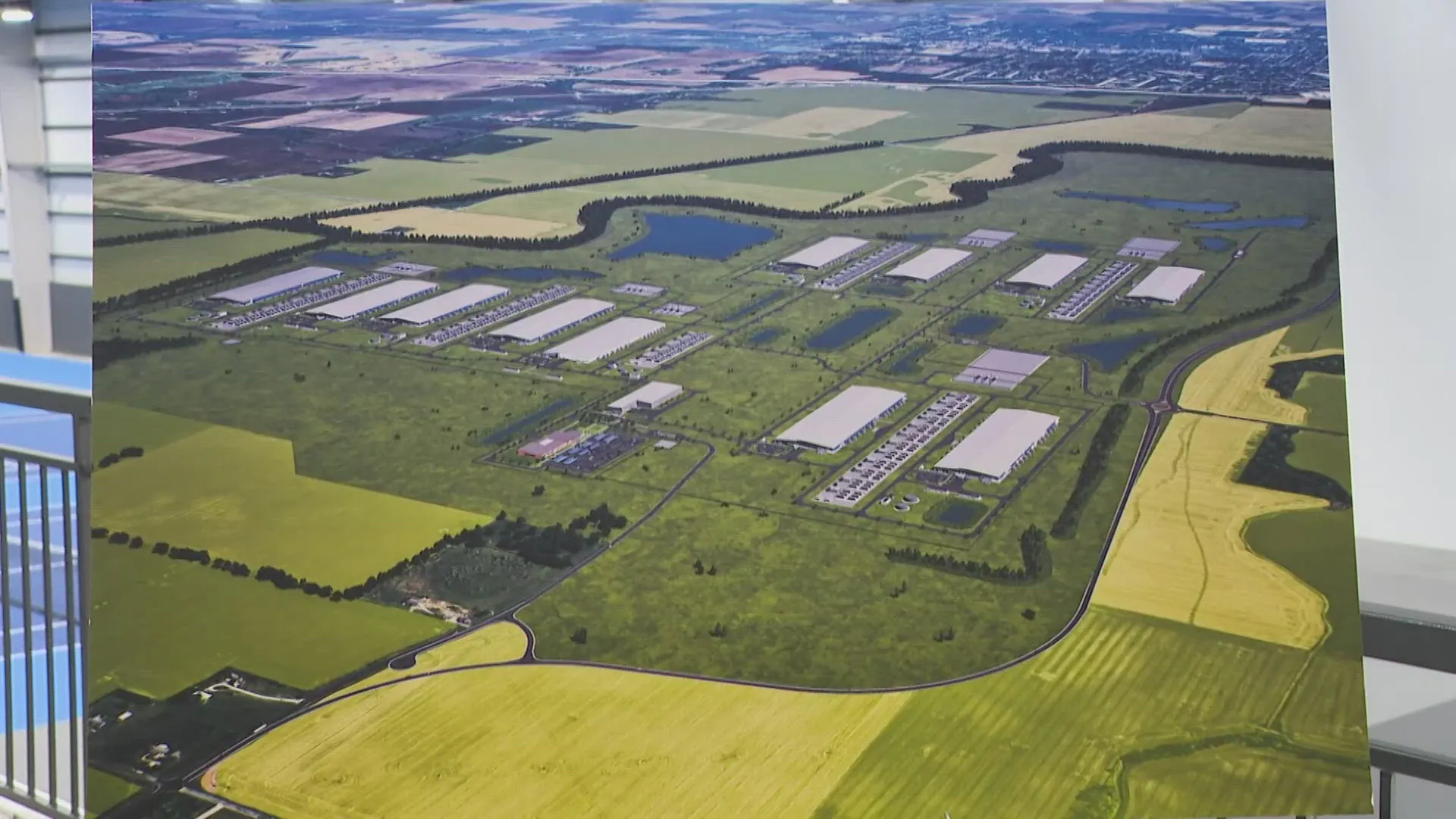
A peak construction count can still be economically meaningful. Four thousand people on or around a site is a large amount of work, especially if the work is concentrated in higher-paid trades. The problem is the sentence that quietly drops the word “peak,” or uses “jobs” to imply a standing local payroll long after the buildout is complete.
Permanent operations at hyperscale data centers are thinner because these facilities are capital-intensive and automation-heavy. They need technicians, security, facilities staff, network specialists, electrical and mechanical maintenance, and contractors. They do not need an office tower’s worth of daily employees. The permanent headcount can be valuable and skilled; it is just much smaller than the construction workforce that built the campus.
When a project announcement says “thousands of jobs,” the first question should be whether that number means workers at peak construction, job-years over a multi-year build, direct permanent employees, or a model that includes suppliers and induced spending. Those are four different claims.
The wage premium is the cleanest pro-worker fact
The strongest pro-construction evidence is not a politician’s total. It is the trade wage premium. Skillit data cited by Fortune put the same trades at an average of $81,800 on data center work versus $62,000 elsewhere, roughly 32% higher [6]. For electricians, pipefitters, heavy-equipment operators, and apprentices trying to get hours on a major site, that is not a rounding error.
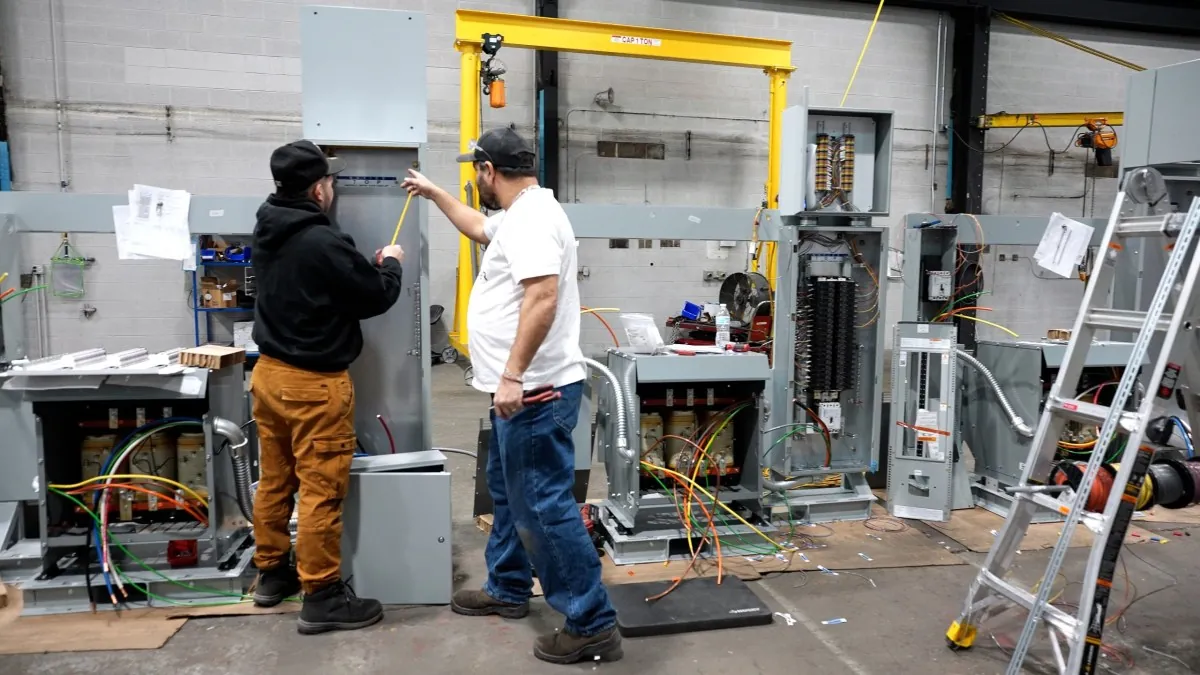
That premium also explains why local effects can be sharp even when permanent employment is small. During the build, contractors compete for licensed and experienced labor. Schedules are compressed. Electrical and mechanical work becomes the bottleneck. A county does not need a large permanent payroll to feel a temporary wage shock.
The caution is that a wage premium is not a promise to every worker. It does not say how many jobs are local, how many are traveling crews, how many are apprentices versus senior trades, or how many months of work each person receives. It says that, for comparable trades, data center work has been paying more in the cited dataset.
Where the big national job totals get slippery
The American Edge Project projection reported by CBS is the large number most likely to travel: 4.7 million temporary construction jobs and roughly 697,000 permanent jobs [7]. It belongs in the record, but with its label attached. American Edge is an advocacy group, and a projection is not the same thing as a measured payroll count.
The multiplier debate is the weak joint. Business Insider reported that a PwC analysis commissioned by industry used a 7.5x multiplier, while economists it interviewed called 1–2x more realistic; the same report cited economist Michael Hicks’ Texas estimates finding net-zero county effects [8]. That does not prove every data center has no effect. It does mean a national jobs claim built on a large multiplier should not be read as a count of people hired by data center developers or their construction contractors.
A multiplier can be useful accounting. Direct construction jobs support suppliers. Workers spend wages. Local businesses may see more demand. But direct, indirect, and induced jobs are not interchangeable, and they should not be collapsed into one headline without showing the multiplier, the baseline, the geography, and the time window.
| If the claim says | Ask for | Why it matters |
|---|---|---|
| “Thousands of jobs” | Peak construction count, average annual headcount, or job-years | A peak site count can disappear when the project is finished. |
| “Permanent jobs” | Direct operations payroll, contractor roles, and local residency assumptions | Operations headcount is usually much smaller than construction headcount. |
| “Economic impact jobs” | Direct, indirect, and induced split, plus the multiplier | A multiplier-backed total is not a hiring count. |
| “Jobs per dollar” | Separate construction slots, job-years, and permanent roles | Meta Lebanon’s rough permanent ratio is about one role per $33 million, while its construction peak is a different measure [5]. |
| “Jobs per megawatt” | Source, facility type, construction versus operations, and whether the figure is measured or modeled | MW-based ratios are easy to repeat and hard to compare without consistent boundaries. |
Jobs per megawatt: useful, but not firm enough here
The commonly repeated data center labor ranges — roughly 0.7–2.0 construction workers per megawatt, 0.15–0.35 operations FTE per megawatt, and 20–40 operators per 100 MW — are best treated as provisional in this benchmark because they trace through Quartz to the Hamm Institute rather than to a rechecked original source in this record [5]. They are directionally plausible: construction labor per MW is much higher than operating labor per MW. They should not carry a national estimate without original documentation.
That is the right standard for any MW-based jobs claim. A 100 MW facility, a 1 GW campus, and a multi-phase regional buildout can all be described in power terms, but a jobs-per-MW ratio changes depending on whether the speaker is counting people on site at peak, annualized construction job-years, direct operators, vendors, or regional spillovers.
Why this matters beyond local labor markets
For media buyers and analysts, the same capex cycle shows up in a different place: AI infrastructure spending changes the cost base for cloud, model training, inference, and eventually ad platforms. That is why this labor benchmark belongs next to the site’s coverage of AI infrastructure demand and ad costs, AI infrastructure spending reaching ad tech, and Amazon AI capex benchmarks for advertisers. The labor-market record is a narrow check on what the physical AI buildout is actually doing.
Practical verdict
The jobs are real. The construction surge is large. The trade wage premium is real. Brookings’ county-level evidence is strong enough to reject the idea that data centers are employment non-events during the build cycle.
The durable-employment claim is much thinner. Meta Lebanon’s roughly 4,000 peak construction jobs versus roughly 300 permanent roles is not an oddity to wave away; it is the basic structure of a capital-intensive data center build [5]. A large temporary workforce builds a facility that later runs with a much smaller operating staff.
Any future AI data center jobs claim can be tested with one question: is this a peak construction count, a permanent operations count, or a multiplier dressed up as both?
References
- Data Centers: The Backbone of the Digital Economy — U.S. Census Bureau, January 2025
- How much is the US spending on building data centers? — Our World in Data
- Wiring the AI Economy: Construction Spending on Data Centers — Construction Executive
- New evidence on data center employment effects — Brookings
- Data center jobs, employment, investment, economic development — Quartz, May 2026
- Construction workers are earning six-figure salaries in the data center boom — Fortune, December 5, 2025
- AI data center jobs construction technician — CBS News
- Data center job boom in construction, not Big Tech — Business Insider
Built on this evidence
No Bidding tactic or Creative record currently cites this case file. Compare it against other results in Benchmarks.
Related benchmark reading
Report a corroborating or contradicting result
Seeing something different in your own account? Feed the data-integrity loop instead of leaving an open comment.