Does Gemini show Ticketmaster's concert discovery ads?
Media buyers auditing the Ticketmaster × Gemini concert-discovery deal need a dated map of which surfaces actually carry paid placements. As of August 2026: AI Overviews ads are live, AI Mode ads are in testing, the Gemini app remains ad-free per Google, and Ticketmaster's own AI Max pilot has no published performance numbers.
- Platform
- Google Ads
- Change category
- targeting
- Effective date
- 0-05-20
- Change type
- default-on change
- Impact level
- Medium
As of August 2026, the short answer to “does Gemini show Ticketmaster concert discovery ads?” is: not in the Gemini app, based on Google’s public position. The paid Google surfaces in this story are AI Overviews, where ads are live, and AI Mode, where ads are being tested. Ticketmaster also has an AI Max for Search Campaigns pilot tied to event discovery, but it has no published Ticketmaster performance results.
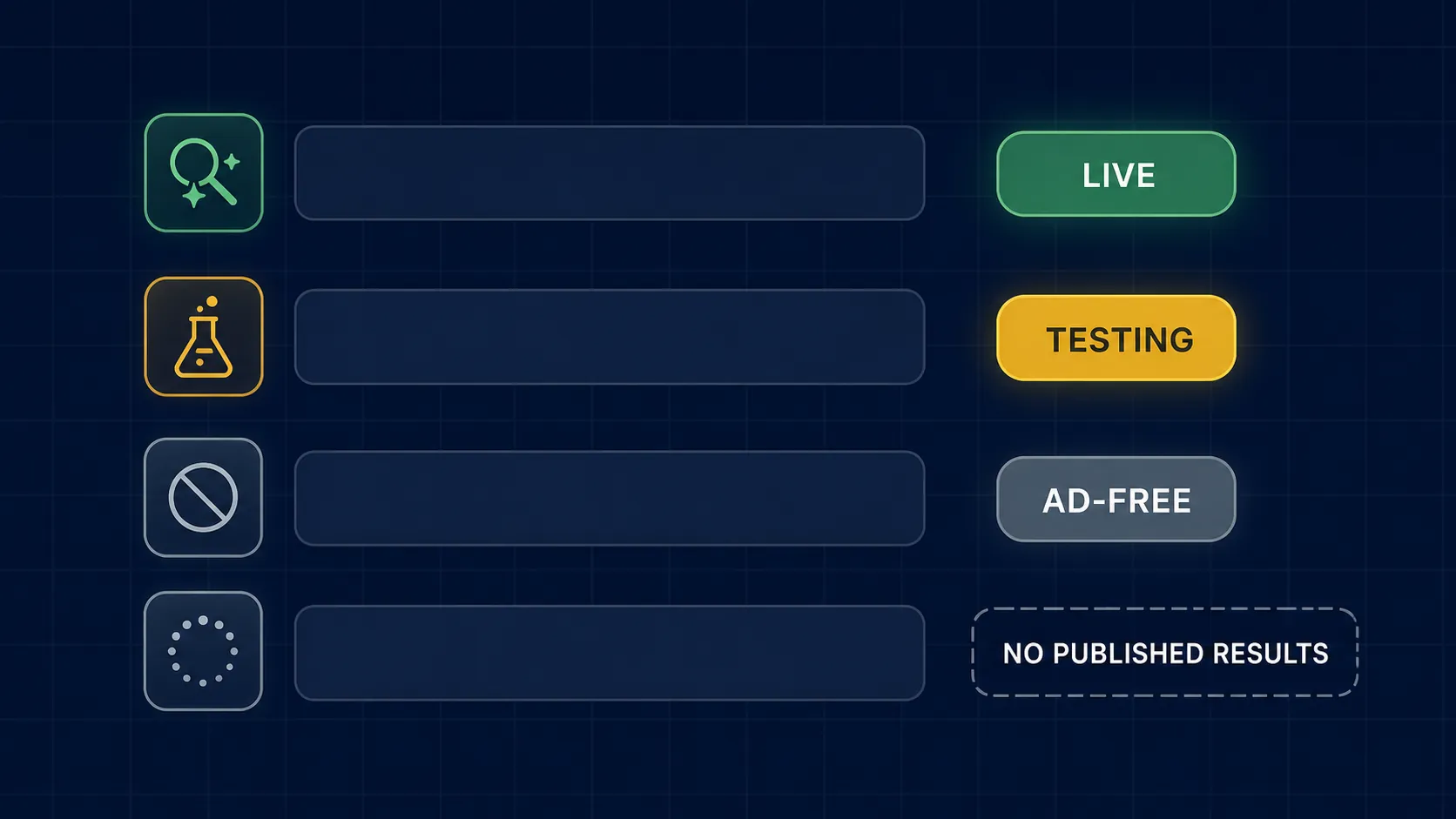
Last reviewed: August 2026 surface map
| Surface or program | Status as of Aug. 2026 | What a buyer can actually assume | Source date |
|---|---|---|---|
| Ads in AI Overviews on Google Search | Live | This is a monetized AI-search surface. Google described ads in AI Overviews as part of its May 20, 2026 Search ads announcements. Do not treat this as Gemini-app inventory. [1] | May 20, 2026 |
| Ads in AI Mode | Testing | AI Mode is part of the Google Search environment, not the standalone Gemini app. Ticketmaster became an early commerce partner for agentic capabilities in AI Mode on Nov. 20, 2025, and Google later described AI Mode ad testing at Google Marketing Live 2026. [2][1] | Nov. 20, 2025; May 20, 2026 |
| Ticketmaster AI Max for Search Campaigns pilot | Testing / no published results | Ticketmaster said its marketing and paid search teams were piloting AI Max for Search Campaigns, combining Google Events Listings with paid placements. No Ticketmaster conversion, ROAS, CPA, or incrementality results have been published. [2] | Nov. 20, 2025 |
| Gemini app + Ticketmaster Connected App | Consumer integration live; ad-free per Google | Ticketmaster discovery inside Gemini is distribution, not paid inventory. Google disclosed that Gemini crossed 1 billion monthly active users on Aug. 11, 2026, and the Ticketmaster Connected App launched in Gemini on Aug. 12, 2026 in the U.S., English only, across web, iOS, and Android. Scale does not equal ad reach. [3][4][5][6] | Aug. 11–13, 2026 |
| Reported Gemini-app ads in Dec. 2025 | Disputed | An Adweek report said ads were coming to the Gemini app; Google’s Dan Taylor publicly denied that Gemini had ads, and Adweek stood by its reporting. This article does not state that Gemini-app ads exist. [7] | Dec. 2025 |
| Ticketmaster in ChatGPT, Claude, and other assistants | Assistant distribution context | Useful for understanding Ticketmaster’s syndication strategy, but not a Google Ads buying surface. SeatGeek launched in ChatGPT on Mar. 31, 2026; Ticketmaster’s ChatGPT app followed on Apr. 9, 2026; a Claude connector went live on Jul. 15, 2026; Ticketmaster told MBW the integrations ride one MCP layer. [6] | Mar.–Jul. 2026 |
That table is the planning boundary. If the media plan needs a line item, the line item belongs against Google Search AI inventory that is live or in test, not against “Gemini users” as a pooled audience. Gemini’s 1 billion monthly active users figure is platform-disclosed app scale, dated Aug. 11, 2026; it is not a paid reach estimate for Ticketmaster concert ads. [3]
Where the Google ad layer actually sits
Google’s May 20, 2026 announcement is the ad layer that matters most for a Google Ads account review. It placed AI-search monetization around Search experiences such as AI Overviews and AI Mode, and introduced or expanded formats including Conversational Discovery ads, Highlighted Answers, AI-powered Shopping ads, Business Agent for Leads, and Direct Offers. [1]
For Ticketmaster, that distinction matters because a user can ask Gemini for a concert recommendation without creating a paid impression in the Gemini app. The monetized path, as currently documented, runs through Google Search AI surfaces and search-campaign tooling.
| Claim type | Safe reading for a buyer |
|---|---|
| “Ads in AI Overviews are live” | Treat as shipped Google Search inventory, subject to the controls and reporting Google exposes in the account. [1] |
| “Ads in AI Mode are being tested” | Treat as test inventory. Budget exposure and reporting should be checked inside the account, not inferred from the Ticketmaster-Gemini consumer launch. [1] |
| “A new generation of AI ads is here” | Read as a Google product direction statement covering multiple formats and surfaces, not as proof that every assistant experience is monetized. [1] |
| “AI Max drives more conversions” | Read as vendor context unless the claim is tied to the advertiser, date range, and campaign setup being reviewed. |
The lift numbers circulating around AI-search ads need the same handling. Google and Think with Google have published AI Max and AI-format examples, including a cited “27% more conversions” AI Max claim, Royal Canin at +263% conversions and -73% cost per conversion, ClickUp at +20% conversions, Klook at +161% conversions, and an AI Mode decision-speed claim of “75% faster decisions.” Those are Google or Think with Google vendor claims, not Ticketmaster results and not independent benchmarks. [1][9]
That does not make the numbers useless. They can help frame what Google is optimizing toward and what account teams should watch. They should not be used as forecast inputs for Ticketmaster-style event discovery unless the forecast clearly labels them as dated platform context. For a broader verification workflow, the site’s AI Max timeline and lift-claim checklist in Alphabet Q2 earnings, AI Max, and cost pressure is the better place to park those assumptions before they enter a client deck.
The Ticketmaster AI Max pilot is the closest account-level item
Ticketmaster’s Nov. 20, 2025 announcement is easy to flatten into a partnership headline, but there are two different things inside it. First, Ticketmaster became an early commerce partner for agentic capabilities in Google AI Mode. That was framed for U.S. users who were 18 or older, using English, inside the opt-in Search Labs experiment. Second, Ticketmaster said its marketing and paid search teams were piloting AI Max for Search Campaigns. [2]
For a buyer, the second item is the one to audit in Google Ads. AI Max for Search Campaigns is not a Gemini subscription unlock and it is not a separate assistant ad buy. It is an in-platform Search campaign capability. Google’s help documentation describes AI Max as using advertiser assets, landing pages, and keywordless matching to expand Search reach, with reporting controls such as an “AI Max” match type in the search terms report, source columns, and a landing pages “Selected by” column. [8]
- If AI Max is enabled, check where traffic is being matched, which landing pages are being selected, and whether event-detail pages are being pulled into queries the team would not have intentionally targeted.
- If Google Events Listings are part of the discovery path, separate organic or listing exposure from paid Search placements before attributing growth.
- If the client asks for Ticketmaster results, the correct answer is still that no public Ticketmaster AI Max performance numbers are available as of August 2026.
The practical risk is not that AI Max exists. The risk is that a consumer AI Mode commerce demo gets treated as if it validates an advertiser’s paid-search economics. Ticketmaster’s pilot may eventually become a useful events-commerce case study. Right now, the public record supports a narrower conclusion: Ticketmaster is testing the mechanics, Google has documented the controls, and buyers need account-level reporting before sizing spend. [2][8]
There is also an account-operations watch item around Google’s AI Max rollout path. If you are tracking auto-upgrade timing and campaign-control changes, keep that in a separate change log rather than mixing it into the Gemini launch narrative; the relevant planning hook is covered in the Google AI leadership and ad tools tracker.
Gemini’s Ticketmaster app is distribution context, not paid reach
The Aug. 2026 Gemini milestone is real and strategically important. Google said the Gemini app reached 1 billion monthly active users on Aug. 11, 2026, making it the company’s 14th product to reach that mark. The next day, Google announced new connected apps for Gemini, including Ticketmaster, and Ticketmaster said its Gemini Connected App would let U.S. users ask for live-event ideas in English across web, iOS, and Android. [3][4][5]

That is a discovery surface. It can move users toward Ticketmaster inventory, and it gives Ticketmaster another place to answer intent-rich prompts about artists, cities, dates, and availability. It does not, by itself, create a Gemini-app ad placement that a buyer can target, cap, exclude, bid against, or report as paid media.
This is where shorthand does damage. “Gemini AI Ticketmaster concert discovery ads” sounds like one product. The public record breaks it into at least three separate things: a Gemini consumer integration, Google Search AI ad inventory, and Ticketmaster’s AI Max Search pilot. Only the second and third belong in a paid-media audit, and the third still lacks public performance results.
The Dec. 2025 Gemini-app ads report remains disputed
There was a Dec. 2025 report that ads were coming to the Gemini app. The accessible public record is the Search Engine Journal account of the dispute: Google’s Dan Taylor denied that Gemini had ads, while Adweek stood by its reporting. [7]
For planning purposes, that remains a disputed report, not an inventory confirmation. Unless Google ships and documents Gemini-app ads, the buyer-safe position is to treat the Gemini app as ad-free per Google and keep paid reach assumptions attached to Search surfaces where ads are live or in test.
Assistant distribution is real, but it is not the Google Ads buy
Ticketmaster is clearly syndicating event discovery across assistants. SeatGeek launched in ChatGPT on Mar. 31, 2026. Ticketmaster’s ChatGPT app launched on Apr. 9, 2026, with OpenAI disclosing roughly 900 million weekly active users at launch. A Claude connector went live on Jul. 15, 2026 in more than 20 countries. Ticketmaster told Music Business Worldwide that these integrations ride one MCP layer. [6]
That context is useful when evaluating Ticketmaster’s distribution strategy. It is less useful when the Monday-morning question is whether to move Google Ads budget into “Gemini concert ads.” ChatGPT and Claude integrations do not prove Google Search monetization. Gemini distribution does not prove Gemini-app ads. MCP plumbing does not create reportable paid impressions in Google Ads.
If the concern is ad adjacency beside AI-generated answers, evaluate that as a separate AI-search brand-safety and controls issue. The relevant operating question is whether the ad is served in an eligible paid surface with available reporting, not whether the same event catalog is accessible through an assistant. For the broader placement-risk angle, see the site’s guide to AI chatbot hallucination and paid ad safety.
The operating standard for budget decisions
Use the Ticketmaster-Gemini headlines as context, not as a budget instruction. If a spend recommendation is going into a plan, attach four fields to the claim: surface, status, source, and date.
| Question | Buyer-safe answer as of Aug. 2026 |
|---|---|
| Can I buy paid placements in AI Overviews? | Yes, treat AI Overviews as live Google Search AI ad inventory, subject to the controls and reporting available in the account. [1] |
| Can I buy paid placements in AI Mode? | Only as testing inventory. Do not assume broad availability from the Ticketmaster partnership headline. [1][2] |
| Can I buy Ticketmaster ads inside the Gemini app? | No public, undisputed inventory confirmation. Google says the Gemini app is ad-free. [7] |
| Can I use Gemini’s 1B MAU as paid reach? | No. It is platform-disclosed app scale dated Aug. 11, 2026, not a media-buying reach number. [3] |
| Can I cite Ticketmaster AI Max performance? | No public Ticketmaster performance results have been published as of August 2026. [2] |
So the clean planning answer is restrained: size AI-search spend only against shipped or reportable Google Search surfaces; watch AI Mode testing and AI Max account changes; keep Gemini’s Ticketmaster Connected App in the distribution column; and label every reach or lift number as dated platform context unless Ticketmaster publishes campaign results.
References
- A new generation of ads for the AI era of Search — Google Blog — May 20, 2026
- Ticketmaster x Google: Powering Live Event Discovery with Agentic Capabilities in AI Search — Ticketmaster Business — Nov. 20, 2025
- Google's Gemini app hits 1 billion monthly active users — Google Blog — Aug. 11, 2026
- New connected apps are coming to Gemini — Google Blog — Aug. 12, 2026
- Gemini and Ticketmaster Bring Live Event Discovery to AI — Ticketmaster Business — Aug. 12, 2026
- Ticketmaster launches connected app in Google's Gemini — Music Business Worldwide — Aug. 13, 2026
- Google Denies Ads In Gemini App After Report — Search Engine Journal — Dec. 2025
- How AI Max for Search campaigns works — Google Ads Help
- How brands use AI Max for Search campaigns — Think with Google
Primary source: https://blog.google/products/ads/new-generation-ads-ai-era-search/