
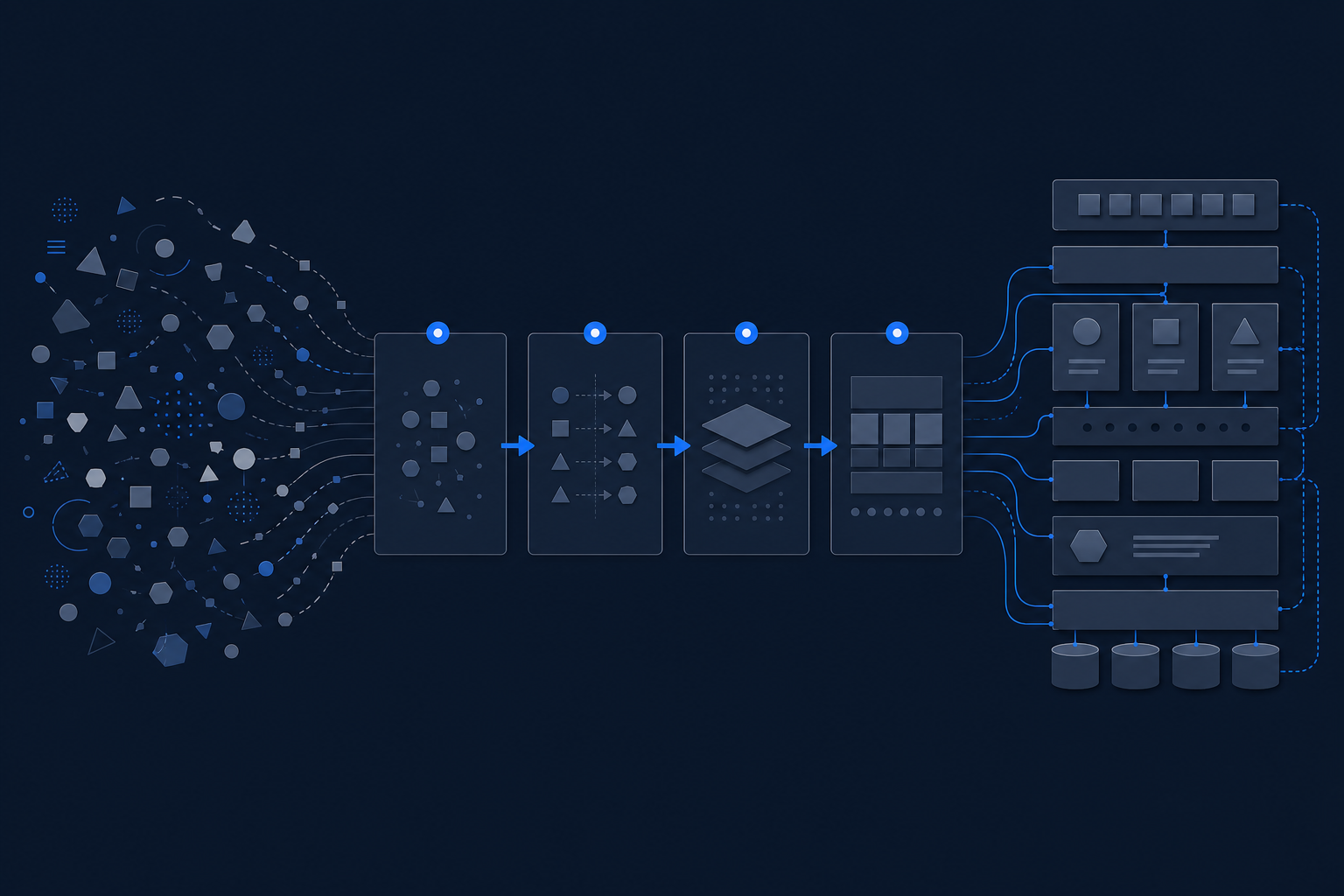
The AI Growth Strategy Framework for Marketing Directors: From Readiness Audit to Scaled Execution
A four-phase execution framework — Assess, Prioritize and Pilot, Scale, Govern and Measure — designed for marketing directors and VPs of Marketing who have run AI pilots but need a structured, growth-tied system to move from fragmented experimentation to end-to-end AI-driven outcomes they can defend to CFO and CEO stakeholders.
The Execution Gap: Why Most AI Marketing Programs Are Stuck
The accountability conversation has arrived. CEOs and CFOs are no longer asking whether marketing is experimenting with AI — they are asking what it has produced. And most marketing directors do not have a satisfying answer.
According to McKinsey's April 2026 research on agentic AI in marketing, nearly 90% of CMOs are experimenting with AI across points of the marketing process — but fewer than 10% have captured value across end-to-end workflows. Broad experimentation has not translated into systematic outcomes.
A Spencer Stuart survey of senior marketing leaders reinforces the same gap from a different angle: more than 80% of the CMOs surveyed are either piloting AI or scaling proven use cases, yet not one believes they have fully transformed their marketing function. The survey's characterization is blunt — AI adoption to date has been a workflow shift, not a business model shift.
The pressure to close this gap is intensifying. More than two-thirds of the marketing leaders in the Spencer Stuart survey report CEO and CFO pressure for AI-driven cost savings within two years. At companies above $20 billion in revenue, 37% face board-level expectations of 20% or greater cost reduction.
The problem is not awareness, and it is not tooling. The gap is governance and framework. Marketing organizations have accumulated AI tools without building the execution infrastructure — readiness verification, phase-gated pilots, workflow redesign, and measurement architecture — that converts experimentation into defensible business outcomes.
The McKinsey Global Survey on AI (fielded mid-2025, 1,993 respondents across 105 countries) adds the enterprise-level dimension: nearly two-thirds of organizations have not yet begun scaling AI across the enterprise, and only 39% report any enterprise-level EBIT impact. The organizations that are generating measurable bottom-line results share a consistent pattern — they have fundamentally redesigned individual workflows, set growth objectives alongside efficiency objectives, and built explicit KPI tracking into their AI programs.
The four-phase framework that follows is designed to close this gap. It is not a trend summary, a tool list, or a maturity model. It is a phase-gated execution system — built for marketing directors who already have pilots running and need a structured path to scale them into end-to-end AI-driven growth they can defend to a CFO.
How to Use This Framework: Who It's For and What It Assumes
This framework is a strategic planning tool for marketing directors and VPs of Marketing at mid-market to enterprise organizations. It assumes you have already run at least one AI pilot — you are not starting from zero. It also assumes you carry growth accountability: revenue targets, pipeline contribution, or cost-efficiency mandates that require you to connect AI investment to measurable business outcomes.
What this framework is not:
- A tool comparison or vendor recommendation guide — those belong in a separate evaluation process.
- A function-by-function tactics playbook — if you need channel-specific starting points, the AI in Digital Marketing function-by-function guide covers SEO, content, paid, and email workflows in depth.
- A beginner's introduction to AI in marketing — skip ahead if you are still building foundational awareness.
- A CFO-facing budget document — the budget communication section in Phase 4 is a subsection of this framework, not its primary purpose.
What the framework delivers: a repeatable, phase-gated system — Assess, Prioritize and Pilot, Scale, Govern and Measure — with built-in decision criteria at each transition point and explicit C-suite communication scaffolding in the final phase. Each phase produces a specific deliverable that the marketing director owns, not a task delegated to a practitioner team.
Phase 1 — Assess: Run the AI Readiness Audit Before Selecting Any Tool
The most common mistake marketing directors make at the start of an AI program is leading with tool selection. The correct starting point is a readiness audit — a structured diagnostic that determines whether your organization can actually execute AI workflows at scale before you commit resources to any specific capability.
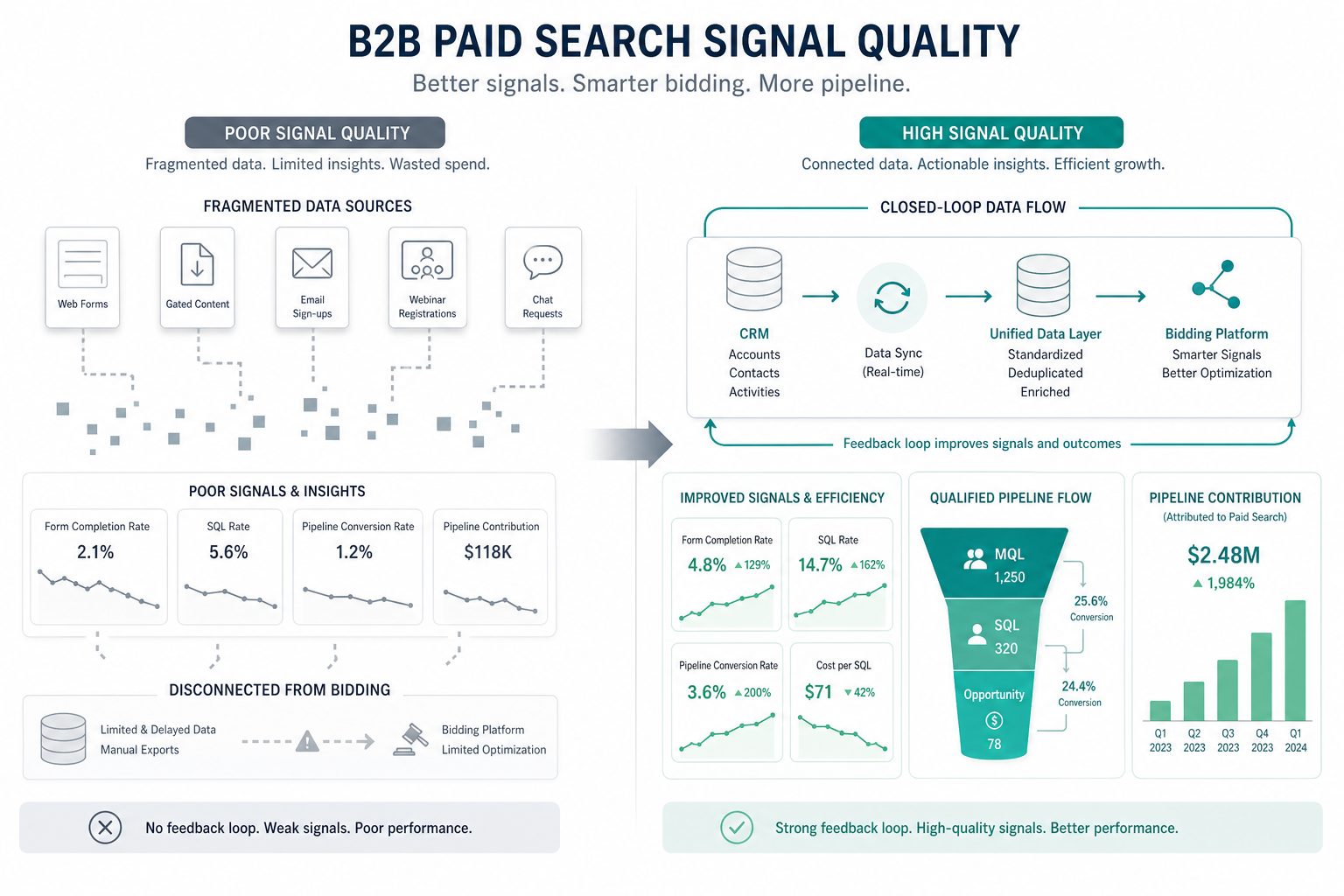
McKinsey's research on agentic AI identifies legacy martech architecture as the primary structural blocker — not model capability, not team willingness. Disconnected CMS, DAM, CRM, and analytics systems prevent the kind of system interoperability that agentic workflows require. In McKinsey's framing, system interoperability, not model design, is often the limiting factor for organizations that fail to capture end-to-end AI value.
The readiness audit has four pre-conditions to verify:
| Pre-condition | What to verify | Common failure signal |
|---|---|---|
| Unified data layer | First-party customer data accessible across systems; no critical data siloed in disconnected tools | Campaign analytics, CRM, and web analytics cannot be joined without manual exports |
| Clean workflow documentation | Core marketing workflows documented at task level, not just process-level; time and volume baselines recorded | Teams describe workflows verbally but have no written documentation of inputs, steps, and handoffs |
| Stack integration readiness | Martech, adtech, and data systems have APIs or native connectors; IT has mapped integration dependencies | CMS, DAM, and email platform are not connected; integrations require custom engineering for each new tool |
| Team AI fluency | At least a subset of the team has working familiarity with AI tools; prompt engineering skills exist somewhere in the function | All AI usage has been confined to one enthusiast; no documented prompts or workflows exist |
The Shadow AI Inventory: A Required Audit Step
Before you can govern AI, you need to know what AI you already have. Research cited by Heinz Marketing from Larridin's State of Enterprise AI 2025 survey finds that 83% of enterprises discover more AI tools during audits than they expected, and 69% of technology leaders lack visibility into their own AI infrastructure.
Shadow AI — tools adopted by individuals or teams without IT or legal review — is not a minor compliance issue. It is a structural risk to data governance, vendor contract compliance, and the integrity of any measurement framework you try to build later. You cannot build a KPI structure on top of workflows you do not know exist.
The Shadow AI inventory is a marketing director-commissioned audit, not a technical task executed by the team. Commission it from IT or marketing ops with a defined scope: all AI-enabled tools used by the marketing function in the past 12 months, whether or not they appear in the approved software catalog. The output should include tool name, use case, data inputs, and whether the tool has been reviewed for legal and security compliance.
The audit output should produce a clear readiness score across the four pre-conditions and a prioritized list of blockers. Organizations that cannot demonstrate a unified data layer and documented workflows at the end of Phase 1 should address those gaps before moving to use-case selection — not in parallel with it.
Phase 2 — Prioritize and Pilot: Use the Impact-Readiness Matrix to Choose Where to Start
With readiness verified, the next decision is which use case to pilot first. This is where most programs make their second critical error: they select pilots based on ambition rather than feasibility, choosing the highest-impact opportunity without assessing whether the organization can actually execute it.
The impact-readiness matrix corrects this by forcing simultaneous evaluation of two dimensions: the revenue or efficiency potential of a use case, and the operational readiness to execute it cleanly. A use case that scores high on impact but low on readiness is the most common source of pilot failure — not because the technology does not work, but because the supporting infrastructure does not exist.

| Quadrant | Impact | Readiness | Recommended action |
|---|---|---|---|
| Start here | High | High | Pilot immediately — this is your first wave |
| Build toward | High | Low | Address readiness gaps first; do not pilot until blockers are resolved |
| Quick wins | Low | High | Use for team fluency building; do not treat as the primary AI program |
| Deprioritize | Low | Low | Remove from the roadmap entirely |
Pilot Design Principles
The best first pilots are not the highest-volume workflows or the most strategically visible ones. They are the workflows where success is most measurable — repetitive, time-consuming, non-strategic tasks where you can document a clear before-and-after.
Before launching any pilot, document specific baseline metrics at the task level. Not 'we produce a lot of social content' — but 'creating one social post takes approximately three hours; we produce fifteen per week.' That specificity is the foundation of the ROI story you will need to tell in Phase 4.
- Scope the pilot to a single, bounded workflow — not a category of work. 'AI-assisted first-draft generation for blog posts' is a pilot. 'AI for content marketing' is not.
- Involve legal, IT, and operations in pilot design from the start — not as reviewers after the fact. Data handling, tool compliance, and integration dependencies must be resolved before launch, not discovered mid-pilot.
- Define failure criteria explicitly before launch: what conditions trigger a stop decision versus an iteration decision? Without predefined failure criteria, pilots tend to drift indefinitely rather than producing a clear go/no-go signal.
- Avoid populating pilots exclusively with enthusiasts. Teams composed only of AI advocates produce optimistic results that do not survive contact with the broader organization. Include at least some skeptics in the pilot cohort.
Phase 3 — Scale: The Expansion-Wave Model and Team Redesign
A successful pilot proves that an AI workflow can produce measurable results in a controlled environment. Scaling requires something different: building the organizational infrastructure — quality controls, feedback loops, team model redesign, and governance checkpoints — that makes those results repeatable at broader scope.
McKinsey's research describes a three-wave expansion pattern observed in leading consumer brands that have captured end-to-end AI value. This model is the most operationally grounded framework available for marketing directors moving from pilot to scale.
- Wave one: Build and prove a single end-to-end workflow. The objective is not broad deployment — it is demonstrating that the full workflow, from input to output to distribution, operates reliably with AI in the loop. One workflow, fully proven.
- Wave two: Add safeguards, quality checks, and feedback loops. This is where brand voice standards, accuracy review processes, and escalation paths are documented and embedded. Expand to additional teams or markets only after this infrastructure exists.
- Wave three: Extend globally or cross-functionally. With proven workflows and documented quality controls in place, scale to additional geographies, business units, or marketing functions. McKinsey's example of a consumer brand that reduced campaign creation time by 4x followed this exact sequence.
Team Model Redesign: The Prerequisite for Sustainable Scale
Scaling AI workflows without redesigning the team model around them produces one of two failure outcomes: either humans are doing redundant work alongside AI (no efficiency gain), or AI is operating without adequate human oversight (quality and governance risk). Neither outcome justifies the investment.
The correct division of labor is not a philosophical position — it is an operational design decision. AI handles repetitive execution, data synthesis, variant generation, and pattern recognition at scale. Humans retain strategy, brand judgment, governance oversight, prompt engineering, quality monitoring, and stakeholder communication. These are not interchangeable functions.
McKinsey identifies four specific new human skill requirements that emerge as AI handles more execution work:
- Prompt engineering: the ability to write, test, and refine instructions that produce reliable AI outputs across different contexts and content types.
- Agent collaboration: understanding how to configure, direct, and troubleshoot AI agents operating within multi-step workflows.
- Quality monitoring: systematic review of AI outputs against brand, accuracy, and compliance standards — not ad-hoc editing, but structured quality assurance.
- Data and AI fluency: the ability to interpret AI-generated analysis, identify model limitations, and make informed decisions about when to trust or override AI outputs.
Change management at this phase is primarily a cultural challenge, not a technical one. Teams that have built professional identity around execution tasks — writing, design production, campaign trafficking — require active support in transitioning to oversight and strategy roles. Marketing directors who treat this as a training exercise rather than a genuine organizational redesign tend to see capability gaps persist long after the tools are deployed.
Before expanding AI-generated content workflows to additional teams, establish a documented quality standard — a content-type taxonomy and rubric for what acceptable AI-assisted output looks like across different formats and channels. The AI-generated content taxonomy and quality-control framework provides a structured approach to building this standard before you scale.
Phase 4 — Govern and Measure: KPIs, Governance Structure, and C-Suite Communication
Measurement is where most AI programs lose their internal credibility. Fewer than 20% of enterprises currently track defined KPIs for generative AI — yet McKinsey identifies KPI tracking as the single strongest predictor of whether AI investments produce bottom-line impact. The absence of measurement is not a neutral state; it is the reason AI programs cannot defend their budgets.
The Four-Category KPI Taxonomy
AI-mature marketing organizations structure their measurement across four categories. This taxonomy, drawn from Heinz Marketing's enterprise AI maturity research, provides a complete view of AI value that neither over-indexes on efficiency nor ignores quality and accuracy risks.
| Category | What it measures | Example metrics |
|---|---|---|
| Cost impact | Reduction in time, headcount, or vendor spend attributable to AI-assisted workflows | Hours saved per workflow per week; reduction in agency production costs; tool consolidation savings |
| Revenue lift | Incremental pipeline or revenue contribution from AI-enhanced programs | MQL volume change from AI-personalized campaigns; pipeline influenced by AI-assisted outreach; conversion rate delta in A/B tests |
| Quality and accuracy | Output quality relative to human-produced baseline; error and compliance incident rates | Brand voice consistency scores; fact-check error rate in AI drafts; compliance review pass rate |
| Operational velocity | Speed of workflow execution before and after AI integration | Campaign creation time; time from brief to first draft; approval cycle duration |
For full implementation guidance on building an AI measurement architecture — including metric definitions, attribution methodology, and dashboard design — the AI marketing analytics practitioner reference guide covers this ground in depth. The taxonomy above is the strategic framing; that guide is the implementation detail.
Governance Structure
Governance is not a compliance exercise appended to the end of an AI program. It is the operational infrastructure that prevents the tool sprawl and Shadow AI accumulation that destroy AI investment value. Three governance components are non-negotiable at scale:
- Brand and legal risk oversight: a defined review process for AI-generated content before it reaches customer-facing channels, with explicit ownership and escalation paths. This is not optional for organizations operating in regulated industries or running paid media at scale.
- Six-month reassessment cadence: a formal review of all active AI use cases against current performance data, updated tool capabilities, and evolving regulatory requirements. AI capabilities and platform policies change on timescales of weeks — a governance framework without a structured reassessment cycle becomes obsolete.
- Shadow AI controls: ongoing monitoring of tool adoption across the marketing function, with a defined process for evaluating and either approving or retiring tools that emerge outside the formal stack. The audit from Phase 1 establishes the baseline; governance maintains it.
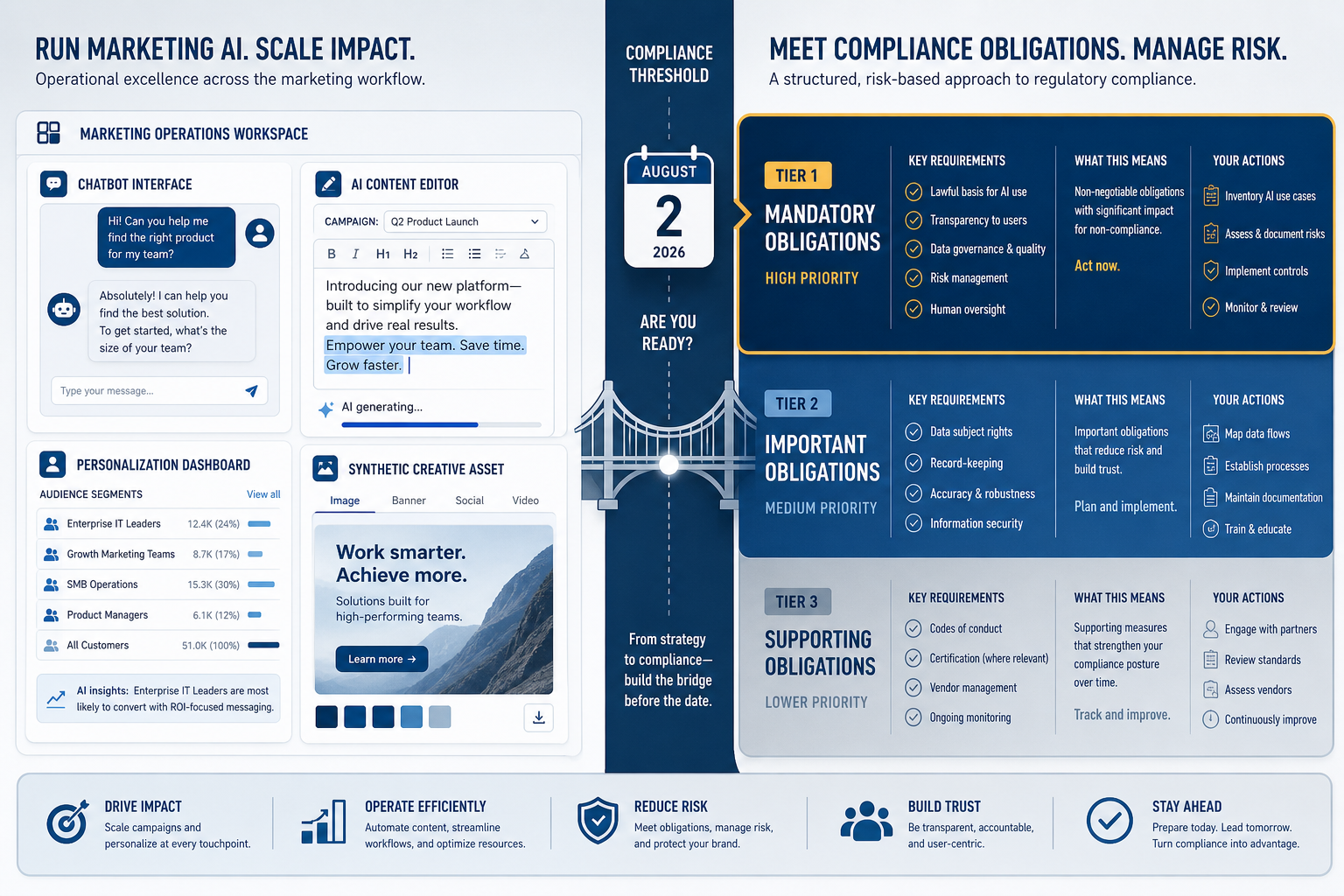
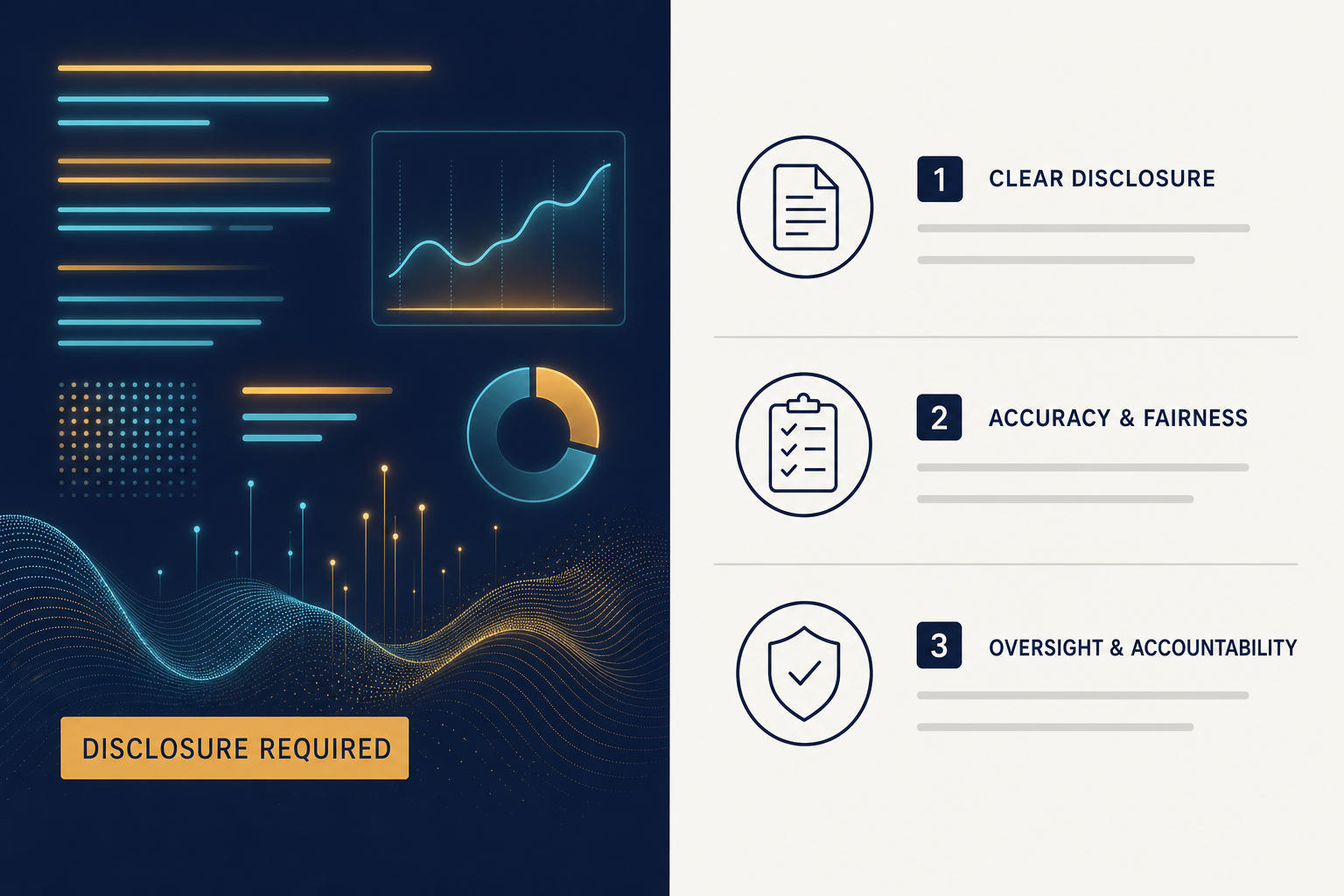
FTC disclosure requirements for AI-generated content are an active governance area, not a settled question. The FTC disclosure requirements reference for AI-generated marketing content covers current rule status and what marketing organizations need to monitor as enforcement evolves.
C-Suite Communication: Connecting AI to Business Outcomes
The CFO does not want to know how many email campaigns your AI tool sent last quarter. McKinsey's research found that none of the 200+ senior marketing and technology leaders surveyed could clearly articulate the ROI of their martech investments — because they were tracking operational activity metrics rather than revenue or customer lifetime value.
The CFO's real question is: 'Can I trust this team to turn money into measurable value?'
The most effective structure for AI budget justification is a three-scenario presentation, not a single-line budget request. Present base, growth, and transformation scenarios — each with a specific AI investment level and a corresponding downstream revenue consequence, not a list of activities. This shifts the conversation from 'what will you do with this money' to 'what will the business lose if we do not invest.'
| Scenario | Investment level | AI program scope | Downstream revenue framing |
|---|---|---|---|
| Base | Current or reduced budget | Maintain existing pilots; no new workflow expansion | Revenue impact constrained by manual execution bottlenecks; campaign velocity remains flat |
| Growth | Current + incremental AI investment | Scale two to three proven workflows; add quality governance layer | Projected velocity improvement and personalization lift based on pilot data; specific pipeline contribution estimate |
| Transformation | Significant AI infrastructure investment | End-to-end workflow redesign; agentic capabilities across core marketing functions | McKinsey's conditional estimate of 10–30% revenue growth from hyperpersonalization — contingent on data foundation readiness being in place |
Common Failure Modes by Phase — and How to Prevent Them
Each phase of this framework has a characteristic failure mode. Most of them are predictable and preventable — but only if you know what to watch for before you encounter them.
| Phase | Failure mode | Prevention tactic |
|---|---|---|
| Assess | Treating the readiness audit as a checkbox — confirming what leadership already believes rather than genuinely diagnosing blockers | Commission the Shadow AI inventory and data layer assessment from a neutral party (IT or marketing ops), not from the team that will be evaluated |
| Prioritize and Pilot | Selecting pilots based on ambition rather than readiness — choosing high-impact, low-readiness use cases and then attributing failure to the technology | Require a completed impact-readiness matrix before any pilot is approved; no pilot launches without documented baseline metrics |
| Prioritize and Pilot | Populating the pilot cohort exclusively with AI enthusiasts, producing results that do not generalize to the broader team | Deliberately include skeptics and average performers in pilot cohorts; test the workflow under realistic, not optimal, conditions |
| Scale | Expanding to additional teams or markets before Wave 2 quality and governance infrastructure is in place | Make Wave 2 completion — documented quality standards, escalation paths, and feedback loops — a hard gate before any Wave 3 expansion begins |
| Scale | Treating team model redesign as a training exercise rather than an organizational change | Assign explicit ownership of the new human roles (prompt engineering, quality monitoring, agent collaboration) before expanding AI workflow scope |
| Govern and Measure | Running too many simultaneous AI use cases in the enterprise integration phase, diluting focus and measurement integrity | Limit active scaling initiatives to two or three workflows at any time; close or pause initiatives that have not met predefined success metrics |
| Cross-phase | Tool sprawl and absent measurement frameworks destroying AI investment value — 72% of AI investments are in this category per Larridin's research | Build the KPI tracking architecture in Phase 1, not Phase 4; governance cannot be retrofitted onto a program that has already accumulated unmanaged tools |
90-Day Action Plan: A Sprint Checklist for Marketing Directors
The four-phase framework is a strategic architecture. This 90-day sprint structure is the immediate execution plan — three 30-day blocks, each producing a specific deliverable that the marketing director owns and can present to stakeholders.
Days 0–30: AI Tool Audit and Shadow AI Discovery
- Commission the Shadow AI inventory: all AI-enabled tools used by the marketing function in the past 12 months, with data inputs, use cases, and compliance review status.
- Assess the four readiness pre-conditions (data layer, workflow documentation, stack integration, team fluency) and produce a written readiness score with prioritized blockers.
- Complete the impact-readiness matrix for the top five candidate use cases in your function mix.
- Identify and brief the pilot team — including skeptics, legal, and IT — before any tool evaluation begins.
- Document baseline metrics for the top-priority pilot use case at task level (time per unit, volume per week, current quality benchmark).
Days 30–60: Deploy One End-to-End Measurable Workflow
- Launch the highest-scoring use case from the impact-readiness matrix as a bounded, single-workflow pilot with predefined success and failure criteria.
- Run the pilot against documented baseline metrics — not impressions or volume, but time-per-task, quality pass rate, and any revenue-adjacent metric available.
- Hold a mid-sprint review at day 45 to assess whether the pilot is on track for the success criteria or requires a defined iteration.
- Begin drafting the Wave 2 quality and governance documentation: brand voice standards, escalation paths, and review process for AI-generated outputs.
Days 60–90: Scale with Documented Proof
- Produce a pilot outcome report with before-and-after metrics, methodology notes, and explicit scope limitations — this is the document you take to CFO and CEO stakeholders, not a slide deck of impressions.
- Complete the Wave 2 governance infrastructure before expanding the workflow to additional teams or channels.
- Build the three-scenario budget presentation for the next planning cycle, grounded in the pilot data you now have.
- Establish the six-month reassessment cadence: a calendar date, an owner, and a defined scope for the first formal review of all active AI use cases.
- Identify the second wave use case and begin the impact-readiness assessment for it — so the program maintains momentum without expanding prematurely.
| Sprint | Primary deliverable | Decision the marketing director owns |
|---|---|---|
| Days 0–30 | Readiness audit report + Shadow AI inventory + impact-readiness matrix | Which blockers require resolution before piloting; which use case gets the first pilot slot |
| Days 30–60 | Pilot outcome data against documented baseline + Wave 2 governance draft | Go/no-go on the pilot use case; whether to iterate or advance to Wave 2 |
| Days 60–90 | Pilot outcome report + three-scenario budget presentation + six-month reassessment schedule | Which workflow scales next; what investment level to request for the next planning cycle |
Comments
Join the discussion with an anonymous comment.