

Netflix
Many companies experiment with generative AI for marketing but few see real financial returns. This case study analysis shows that the companies achieving measurable ROI—like Netflix, Progressive, and Starbucks—use predictive AI to drive automated decisions, not just faster content creation.
Outcome
Reported over $1 billion in annual savings from reduced churn via churn prediction and retention interventions — source: Pecan.ai, 2026
This outcome is independently verified via the primary source linked above.
The uncomfortable number in AI marketing is not how many teams have adopted it. It is the gap between activity and financial return. One 2026 case-study roundup cites 88% of marketers using AI tools while only about 6% of organizations see meaningful financial returns, attributing the latter figure to McKinsey’s 2025 State of AI work; because that is a secondary citation, it should be verified against the original McKinsey report before anyone builds a board slide around it.[1] Even with that caveat, the pattern is familiar inside marketing teams: prompts are everywhere, budget confidence is not.
That is why the useful question is narrower than “Which companies use AI for marketing?” Plenty do. The better question is which companies use AI in a way that can plausibly move revenue, retention, spend, upgrade rate, inventory cost, or sales productivity. The dividing line is usually not whether a team can generate more copy. It is whether a model predicts something economically useful and then changes what happens next.
Generative AI still matters. It reduces blank-page time, helps with variants, summarizes calls, accelerates research synthesis, and makes small teams feel less underwater. But faster content production is often several steps away from money. Predictive AI sits closer to the budget conversation because it decides who should receive an offer, which account should go to sales, which customer is at risk, or what quantity should be stocked before demand arrives.
The Companies Getting Real AI Marketing ROI Change Decisions, Not Just Output
Across the strongest examples, the operating pattern is consistent: prediction, workflow action, measurable outcome. A churn model is only interesting if it changes the retention journey. A propensity score matters when it changes lead routing, offer eligibility, bid strategy, or sales prioritization. A demand forecast becomes marketing-relevant when it shapes promotion timing, store inventory, or product availability.
| Company | Prediction | Action tied to the prediction | Reported business outcome |
|---|---|---|---|
| Netflix | Churn risk and content preference | Personalized recommendations and retention interventions | Reported $1B+ annual savings from reduced churn; methodology requires verification |
| Progressive | Purchase propensity and risk signals | Targeting and offer prioritization connected to telematics data | $2B in new premiums attributed to one ML-powered feature; about 90% lead identification accuracy and 197% campaign lift reported |
| Starbucks | Individual offer response and demand signals | Personalized offers plus inventory and supply chain planning | Reported 30% global ROI uplift, 3x spend from AI-personalized offers, and $125M supply chain savings |
| Grammarly | Account upgrade likelihood and lead quality | Salesforce Einstein lead scoring and sales prioritization | 80% increase in account upgrades; sales cycle reduced from 60–90 days to about 30 days |
The table is not a leaderboard. The source quality varies, and several figures come from vendor-published or vendor-adjacent case studies. Still, the useful comparison is not brand prestige. It is the mechanism: each company connects a prediction to a marketing or go-to-market action close enough to a financial outcome to survive a budget review.
Netflix: Retention AI Works Because the Model Changes the Experience
Netflix is the example that usually gets flattened into “recommendation engine saves money.” The better reading is more operational. The company’s AI systems are described as predicting churn risk and content preference, then using those predictions to personalize what a member sees and which retention interventions high-risk cohorts receive.[1] The model is not just producing an insight for a weekly dashboard. It is changing the product and marketing surface that a subscriber encounters.
The often-cited number is large: more than $1 billion in annual savings from reduced churn, with some summaries reporting around a 6% cancellation reduction in targeted high-risk cohorts.[1] That figure should be handled carefully. The exact methodology and original disclosure context vary across secondary sources, so it is stronger as a directional signal than as a clean benchmark. A mid-market subscription business should not read it as “install AI, save a billion dollars.” It should read it as “churn prediction becomes valuable when it controls a retention action before cancellation happens.”
The same caution applies to the reported recommendation success comparison: Netflix’s original content recommendation success rate is cited at 93% versus an industry average around 35%.[1] Whether that exact comparison belongs in a finance model depends on source verification. But the economic logic is clear enough: when discovery improves, engagement can rise; when engagement rises, cancellation risk can fall; when cancellation risk falls, lifetime value changes.
Progressive: Propensity Modeling Gets Budget Attention Because It Is Attached to Premium Growth
Progressive is useful because the reported outcome is not framed as content efficiency. The company’s Snapshot program is described as using more than 10 billion miles of telematics data, feeding machine learning models that support purchase propensity and risk evaluation.[1] In marketing terms, the point is not simply that Progressive has a lot of data. The point is that behavioral data can improve who receives attention, what offer they receive, and how confidently the company can prioritize likely buyers.
The headline figure cited in the case material is $2 billion in new premiums in a single year from one ML-powered feature.[1] The same source reports lead identification accuracy of about 90% and a 197% campaign lift.[1] Those numbers deserve the same skepticism any polished case statistic deserves, especially when a secondary source compresses investor, earnings, and marketing materials into one narrative. Still, the category of result is exactly what makes the case relevant: premium growth, not just more personalized messaging.
For marketing operations, the lesson is not “collect telematics data.” Most teams cannot and should not copy that data asset. The portable idea is purchase-propensity routing: when a model can rank likely buyers or high-value prospects, marketing spend and sales attention stop being spread evenly across names that only look equivalent inside a CRM.
Starbucks: Personalization and Forecasting Belong in the Same ROI Conversation
Starbucks’ Deep Brew platform is usually discussed as personalization, but its reported value comes from a wider operating system: individual-level offers, demand prediction, and supply chain planning. The case material reports a roughly 30% global ROI uplift, 3x spend from AI-personalized offers, and $125 million in supply chain savings from demand prediction.[1][2]
That mix matters. A coupon or app offer is marketing. Whether a store has the product available when the offer lands is operations. Predictive AI becomes more financially credible when those two systems stop behaving like separate worlds. If a model expects demand to rise in a location, the valuable action may be inventory positioning as much as message selection.
This is also where generic personalization claims get weaker. “Personalized at scale” can mean little more than dynamic first names and product blocks. In the Starbucks example, the stronger claim is that personalization is connected to behavioral response and demand planning. The model is not only asking which message might perform. It is helping decide which offer, in which context, with which operational readiness behind it.

Grammarly: In B2B, AI ROI Shows Up When Lead Scoring Changes Sales Behavior
Grammarly’s case sits closer to the day-to-day reality of many B2B marketing teams. The reported implementation used Salesforce Einstein for predictive lead scoring, helping the company identify accounts more likely to upgrade and prioritize sales engagement.[3] The cited results are an 80% increase in account upgrades, a sales cycle compressed from 60–90 days to about 30 days, and a 0.04% unsubscribe rate versus an industry average around 2%.[3]
This is a vendor-vetted case study, so the numbers should not be treated as a universal benchmark. But the workflow is highly transferable. A lead score that sits unused in a dashboard is analytics theater. A lead score that changes routing rules, sales alerts, nurture suppression, expansion plays, or account prioritization can alter the cost and speed of pipeline creation.
The unsubscribe figure is especially worth interpreting carefully. A low unsubscribe rate does not prove revenue impact by itself. It does suggest that the targeting and message selection did not simply push more volume into the market at the expense of audience tolerance. For teams already drowning prospects in automated sequences, that is not a minor point.
What These Cases Have in Common
The strongest companies that use AI for marketing are not merely faster. They are more selective. Their systems reduce wasted action: fewer irrelevant offers, fewer low-propensity leads sent to sales, fewer retention efforts aimed at customers who were not at risk, fewer promotions disconnected from demand.
- The prediction is economically meaningful: churn risk, purchase likelihood, upgrade probability, demand, or next-best offer.
- The prediction is close to a workflow: routing, suppression, offer selection, retention treatment, inventory planning, or sales prioritization.
- The workflow has an owner: lifecycle marketing, RevOps, sales, merchandising, or customer success can act on it.
- The outcome is measured near money: premium growth, retained revenue, account upgrades, spend, cost savings, or sales-cycle reduction.
- The result is not treated as self-proving: source quality, incrementality, and attribution still need scrutiny.
That last point is where many AI marketing conversations get sloppy. Adoption is not effectiveness. A case study is not proof of repeatability. A vendor disclosure is not the same thing as an independent study. A lift claim may be real and still fail to answer whether the lift was incremental, durable, or profitable after software, data, engineering, and change-management costs.
Why Generative AI Alone Rarely Carries the Largest ROI Claims
Generative AI has a clearer productivity story than a revenue story. If a team produces first drafts faster, repurposes webinars into nurture copy, or creates more ad variants for testing, the savings may be real. The issue is measurement distance. Saved hours must become either lower cost, higher throughput without quality loss, faster campaign launch, better testing velocity, or incremental revenue. Too often, the reporting stops at the saved-hours estimate.
That does not make generative AI a distraction. It makes it infrastructure. Teams should use it for briefs, summaries, variant generation, QA support, research synthesis, and campaign assembly where governance allows. But if the investment case depends on material ROI, the finance conversation usually needs a second layer: what decision improved because of AI, and what happened after that decision changed?
For a deeper treatment of this distinction, the internal analysis on the real ROI of generative AI in marketing is a useful companion. The short version for budget planning is simple: generative AI often improves production economics; predictive AI more often changes allocation economics.
How Mid-Market Teams Can Apply the Pattern Without Copying Netflix
The wrong takeaway is that every marketing team needs a Netflix-scale recommendation system or a Starbucks-scale data platform. Those companies have engineering capacity, data volume, and operational integration most organizations do not. The practical move is to find a narrow prediction that can trigger a near-term action using data the company already trusts enough to operate with.
- Churn risk: identify customers whose behavior suggests they may cancel, then trigger retention journeys or customer-success review.
- Lead propensity: rank inbound and nurture leads by conversion likelihood, then adjust sales routing and follow-up urgency.
- Account expansion likelihood: surface customers likely to upgrade, then coordinate lifecycle messaging and account-owner outreach.
- Next-best offer: select the product, bundle, or message most likely to fit the customer’s current behavior.
- Demand signals: use historical and behavioral data to adjust promotion timing, product emphasis, or inventory-sensitive messaging.
The selection criterion is not novelty. It is actionability. If the model output cannot change a rule, route, offer, suppression list, budget allocation, sales task, or customer intervention, it is probably not the first predictive use case to fund.
Data readiness matters more than the demo suggests. A churn model built on inconsistent renewal dates, missing product usage fields, or duplicate account records will create arguments instead of lift. A lead score trained on historical sales behavior can reproduce old biases if the team never examines what “good lead” meant in the first place. Before a predictive AI project becomes a technology purchase, someone has to inspect the fields, definitions, owner handoffs, and feedback loops.
That work is not glamorous, but it is where many AI ROI programs are won or lost. The RevOps manager cleaning lifecycle stages and the analyst defining an incremental holdout are closer to revenue impact than a slide promising infinite personalization.
The Measurement Standard Should Match the Claim
If the claim is productivity, measure productivity honestly: hours saved, cycle time reduced, agency spend avoided, campaign volume increased, and quality control maintained. If the claim is revenue, retention, or pipeline, measure closer to the economic event. That means holdouts where possible, pre/post comparisons where holdouts are not practical, and clear separation between model adoption and model effectiveness.
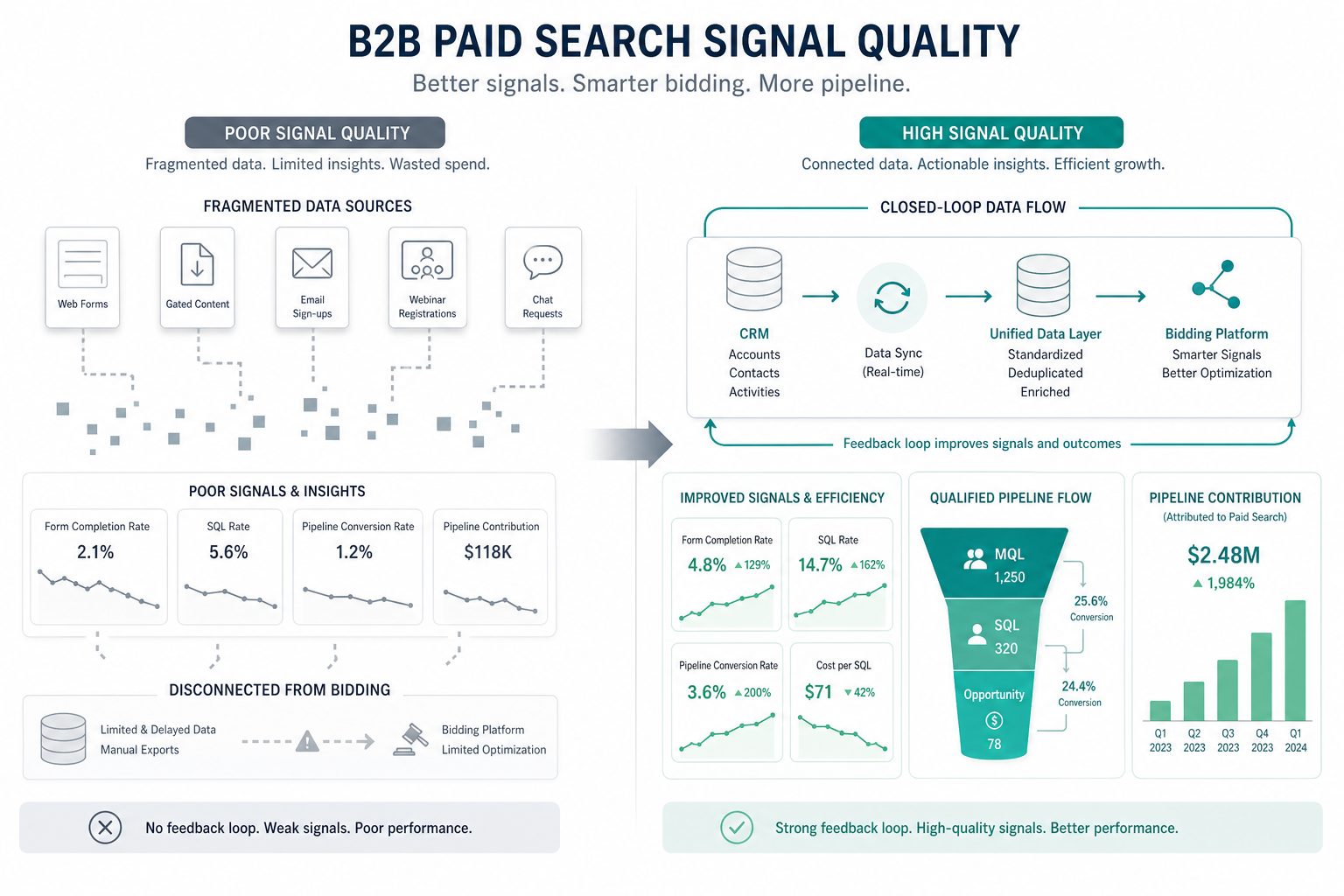
A predictive system also needs a feedback loop. Sales must disposition the leads. Customer success must report whether retention interventions worked. Lifecycle marketing must know which offers drove response and which created unsubscribes or margin leakage. Without that loop, the model keeps scoring the world as it used to be instead of learning from what happened after the company acted.
Teams building the business case can use AI marketing analytics ROI and how to prove AI marketing ROI when productivity metrics fall short to pressure-test measurement design before the pilot becomes another adoption story.
A Better Filter for Companies That Use AI for Marketing
Brand examples are only useful if they sharpen judgment. Netflix points to retention intervention. Progressive points to propensity and premium growth. Starbucks points to personalization linked with demand forecasting. Grammarly points to lead scoring that changes sales behavior. None of those examples prove that AI automatically creates ROI. They show where to look when separating meaningful systems from high-activity experimentation.
The investment filter is disciplined: start with a prediction worth paying for, connect it to a workflow someone owns, measure the business outcome, and keep the source quality honest. Generative AI is now table stakes for marketing productivity. The predictive advantage belongs to teams that connect models to action.

Comments
Join the discussion with an anonymous comment.