

What the Data Says About AI Marketing Analytics ROI in 2026
Marketing managers need grounded, sourced numbers to build a business case for AI analytics investment. This article disaggregates ROI by use case using 2026 data, showing where returns are consistent and where they depend on data maturity.
AI marketing analytics is moving through 2026 with two facts that do not sit comfortably together. The market is large and expanding, with one 2026 market roundup putting AI marketing analytics at $47.32 billion in 2025 and projecting $107.5 billion by 2028; the same article cites an 88% daily AI usage figure among marketers, attributed to SEO.com. [1] At the same time, Gartner’s marketing budget benchmark keeps the spending environment tight, with marketing budgets at 7.7% of company revenue. [2] That makes the useful question narrower than whether AI marketing analytics is popular. A renewal or new purchase has to show which cost moved, which reporting cycle got shorter, which campaign decision improved, or which waste was removed before anyone credits it with ROI.
The ROI Map Is Uneven
The strongest case starts where AI analytics changes campaign mechanics directly: predictive targeting, campaign automation, anomaly detection, and recurring reporting. A Whatagraph article cites AllAboutAI figures showing 22% higher ROI, 47% better CTR, and 75% faster campaign launches for AI-supported marketing analytics and automation. [3] Those are not guarantees for every team, but they are credible ROI categories because the operational pathway is visible. Better targeting can reduce impressions spent on low-fit audiences. Faster launches reduce the waiting time between insight and execution. Anomaly detection helps stop a leaking campaign before the monthly report turns the loss into history.

Reporting automation deserves the same seriousness as targeting because it often produces the cleanest business case. Improvado’s vendor-published Function Growth case says the team redirected 30% of its time toward strategic work after implementation. [4] Tellius reports in a vendor-owned Novo Nordisk client case that agentic analytics produced 88% time savings on reporting tasks. [5] Those claims should be read with the source label attached, but the category is still practical: finance can understand analyst hours no longer spent reconciling exports, cleaning dashboards, or rebuilding the same weekly view. The payoff is not only lower labor cost; it is the capacity to investigate why performance changed while the campaign is still adjustable.
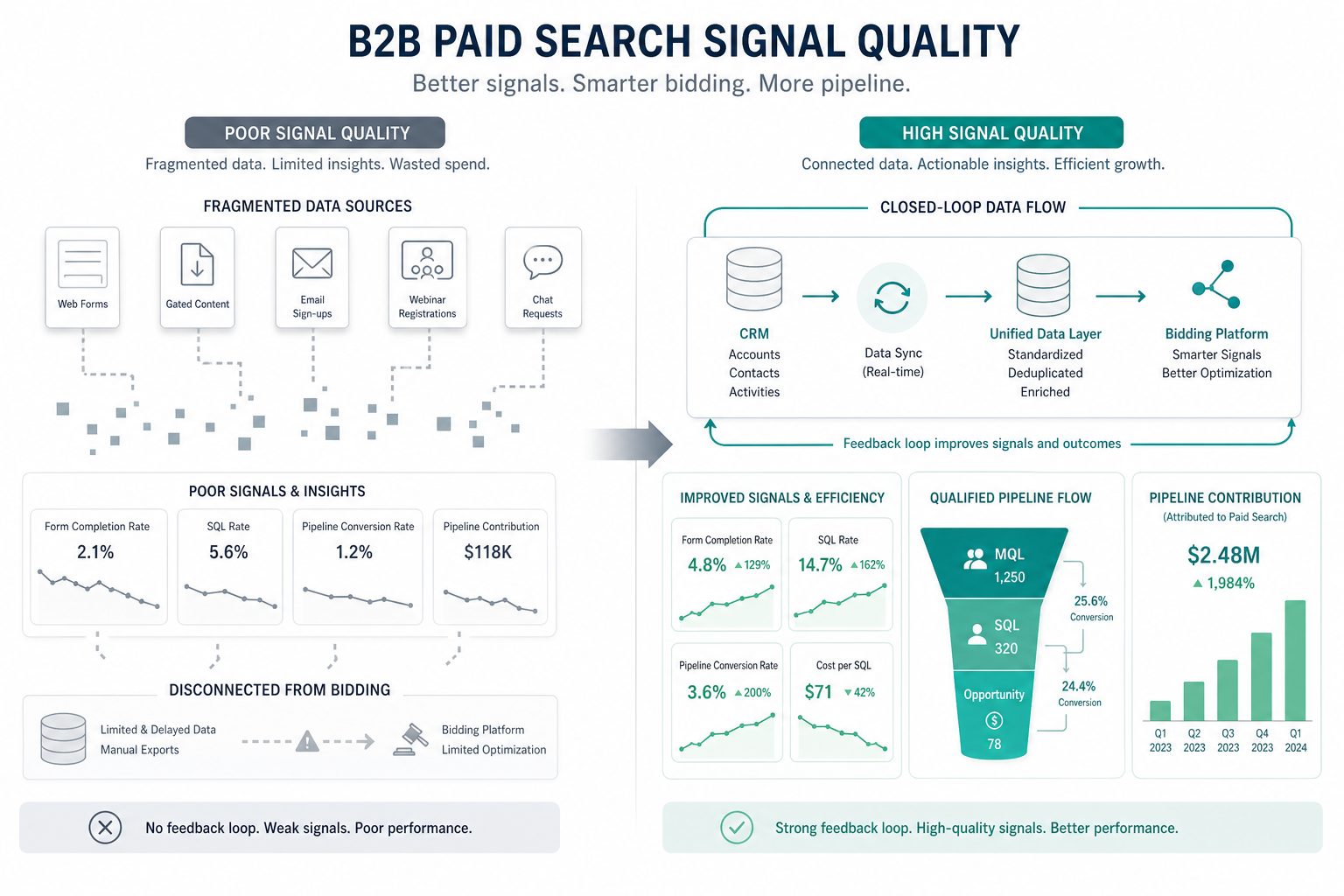
Cost reduction and sharper audience discovery are related, but they are not the same ROI story. HockeyStack’s vendor-published ActiveCampaign case says the company cut its ads budget by 50% while maintaining revenue targets. [6] LatentView reports that a client identified a 12.4% high-intent audience segment and reversed a declining sales trend. [7] The first case is a budget efficiency argument: spend less while preserving the target. The second is an allocation argument: find the subset of demand that was being averaged away. Both are useful, but neither should be flattened into a generic “AI increases revenue” claim without knowing the baseline, channel mix, measurement window, and how much of the result came from the analytics layer versus execution changes made after the insight.
Personalization And Attribution Need A Higher Bar
The splashier claims sit in the conditional zone. Averi cites a Keevee statistic that personalization can improve conversions by 202%, but that figure travels through a secondary source chain and should not be treated as a baseline result for a team that still has fragmented identity data, inconsistent consent handling, or disconnected campaign and CRM records. [1] Personalization ROI depends on whether the system can recognize the customer, apply a relevant segment or propensity signal, deliver the experience in-channel, and measure the outcome without double-counting. Attribution has the same problem in a different form. AI can help detect patterns across touchpoints, but clean proof gets harder when sales cycles are long, channels overlap, and the CRM contains missing or late-stage-only activity. For teams in that position, the better companion read is an ROI measurement framework, not another conversion-lift benchmark.
The broader GenAI ROI evidence points in the same direction. WordStream’s summary of Gartner findings says adopters report ROI through time efficiency at 49%, cost efficiency at 40%, and increased capacity at 27%; those are mainly operating gains, not clean new-revenue attribution. [8] The enterprise-scale examples also need guardrails: McKinsey’s 15x acceleration claim applies to Fortune 250-scale deployments, while BCG data cited in the same coverage says 43% of CMOs are investing nearly $15 million per year, a spending level that does not describe most marketing organizations. [8] In 2026, the defensible business case for AI marketing analytics should start with waste reduction, reporting automation, faster campaign decisions, and measurable capacity gains. Personalization and advanced attribution can follow, but they belong in the second wave unless the team already has the unified customer data and operating discipline required to make the lift measurable.
References
- AI Marketing Trends 2026, Averi
- Marketing Budget Benchmark, Gartner
- Whatagraph article citing AllAboutAI data, Whatagraph
- Function Growth case study, Improvado
- Novo Nordisk agentic analytics case study, Tellius
- ActiveCampaign case study, HockeyStack
- High-intent audience segment client result, LatentView
- Generative AI marketing ROI coverage citing Gartner, McKinsey, and BCG, WordStream
Comments
Join the discussion with an anonymous comment.