
What a CPI report actually changes for ad budgets
A CPI report doesn't move ad budgets directly; it transmits through three channels that run on different clocks — Fed rate expectations, consumer demand, and media price inflation. The July 2026 print has those channels pointing in different directions, so the defensible response is per-channel account checks, not a headline reflex.
- Platform
- Google Ads
- Bid strategy
- AI Max
- Last reviewed
- 0-08-25
Grounded in benchmark case file: AI rout ad-spend timeline
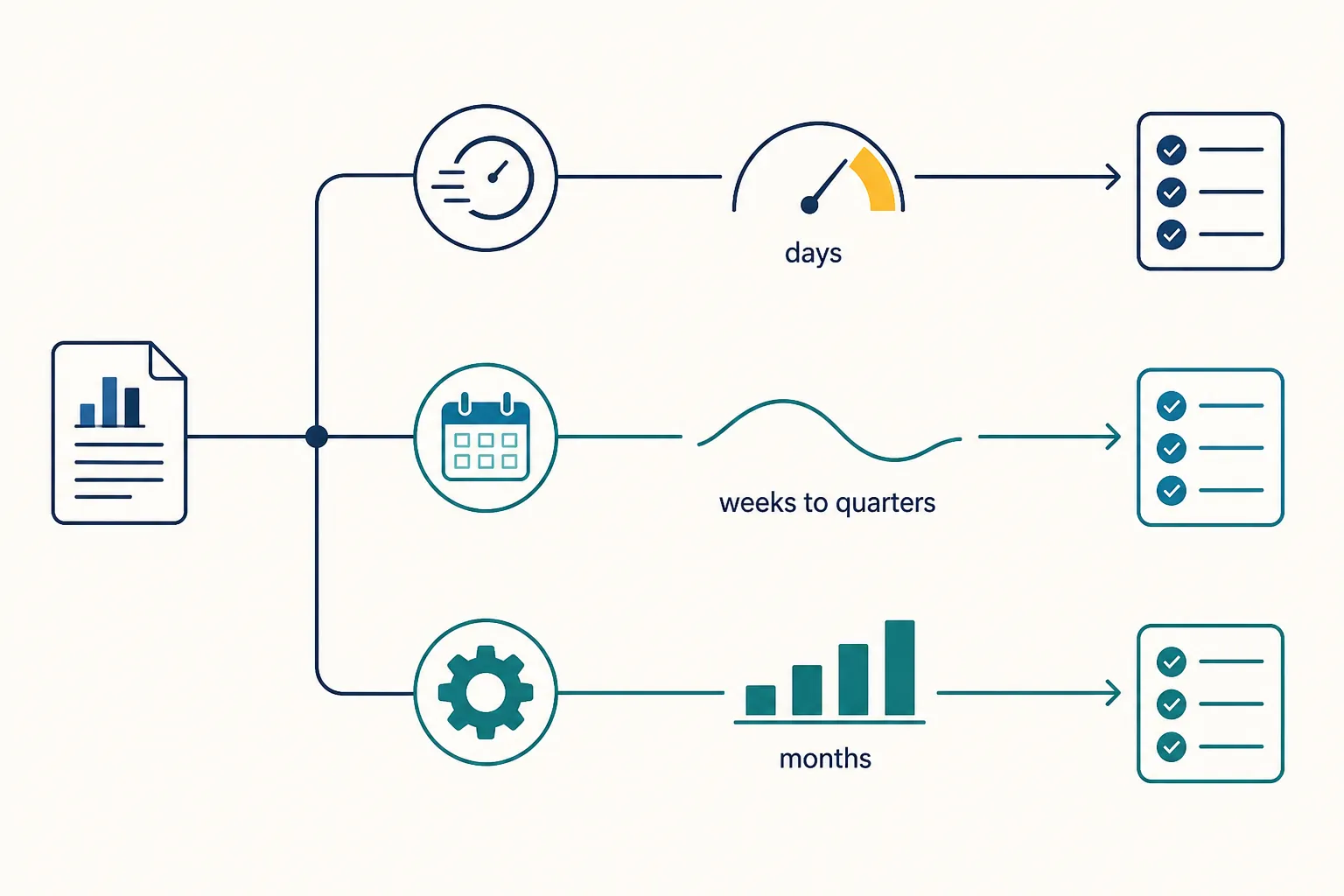
The wrong question after a CPI release is usually the fastest one: “Does this mean we cut Google Ads?” The better answer, as of the July 2026 CPI report released Aug. 12 and last reviewed here on Aug. 25, is that the CPI headline does not touch ad budgets directly. It reaches paid media through three channels that run on different clocks: Fed and rate expectations in days, consumer demand in weeks to quarters, and media price inflation over months.
July is a useful test because the signals do not line up neatly. CPI rose 0.1% month over month on a seasonally adjusted basis and 3.4% year over year; core CPI rose 0.2% month over month and 2.5% year over year. Energy fell 1.5% on the month but was still up 14.7% from a year earlier, gasoline was up 24.6% year over year, airline fares were up 25.5%, and shelter rose 0.1% on the month while accounting for roughly two-thirds of the monthly all-items increase. The next BLS CPI release is scheduled for Sept. 11, 2026.[1]
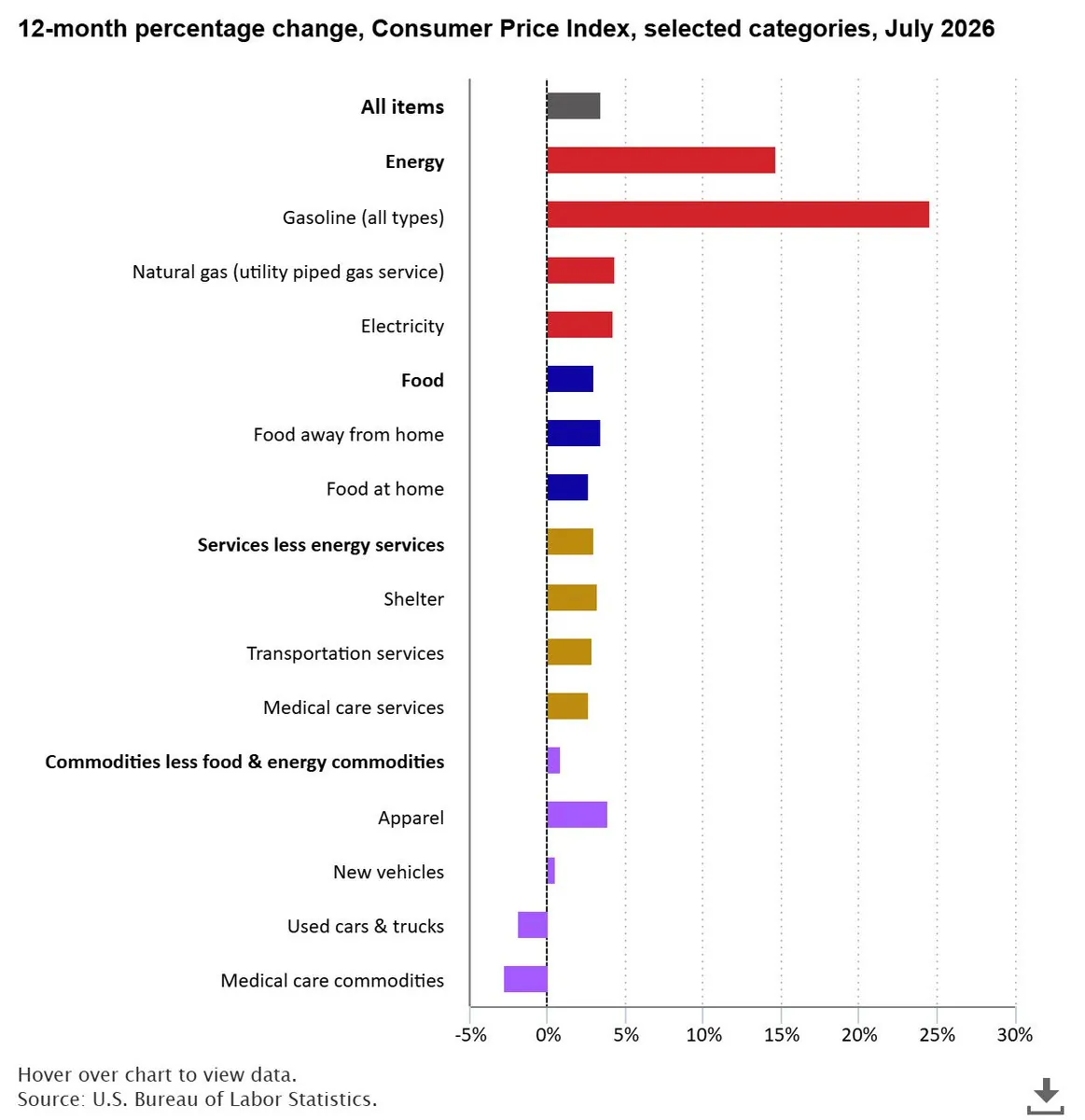
That mix is exactly why a single budget reflex is hard to defend. A hot gasoline number can matter a lot for a discretionary travel advertiser and much less for a B2B SaaS account selling annual contracts. A cooler core reading can change rate expectations without proving that shoppers are suddenly more willing to convert. Media costs can keep rising even when some consumer prices cool.
The CPI-to-budget path has three clocks
There is no cited rule in the available evidence that says a CPI print of X should cause an ad budget change of Y%. The following model is an operating framework for budget reviews, built from separate evidence on rates, demand, and media prices. It is useful because each channel points to a different account check.
| Channel | Typical clock | What can change | What to inspect before changing spend |
|---|---|---|---|
| Fed and rate expectations | Days | Financing assumptions, risk appetite, board/CFO pressure, pacing tolerance for cash-sensitive advertisers | Rate-sensitive campaign pacing, cost of capital assumptions, lead-to-cash timing, budget approval constraints |
| Consumer demand | Weeks to quarters | Category conversion rates, basket size, promo dependence, volume by income or region where available | Search demand, CVR, AOV, ROAS/MER, new-vs-returning customer mix, category-level softness |
| Media price inflation | Months, sometimes faster inside automated auctions | CPCs, CPMs, auction density, platform-recommended bids, efficiency targets | CPC/CPM trend, impression share, auction insights, bid strategy behavior, creative fatigue, incrementality tests |
The practical point is not to make CPI feel more complicated than it is. It is to stop using the headline as a fake shortcut. If the rates channel moved, the first check is pacing and financing exposure. If demand moved, the first check is conversion evidence. If media prices moved, the first check is auction cost and bidding behavior.
Channel 1: rate expectations can move before budgets do
The fastest CPI impact is usually not in the ad platform. It is in the room where finance decides how much risk the company is willing to carry this month. After the July CPI print, traders cut the probability of a September Fed hike to 42%, according to CNBC’s report citing CME FedWatch. The same report noted that the July FOMC vote was 9-3 to hold rates steady.[2]
That is an expectations change, not a rate change. A buyer should not rewrite budgets as if the Fed has already moved. But if an account is sensitive to financing conditions, the post-CPI rate reaction can still matter within days.
The accounts that deserve a same-week check are usually not the ones with the loudest CPI commentary. They are the ones where payback windows and financing costs already sit inside the budget model: mortgages, auto, home improvement, durable goods, private education, some B2B categories, and any advertiser whose CFO has tied spend approval to cash conversion.
For those accounts, the CPI-day task is narrow:
- Update the dated macro note in the budget tracker: July CPI released Aug. 12; all-items CPI at 3.4% year over year; core at 2.5%; September hike odds reported at 42%; Fed has not hiked.
- Check whether the finance team changed the allowable payback window, monthly spend cap, or pacing tolerance after the print.
- Look for immediate lead-quality or approval-rate movement only where the product is rate sensitive. Do not assume a platform-wide demand shift from a market-implied Fed probability.
- Separate “we are nervous” from “our conversion economics changed.” The former belongs in a note; the latter may justify a pacing adjustment.
The 2023 CME discussion of CPI and interest-rate volatility is useful historical context because it shows why markets can react quickly to inflation surprises, especially in periods when inflation was running above 8%. But that does not make the July 2026 print a mechanical budget trigger.[3]
Channel 2: demand pressure is category-specific, not headline-specific
This is where budget meetings get sloppy. A CPI report can tell you which household costs are moving, but it cannot tell you from the headline alone whether your prospect is about to stop buying, trade down, delay, or behave normally. July’s report makes that obvious: energy and gasoline were sharply higher year over year, airline fares were also up sharply, shelter was still contributing to the monthly increase, and core inflation was cooler than the all-items number.[1]
Those facts do not point to one universal paid-media response. A higher gasoline line can squeeze discretionary budgets for some households. Higher airline fares can affect travel demand, but the direction depends on whether the advertiser sells flights, hotels, points products, luggage, or local alternatives. Shelter pressure can matter for home services, moving, furniture, rental platforms, and financial products in different ways. Core cooling can reduce some macro anxiety while still leaving real pressure in categories tied to energy or transportation.
The budget-meeting risk is real. The CMO Survey’s Fall 2024 edition reported that marketing was the first line item cut 44.6% of the time.[4] That is context for why CPI headlines make paid-media teams nervous. It is not evidence that a specific CPI print should cause a specific campaign cut.
For demand, the inspection window should usually run longer than the news cycle. A buyer needs enough time to see whether the category is actually changing in the account. The first week after a print can be noisy; the following weeks start to show whether search interest, conversion rate, average order value, or lead quality has moved.
What to check in the account
- Segment by category or product line before touching the total budget. A fuel-sensitive or travel-sensitive product should not be averaged into an unrelated evergreen service line.
- Compare branded and nonbranded search separately. Branded softness can indicate demand or brand pullback; nonbranded softness can be auction, creative, match-type, or intent mix.
- Watch conversion rate and average order value together. AOV can hold while conversion rate weakens, or discounting can preserve volume while damaging margin.
- For lead-gen, check downstream acceptance and sales-qualified rates. CPI anxiety does not belong in the bid strategy if the real change is happening after the form fill.
- Ask finance whether margin assumptions changed because of input costs. If the answer is yes, target efficiency may change even if demand has not.
A simple hypothetical: if a home-services advertiser sees nonbrand CPCs flat, conversion rate steady, but average ticket size down in the three weeks after a CPI report, that is not a “cut paid search because CPI is hot” story. It is a margin and offer story. The next move may be promo structure, query filtering, or sales follow-up—not necessarily a budget cut.
This is also where internal macro trackers can help keep the conversation honest. A dated record such as the AI rout ad-spend timeline is useful less because AI valuation headlines explain CPI, and more because the method is the same: separate market noise from actual advertiser demand before changing spend.
Channel 3: media prices can move on their own cycle
Paid-media teams feel this channel fastest because it shows up as CPCs, CPMs, impression share loss, and bid-strategy complaints. But broad CPI and media inflation are not the same measure. Media prices can rise while core CPI cools. They can also fall in a specific channel while nominal consumer prices are rising.
ECI Media Management’s 2026 forecast put global media inflation at 3.1%, down from 3.8% in 2025 and the lowest since 2014 excluding 2020.[5] WFA/ISBA’s 2025-2027 media inflation forecasts described global media inflation as stabilizing around +4%.[6] Those forecasts are not CPI, and they are not proof that your account’s CPCs should rise by the same amount. They do explain why a buyer can see auction costs continue to increase even when the CPI discussion sounds calmer.
The older retail-media example is a useful caution against overgeneralizing. In January 2023, eMarketer’s Andrew Lipsman wrote that “in aggregate, digital ad prices do correlate with inflation because they’re a function of nominal consumer expenditure,” while also noting Skai data showing retail media CPCs down 12% year over year as spend rose 45% and impressions rose 61%.[7] In that case, more supply helped pull CPCs down even as broader inflation was elevated. The lesson is not that retail media is always cheaper under inflation. It is that channel supply, demand, and platform mechanics can dominate the CPI headline.
Search auctions add another layer because automation can turn competitive pressure into budget pressure quickly. In May 2026, Digiday reported buyer-cited CPC increases of 10% to 25% tied to Google’s AI Max, based on media-buyer accounts of the tool’s first year.[8] That is not an independent CPI effect. It is media-price evidence: platform automation, auction expansion, and advertiser adoption can raise costs on a clock that has little respect for the CPI calendar.
Search Engine Land’s discussion of why CPC inflation can start before the auction is useful for the same reason: cost pressure often enters before the buyer sees the final CPC line, through competition, platform defaults, and upstream planning assumptions.[9]
For this channel, the account review should be more mechanical than philosophical:
- Pull CPC and CPM by campaign type, not just blended paid media. A blended average can hide a rising search auction under cheaper prospecting inventory.
- Check impression share, top-of-page rate, and auction insights before blaming demand. If competitors became more aggressive, conversion softness may be a position and mix problem.
- Review bid-strategy changes and platform recommendations around the CPI window. Automated systems optimize to their configured goals, not to the reason a budget owner is anxious.
- Look for match-type expansion, audience expansion, creative rotation, and inventory mix changes that can make CPC or CPM inflation appear to be macro-driven.
- Separate price pressure from performance pressure. A higher CPC with stable conversion rate and margin may call for budget protection; a higher CPC with lower lead quality may call for query, audience, or bidding cleanup.
This is where platform-claim hygiene matters. If a vendor says automation is improving efficiency while the account shows rising CPCs, the buyer needs a verification path. Internal records such as the AI capex digital ad spend verification scorecard and the Meta Advantage+ automation profile are useful as operating references for checking platform claims against observed account behavior.
Cost inputs outside the auction can also matter. A tracker such as data-center regulation and ad costs belongs in this part of the review because infrastructure, AI, and platform operating costs can become part of the media-price discussion. It should not be used as a substitute for account-level CPC and CPM evidence.
How to answer the budget question after a CPI print
A defensible CPI response in paid media is a dated note plus three checks. It does not need a macro essay, and it does not need a performative budget cut by Monday.
| If the pressure is... | Do this first | Do not do this |
|---|---|---|
| Rate expectations | Document what changed in Fed expectations and ask whether financing assumptions, payback windows, or pacing limits changed | Treat a hike probability as if a hike already happened |
| Consumer demand | Wait for category-level account signals: search volume, CVR, AOV, lead quality, margin, and sales feedback | Cut or raise total budget because the all-items CPI number looked hot or cool |
| Media price inflation | Inspect CPC, CPM, auction pressure, bid-strategy changes, automation settings, and channel-level supply/demand | Assume CPI and CPC inflation move one-for-one |
So the operating rule is simple enough to survive a budget review: update the macro note with the release date and next BLS date; check rate-sensitive pacing only if financing expectations moved; inspect demand signals over the following weeks; monitor CPC, CPM, and auction pressure over months; and do not change budgets, bids, or pacing solely because the CPI headline looked hot or cool.
References
- Consumer Price Index Summary, U.S. Bureau of Labor Statistics
- CPI inflation report July 2026, CNBC, Aug. 12, 2026
- How CPI Drives Interest Rate Volatility, CME Group, 2023
- Marketing Budget and Job Growth Rebound, The CMO Survey, Duke Fuqua
- Media Inflation Report 2026 Forecasts, ECI Media Management
- WFA/ISBA Media Inflation Forecasts 2025-2027, ISBA
- Why retail media ad prices are declining when inflation is up, eMarketer, Jan. 2023
- 'CPC pain is real': One year on, Google's AI Max has pushed up search budgets – and costs, Digiday
- Why CPC inflation starts before the auction, Search Engine Land