
Auditing Yahoo Shopping's Similar Image Search for Product Ads
Similar-image search for shopping ads is expanding across Google Lens, Pinterest Lens, and Yahoo Scout, but the performance data is uneven and often unverifiable. This article audits the available metrics, flags tracking gaps, and gives media buyers a framework for evaluating platform claims before investing.
- Platform
- Yahoo
- Campaign type
- Scout commerce cards
- Spend range
- Varies
- Timeframe
- 0-2026
- pogo-stick rate
- 0% lower pogo-stick rate
- Verdict
- mixed
- Industry vertical
- ecommerce
- Last reviewed
- 0-07-30
The first problem with “yahoo shopping similar image search for product ads” is the name. As of July 2026, there is no clearly named standalone Yahoo Shopping similar-image-search ad product with its own buying and reporting surface. The closest current Yahoo surface is Yahoo Scout, launched in March 2026 as an AI search experience with visual answer cards and shopping integrations, including commerce cards that can move a user toward a product without a conventional search-results click path.[1]
That naming gap matters because a media buyer does not buy “visual search” in the abstract. They buy inventory, accept attribution rules, and then have to explain performance in a report. On that standard, Google Lens, Pinterest Lens, and Yahoo Scout are not equally auditable, even though all three sit near the same shopper behavior: starting discovery from an image rather than a typed query.

| Surface | What the platform or case data supports | Reporting visibility for buyers | Buyer confidence as of July 2026 |
|---|---|---|---|
| Yahoo Scout commerce cards | Yahoo Scout launched with visual answer commerce cards; Yahoo has cited a 22% lower pogo-stick rate versus traditional SERP behavior. | No mature public purchase-conversion benchmark; direct purchase initiation can bypass the normal click path. | Interesting discovery signal, weak purchase-performance evidence. |
| Google Lens Shopping Ads | Shopping ads can appear in Google Lens results. | Practitioner reporting indicates no separate Google Ads line item for Lens; performance is folded into broader campaign reporting. | Commercially relevant, but Lens-specific ROAS is not independently isolatable from the standard account view. |
| Pinterest Lens and shoppable Pins | Pinterest has published large Lens usage figures, and retailer case data from ASOS Style Match reports higher return visits and more items per session. | Case data is concrete but self-reported; not the same as an independently audited platform benchmark. | Strongest available behavioral signal, still not a clean universal ROAS benchmark. |
| Google Similar items | Google brought Similar items and Style ideas into mobile Image Search in 2017. | No fresh separate CTR or conversion publication was identified in the current materials. | Useful history, not enough current evidence for budget allocation. |
What Yahoo Scout Actually Gives a Shopping Advertiser
Yahoo Scout is worth watching because its shopping experience is not just a blue-link search result with an image thumbnail. Scout is built around visual answers, and its commerce cards can present product-like options inside the answer environment. The published benchmark that matters so far is engagement-oriented: Yahoo has reported a 22% lower pogo-stick rate compared with traditional SERP behavior.[1]
A lower pogo-stick rate can mean the answer environment is satisfying the user faster. It can also mean the platform has changed the observable path. If a shopper views a commerce card, compares options, and initiates a purchase from inside an answer surface, the advertiser may have fewer conventional search clicks to reconcile. That is useful for user experience and awkward for measurement.
Yahoo’s published commerce-card requirements also point to where the practical work sits: real-time price and availability, minimum 800×800px images, GTIN or MPN identifiers, and Product schema with Offer sub-properties. The same materials describe Scout ranking as placing more weight on structured data than link equity, while Yahoo’s knowledge graph is described as especially deep in finance and local business.[1]
None of that proves product-ad lift. It does tell a buyer what can be audited before spending more: whether the catalog is eligible, structured, current, and visually usable enough to be selected in the first place.
Google Lens Is Buyable, But Not Separately Defensible
Google Lens Shopping Ads are already commercially important because Lens sits inside Google’s shopping discovery path. Google has described Lens shopping as a way to identify products from images and connect users with shopping results, and practitioners have documented Shopping ads appearing in Lens results.[2][3]
The reporting layer is the problem. JumpFly’s 2025 practitioner coverage states that Google Ads does not provide a separate Lens reporting line item; Lens traffic is included inside broader campaign reporting, particularly Performance Max and Shopping-style aggregation.[2] That makes a vendor claim such as “Lens drove this ROAS” difficult to verify from the normal Google Ads export. The spend may be real, the impressions may be real, and the shopper behavior may be real, but the buyer cannot isolate the surface cleanly enough to optimize against it.
This is not a complaint about automation by itself. Blended campaign systems can work. The issue is narrower: if a surface is monetized before its performance is separately reportable, the advertiser is asked to trust a directional story while making budget decisions with aggregate numbers. That is a poor trade when the next decision is concrete, such as shifting budget, changing feed priorities, or defending a ROAS target to finance.
Google Similar items is even less useful as current performance evidence. Productsup’s launch coverage describes Google bringing Similar items and Style ideas to mobile Image Search in 2017, which is helpful context for how long Google has been connecting image discovery with shopping surfaces.[4] But the current research set does not provide a fresh Similar-items-specific CTR or conversion benchmark. It should not be used as a present-day proof point for product-ad performance.
Pinterest Has the Best Case Signal, With a Real Caveat
Pinterest is the strongest case in this audit because the available evidence is closer to shopper behavior than to platform aspiration. Yahoo Tech’s visual-search retail coverage cites more than 850 million Pinterest Lens uses in the first half of 2025.[5] Usage is not effectiveness, but it establishes that image-led shopping behavior is not a fringe interaction on the platform.
The ASOS Style Match figures are more useful. Published materials report that users of ASOS Style Match had a 75% higher return-visit rate and viewed 48% more items per session.[5] Those are not generic “engagement is up” claims; they describe specific behaviors a retailer can care about. A higher return-visit rate changes remarketing pools and purchase windows. More items per session can indicate broader consideration, even if it does not automatically equal incremental revenue.
The caveat is equally important: the ASOS figures are self-reported retailer case data in published materials, not an independently audited benchmark that every advertiser can transpose into its own media plan. They are still the most concrete evidence in this landscape because they name a retailer, a behavior, and a measured outcome. That is more than Google Lens or Yahoo Scout currently offers for purchase-performance validation.
Pinterest also benefits from a cleaner native intent pattern. A user saving outfits, browsing aesthetics, and opening shoppable Pins is often already in a discovery mode where image similarity is the point of the session. That does not make Pinterest inherently better for every advertiser. It does make its visual-search evidence easier to interpret than a Lens impression buried inside a broader automated campaign report or a Scout commerce card that may resolve the session without a conventional click.
Why Visual Search ROAS Does Not Compare Cleanly With Text Search
The temptation is to ask whether visual search ROAS is higher or lower than text search ROAS. That is usually the wrong first comparison. A typed query such as “black leather ankle boots size 8” carries declared intent. A visual search from a photo of boots may happen earlier, while the shopper is still identifying style, vocabulary, brand, or price range. Both can lead to revenue, but they do not enter the funnel at the same point.
Three measurement problems follow from that funnel difference:
- Blended campaign reporting can hide the surface. If Lens inventory sits inside Performance Max or Shopping aggregates, the buyer sees total campaign performance rather than Lens-specific contribution.
- Zero-click commerce cards can reduce observable handoffs. A better in-answer shopping experience may create fewer traditional clicks, which can make downstream attribution look worse or simply different.
- Catalog readiness can masquerade as platform lift. A retailer with cleaner images, better identifiers, and richer schema may outperform because it is easier for any visual system to understand, not because one visual surface has superior media economics.
That third problem is underappreciated. TaskMonk’s vendor-published guidance states that 80% of visual search accuracy depends on annotation quality rather than model architecture, and reports that teams using structured labeling see 30–40% better visual search conversion.[6] Because TaskMonk sells annotation-related services, those figures should be treated as vendor-sourced rather than independent research. Even with that limitation, the direction is plausible enough to affect planning: product data quality is not a back-office detail in visual search. It is part of media eligibility and matching quality.
The Market Context Is Real, But It Does Not Solve Attribution
There is enough market context to justify attention. Imagga’s 2026 retail-discovery coverage cites visual search as a growing retail behavior, and InvespCRO’s statistics roundup reports broader consumer interest in image-based product discovery.[7][8] The research set also includes the estimate that visual search drove 6.4% of e-commerce revenue in 2024 and a market projection from $41.7 billion in 2024 to $151.6 billion by 2032, at roughly a 17–18% CAGR.[7][8]
Those numbers explain why platforms are packaging visual shopping surfaces more aggressively. They do not tell a media buyer whether Yahoo Scout, Google Lens, or Pinterest Lens created incremental purchases in a specific account last month. Market size is not a substitute for a report that ties spend, surface, time period, and conversion method together.
What to Audit Before Moving Budget
For Q3 2026, the responsible move is not to ignore similar-image search. It is to separate surface eligibility from performance proof. A buyer can prepare for Yahoo Scout, Google Lens, and Pinterest Lens without pretending the reporting is cleaner than it is.
| Audit question | What a buyer can check now | Why it matters |
|---|---|---|
| Can the surface be named in reporting? | Look for a separate Lens, Scout, visual-search, or image-search row in the platform export, not just in a sales deck. | If the surface cannot be isolated, do not optimize to a claimed surface-level ROAS. |
| Can the time period be matched? | Compare platform claims against the same date range used in internal revenue and attribution reporting. | Lift claims often become weaker when the campaign window and sales window do not align. |
| Can Shopping or PMax traffic be separated? | Check whether visual inventory is blended into broader campaign types. | A blended campaign can be profitable while a surface-specific claim remains unverifiable. |
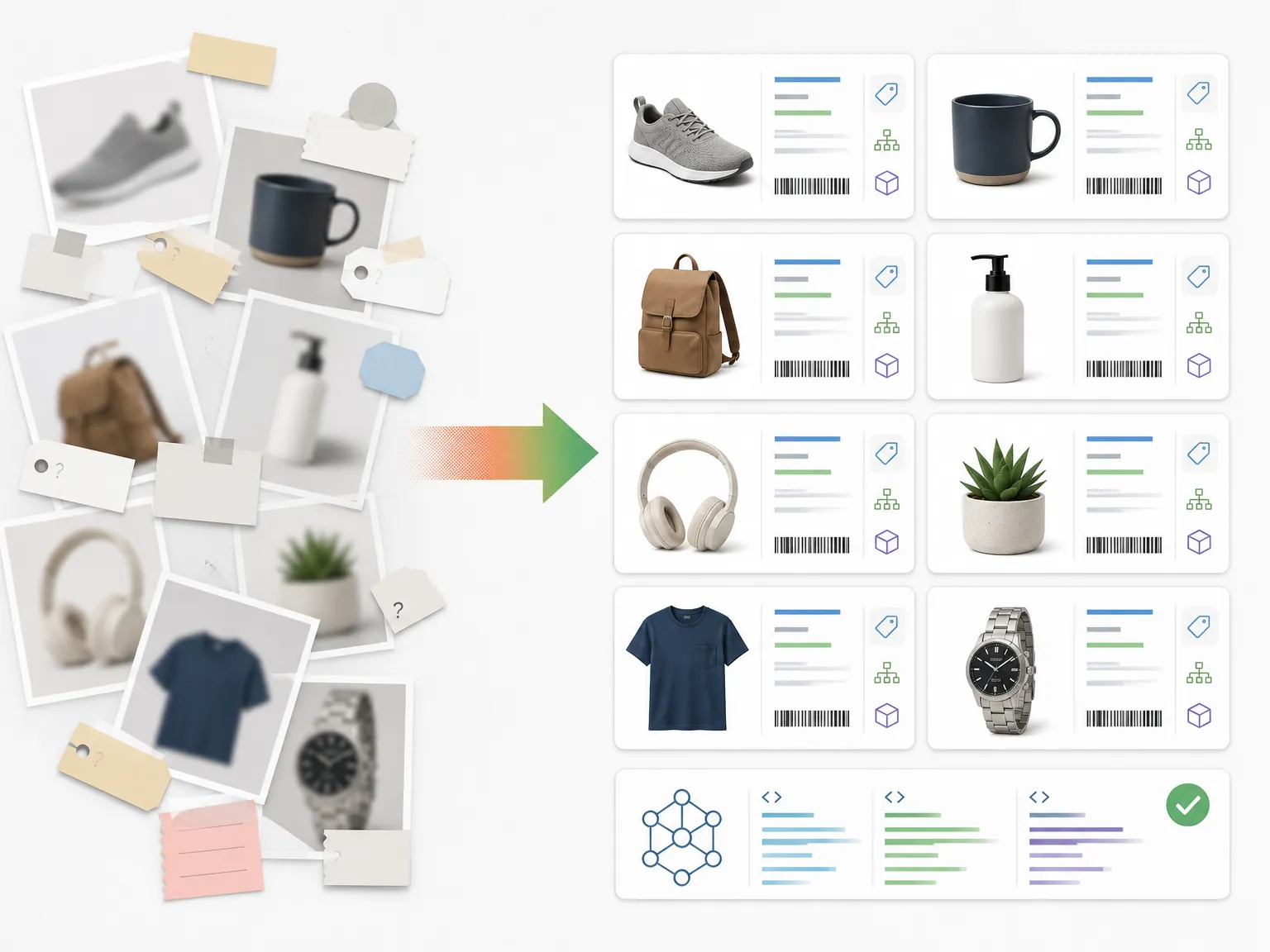
| Is the catalog machine-readable? | Review GTIN or MPN coverage, Product schema, Offer fields, price freshness, availability, and image minimums. | Bad product data can suppress visual matching before bidding strategy has a chance to matter. |
| Are images visually useful? | Prioritize clean primary images, consistent angles, non-blurry files, and enough product variation to distinguish similar items. | Visual search depends on what the model can recognize, not what the merchandiser intended. |
| Is incrementality being tested outside the platform claim? | Use holdouts, geo splits, feed experiments, or catalog-quality tests where feasible. | When platform reporting is blended, external checks become the only way to avoid over-crediting discovery surfaces. |
The highest-confidence optimization work is therefore not a platform-specific bid hack. It is catalog annotation quality, feed completeness, schema hygiene, image standards, and disciplined incrementality checks. Those improvements help across Yahoo Scout commerce cards, Google Lens Shopping Ads, Pinterest Lens, and any other surface that has to understand a product from pixels and structured data.
The budget rule is simple enough to use in a meeting: fund visual-search readiness as infrastructure, but do not fund a surface-specific lift claim unless the platform can show the surface, the time period, the measurement method, and the conversion outcome in a way your own reporting can reconcile. Pinterest currently has the strongest concrete case signal, with the ASOS caveat. Google Lens is commercially relevant but not separately defensible from standard Google Ads reporting. Yahoo Scout is promising, but its public evidence is still closer to engagement quality than purchase performance.
References
- Yahoo Launches Scout: AI Search With Visual Answers — Digital Applied
- Google Shopping Ads Now Available in Google Lens Results — JumpFly
- 3 ways visual search helps you shop (Google Lens Shopping) — Google Blog
- Google brings shopping ads to mobile Image Search with Google Similar items & Style ideas — Productsup
- Beyond the scroll: how visual search is redefining the future of retail — Yahoo Tech
- Image Search in E-Commerce: A Step-by-Step Guide — TaskMonk
- Visual Search and the New Rules of Retail Discovery in 2026 — Imagga
- The State of Visual Search - Statistics and Trends — InvespCRO
Built on this evidence
No Bidding tactic or Creative record currently cites this case file. Compare it against other results in Benchmarks.
Related benchmark reading
Report a corroborating or contradicting result
Seeing something different in your own account? Feed the data-integrity loop instead of leaving an open comment.