
Separating Product Innovation from Advertising in Poitto Monja's Launch
Poitto Monja's launch exceeded shipment expectations, but was it the advertising strategy or the product innovation that drove growth? This post-mortem examines the available data, revealing that the primary driver was product format innovation removing consumer barriers, while advertising amplified existing demand — highlighting the attribution ambiguity CPG brands face when measuring new product launches.
- Platform
- Meta
- Campaign type
- Social Video
- Spend range
- Low
- Timeframe
- April 0
- ROAS
- 0
- Verdict
- mixed
- Industry vertical
- CPG
- Last reviewed
- 0-07-29
Poitto Monja is a useful launch to study precisely because the easy story is too clean. Otafuku’s freeze-dried monjayaki product exceeded shipment expectations after launch, and the company had a tidy set of launch assets around it: a soft-sounding name, packaging that explained a new format, and a one-minute video made for social distribution and retailer sales meetings. That is enough for a case-study headline. It is not enough to prove that the advertising strategy created the demand.[1]
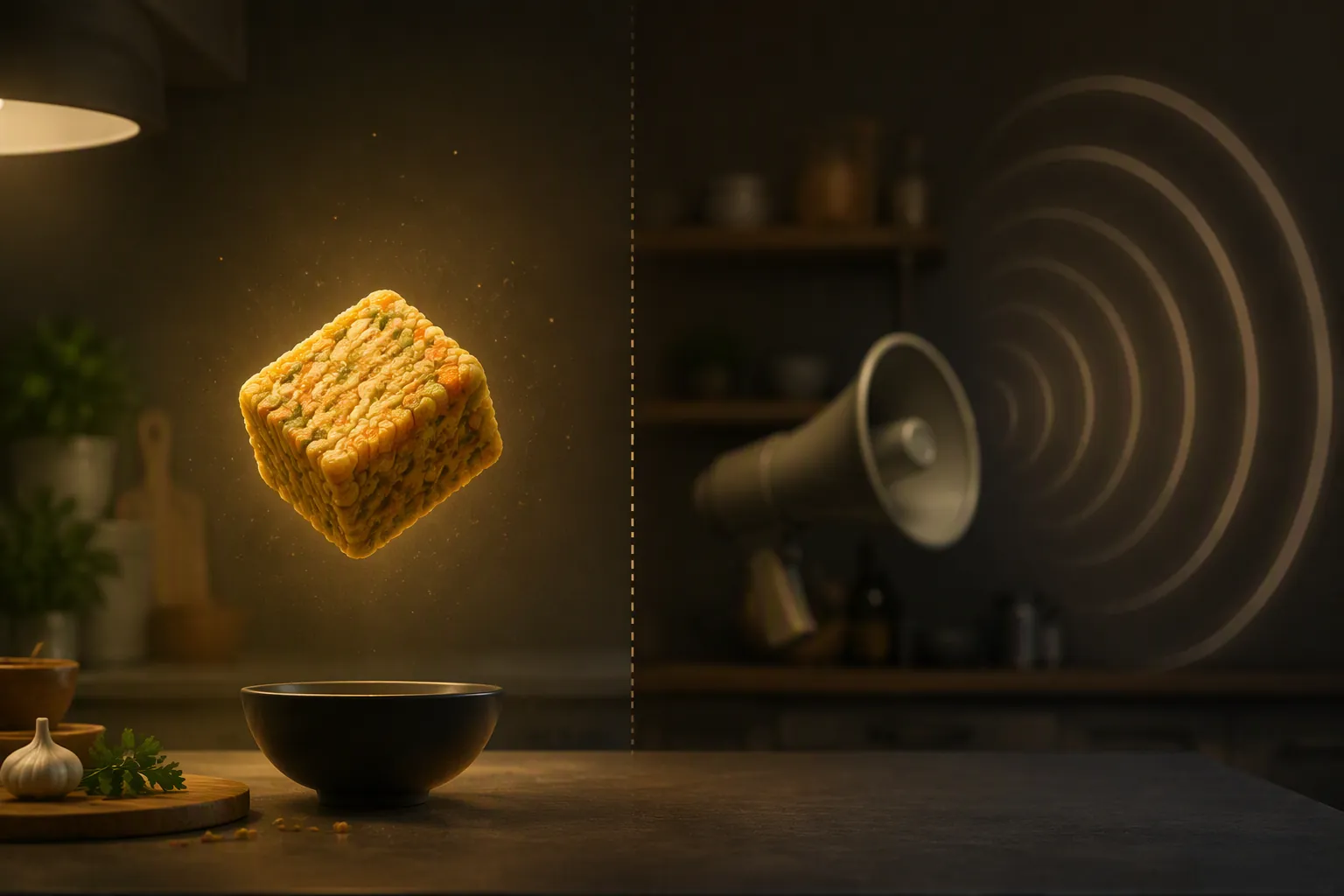
The better read is narrower. Poitto Monja looks like a product-led launch that advertising helped make legible. The freeze-dried format did the harder job: it removed the two frictions Otafuku had already identified in 2022 as the main reasons people avoided making monjayaki at home: anxiety about making the batter and the hassle of preparing utensils. The survey behind that finding has an important limitation — Otafuku has not published its sample size, methodology, or full results — but as a product brief, the insight is unusually direct.[2]
The Launch Result Is Positive, but the Attribution Claim Is Thin
“Exceeded shipment expectations” is a real commercial signal, but it is a weak attribution signal. It does not tell us the expected shipment baseline, the sell-in target, how much inventory retailers took on, whether repeat purchase followed, or whether advertising changed behavior among exposed consumers. In CPG, shipment success can mean strong retailer confidence, good timing, low initial targets, distributor pressure, or actual consumer pull. Without the baseline, the phrase stays directional.[1]
The available materials do not include independent English-language consumer review datasets for Poitto Monja, and Otafuku has not published Poitto-specific ad metrics such as video views, completion rate, click-through, brand lift, view-through conversion, retail media sales lift, or incrementality. The evidence can support a launch post-mortem. It cannot support a clean media-effectiveness verdict.
That does not make the advertising irrelevant. It changes the job advertising appears to have performed. In this case, the creative work seems less like demand creation and more like translation: it turned an unfamiliar freeze-dried monjayaki format into a product shoppers, buyers, and sales teams could understand quickly.
The Product Solved a Cooking Problem Before the Campaign Solved a Messaging Problem
Monjayaki has an awkward home-cooking problem. It is not just that some shoppers do not know the dish. It is that the act of making it can feel uncertain. Batter texture, tools, timing, and the visual messiness of the process all create hesitation at the stove. Otafuku’s own 2022 research placed that hesitation into two concrete barriers: making the batter and preparing utensils.[2]
The freeze-dried block is important because it answers those barriers materially rather than rhetorically. Instead of asking shoppers to believe that monjayaki is easy, the product changes what “making monjayaki” requires. A consumer no longer has to manage the same batter-preparation step. The format also reduces the perceived equipment burden because the product has already bundled part of the preparation into a compact unit.
That is the sort of innovation advertising loves to inherit. When a launch removes a known friction, every asset downstream becomes easier to write, film, sell, and merchandise. The claim does not need to be abstract. The format itself performs the promise.
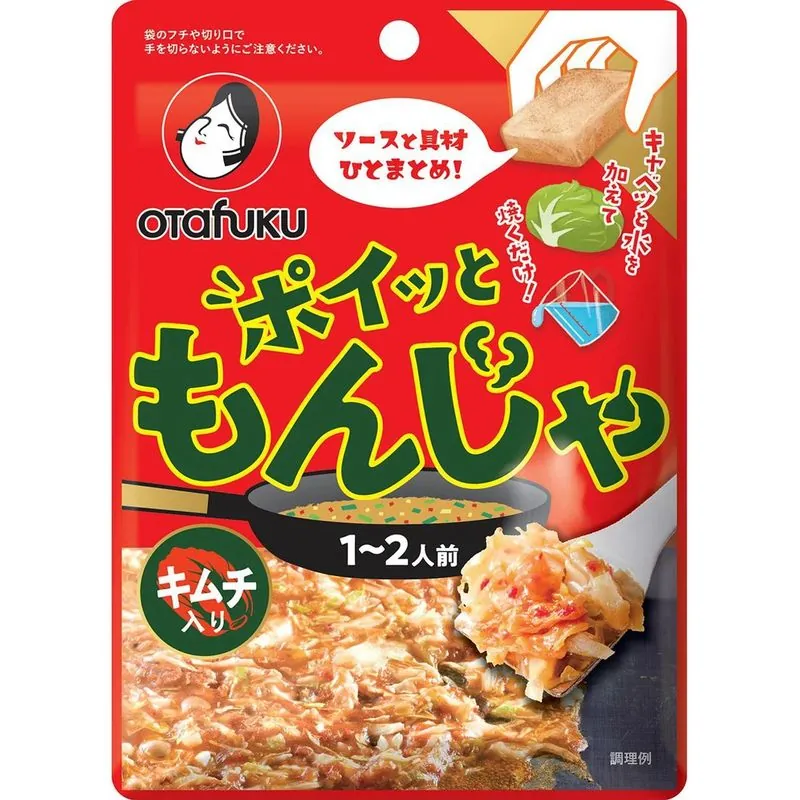
Otafuku’s development timeline also points to product work rather than a light creative refresh. The company describes Poitto Monja as Otafuku Group’s first use of freeze-drying technology, with development beginning in October 2022 and running about two and a half years to launch.[2] That length matters. A two-and-a-half-year format build is not a media hook looking for a product. It is a product-development answer looking for the right presentation.
| Consumer friction identified | What the product changed | What advertising then had to explain |
|---|---|---|
| Anxiety about making monjayaki batter | Moved key preparation work into a freeze-dried format | Show that the format turns into monjayaki in a familiar cooking flow |
| Hassle of preparing utensils | Reduced the perceived setup burden | Make the action feel simple enough to try |
| Weak appetite cue compared with okonomiyaki | Created a product that still needed visual translation | Film the okoge moment and make the finished texture look desirable |
“Poitto” Was Good Naming Because It Matched the Format
The name “Poitto” took more work than it looks like. Otafuku evaluated more than 70 candidates over eight months before choosing a word that carries the feeling of tossing something in.[2] That kind of naming can be dismissed as soft brand craft, but here it has a practical function. It compresses the product behavior into the name.
For a familiar sauce or flour mix, the package can lean on category recognition. For a freeze-dried monjayaki product, the package has to do more. It has to tell the shopper what the object is, why it is not strange, and what action comes next. “Poitto” helps because it gives the shopper a verb before the instructions begin.
This is where the advertising strategy deserves credit, but not the kind often claimed in launch recaps. The naming did not invent the consumer problem. It did not prove that media exposure caused incremental demand. It reduced the explanation cost of a new format.
The One-Minute Video Was Demand Capture in a Very Literal Sense
The most interesting creative asset is the one-minute instructional video. Otafuku’s team was dealing with a presentation problem that anyone who has watched food content would recognize: monjayaki does not have the same default appetizing image as okonomiyaki, with its browned surface and sauce-drizzled finish. The company’s own description notes that monjayaki lacked that common image of looking delicious by comparison.[2]
So the video had to capture a specific event, not just display a plate. The production focused on the moment when okoge — the crispy crust — emerged, and that moment had a narrow filming window. Otafuku then used the one-minute video both for SNS distribution and for retailer-facing sales meetings.[2]
That dual use is telling. A consumer video often has to create appetite. A retailer meeting asset has to reduce doubt: what is this product, how does it work, and why will a shopper understand it at shelf? The same footage could serve both because the core problem was legibility. Show the block. Show the cooking action. Show the okoge. Make the unfamiliar format easier to buy into.
A weaker product would have forced the video to overpromise. Poitto Monja gave the video something concrete to demonstrate. That is why the asset reads as amplification rather than independent demand generation. It made a real product mechanism visible.
Otafuku Was Not Launching from Zero
The brand context also weakens a simple ad-credit story. Poitto Monja sits inside Otafuku’s long-running expansion from sauce into the broader konamono occasion: flour mixes, tempura scraps, takoyaki sets, and now freeze-dried monjayaki. The development team’s stated ambition was not just to launch a novelty, but to continue making “Konamono = Otafuku” a broader association.[2]
That matters because distribution and category authority are not neutral background conditions. A trusted incumbent can get meetings, shelf attention, and trial conditions that a small challenger would have to buy or beg for. When shipments beat expectations under those conditions, the result may reflect the brand’s trade power as much as the consumer-facing advertising.
The campaign assets still had work to do. A strong parent brand does not automatically explain a freeze-dried monjayaki block. But it does change the launch environment. Retailers and shoppers were not meeting an unknown company with an unfamiliar format. They were meeting an unfamiliar format from a company already associated with the broader eating occasion.
The Monja-Restaurant Tailwind Makes Attribution Even Messier
There is another variable that should keep the verdict modest: monja specialty restaurants were rising in the Kansai and Chugoku-Shikoku regions, where Otafuku already had strong distribution. That trend created a demand-side tailwind outside the advertising plan.[1]
A restaurant tailwind can change a packaged-food launch in several ways. It can make the dish more familiar before the shopper reaches the aisle. It can turn a regional food curiosity into a home occasion. It can make a retailer more willing to take inventory because the category already feels active. None of those effects would show up as “advertising worked,” but all of them could help shipments exceed plan.
Without a controlled test, those effects cannot be separated cleanly. If regions with stronger restaurant momentum also had better Poitto Monja sell-in, advertising may have captured existing interest rather than created it. If social video exposure was concentrated in the same areas where monja was already gaining visibility, the attribution problem gets even harder.
The Missing Measurement Is Noticeable Because Otafuku Has Published It Before
The absence of Poitto-specific advertising data stands out because Otafuku has previously appeared in a campaign context where measured performance was published. In a DELISH KITCHEN recipe-video campaign for Wa Pickles Vinegar, covering the 2017–2019 period, the reported PI value reached 160% among people in their 20s to 40s.[3]
That comparison should be handled carefully. Wa Pickles Vinegar and Poitto Monja are different products, different occasions, and likely different consumer tasks. A recipe-video platform campaign is not the same as a launch package built around naming, packaging, SNS use, and retailer sales meetings. The older PI value does not give us a benchmark for Poitto Monja.
It does show the difference between a measured media claim and an inferred one. For Poitto Monja, the public record gives us a product-development rationale, a creative explanation, and a shipment result. It does not give us exposed-versus-unexposed behavior, regional lift controls, retailer-level incrementality, or post-launch repeat purchase.
A More Disciplined Read of the Advertising Strategy
The fair advertising review is not negative. The campaign work appears well matched to the product problem. It gave the format a name that felt like an action. It made the package explain a new object at shelf. It used video to show the cooking transformation and the okoge moment that still photography would struggle to carry.
For performance marketers and media buyers, the lesson is less flattering but more useful: good creative can make a product innovation travel, yet still not be the main reason the product moved. In Poitto Monja’s case, the most defensible causal chain starts with a known home-cooking barrier, moves through a freeze-dried format that removed part of that barrier, then passes through naming, packaging, video, trade meetings, and social distribution.
The stronger measurement plan would have isolated at least one of those links. A regional holdout could have tested video support against comparable retailer distribution. Retail media data could have compared exposed and unexposed shoppers. Post-purchase research could have asked whether the name, the package, the video, the Otafuku brand, or prior restaurant experience drove trial. None of that is available in the public materials.
So the verdict has to stay bounded. Poitto Monja’s launch appears commercially promising, and its advertising strategy looks practical rather than ornamental. But the available evidence points first to product innovation: freeze-drying answered the barriers Otafuku had identified, while the creative system helped shoppers and retailers understand why that mattered. This is not proof that advertising independently drove growth. It is a good example of advertising doing its best work after the product team has removed a real reason not to buy.
References
- Otafuku launches freeze-dried monjayaki product Poitto Monja, Japan Food News, April 2, 2026.
- Poitto Monja development story, Otafuku Note.
- DELISH KITCHEN recipe-video campaign for Wa Pickles Vinegar, AdverTimes, January 7, 2019.
Built on this evidence
No Bidding tactic or Creative record currently cites this case file. Compare it against other results in Benchmarks.
Related benchmark reading
Report a corroborating or contradicting result
Seeing something different in your own account? Feed the data-integrity loop instead of leaving an open comment.