
Wingstop's 5-Day Paid Campaign for National Chicken Wing Day 2026
This article examines Wingstop's 2026 Wing Week structure and the closest available performance data to help restaurant media buyers evaluate whether multi-day sweepstakes campaigns improve or degrade CPA relative to single-day pushes.
- Platform
- Meta
- Campaign type
- Paid Social
- Spend range
- $0k–$1M
- Timeframe
- July 0–31, 2026
- ROAS
- 0x
- Verdict
- mixed
- Industry vertical
- Restaurant
- Last reviewed
- 0-07-30
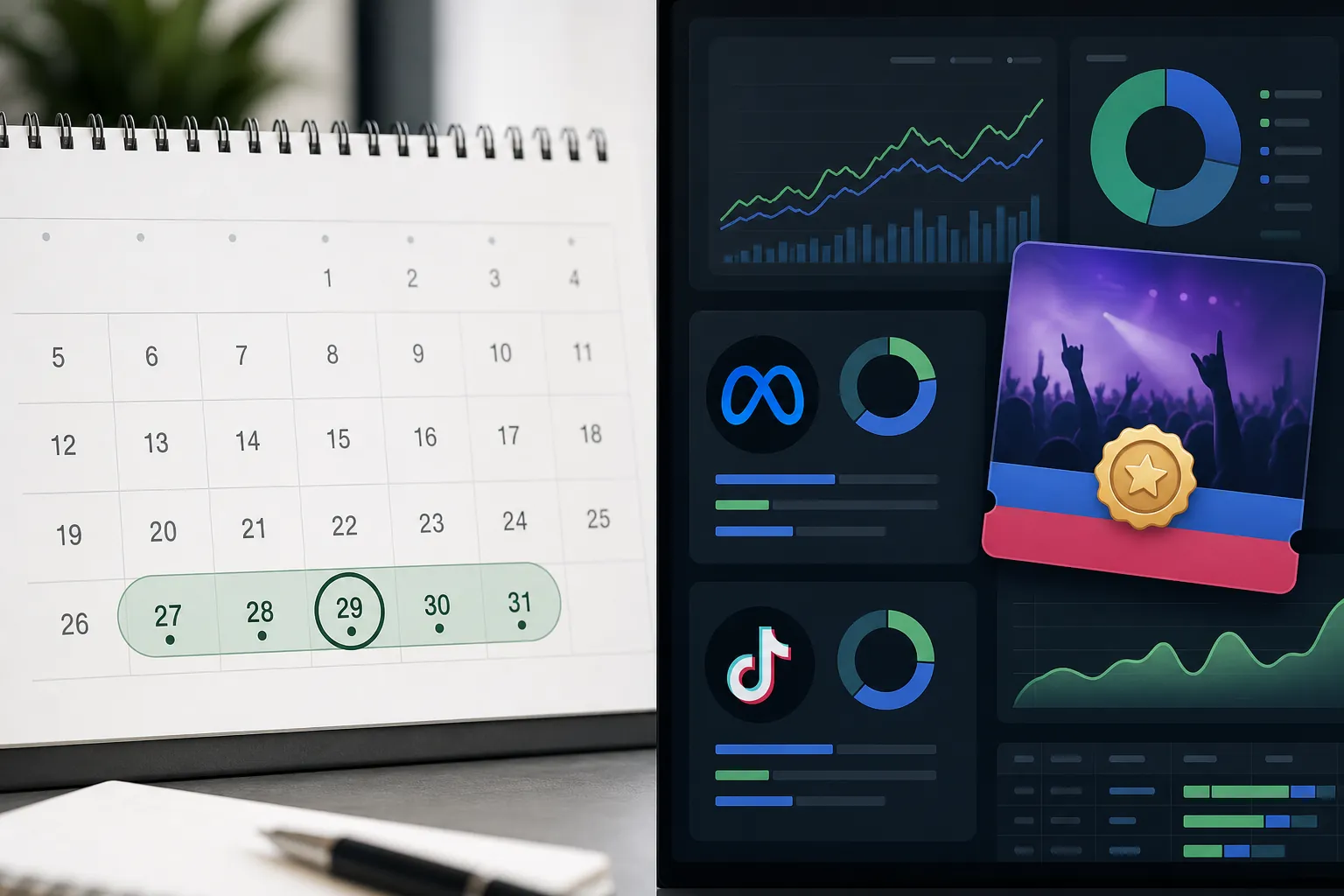
Wingstop made the most interesting move in the National Chicken Wing Day 2026 paid ad cycle by refusing to treat the holiday as a one-day coupon race. Wing Week runs July 27-31, gives online buyers 5 free boneless wings with the code FREEWINGS, adds Club Wingstop daily redemption offers, and wraps the whole thing in a $1 million Live Nation and Ticketmaster fan-experience giveaway across a system of more than 3,000 locations.[1] That is a real campaign architecture, not just a bigger headline.
The uncomfortable part for restaurant media buyers is that the cleanest ROI number available is not a Wing Week number. The closest hard benchmark comes from an Anderson Collaborative Wingstop paid social program that produced 120,000+ orders, $2.83 million+ in revenue, and 3.5x ROI using full-funnel paid social, dynamic location ads, multilingual targeting, and location-level execution across 50+ DMAs.[2] That 3.5x ROI is the baseline Wing Week has to protect or beat. It is not proof that Wing Week is delivering the same efficiency.
What Wingstop Actually Put In Market
The useful starting point is the conversion path, because restaurant paid campaigns around National Chicken Wing Day can quickly turn into a pile of deal screenshots with no operating logic. Wingstop’s public release gives enough structure to map the campaign, even without spend or CPA data.
| Campaign layer | What Wingstop disclosed | What it does for media buying |
|---|---|---|
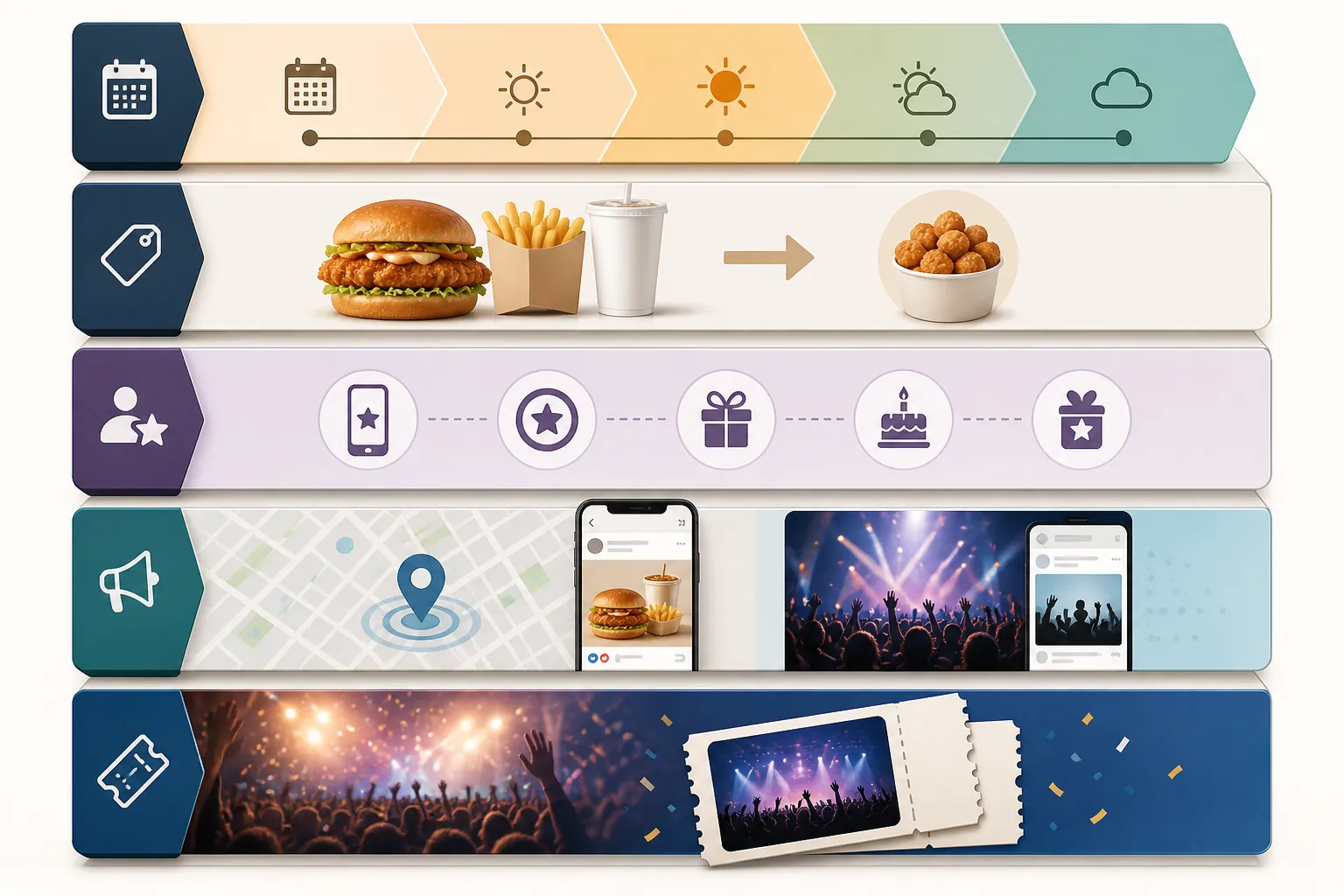
| Timing | Wing Week runs July 27-31, expanding National Chicken Wing Day into a 5-day event. | Creates more conversion windows than a single-day offer and gives paid media more room to sequence reach, reminder, and retargeting. |
| Core offer | Customers can use FREEWINGS for 5 free boneless wings with any online purchase. | Keeps the giveaway tied to an order instead of turning the event into pure free-sample traffic. |
| Loyalty | Club Wingstop members receive exclusive daily redemption offers. | Separates known customers from broader acquisition traffic, but also complicates incrementality. |
| Prize layer | $1 million in Live Nation and Ticketmaster fan experiences and giveaways. | Expands reach and attention, while making attribution less clean. |
| Store base | More than 3,000 locations. | Makes local availability and market-level delivery conditions part of campaign performance, not background noise. |
The free-with-purchase requirement matters. A free-food holiday can create volume that looks great in screenshots and ugly in contribution margin if too many redemptions are detached from paid orders. Wingstop’s disclosed mechanic keeps the free boneless wings attached to an online purchase, which gives the campaign a measurable transaction event instead of only engagement, entries, or app activity.[1]
The loyalty layer does a different job. Club Wingstop daily redemptions can pull members back repeatedly during the week, but those orders are not automatically acquisition wins. Some will be incremental, some will be shifted timing, and some may be loyal customers taking the best available deal on an order they were already likely to place. A post-mortem that blends those together will flatter the event.
The Paid Social Baseline Is Strong, But It Belongs To A Different Program
The Anderson Collaborative case study is still the right comparison point because it is operator-adjacent, named, and tied to Wingstop order outcomes rather than generic restaurant ad averages. Its campaign used a full-funnel structure across Awareness, Consideration, Conversion, and Retention; deployed dynamic location ads; localized execution by store; and ran multilingual targeting across 50+ DMAs.[2]
Those details make the 120,000+ orders and $2.83 million+ revenue figure more useful than a broad QSR benchmark table. The case is not just saying social ads drove interest. It is saying a location-based paid social system drove takeout and delivery orders at scale, with a reported 3.5x ROI.[2]
But it does not prove three things media buyers would need before calling Wing Week efficient: it does not disclose Wing Week spend, it does not report Wing Week CPA, and it does not isolate the effect of a $1 million sweepstakes layer. As of July 30, 2026, Wing Week-specific spend, CPA, and ROAS have not been published. So the clean read is this: Anderson gives the closest available Wingstop paid social efficiency baseline; Wing Week is the live test of whether a larger holiday wrapper can hold that standard.
Why The Five-Day Structure Is Worth Testing
A one-day restaurant holiday creates a familiar paid-media squeeze. Everyone launches at once, CPMs do not politely wait for the calendar, operators overvalue urgency, and the conversion window is so short that a delivery delay, local stock issue, or weak daypart can distort the read. A five-day structure gives the buyer more room to learn, shift budget, cap fatigue, and separate early curiosity from late redemption.
Wingstop had a reason to avoid the single-day pileup. USA Today’s 2026 National Chicken Wing Day roundup counted 34+ chains running promotions, and cited Circana CREST data showing 1.3 billion wings ordered annually, up 2.4% year over year.[3] TODAY also catalogued 34 chain deals, including BOGO-style offers and loyalty-exclusive mechanics from other restaurants.[4] In that environment, one more “free wings today” unit can win clicks and still lose the customer’s actual dinner decision.
Stretching the holiday changes the job of paid social. Day one can introduce the event. Middle days can harvest people who engaged but did not order. Later days can push urgency without asking every impression to convert immediately. That does not guarantee lower CPA, but it gives the media team more levers than a single-day blast.
The Sweepstakes Helps Reach And Hurts The Read
The $1 million Live Nation and Ticketmaster prize pool is the part that makes the campaign bigger and messier at the same time. It can create social attention beyond people actively shopping for wings, which is useful in a crowded holiday week. It can also pull in contest-driven traffic that behaves differently from food-offer traffic. Those audiences should not be treated as one conversion pool.
For measurement, the question is not whether the sweepstakes generated reach. It gives the campaign a broader reason to be noticed than a standard coupon. The harder question is which orders came from the FREEWINGS offer, which came from Club Wingstop daily redemptions, which came from prize-seeking behavior, and which came from customers who would have ordered anyway during a normal week.
That is where a restaurant post-mortem can get slippery. If the same paid campaign promotes the holiday, the free-with-purchase code, loyalty deals, and sweepstakes entries, the blended CPA may look acceptable while the true acquisition CPA is weaker. A buyer defending budget after the holiday needs segmented reads: new versus returning customers, offer-code orders versus loyalty redemptions, market-level lift versus ordinary demand, and prize-engaged users versus non-prize converters.
Creative Context: Lifestyle Demand Versus Offer Conversion
Wingstop’s broader creative direction also matters, but it should not be asked to carry the performance claim. VaynerMedia’s Wingstop work describes the “Wingstop is Here” platform as a multi-channel campaign across TV, OTT, and social, shifting emphasis toward emotional and social moments rather than product-feature creative.[5]
That kind of platform can help explain why Wingstop would build a week around fan experiences instead of only discounting wings. It gives the brand more cultural surface area. But short-term order efficiency still has to be judged separately. Lifestyle demand creation and coupon redemption do not move through the funnel at the same speed, and a campaign that mixes them needs reporting that respects the difference.
What A Useful Wing Week Post-Mortem Would Need
The public materials make Wing Week a good benchmark candidate, not a completed benchmark. To evaluate the campaign against the 3.5x paid-social ROI baseline, the post-mortem would need more than total orders and earned coverage.
- Spend by channel and objective, especially Meta conversion spend versus TikTok awareness spend.
- CPA and ROAS for FREEWINGS orders, separated from Club Wingstop daily redemptions.
- New-customer order share compared with returning-customer redemption behavior.
- Market-level lift across participating locations, with high-noise holiday markets separated from cleaner comparisons.
- Sweepstakes engagement cohorts tracked separately from non-sweepstakes converters.
The last item is not a reporting nicety. It is the difference between learning that a prize mechanic lowered acquisition cost and learning that it made the event feel larger while moving less efficient traffic through the same funnel.
The 2027 Planning Lesson
For restaurants planning National Chicken Wing Day 2027 paid ad campaigns, Wingstop’s format is more useful than another list of holiday deals. The five-day window gives the media team room to sequence audiences. The free-with-purchase code keeps the giveaway attached to revenue. Loyalty-only daily offers give existing customers a reason to come back without making the public offer do every job. Location-based paid social has a relevant Wingstop baseline in the Anderson case, even if that baseline comes from a different program.[2]
The caution is just as important. A $1 million sweepstakes can be a reach amplifier and a measurement contaminant in the same campaign. If prize traffic, loyalty redemptions, and offer-driven online purchases are blended into one success number, the post-holiday read will be too soft for budget decisions.
The standard is not whether Wing Week felt bigger than National Chicken Wing Day. It is whether the added days protected or beat the order-efficiency baseline once prize-driven attention is separated from offer-driven conversion.
References
- Wingstop Expands Wing Day into Wing Week, Kicking Off a Broader $1 Million in Fan Experiences and Giveaways — Wingstop IR, July 23, 2026
- Paid Social Advertising Drives Takeout & Delivery Orders — Anderson Collaborative
- National Chicken Wing Day 2026 deals: Free wings, BOGO offers from Wingstop, Popeyes, more — USA Today, July 28, 2026
- National Chicken Wing Day deals 2026 — TODAY
- Wingstop x VaynerMedia Campaign — VaynerMedia
Built on this evidence
No Bidding tactic or Creative record currently cites this case file. Compare it against other results in Benchmarks.
Related benchmark reading
Report a corroborating or contradicting result
Seeing something different in your own account? Feed the data-integrity loop instead of leaving an open comment.