
BWW National Wing Day 2026: Paid Ads Breakeven Analysis
A post-mortem modeling whether Buffalo Wild Wings' free-six-wings offer with a $15 minimum AOV generated positive unit economics after food cost and paid-media CPA. The analysis finds that profitability depends on zero-CPA loyalty traffic and retargeting, not prospecting — a structural condition any QSR media buyer should pressure-test before running a free-item promo.
- Platform
- Meta
- Campaign type
- Paid Social
- Spend range
- High
- Timeframe
- 0-07-29
- CPA
- 0
- Verdict
- mixed
- Industry vertical
- QSR
- Last reviewed
- 0-07-30
A $15 minimum ticket does not make free wings safe. It only gives the media buyer a ceiling to work under.
Buffalo Wild Wings’ National Wing Day 2026 offer was cleanly built for measurement: six free wings, a $15 minimum purchase, promo code FREEWINGS, and a one-day window on July 29, 2026.[1] That structure matters more than the headline giveaway. If the six wings cost an estimated $3–$5 in food cost, a $15 qualifying order leaves roughly $10–$12 before media cost, labor, packaging, payment fees, and store-level operating burden.[2] That is the contribution envelope the paid media has to fit inside.
This is modeled analysis, not disclosed Buffalo Wild Wings campaign performance. BWW has not published campaign-level CPA, ROAS, redemption volume, incremental foot traffic, or store-level margin for the National Wing Day 2026 promotion. The useful question, one day after the promotion, is narrower: what would have to be true for the paid ads strategy around the offer to produce positive first-order unit economics?
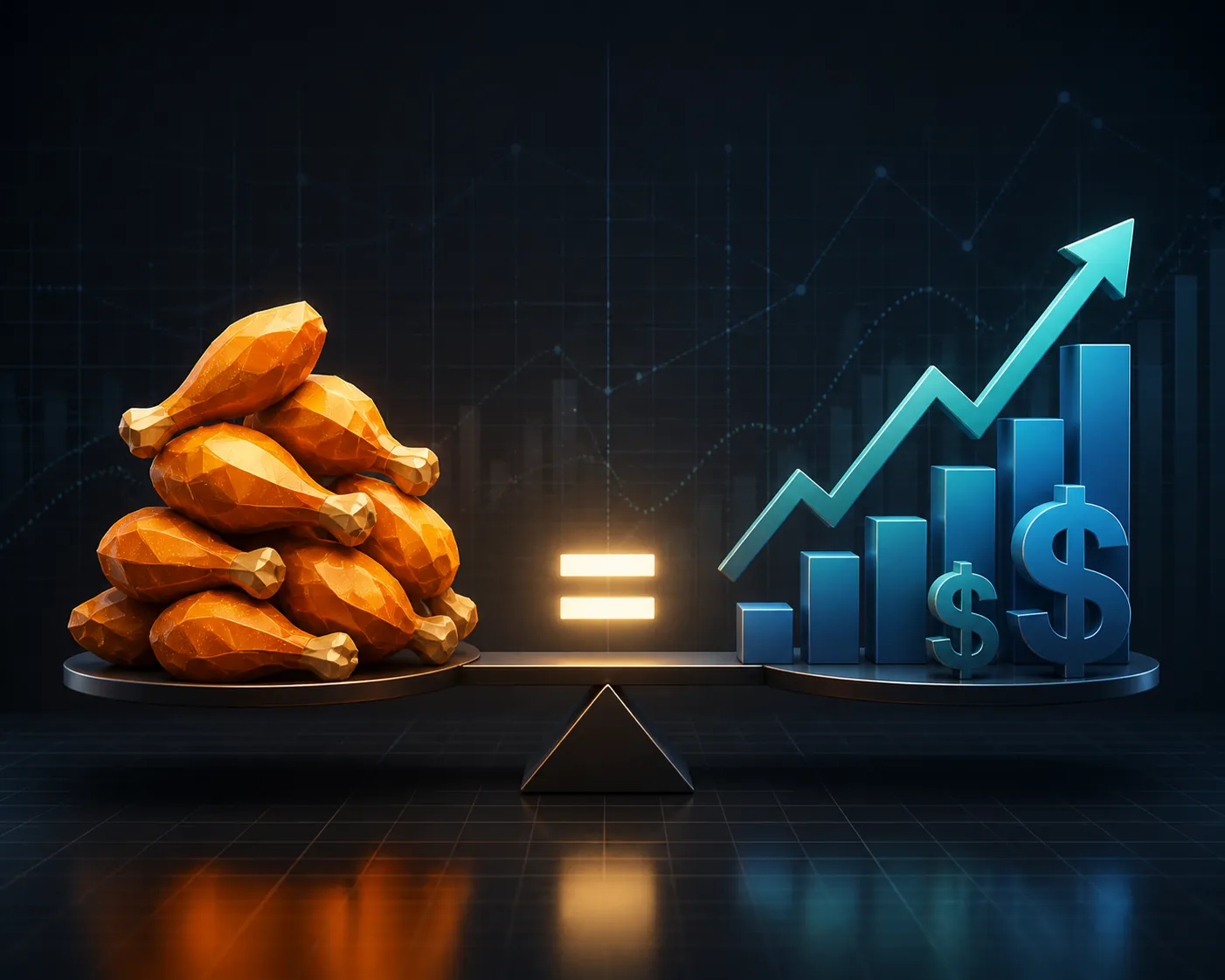
The Breakeven Problem Starts Before ROAS
The first transaction math is tight. A customer who spends exactly $15 and receives six free wings gives the operator a modeled $10–$12 contribution margin after the estimated food cost of the giveaway. That is not restaurant profit. It is simply the amount left before paid acquisition and the rest of the cost stack.
Against 2026 Meta Food & Beverage benchmarks, that envelope does not comfortably absorb cold acquisition. AdRiseLab’s Food & Beverage benchmark puts median Meta CPA at $22, prospecting CPA at $28, and retargeting CPA at $12, with a median 4.5x ROAS and $9.50 CPM.[3] The $12 retargeting figure sits at the upper edge of the modeled food-cost-adjusted margin. The $22 median and $28 prospecting figures sit outside it.
| Traffic source | Modeled acquisition cost | Fit against $10–$12 margin after free-wing food cost |
|---|---|---|
| Owned loyalty push/email | $0 paid-media CPA | Can carry margin if the order qualifies and would not have happened anyway |
| Meta retargeting | $12 CPA benchmark | Barely inside or at the edge of the modeled envelope |
| Meta Food & Beverage median | $22 CPA benchmark | Does not fit on a $15 floor first transaction |
| Meta prospecting | $28 CPA benchmark | Fails first-order unit economics unless future value or larger basket offsets it |
That is why a blended ROAS recap can be misleading for this kind of promotion. A campaign can look healthy if loyalty members redeem through owned channels, retargeted app users convert efficiently, and a smaller prospecting layer absorbs the losses. But the prospecting layer does not become profitable just because the blend clears the reporting dashboard.
Prospecting Alone Does Not Clear the $15 Floor
Take the cleanest version of the offer: one paid-acquired customer, one qualifying $15 order, one six-wing redemption. If the giveaway food cost is $3, the campaign has $12 left before media. If the food cost is $5, it has $10 left. A $28 prospecting CPA is already more than twice the available contribution margin in the lower-margin version of the model.[2][3]
That does not mean prospecting was useless. It means prospecting needs a different justification: larger baskets, repeat visits, loyalty capture, franchise-market awareness, or future LTV. Those may be valid goals, but they are not the same as saying the free-six-wings transaction paid back on day one.
The same caution applies to platform ROAS benchmarks. Google Ads Food & Beverage median ROAS was reported at 3.20x for 2026, while a restaurant Facebook benchmark reported 6.9x ROAS.[4][5] Those numbers help set market context, but they do not answer the free-item question unless the analyst separates the subsidized item cost from the order value and breaks CPA out by prospecting, retargeting, and owned-channel demand.
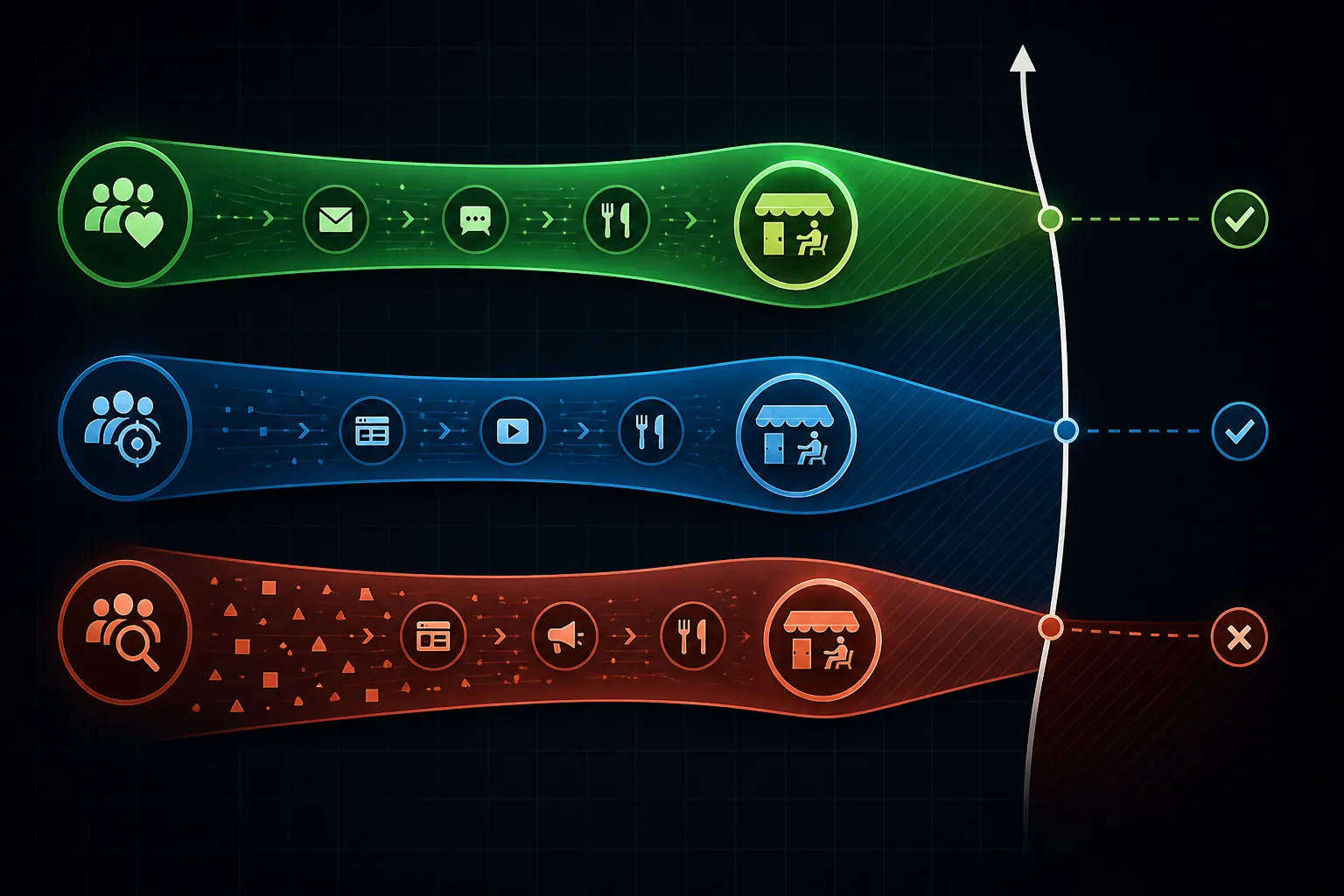
Where the Offer Can Start to Work
The promotion starts to make more economic sense when paid acquisition is not doing all the work. Buffalo Wild Wings has a loyalty infrastructure that can move demand without paying Meta for every conversion: BWW Rewards earns 10 points per dollar, Blazin’ Status begins at $250 in annual spend, and members who signed up earlier in 2026 could have offers loaded retroactively, with push notification delivery available through the program.[6]
That changes the breakeven model. A loyalty member who redeems after an app push or email does not carry a paid-media CPA in the same way a cold Meta prospect does. The free wings still cost food dollars. The store still has to handle the order. But the media line can be near zero for that visit, which leaves the $10–$12 envelope intact enough to support the promotion.
Retargeting is the next viable layer. At a $12 Food & Beverage retargeting CPA benchmark, the acquisition cost sits roughly on the boundary of the modeled margin envelope.[3] That is not generous, and it becomes worse if the order lands at the $15 minimum with higher food cost. But it is at least in the same economic neighborhood. Cold prospecting at $28 is not.
| Scenario | Example traffic mix | Modeled implication |
|---|---|---|
| Owned-channel heavy | Most redemptions from rewards push/email, small paid layer | Food cost is the main promo cost; paid media does not overwhelm the $15 floor |
| Retargeting-led | Known guests and site/app engagers dominate Meta conversions | CPA may fit only if baskets exceed the floor or food cost stays near the low end |
| Prospecting-led | Cold audiences drive most qualifying orders | First-order economics likely fail against benchmark CPA |
BWW’s Advantage Is the Stack Around the Promo
Buffalo Wild Wings is not a local operator trying to make a free-item offer work from a standing start. MediaRadar estimates BWW annual spend at about $100 million across digital and national TV, excluding local franchisee ad fund spending tied to the 4% gross sales advertising fee.[7] iSpot tracked 216 BWW TV creatives and ranked the brand No. 147 in national TV spend, though exact impression and spend figures sit behind its demo wall.[8]
That matters because Meta does not have to create all of the demand from scratch. In a TV-supported promotion, paid social can behave more like a lower-funnel capture tool: remind rewards members, retarget recent engagers, push the code, and pick up people already aware that National Wing Day is happening. The modeled CPA for that job should be judged differently from a cold-prospecting campaign asked to manufacture intent.
The Wing Drop merch tie-in also gives the media team a second hook. Apparel does not fix weak unit economics on a $15 food order, but it can extend creative relevance beyond a one-day food discount and help segment people who are engaging with the brand rather than merely hunting for free calories.
The $15 Minimum Looks Like a Check-Builder
The $15 floor is the quiet lever in the promotion. BWW’s Pick 6 Meal for Two was priced at $19.99, so the National Wing Day threshold sat at about three-quarters of that bundled meal price. The free wings were not simply an open-ended giveaway; they were attached to a basket requirement that pushed the customer toward a real order.
That aligns with how QSR limited-time offers often perform best when the trip-driver and the check-builder are paired. Numerator’s 2026 QSR Growth Playbook describes effective QSR strategies as combining dual LTOs: one offer that gets the visit, and another that adds to the check.[9] In this case, the free wings play the trip-driver role, while an add-on such as the 99-cent Poppin’ Ranch item can help lift the order without asking the free item to carry the whole economics.
That is the charitable read of the offer design. It does not prove profitability. It shows the promo was built with more discipline than a pure “show up and get free food” stunt. The $15 minimum creates an AOV floor, the promo code isolates the redemption path, the one-day window contains liability, and loyalty delivery gives the brand a way to create volume without paying auction prices for every order.
Ambient Wing Demand Helps, but It Is Not a Margin Model
National Wing Day had plenty of category gravity. Circana data cited by USA Today reported 1.3 billion servings of wings from foodservice in the 12 months ending June 2026, up 2.4% year over year.[1] That kind of demand makes it easier for TV, PR, app notifications, and paid social reminders to find receptive customers.
Still, category demand is not the same as paid-media efficiency. A high-intent day can lift response rates, but the operator still needs to know which visits were incremental, which were existing customers collecting a discount, and which were cold-acquired orders that cost more than the contribution margin available on the first ticket.
There are encouraging examples for restaurant digital campaigns when media is tied to store visits. A Brandience QSR digital campaign case study reported 650,000 incremental visits, $8.5 million in attributable sales, a 31.2% uplift, 53% of visitors arriving within two days of seeing an ad, and 23% visiting the same day.[10] That case supports the broader point that QSR ads can drive near-term traffic. It does not disclose BWW’s National Wing Day economics, and it should not be imported as if it did.
What a Media Buyer Should Pressure-Test
The useful benchmark from Buffalo Wild Wings National Wing Day 2026 is not “free wings drive traffic.” That part is easy. The benchmark is the relationship between the minimum ticket, the food cost of the giveaway, and the channel mix required to keep CPA inside the remaining contribution margin.
- Start with the floor: subtract the estimated food cost of the free item from the minimum qualifying order before looking at ROAS.
- Separate traffic sources: owned loyalty, retargeting, prospecting, and broad awareness should not sit in one blended CPA line.
- Model prospecting honestly: if cold CPA exceeds the remaining contribution margin, it needs LTV, larger baskets, or strategic awareness to justify it.
- Estimate the owned-channel share needed to break even: loyalty volume is not a footnote in free-item promos; it is often the margin protection.
- Keep retargeting accountable: a CPA that fits the envelope at the benchmark level can still fail if redemptions cluster at the minimum ticket.
On the available evidence, the $15 floor looks like a check-builder rather than a pure loss leader. But the offer only pencils out in a modeled first-order view if loyalty visits carry a meaningful share of volume and retargeting stays close to the margin envelope. A prospecting-heavy version of the same campaign would make the dashboard busy and the unit economics ugly.
References
- National Wing Day 2026 coverage and Circana wing-servings data, USA Today, 2026.
- QSR bulk chicken wing procurement averages, QSR industry averages.
- Meta Food & Beverage benchmarks 2026, AdRiseLab, 2026.
- Google Ads Food & Beverage 2026 benchmarks, Varos/Superscale, 2026.
- Restaurant Facebook 2026 benchmarks, Evokad, 2026.
- BWW Rewards loyalty program information, Inspire Brands / Buffalo Wild Wings, 2026.
- Buffalo Wild Wings advertising spend estimate, MediaRadar, 2026.
- Buffalo Wild Wings TV creative count and national TV spend rank, iSpot, 2026.
- QSR Growth Playbook 2026, Numerator, 2026.
- QSR digital campaigns case study, Brandience.
Built on this evidence
No Bidding tactic or Creative record currently cites this case file. Compare it against other results in Benchmarks.
Related benchmark reading
Report a corroborating or contradicting result
Seeing something different in your own account? Feed the data-integrity loop instead of leaving an open comment.