
What Cubs-Cardinals betting ads actually cost in 2026
This article compares real CPA and ROI of betting ad strategies for the 2026 Cubs-Cardinals rivalry, using the bet365-Cardinals.TV integration and DraftKings' Wrigley Field closure as cases. Learn which platform claims hold up when IVT and policy changes are factored in.
- Platform
- Google Ads
- Campaign type
- Performance Max
- Spend range
- 0-100,000
- Timeframe
- 0-01 to 2026-07
- CPA
- $0-$268
- Verdict
- mixed
- Industry vertical
- Sports Betting
- Last reviewed
- 0-07-30
A Cubs-Cardinals betting campaign can look fine in a platform dashboard and still be too expensive after the buyer does the work the dashboard does not do. The first-time depositor CPA range often used for sports betting is $50 to $150 across platforms, but that is a reported market range, not a cleaned campaign ledger.[1] Once invalid traffic, state licensing, creative rejection, and inventory removal are priced in, the usable CPA for rivalry traffic moves fast.
| Acquisition route | 2026 CPA or cost signal | What changes after quality and policy review | Usefulness for Cubs-Cardinals |
|---|---|---|---|
| Google PMax | $50-$150 FTD market range before adjustment; simple IVT-adjusted estimate: about $89-$268 using Fortis Media's high-end 44% IVT figure against the FairPlay range; stricter analytical review: about $114-$268 | Fortis Media reports 30%-44% IVT for Tier 1 betting operators on Google PMax; March 23, 2026 domain ownership rules also reduced affiliate-style betting inventory | Useful only if the buyer can separate certified operator traffic from low-quality expansion and survive creative review |
| Meta Advantage+ | $50-$100 FTD in Illinois, according to the research brief's benchmark set | Lower reported CPA does not solve state-level license separation; Missouri cannot be casually consolidated into an Illinois campaign | Good for Illinois retargeting and modeled audiences, weaker as a clean cross-border rivalry engine |
| Affiliate CPA | $30-$80 FTD and $12-$15 per $1 spend in the benchmark set | Still attractive, but Google domain ownership and affiliate inventory constraints narrow the advantage | Efficient for mid-sized operators if the affiliate source is compliant, owned, and auditable |
| Embedded broadcast integration | No public CPA disclosed for bet365-Cardinals.TV | The signal is qualitative: live odds, gameflow data, and scoreboard bugs sit inside the viewing experience rather than an open auction | Strongest fit when the goal is fewer wasted impressions and more observable game-adjacent intent |
| Physical retail sportsbook as advertising | No verified CPA disclosed; DraftKings' Wrigley Field closure has been reported secondarily, not confirmed by an official release | Prestige and foot traffic do not automatically translate into acquisition efficiency | A caution signal, not a universal verdict on venue deals |
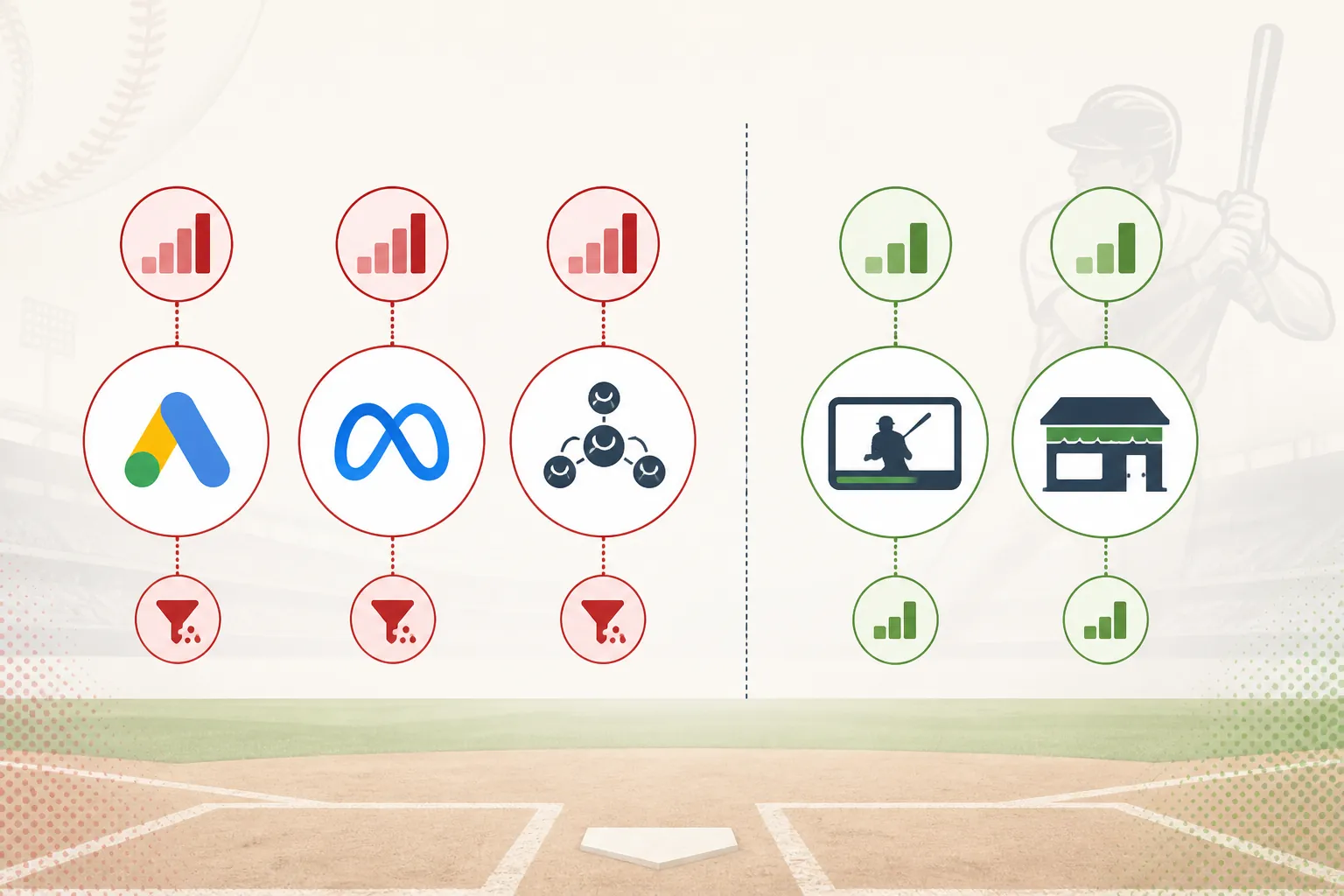
For Cubs-Cardinals betting ad strategy in 2026, the winning plan is not the channel with the cleanest automated CPA. It is the plan whose CPA still makes sense after the buyer removes traffic that should not have been counted, rejects conversions the operator cannot legally use, and discounts inventory that disappears under 2026 gambling-ad policy.
The Platform CPA Is Only the Starting Number
FairPlay Sports Media's $50-$150 per FTD range is useful because it anchors the conversation in a recognizable sports-betting acquisition benchmark.[1] It is not enough to buy against it as if every counted depositor is equally real, legal, and incremental. For a rivalry event, the auction is under pressure before the first bid goes live: more casual fans search, more affiliates chase long-tail intent, and more automated systems find inventory that looks efficient because it is cheap.
The hard break comes from IVT. Fortis Media reports 30%-44% invalid traffic for Tier 1 betting operators on Google PMax.[2] If a buyer starts with the FairPlay $50-$150 FTD range and applies the high-end 44% IVT figure as an analytical cleanup, the effective CPA is no longer $50-$150. It becomes roughly $89-$268 if the adjustment is calculated as reported CPA divided by the remaining valid share. Using the stricter acquisition-review interpretation in the research brief, where low-quality conversion leakage and downstream rejection are treated together, the practical range is about $114-$268. That second number is synthesis, not primary campaign data.
The distinction matters. A platform-reported $95 FTD can pass a weekly pacing call. A cleaned $170 FTD may fail finance review once fraud filters, chargeback risk, and state eligibility are applied. The campaign did not suddenly get worse; the measurement got closer to what the operator can keep.
| Reported CPA | Valid traffic assumption | Simple IVT-adjusted CPA | Buyer interpretation |
|---|---|---|---|
| $50 | 56% valid traffic after 44% IVT | About $89 | Still potentially workable, but no longer a cheap rivalry win |
| $100 | 56% valid traffic after 44% IVT | About $179 | Likely needs high first-deposit value or strong retention to clear payback |
| $150 | 56% valid traffic after 44% IVT | About $268 | Hard to defend unless the cohort is unusually valuable |
A national market tailwind does not rescue every buy. Track360 reports $166.9 billion in U.S. sports betting handle in 2025 and a 10.2% national hold rate.[3] Those numbers explain why operators keep competing for MLB attention, but they do not prove that a Cubs-Cardinals rivalry click is profitable. Higher hold gives the operator more revenue per dollar wagered; rising CPCs and IVT can still consume that gain before the depositor becomes worth keeping.
Why 2026 Makes PMax Harder to Defend
The March 23, 2026 Google domain ownership mandate is not a minor compliance footnote for betting advertisers. Yeezypay's 2026 Google gambling-ads guidance says the change removed subdomain-dependent betting affiliates from PMax auctions, cutting roughly 15%-20% of betting inventory and inflating CPCs for certified operators in Illinois and Missouri.[4] A buyer can agree with the policy goal and still feel the budget impact.
That removal changes the shape of a rivalry campaign. Some affiliate paths that previously absorbed demand no longer clear the auction in the same way. Certified operators then bid into a tighter pool, where PMax automation may still find conversions but has less room to arbitrage cheap inventory. If the platform continues reporting a tolerable CPA while the reachable inventory has become cleaner, scarcer, and more expensive, the buyer has to ask which part of the funnel improved and which part merely disappeared.
Creative review adds another drag. The research brief identifies April 2026 secondary audit findings from dataslayer.ai and auditsocials.com: PMax asset-level systems auto-rejected betting creatives containing phrases such as "risk-free" or "guaranteed," language that was still present in about 30% of Q1 2026 betting ad copy across the top five sportsbooks. Because those sources are secondary audit sources rather than Google documentation, the number should be treated as directional. The operational consequence is still familiar: approved assets shrink, testing slows, and the apparent efficiency of automated creative rotation becomes less useful when the system is rotating through fewer compliant claims.
This is where a Cubs-Cardinals plan gets more fragile than a generic MLB plan. Illinois and Missouri are not interchangeable just because the rivalry is. A fan can move between media markets, teams, and game contexts faster than a licensed operator can move a compliant ad account. When platform automation treats likely bettor intent as the primary signal, the buyer still has to reconcile where that bettor is, which operator license applies, and whether the creative that won the impression can legally make the offer.
Meta Looks Cleaner Until Licensing Splits the Audience
Meta Advantage+ has the more attractive Illinois CPA signal in the benchmark set: $50-$100 per FTD. For a Chicago-heavy Cubs audience, that looks easier to defend than a PMax buy after IVT cleanup. The problem is not only price. It is campaign structure.
Fortis Media's 2026 sports betting advertising analysis describes Meta's G2 Risk Solutions integration as real-time license cross-referencing, where a license suspension in any state can trigger ad pauses across all states within roughly five minutes.[2] That is a sensible risk control for regulated advertising. It is also a reminder that the platform is not optimizing in a vacuum. A buyer trying to consolidate Cubs and Cardinals demand across Illinois and Missouri has to respect separate licensing realities, not just modeled lookalike efficiency.
Missouri also deserves careful wording. The research brief notes $350 million in December 2025 Missouri handle, but only as the first partial month after legalization. That is not a full-season run rate and should not be used as if it proves mature Cardinals-market betting volume. For 2026 planning, Missouri is a live opportunity with incomplete seasonality, not a stable clone of Illinois.
Responsible-gaming creative rules can further break what looks like one neat rivalry audience into multiple production lanes. The research brief flags NJ S2356 phrase-rotation mandates as a model that would require separate creative sets per state inside a broader Illinois-Missouri campaign. Even when a rule is not the direct governing law for both states, it shows the direction of pressure: more state-specific claims, more versioning, and less tolerance for one promo message pushed everywhere.
Affiliate Still Works, but the Easy Spread Is Narrower
Affiliate CPA remains hard to ignore. The benchmark set puts affiliate at $30-$80 per FTD and $12-$15 per $1 spend, which beats most platform-heavy rivalry buying before and after IVT adjustment. For mid-sized operators, that spread can be the difference between testing MLB inventory and sitting out premium rivalry weeks.
The catch is that affiliate efficiency depends on source quality and policy survivability. If the affiliate path relies on subdomains that lose auction access under Google's domain ownership mandate, the apparent bargain shrinks. If the affiliate cannot document traffic origin cleanly enough for compliance and finance, a cheap FTD can become an expensive rejected depositor. The right question is not whether affiliate beats PMax on a rate card; it is whether the affiliate's inventory still exists, is licensed into the right state, and survives the same invalid-traffic review applied to platform buys.
Why bet365's Cardinals.TV Deal Is the Stronger 2026 Signal
The bet365-Cardinals.TV integration is not important because it is a famous-logo sponsorship. It is important because of where the betting prompt appears. In February 2026, the Cardinals and bet365 expanded their marketing partnership to include live odds, gameflow data, and scoreboard bugs directly inside Cardinals.TV broadcasts.[5] That places betting information inside the live game environment, not beside it in an auction where the platform is inferring intent from a chain of signals.
That mechanism matters for Cubs-Cardinals. A viewer watching a Cardinals broadcast during a rivalry game has already passed several quality filters that a paid-social or PMax campaign tries to reconstruct: team interest, live-game attention, market relevance, and timing. The integration does not guarantee a first-time depositor. It does reduce the amount of guessing the media buyer is paying for.
The IVT exposure is also structurally different. An embedded broadcast element is not immune to measurement problems, and no public CPA has been disclosed for the bet365 deal. But the ad unit is not being distributed through the same open auction surfaces that produce the Fortis Media PMax IVT range. A scoreboard bug or live odds integration inside Cardinals.TV has a narrower environment, a clearer context, and less incentive for low-quality traffic intermediaries to manufacture clicks.
It also solves a problem that platform automation often makes worse: timing. A rivalry-game bettor's intent is volatile. It rises around lineups, pitching changes, late innings, and game-state swings. Cardinals.TV's live odds and gameflow data can meet that intent when the viewer is already watching the event. PMax and Advantage+ can target likely bettors, but they still have to buy through broader surfaces and then hope the conversion window lines up with the game moment.
None of this proves the bet365 integration has a lower disclosed CPA than every platform campaign. The stronger claim is narrower: on the available evidence, the integration has cleaner intent, lower obvious IVT exposure, and fewer auction-dependent failure points than a platform-heavy Cubs-Cardinals buy. For a paid acquisition team, that is enough to earn more patience than a black-box campaign reporting a low FTD count before quality review.
The Wrigley Field Closure Is a Warning, Not a Proof
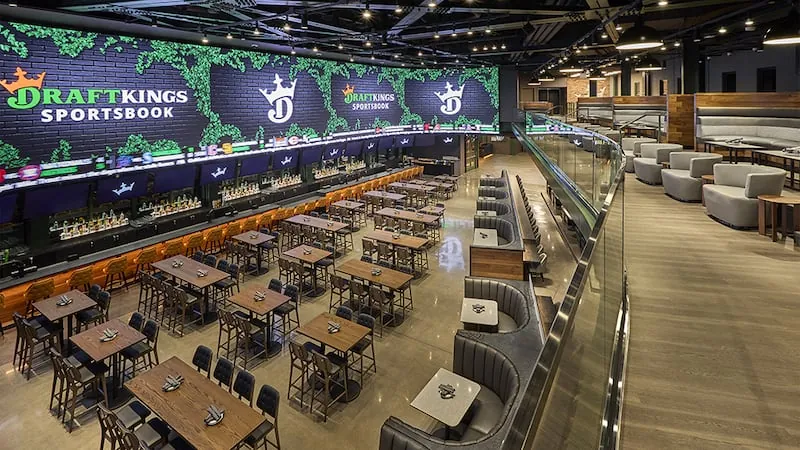
The reported DraftKings Wrigley Field sportsbook closure should be handled with restraint. The research brief identifies the May 2026 closure report as coming from cubs.area on Instagram, not from an official Cubs or DraftKings press release. It also says the venue closed after roughly two years of a 10-year, $100 million deal with the Cubs. That is a meaningful secondary signal, but it is not confirmed enough to carry a broad conclusion by itself.
Even with that caveat, the question it raises is useful. A physical sportsbook at Wrigley Field offers brand visibility, hospitality value, and local presence that no feed ad can copy. But those benefits do not automatically become efficient first-time depositors. If retail-as-advertising cannot clear ROI thresholds in a marquee MLB environment, the buyer should be skeptical of any plan that treats venue prestige as a substitute for acquisition math.
The better comparison is not retail versus digital in the abstract. It is retail prestige versus embedded game context. A physical book asks the fan to move from the game experience into a separate transaction environment. Cardinals.TV-style integration keeps the betting signal inside the viewing environment. For rivalry campaigns, that difference can matter more than the size of the logo.
Ad Saturation Makes Clean Context More Valuable
There is also a pressure issue around gambling ad volume. The Washington Post's 2026 AI analysis of sports television found an excess of gambling ads in sports broadcasts, adding evidence to the saturation problem buyers already feel in auction prices and audience fatigue.[6] The performance consequence is not a moral abstraction. More ad density can mean more duplicated reach, more inattentive impressions, more regulatory scrutiny, and more creative rules that slow down testing.
That is another reason embedded integrations deserve a different evaluation. A live odds graphic or scoreboard bug can still contribute to saturation if overused, but it is not the same as another disconnected promo unit chasing the same fan across feeds and display inventory. When the ad element is tied to game state, the buyer at least has a plausible reason to believe the impression is connected to the betting moment.
A 2026 Cubs-Cardinals Buying Model That Survives Review
The practical media plan is not to abandon platforms. It is to stop letting platform dashboards set the benchmark. For Cubs-Cardinals weeks, the first column in the plan should be reported CPA, the second should be IVT-adjusted CPA, the third should be state-eligible CPA, and the fourth should be approved-creative CPA. If the number gets worse at every step, that is not pessimism. That is the actual acquisition workflow.
- Use Google PMax for certified, tightly reviewed operator campaigns only after modeling IVT-adjusted CPA rather than accepting platform-reported FTD cost.
- Use Meta Advantage+ where Illinois licensing, audience structure, and creative approval are clean enough to keep the $50-$100 CPA signal from being diluted.
- Use affiliate CPA where the partner can prove owned, compliant, state-eligible traffic after Google's 2026 domain ownership rules.
- Give embedded broadcast integrations more budget consideration when live-game context, geo relevance, and lower auction exposure are more valuable than raw reach.
- Treat physical retail deals as brand and hospitality assets first unless they can show cleaned first-time depositor economics.
For the 2026 Cubs-Cardinals rivalry, platform automation is not automatically wrong. It is just not finished math. Google PMax and Meta Advantage+ can still produce depositors, but the claimed efficiency does not hold unless IVT, state licensing, and policy friction are priced in. On the available evidence, bet365's Cardinals.TV-style embedded broadcast integration looks more cost-effective per real first-time depositor than a platform-heavy rivalry buy, while affiliate remains useful but increasingly constrained.
References
- The US Sports Betting Market in 2026: A B2B Opportunity Map — FairPlay Sports Media
- 2026 Sports Betting Advertising: Trends, Growth & Risks — Fortis Media
- Sports Betting Statistics 2026 — Track360
- Running Gambling Ads on Google in 2026 — Yeezypay
- Cardinals bet365 Expand Marketing Partnership — MLB.com
- Post AI analysis of sports on TV detected an excess of gambling ads — The Washington Post, May 19, 2026
Built on this evidence
No Bidding tactic or Creative record currently cites this case file. Compare it against other results in Benchmarks.
Related benchmark reading
Report a corroborating or contradicting result
Seeing something different in your own account? Feed the data-integrity loop instead of leaving an open comment.