
What Taco Bell's $1 Mexican Pizza Deal Teaches About Paid vs. Earned Media
This article contrasts Taco Bell's 2022 earned-media-driven Mexican Pizza relaunch with its 2026 crisis-recovery $1 deal, giving media buyers a framework for deciding when brand-funnel earned media suffices and when performance-funnel paid promotions are non-negotiable.
- Platform
- Meta Ads
- Campaign type
- Promotional Campaign
- Spend range
- Low
- Timeframe
- July 0
- Foot traffic
- -31% (Jul 17)
- Verdict
- mixed
- Industry vertical
- Fast Food
- Last reviewed
- 0-07-29
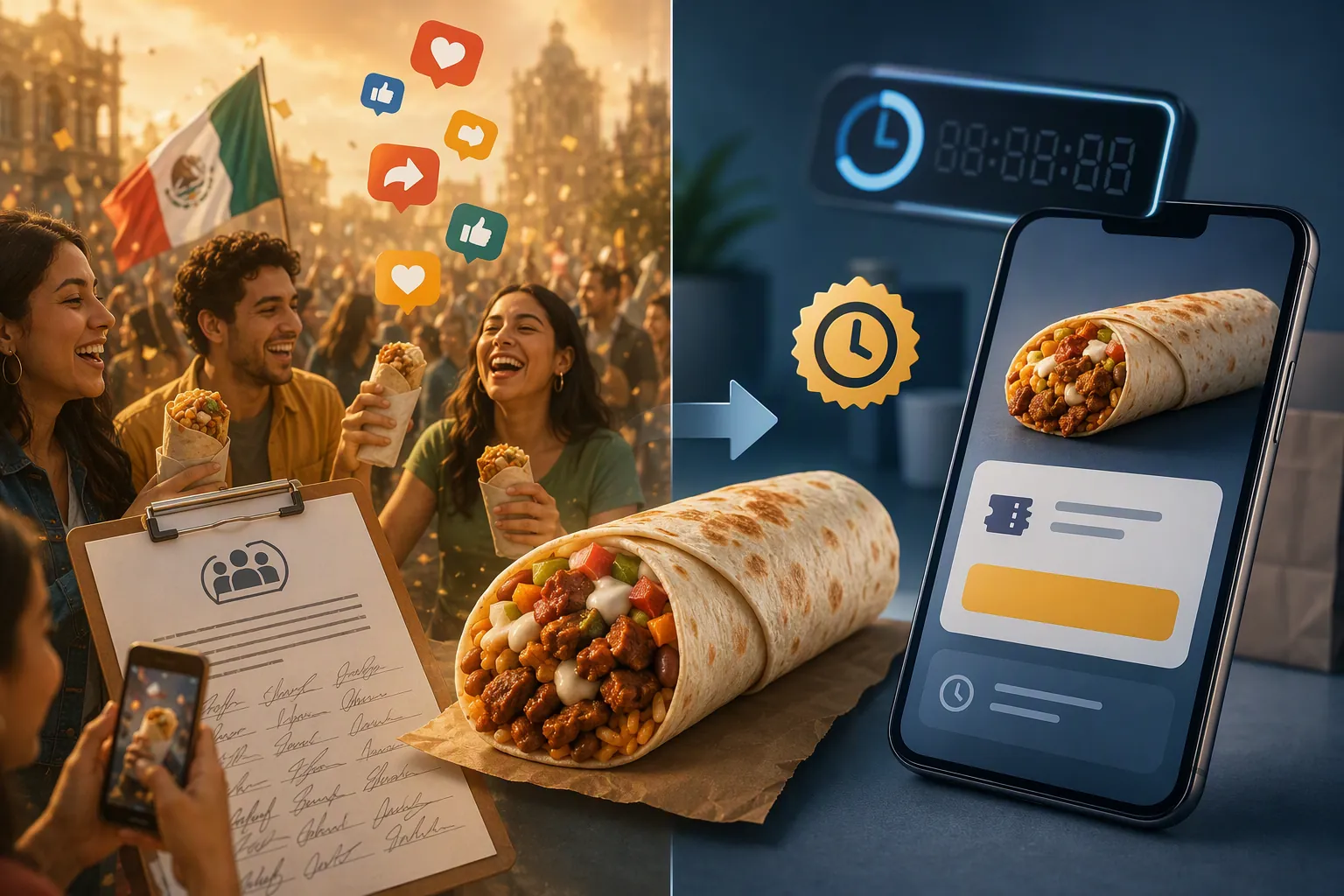
The same menu item did two very different media jobs for Taco Bell. In 2022, Mexican Pizza came back as a nostalgia product with enough cultural demand to make earned media do real commercial work. In 2026, the $1 Mexican Pizza deal was much less romantic: a limited offer used to pull people back toward restaurants and the Rewards app after a trust problem had already damaged traffic.
That contrast is useful because it keeps the paid-versus-earned debate from becoming a taste preference. Earned media is not free paid media. Paid promotion is not an admission that the brand idea failed. The right channel mix depends on the job in front of the campaign, the conversation already surrounding the brand, and the operational bottleneck that will cap the result.
The 2022 Relaunch Was the Seductive Earned-Media Case
The 2022 Mexican Pizza return had the conditions media teams are usually trying to manufacture after the fact. People already knew the product. They already had a reason to miss it. The campaign had petitions, fan pressure, celebrity amplification, and a simple story that editors and social users could repeat without needing much explanation.
ClickZ, citing Taco Bell’s Matt Prince, reported more than 13,500 articles and more than 15 billion earned media impressions around the Mexican Pizza return. The same account said Mexican Pizza sales were seven times higher than in 2020 and that the item reached an 80% attach rate, meaning a large share of orders included another item with the pizza rather than treating it as a one-item novelty purchase [1].
Even if the impression count is treated carefully, the broad read is hard to dismiss. The Syn’s Clio case study gives a lower figure of more than 7.4 billion earned impressions, which likely reflects a different scope or time window than the 15 billion-plus figure used in the ClickZ account [2]. Taco Bell has not disclosed a clean paid-media spend figure for the relaunch, so nobody outside the campaign should pretend to know the exact paid-to-earned ratio. But the channel description and reported earned reach point to a campaign whose distribution engine was overwhelmingly cultural momentum, not brute-force media buying.
The commercial result was not just conversation. Yum Brands said Taco Bell sold more than 45 million Mexican Pizzas in 2022, despite the item being unavailable for part of the year after demand exceeded supply [3]. That is the difference between a nostalgic stunt and a relaunch that actually creates order volume.
Why Earned Media Had Permission to Work
The 2022 case worked because earned media was carrying a message the market already wanted to pass along. Taco Bell did not need to teach people what Mexican Pizza was, invent a new usage occasion, or convince skeptics that the product deserved attention. The campaign converted dormant demand into visible demand.
That matters for media allocation. Earned media is strongest when the audience can do part of the targeting and distribution work for the brand. A fan petition is not a media plan, but it is evidence that the plan is entering a warm room. So are organic posts from people who remember the product, articles that can frame the return as a pop-culture comeback, and social commentary that does not require the brand to pay for every incremental exposure.
This is also why the campaign’s award-case language is less important than its demand conditions. The Mexican Pizza had memory, specificity, and a built-in distribution base. A generic limited-time offer can buy reach and still have no one willing to repeat the story. The 2022 relaunch had the rarer asset: people who could explain the appeal to each other.
The Sell-Out Was Not Just a Nice Problem
The useful lesson is not that Taco Bell made a lot of noise. It is that the noise hit a supply ceiling.
YipitData’s email receipt analysis found that Mexican Pizza sold out after roughly two weeks and that indexed orders fell steeply once availability collapsed [4]. That is the line item that should sit next to the 15 billion impressions in any serious readout. Earned media can create a demand curve that operations cannot honor. When that happens, the campaign has not merely “created scarcity.” It has forced stores, franchisees, customer-service teams, and future media flights to absorb the disappointment.
For a media buyer, the bottleneck changes the grade. If a campaign’s job is brand salience, the 2022 relaunch is exceptional. If the job is to convert peak attention into sustained sales, the two-week sell-out is a real cap on performance. The impression count did not become false; it became incomplete.
| Media question | 2022 Mexican Pizza relaunch read |
|---|---|
| Was there organic demand before the campaign? | Yes. Fan pressure, nostalgia, and cultural familiarity gave earned media a strong starting point. |
| Could the audience explain the product without paid education? | Yes. The product already had memory and a clear comeback narrative. |
| Did earned reach translate into sales? | Yes. Taco Bell reported more than 45 million Mexican Pizzas sold in 2022. |
| Did operations absorb the demand cleanly? | No. YipitData found a roughly two-week sell-out followed by a steep order decline. |
The 2026 $1 Deal Had the Opposite Media Problem
By July 2026, Mexican Pizza was no longer operating as a clean nostalgia asset. Taco Bell was managing a traffic problem in the context of a cyclosporiasis outbreak linked in public coverage to its restaurants. NRN, citing Placer.ai, reported Taco Bell foot traffic down 18.1% on July 15 and down 31% on July 17 [5]. The Placer.ai numbers are secondhand through NRN rather than independently verified here, but they are directionally important: the campaign was not trying to ride affection. It was trying to interrupt avoidance.
That is a different job. When the ambient conversation is favorable, earned media can reduce the burden on paid distribution. When the ambient conversation is about illness, contamination, or trust, unpaid conversation is unlikely to carry the message the brand wants carried. The campaign needs controlled reach, clear mechanics, and a measurable behavior to watch.
Taco Bell’s July sequence looked like repair work. NRN reported a $1 Enchirito deal on July 22 followed by a $1 Mexican Pizza offer on July 28 [5]. The Mexican Pizza deal was app-exclusive, time-gated to a 2–3 PM PT window, and reported with a 30,000-Rewards-member cap; the exact cap should be treated cautiously because it was not presented in the research set as a clean Taco Bell corporate release [5].
There is nothing especially elegant about a $1 Mexican Pizza. That is not an insult. A discount can be the right media product when the KPI is humble enough: get people to return, give them a reason to open the app, create a short redemption window, and measure whether behavior moves.
Owned Media Was Part of the Recovery System
The 2026 case also shows why “paid” and “owned” should not be separated too neatly in a crisis-recovery promotion. Paid or promotional distribution can create urgency, but owned channels are where the brand can route behavior and keep the message intact. App exclusivity matters because it turns a traffic offer into a first-party system: Rewards users see the deal, redeem within the window, and leave a clearer behavioral trail than a broad awareness push would.
On the communications side, Forbes noted Taco Bell’s CEO used LinkedIn as an owned crisis-response channel while also pointing out the apparent absence of a dedicated crisis page on tacobell.com [6]. That gap matters because social posts can travel, but they are not a full information hub. In a trust event, the brand needs places where customers, operators, journalists, and employees can find the official version without relying on fragments.
The paid-promotion job and the owned-communications job meet at the same practical point: reduce uncertainty enough for people to act. The $1 offer gives a reason to come back. The app gate gives Taco Bell a controlled redemption path. Crisis messaging gives the promotion a better chance of not being drowned out by the outbreak story.
The Allocation Rule Is About the Job, Not the Channel
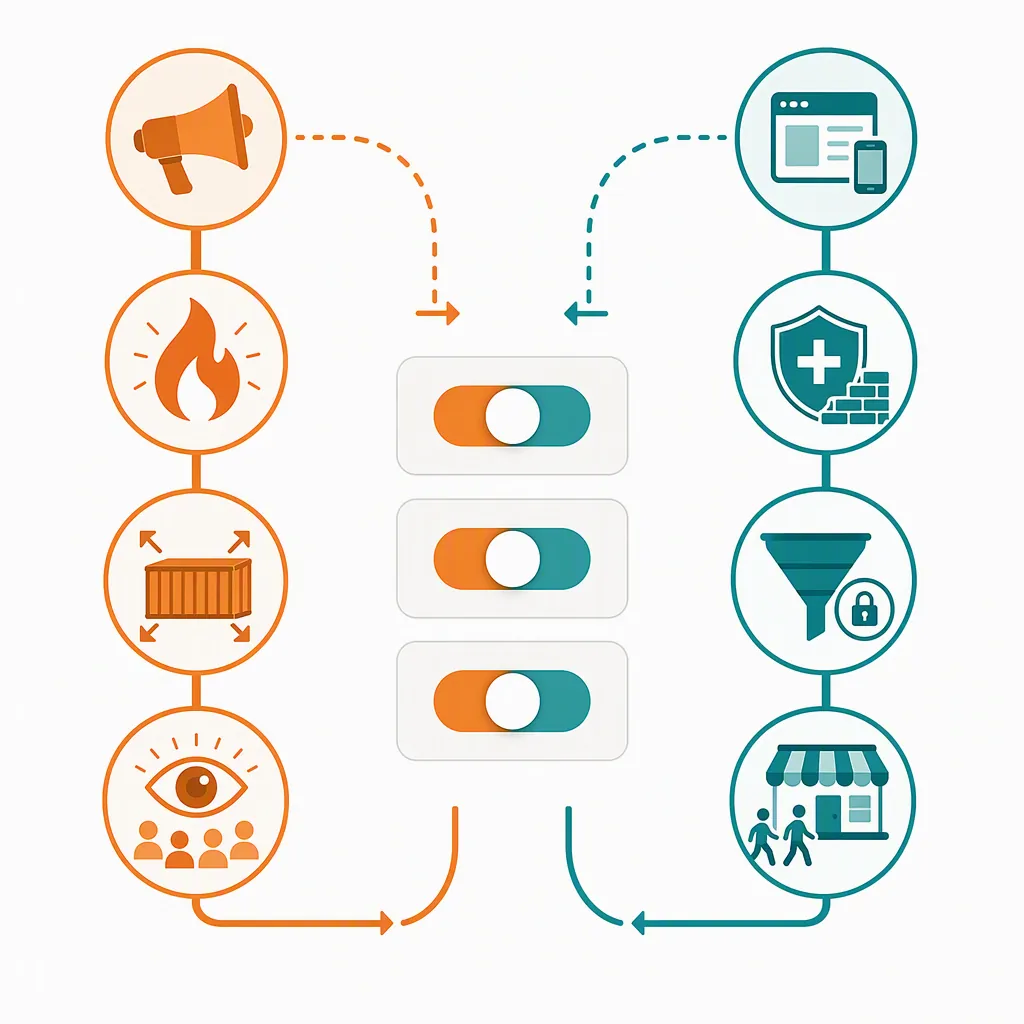
The two Mexican Pizza moments are useful because the product stays mostly constant while the market conditions change. In one case, media was amplifying desire that already existed. In the other, media was trying to repair behavior after a negative context had already formed.
A simple allocation check comes out of that contrast:
- Use earned media heavily when the product has visible organic demand, the audience already understands the story, and the brand can absorb the demand it creates.
- Add paid support when awareness must be sequenced, targeted, repeated, or protected from being misread.
- Use paid and owned promotion as the core system when the KPI is foot-traffic recovery, app behavior, redemption, or trust repair.
- Pressure-test supply before celebrating earned reach, because attention that cannot be converted cleanly becomes an operational liability.
The 2022 relaunch earns its place as a benchmark because earned media helped convert nostalgia into enormous visibility and real sales. It also shows the cost of treating demand generation as the finish line. Once the item sold out, the media machine had produced more appetite than the system could satisfy.
The 2026 dollar deal belongs in a different benchmark set. It is not a brand-love case. It is a recovery mechanic built around urgency, app routing, and measurable response. In that context, impressions are a weak primary KPI. The better questions are whether traffic stabilizes, whether Rewards users redeem, whether the offer changes behavior without creating a new service problem, and whether owned communication reduces the trust drag around the promotion.
That is the useful media lesson from Taco Bell’s Mexican Pizza history. Earned impressions are a valid KPI when the market is already leaning in and the product can meet the demand. In a trust or traffic-recovery moment, the campaign is judged much closer to the register: visits, redemptions, app behavior, and operational follow-through.
References
- How Taco Bell’s social strategy made its Mexican Pizza a sell-out success — ClickZ
- Taco Bell’s ‘Mexican Pizza’ | The Syn — The Syn
- Taco Bell’s sales grow, thanks to Mexican Pizza and Pete Davidson — Restaurant Business Online
- The Rise and Fall of Taco Bell’s Mexican Pizza — YipitData
- Taco Bell’s latest plan to win back customers: $1 Mexican Pizzas — NRN
- Crisis Lessons From Taco Bell’s Response To A Cyclosporiasis Outbreak — Forbes
Built on this evidence
No Bidding tactic or Creative record currently cites this case file. Compare it against other results in Benchmarks.
Related benchmark reading
Report a corroborating or contradicting result
Seeing something different in your own account? Feed the data-integrity loop instead of leaving an open comment.