
Why Taco Bell Chose the Mexican Pizza for Its $1 Crisis Recovery Deal
Analyzing why Taco Bell selected the naturally lettuce-free Mexican Pizza as the July 28 dollar-deal recovery offer during the 2026 cyclosporiasis crisis, and how the item's ingredient profile and nostalgic fanbase made it a more effective trust signal than the earlier Enchirito pilot.
- Platform
- Google Ads
- Campaign type
- Search
- Spend range
- Under $0M
- Timeframe
- 0-07-28
- ROAS
- 0
- Verdict
- mixed
- Industry vertical
- Quick Service Restaurant
- Last reviewed
- 0-07-29
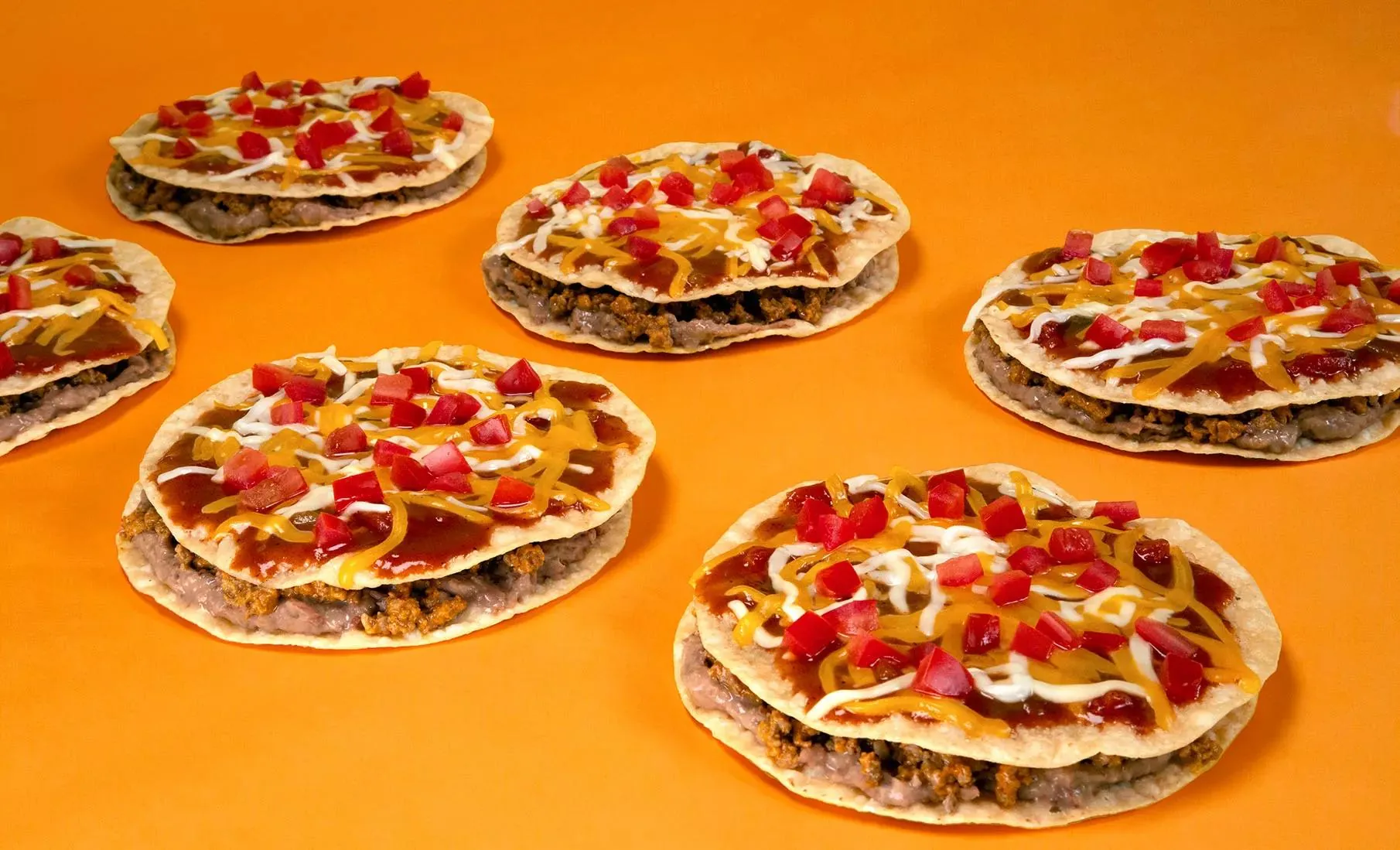
The useful question behind Taco Bell’s July 28 Mexican Pizza deal is not how to order a $1 item without lettuce. The standard Mexican Pizza already has no lettuce: Taco Bell lists seasoned beef, refried beans, two flour tortillas, Mexican Pizza sauce, a three-cheese blend, and diced tomatoes, with lettuce available only as an optional add-on.[1] Customers did not need a special modification. That was the point.
After Taco Bell removed lettuce from affected restaurants on July 17, the brand needed a recovery offer that could say “safe” faster than a corporate statement could. By July 24, CDC-linked coverage was reporting more than 1,947 illnesses across nine states tied to Taylor Farms shredded iceberg lettuce served at Taco Bell, while Placer.ai data cited in news coverage showed visits falling roughly 20% to 31% in the days after the lettuce removal and Yum! Brands shares down about 6% to 10% over the week of July 13 to July 17.[2] Under that kind of pressure, the recovery SKU has to do more than create a cheap transaction. It has to avoid making the guest solve the brand’s problem at the counter.
The $1 Deal Was a Message Carrier, Not Just a Discount
The July 28 offer ran from 8 a.m. to 11:59 p.m. PT, priced the Mexican Pizza at $1, limited redemption to one per transaction, and made the item available in person, through the app, on the website, and at kiosks. Taco Bell also paired it with a $1 drink add-on for Rewards members.[3] That is the complete deal instruction layer; it matters, but it is not where the strategy lives.
A normal traffic promotion can afford friction. A crisis recovery promotion cannot. If the item requires customers to remember “no lettuce,” if the cashier has to clarify it, or if a newsroom has to hedge the headline, the promotion reintroduces the contaminant cue it is trying to move past. The Mexican Pizza avoided that trap because the safety attribute was built into the default build.
That made the item more useful than a broader coupon. “Any taco for $1” would have created menu-family confusion. A brand-new limited-time offer would have added explanation when the brand needed reduction. A pure nostalgia push would have been too soft for the moment. Mexican Pizza sat in the narrow lane Taco Bell needed: familiar enough to travel, specific enough to control, and lettuce-free without requiring a custom order.
The Enchirito Proved the Mechanic First
Six days earlier, Taco Bell had already tested the basic recovery pattern with the $1 Enchirito. That July 22 pilot used another item that naturally contained no lettuce, capped purchases at five per customer, and included a $1 Nacho Fries app-only upsell.[4] In other words, the Mexican Pizza deal was not an improvisation. It was the second wave of a structure Taco Bell had already put into market: choose a lettuce-free item, cap the offer, pull digital behavior where possible, and keep the paid value simple enough for earned media to repeat.
That matters because crisis marketing often gets judged as if every move is either panic or genius. The more practical read is that the Enchirito gave Taco Bell a controlled test. It let the brand see whether a lettuce-free dollar item could attract attention without forcing the lettuce story back into every ordering interaction. For a deeper read on that first test, the useful predecessor is Taco Bell’s $1 Enchirito Dollar Deal Was a Calibrated Crisis Play.
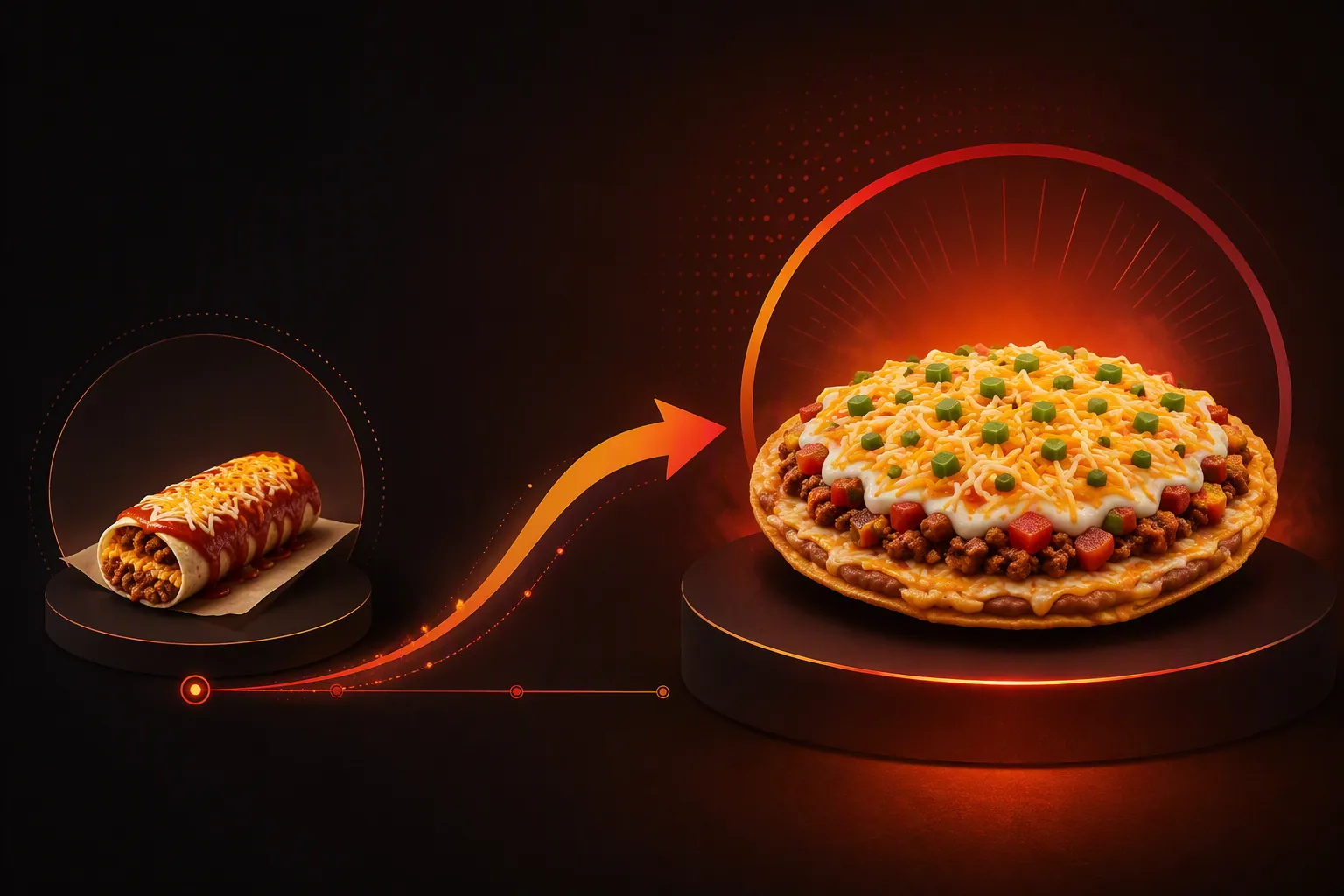
The Mexican Pizza changed the ceiling of that same mechanic. The Enchirito could prove that lettuce-free value had operational discipline. Mexican Pizza could do that while adding a larger cultural memory. Its 2022 comeback had already shown that the item had a fanbase willing to carry the story beyond paid placements and owned channels. In a recovery push, that difference is not sentimental. It changes distribution.
| Recovery variable | July 22 Enchirito | July 28 Mexican Pizza |
|---|---|---|
| Core safety attribute | Naturally lettuce-free item | Naturally lettuce-free item with official ingredient list that is easy to verify |
| Offer structure | $1 item, capped per customer, with digital upsell | $1 item, one per transaction, available across app, web, kiosk, and in-person channels |
| Marketing job | Pilot the lettuce-free dollar mechanic | Scale the same mechanic with a stronger earned-media hook |
| Cultural portability | Recognizable to menu followers | Backed by a broader nostalgia cycle from the 2022 comeback |
Why Mexican Pizza Carried the Second Wave Better
By the second recovery push, Taco Bell did not only need a safe item. It needed a safe item that headline writers could explain in one clause. That is where Mexican Pizza outperformed the Enchirito. Gray Media’s First Alert 7 framed the promotion around the reassurance directly: “don’t worry, it doesn’t have lettuce.” USA Today called the Mexican Pizza offer “another $1 lettuce-free item.”[5][6] Those headlines did some of the brand’s work without sounding like brand copy.
That headline loop is easy to underrate. During a food-safety scare, every extra explanatory step is a chance for the audience to remember the risk instead of the offer. The best recovery item is not necessarily the highest-margin SKU or the newest item on the board. It is the one where the ingredient list, the ordering path, the newsroom framing, and the store-level behavior all point in the same direction.
Mexican Pizza also had a visual advantage. The standard item photographs as a composed, topped specialty rather than a lettuce-dependent taco or burrito. Diced tomatoes and melted cheese give media something colorful to show without needing the green ingredient everyone is avoiding. That is not a creative footnote; it helps the safety message survive thumbnails, social shares, and local-news rewrites.
The Combo Edge Case Shows Why SKU-Level Clarity Matters
The clean message applies to the Mexican Pizza item, not every menu path that contains those words. Taco Bell’s Mexican Pizza Combo includes the Mexican Pizza plus two Crunchy Taco Supremes, and those Crunchy Taco Supremes include lettuce by default.[7] A guest who orders the combo because “Mexican Pizza has no lettuce” has made a different choice than a guest redeeming the $1 Mexican Pizza offer.
That distinction is exactly why the July 28 promotion needed a single-item frame. Crisis offers do not get to rely on menu-family assumptions. The safe claim has to attach to the exact SKU, the exact build, and the exact purchase path. If the customer moves from the promoted item into a combo, the operational risk is no longer the same, even though the phrase “Mexican Pizza” still appears on the screen.
What the Deal Could Measure, and What It Could Not
The Mexican Pizza offer could plausibly improve share-of-voice, app sessions, store intent, and short-window visits. It could also give Taco Bell a cleaner way to observe whether customers were willing to transact around a clearly lettuce-free item after the July traffic shock. None of that proves the deal restored trust by itself.
The attribution problem is especially sharp here. A customer might see a local-news headline, open the app, decide not to order, return two days later, and then visit a store because the lettuce concern has faded. Last-click ROAS will struggle to value that path, and same-day redemption will undercount the role of earned reassurance. The better measurement frame is closer to the one discussed in Taco Bell’s Crisis Deal: Why Last-Click ROAS Misleads: share velocity, app engagement, foot-traffic recovery slope, and whether market pressure eases after the news cycle turns.
That is also why the Placer.ai and Yum! Brands figures should be read as pressure context, not a scoreboard for the Mexican Pizza event. They show why Taco Bell had to optimize for confidence and clarity. They do not, on their own, show that a one-day offer reversed the damage. For the broader performance cost of the crisis period, the relevant benchmark is How Taco Bell’s Digital Silence Cost in Paid Ad Performance, which treats the traffic decline and market-cap pressure as part of a larger media-efficiency problem rather than a coupon result.
The Case-Study Read
Taco Bell chose the Mexican Pizza because it was the cleanest available trust signal on July 28. The item did not ask customers to remove lettuce. It let media outlets reassure readers without rewriting the ingredient list. It extended the Enchirito’s lettuce-free dollar mechanic with a more recognizable product and a larger nostalgia base. And it kept the offer narrow enough that store execution, app presentation, and headline framing could stay aligned.
That makes the deal more disciplined than a random fan-service discount and less conclusive than a recovery victory lap. The Mexican Pizza was the right vehicle for the moment. Whether it bent the traffic slope or relieved market pressure needs updated post-July 28 data, not a same-day redemption count dressed up as trust restored.
References
- Mexican Pizza | Taco Bell® — Taco Bell
- Taco Bell Offers $1 Mexican Pizza Deal for 1 Day — People.com
- $1 Mexican Pizza | Taco Bell® Promo Page — Taco Bell
- Taco Bell is offering another $1 lettuce-free item — USA Today
- Taco Bell is offering its Mexican Pizza for just $1 — don't worry, it doesn't have lettuce — First Alert 7 / Gray Media
- USA Today coverage of Taco Bell’s Mexican Pizza lettuce-free promotion — USA Today
- Mexican Pizza Combo | Taco Bell® — Taco Bell
Built on this evidence
No Bidding tactic or Creative record currently cites this case file. Compare it against other results in Benchmarks.
Related benchmark reading
Report a corroborating or contradicting result
Seeing something different in your own account? Feed the data-integrity loop instead of leaving an open comment.