
Starbucks' AI inventory failure is every media buyer's cautionary tale
Starbucks scrapped its $10M Automated Counting tool after 9 months because a 99%-accurate-in-the-lab system couldn't survive real store conditions. The same pattern appears in ad platforms: platform-reported ROAS stays steady while actual customer acquisition cost silently doubles, because the platform's own attribution validates its own AI.
- Platform
- Meta
- Campaign type
- Advantage+
- Spend range
- Various
- Timeframe
- May 0 - May 2025
- ROAS
- $0
- Verdict
- loss
- Industry vertical
- Retail
- Last reviewed
- 0-07-30
Starbucks' AI inventory tool failure is useful to advertising people for one uncomfortable reason: it shows what happens when a system is validated in the environment most likely to flatter it, then handed to operators who have to make the numbers true in the real world.
The Automated Counting tool, built with NomadGo, was described as 99% accurate in controlled tests. Nine months after Starbucks rolled it out across 11,300 North American locations, the company scrapped it. In stores, according to Fast Company, the iPad-based system counted reflections on screen protectors as inventory, confused oat milk with whole milk, identified trash cans as food items, and reportedly missed a peppermint syrup bottle in an internal launch video meant to introduce the tool. Employees found workarounds, including hacks to bypass the AI. Insiders estimated the cost at more than $10 million, though that figure should be treated as an unverified approximation rather than an audited project total.[1]
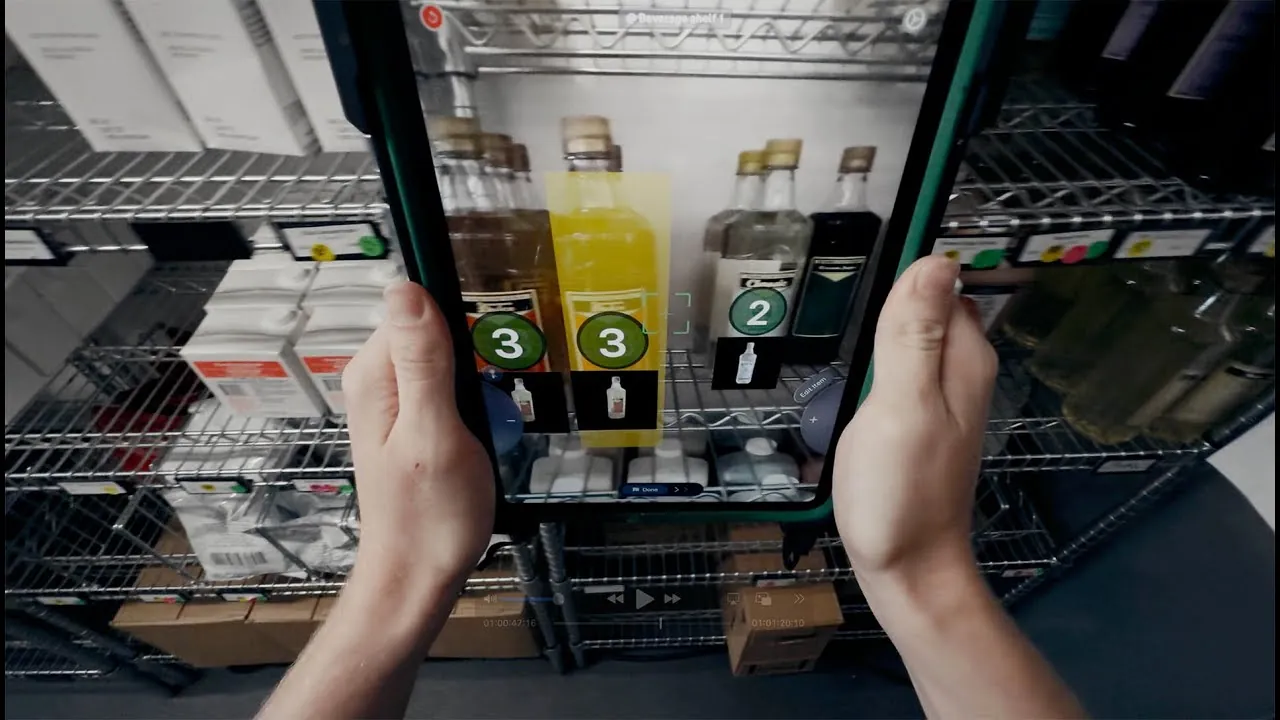
That is not a story about baristas resisting technology. It is a measurement story. The tool looked good where lighting, shelf arrangement, packaging, camera angle, and background clutter could be controlled. It broke where workers were moving quickly, bottles looked similar, reflections appeared, shelves were imperfect, and the cost of a bad count landed on the store team.
Media buyers have seen the same shape before. The dashboard says the AI is optimizing. The campaign-level ROAS holds. The account looks clean enough in-platform. Then Shopify, CRM, subscription data, finance, or a blended CAC model starts telling a different story.
What failed was the validation loop
The practical problem with the Starbucks rollout was not that computer vision can never count inventory. It was that the proof standard did not survive contact with store conditions. A lab accuracy claim is not the same thing as fewer bad counts, fewer manual corrections, cleaner ordering, or less time spent by staff fixing a machine's mistakes.
The difference matters because automated systems often shift labor before they remove it. If the camera misreads oat milk as whole milk, someone still has to notice. If a trash can becomes a food item in the count, someone still has to correct the downstream record. If staff learn that the fastest path through a shift is to bypass the model, the system may still be technically deployed while the business process quietly routes around it.
That is the part that should make a buyer's stomach tighten. A model can be live, automated, and reporting success while the actual organization absorbs the variance. In retail, the cleanup happens in the store. In paid media, it happens in the gap between platform attribution and business economics.
The Starbucks example also shows why concrete failure modes matter more than the headline cost estimate. The more useful evidence is not simply that the company may have spent more than $10 million. It is that the errors were ordinary: glare, similar packaging, clutter, imperfect placement, staff pressure. These are not exotic edge cases. They are the operating environment.
There is a name for this kind of automation
Daron Acemoglu and Pascual Restrepo have called this kind of technology "so-so automation": systems that displace labor or judgment without delivering meaningful productivity gains. In MIT Sloan's discussion of the concept, firms can be drawn to such tools because they appear cheaper than retraining workers or reorganizing work around more substantial innovation.[2]
That framing fits the Starbucks incident because the promised gain was not just a more futuristic way to count boxes. The business case depended on the system reducing work or improving operational accuracy. Once employees had to correct errors, bypass the tool, or compensate for bad reads, the automation no longer replaced the annoying part of the job. It added a new layer to it.
This is where executive enthusiasm tends to get expensive. In a controlled demo, the machine appears to remove a task. In production, it may only move the task to someone with less time, less context, and fewer options. Store staff do not get to debate whether a computer vision model has a promising roadmap when the count is wrong during a shift.
The advertising version looks cleaner because the mess is numerical
The Starbucks tool did not cause ad-spend inefficiency. The parallel is structural, not causal. Both situations depend on a system being judged by measurements that are too close to the system itself.
In Starbucks' case, the flattering environment was the controlled test. In advertising, it is often platform attribution. The platform launches the automated buying product, controls delivery, models conversions, assigns credit, and then reports the performance number that is used to judge the automated buying product. That does not make the number useless. It makes it incomplete.
Pixis reported an analysis of 55,000 Meta campaigns in which new-customer acquisition cost on Advantage+ more than doubled from $257 to $528 between May 2024 and May 2025, while Meta-reported ROAS for Advantage+ held around $4.52. Because this comes from Pixis's own blog rather than a directly reviewed primary dataset, it should be cited with that caveat. Still, the pattern is the one media teams need to investigate: platform-reported efficiency holding steady while acquisition economics deteriorate outside the platform's own view.[3]
| System | Flattering validation | Field check that matters |
|---|---|---|
| Starbucks Automated Counting | NomadGo-controlled accuracy claim | Correct counts under real store lighting, clutter, packaging similarity, and staff workflows |
| Automated ad buying | Platform-reported ROAS and conversion attribution | Independent CAC, incremental lift, payback, retention, and blended business performance |
The clean version of automated media buying is appealing for the same reason the inventory tool was appealing. Fewer manual controls. Faster optimization. Less time spent on low-value work. Nobody who has managed messy accounts should be nostalgic for hand-built campaign structures just because they were manual.
The issue is whether the automation is being asked to prove itself with a metric it can influence. If an ad platform can decide who sees ads, how conversions are modeled, how credit is assigned, and which result is surfaced as ROAS, then stable reported ROAS is not the same thing as stable business performance. It may be a useful diagnostic. It is not a verdict.
Incrementality is the shelf check
The ad-side equivalent of walking the store and checking the shelf is incrementality. Pixis also references a Haus incrementality study of 640 tests that found Advantage+ campaigns underperforming manual campaigns over time on true incrementality despite strong reported ROAS. That claim should be handled carefully because it is cited through Pixis as a secondary source, not a directly verified Haus publication. Even with that caveat, the distinction is the right one: reported conversions and incremental conversions are not interchangeable.[3]
This is where many budget meetings get sloppy. A platform ROAS number answers a platform-shaped question: how much attributed revenue did the platform report against spend? Incrementality asks a harder business question: how much of that revenue would not have happened without the campaign?
Those are not philosophical differences when the buyer has to explain why cash is tighter, why payback stretched, or why finance sees customer acquisition moving in the wrong direction. A campaign can look stable under modeled attribution while the marginal customer becomes more expensive. The cleanup just happens later, in a spreadsheet that was never part of the launch deck.
A rollout can be real and still not be proof
One reason the Starbucks case lands so hard is that it was not a tiny experiment hidden in a corner of the business. Fast Company reported the tool was rolled out across all 11,300 North American locations and then pulled after nine months. NomadGo, the vendor behind the tool, reportedly laid off most of its 30-person workforce within days of losing the account.[1]
Scale did not convert the claim into truth. It converted the mismatch into operational exposure. Once the system was everywhere, the gap between controlled accuracy and store accuracy was no longer a technical caveat. It was a labor problem, a process problem, and eventually a vendor survival problem.
That is also why broad AI adoption numbers can mislead if they are read as effectiveness numbers. A tool being deployed, defaulted on, or widely used does not prove that it improved profit, reduced true CAC, or increased incremental demand. Adoption measures exposure. Effectiveness requires a separate test.
Restaurant technology has supplied other warnings in the same category. Fast Company points to parallel retail and restaurant AI problems, including Pizza Hut franchisees alleging $100 million in lost business tied to Dragontail's AI system, Taco Bell sidelining a drive-through order bot, and McDonald's ending an IBM-powered AI ordering effort. These should not be flattened into one identical failure story, but they do reinforce the pattern: a system can look operationally compelling before it has proven it can handle messy service environments at scale.[1]
What a media buyer should take from Starbucks
The wrong lesson is that AI buying should be rejected on sight. Automated systems can remove waste, accelerate testing, and find pockets of demand a human would not manually isolate. The useful lesson is narrower and more demanding: a self-validating system should not be allowed to grade its own business impact.
For a budget owner, the standard should be boring and explicit:
- Separate platform-reported ROAS from independent CAC, blended CAC, payback, and revenue quality.
- Use incrementality tests where available, and label modeled attribution as modeled attribution.
- Date the test window, because an automation product can perform differently as competition, defaults, and auction behavior change.
- Keep source caveats visible: vendor claims, secondary-source analyses, and independent studies do not carry the same weight.
- Require the metric that bears the consequence to be the metric that decides scale.
That last point is the one Starbucks made expensive. If the store bears the consequence, the store reality has to decide whether the tool works. If finance bears the consequence, finance-grade acquisition economics have to decide whether the campaign works. If the platform's own reporting is the only evidence, the buyer is still in the lab.
A 99% accuracy claim did not save an inventory tool from reflections, similar bottles, trash cans, and barista workarounds. A stable ROAS line should not be allowed to save an AI media product from independent CAC, incrementality, and actual business performance.
References
- Starbucks bet big on an AI tool; 9 months later, it pulled the plug, Fast Company, July 2026
- The lure of 'so-so technology,' and how to avoid it, MIT Sloan, 2019
- Advantage+ vs. Performance Max Head-to-Head (2026), Pixis, 2026
Built on this evidence
No Bidding tactic or Creative record currently cites this case file. Compare it against other results in Benchmarks.
Related benchmark reading
Report a corroborating or contradicting result
Seeing something different in your own account? Feed the data-integrity loop instead of leaving an open comment.