
Nebius asset-light model risks Advantage+ advertisers can't ignore
Nebius's July 2026 asset-light pivot introduces structural risks that Meta cannot insulate Advantage+ advertisers from. This article examines how capacity delays, financing stress, and service-level fragmentation could affect ad delivery and performance, and what signals media buyers should monitor.
- Platform
- Meta Ads
- Campaign type
- Advantage+
- Spend range
- Enterprise
- Timeframe
- 0 Q3
- CPA
- Variable
- Verdict
- mixed
- Last reviewed
- 0-07-30
Advantage+ buyers can see spend, delivery, CPA, ROAS, creative fatigue, learning status, and budget limits. They cannot see whether the upstream compute supplier feeding Meta’s AI roadmap has enough financed capacity arriving on time. That blind spot matters more after Nebius moved toward an asset-light data center model, because the risk is no longer just “does Meta want more AI capacity?” It is “can the chain supplying that capacity stay funded, built, allocated, and accountable quickly enough for Meta’s ad systems to keep improving?”
Nebius is not an ad platform. It does not run Advantage+ campaigns, set auction rules, or decide whether a catalog ad gets delivery. The connection runs through Meta. Meta has become a major Nebius customer, and Advantage+ advertisers inherit only the portion of risk that flows through Meta’s dependence on Nebius AI infrastructure.

That distinction keeps the claim narrow. A Nebius delay does not automatically mean an Advantage+ CPA spike next Tuesday. Meta and Nebius do not publicly disclose how GPU availability maps to ad-ranking iteration, feature release timing, or model-refresh cadence. But the exposure is still real: if Meta’s AI capacity plan depends on a supplier whose buildout model has become more dependent on partners and financing markets, advertisers should treat that as infrastructure risk sitting outside the campaign dashboard.
Why Nebius Suddenly Matters To Meta Buyers
The key event is the Meta-Nebius AI infrastructure agreement announced in 2026. Nebius described the deal as a $27 billion agreement with Meta, structured around a $12 billion dedicated three-year commitment and a further $15 billion additional-capacity arrangement that functions more like a backstop than a plain firm order.[1] CNBC reported the headline value as more than ten times Nebius’s full-year 2026 revenue guidance of $3.0 billion to $3.4 billion.[2]
For a media buyer, the size comparison is not a finance trivia point. It says Meta’s demand is large enough to reshape the supplier. When one customer agreement is more than ten times the supplier’s guided annual revenue, execution risk does not sit neatly in a vendor-management box. The supplier has to convert contracted demand into physical GPU capacity, data center power, networking, operations, and financing.
That is where the asset-light pivot changes the texture of the risk. In July 2026, Nebius described a model in which partners finance and operate data centers while Nebius contributes software, operations, and revenue-sharing arrangements.[3] The language sounds efficient because it reduces how much Nebius must own directly. It also means the delivery chain for Meta’s compute is less vertically contained than a simple “Nebius builds and runs everything” story.
The campaign dashboard will not label this as a data center dependency. If model updates slow, delivery behaves oddly, or platform-side automation becomes more conservative, the buyer usually sees symptoms first: narrower delivery, delayed stabilization, budget warnings, inconsistent CPA movement, or feature rollouts that feel uneven across markets and accounts. None of those symptoms proves a Nebius issue. The point is that the possible cause sits upstream of the controls advertisers can adjust.
The $12B Commitment And The $15B Backstop Are Not The Same Risk
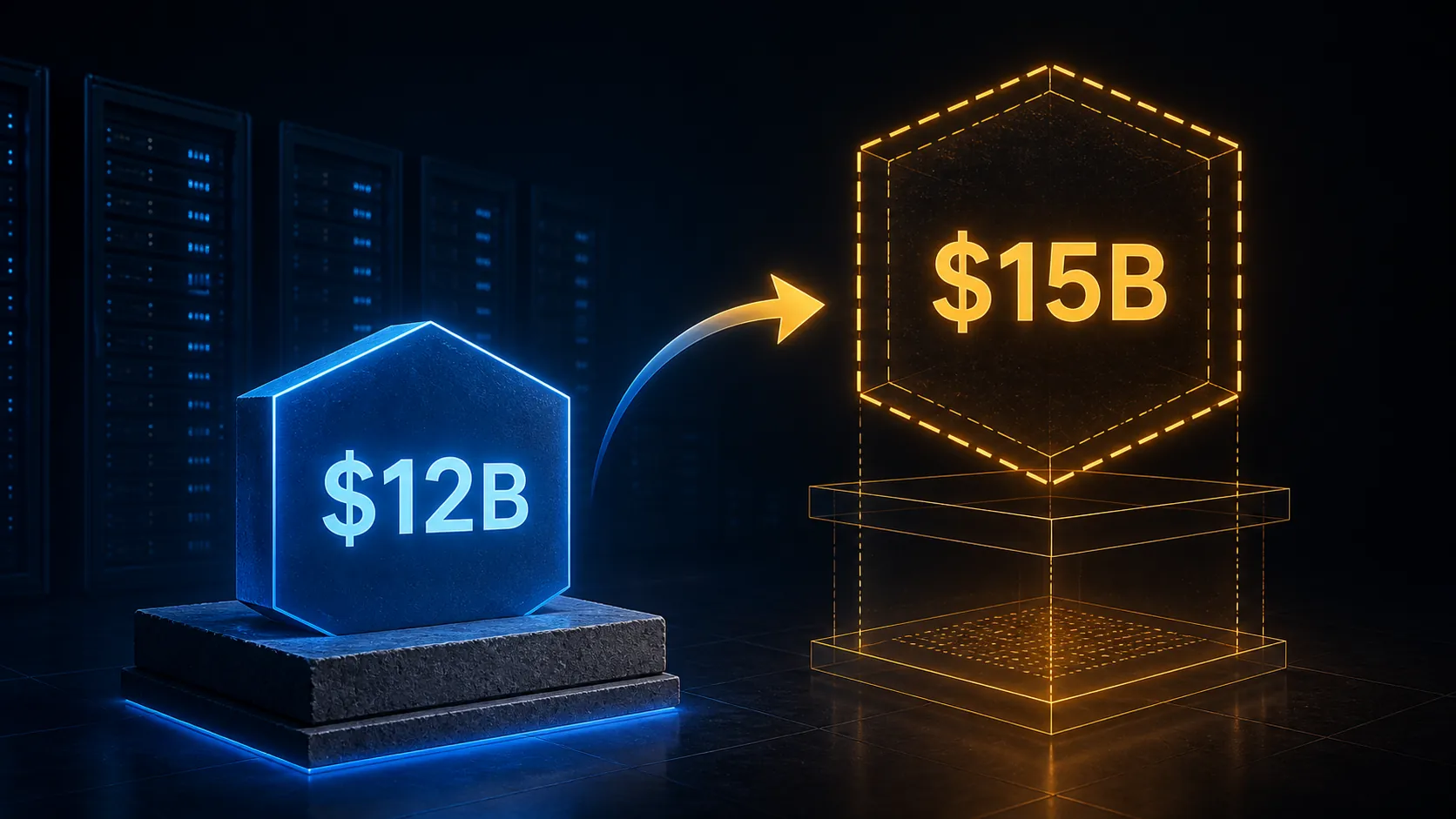
The $27 billion headline is too blunt for operational planning. The dedicated $12 billion piece and the additional $15 billion backstop create different exposures.
| Contract Piece | What It Means Operationally | Why Advertisers Should Care |
|---|---|---|
| $12B dedicated commitment | A firmer three-year capacity commitment tied to Meta demand | More likely to be planned into Nebius’s buildout and Meta’s AI capacity roadmap |
| $15B additional-capacity backstop | An option-like demand-support mechanism, with public details on enforceability still limited | Important as a financing signal because lenders and partners may treat it as evidence of future demand |
The firm piece matters for dedicated capacity. It gives Nebius a clearer demand base for Meta and gives Meta a more direct claim on capacity than an ordinary cloud customer might have. If the equipment, power, and partner facilities arrive as planned, this is the part of the contract that should most directly support Meta’s AI compute requirements.
The backstop matters differently. Public materials describe a further $15 billion in additional capacity, but the available information does not make it equivalent to a simple purchase order.[1] Its practical value is partly financial: it can help Nebius show capital providers and data center partners that demand exists beyond the initial dedicated commitment. That helps when the supplier is trying to fund a capex plan far larger than its current revenue base.
This is the uncomfortable part for advertisers. A contingent backstop can support confidence without guaranteeing that every GPU arrives exactly when Meta wants it. If the backstop is perceived as less solid, Nebius may still have the same customer pipeline on paper, but worse financing terms, slower partner commitments, or less flexibility to absorb construction delays.
That distinction became more visible when reports that Meta planned to sell AI compute externally weakened market confidence in Nebius’s Meta-linked demand support. TECHi reported that Nebius lost $11.9 billion in market capitalization on July 1, 2026 after a Bloomberg report on Meta’s cloud ambitions raised concerns about the stability of that demand anchor.[4]
The useful takeaway is not that traders changed their minds for a day. It is that the backstop is being interpreted as part of Nebius’s financing story. If confidence in Meta’s role weakens, the cost and pace of Nebius’s capacity buildout can change before any advertiser sees a labeled platform incident.
The Asset-Light Model Pushes Capacity Risk Into The Buildout Chain
Nebius’s Q1 2026 numbers show why an asset-light model is attractive and why it is risky. The company reported $399 million in quarterly revenue, up 684% year over year, while spending $2.5 billion in capex during the quarter. It also reported $9.3 billion of cash against a full-year 2026 capex plan of $20 billion to $25 billion.[5]
Translate that into advertiser terms: Nebius is scaling faster than its current revenue base can internally fund. The planned annual capex is roughly 50 to 62 times Q1 revenue. That does not mean Nebius cannot execute. It means execution depends on continuous access to external capital, partner balance sheets, construction schedules, power availability, hardware allocation, and customer demand commitments that remain credible.
The capacity buffer already looks thin. Nebius management said on its Q1 2026 earnings call that “several customers compete for every GPU,” according to Futurum’s coverage.[5] That is the line media buyers should remember. When multiple customers are competing for each unit of capacity, there is no comfortable slack layer between a delayed data hall and a large customer’s compute plan.
Earlier capacity tracking on this site covered the same scarcity baseline in Nebius Group’s AI Cloud Earnings Reveal a Rising Ad Cost Floor. The asset-light pivot extends that story. Scarcity is no longer just a question of how many GPUs Nebius can buy. It is also a question of whether partner-financed and partner-operated facilities arrive in sync with the compute demand Nebius has promised to support.
That matters because Meta’s ad automation is not a static product. Advantage+ depends on ranking systems, creative interpretation, audience expansion, catalog matching, conversion modeling, and delivery optimization that improve through repeated model work. The exact compute-to-feature relationship is not public, so it would be wrong to claim that a specific delayed GPU shipment causes a specific CPA increase. The narrower claim is stronger: if the infrastructure pipeline constrains Meta’s ability to train, test, or deploy model improvements at the intended pace, advertisers can feel the result as slower product improvement or less resilient delivery.
Capacity Delays Are The Most Direct Channel
The most direct risk is late capacity. If partner data centers slip, Nebius cannot simply turn a contract into working AI infrastructure. Power, cooling, networking, GPUs, and operations have to come online together. With several customers competing for each GPU, capacity delays do not just postpone surplus; they can force allocation decisions among large customers.
For Advantage+ buyers, the likely campaign-level signal would not be a neat announcement saying “infrastructure delay.” It would be weaker confidence that Meta can keep adding compute-heavy improvements on the expected cadence. That could affect model experimentation, rollout speed, or the degree to which Meta can absorb demand spikes without auction pressure rising. Those are analytical inferences, not disclosed platform mechanics.
Financing Stress Can Slow GPU Deployment Before Capacity Fails
Financing risk is less visible than construction risk, but it can bite earlier. Nebius does not need to run out of cash for financing stress to matter. If the market applies a higher risk premium, if partners ask for stronger guarantees, or if the $15 billion backstop is treated as less dependable demand support, deployment can slow while everyone still uses normal corporate language.
Customer concentration intensifies the issue. Yahoo Finance reported that Meta and Microsoft together represented more than $44 billion in contracted backlog, compared with Nebius’s $3.0 billion to $3.4 billion 2026 revenue guidance.[6] Concentration cuts both ways. It gives Nebius the demand story required to raise capital and recruit partners. It also means that any perceived change in one anchor customer’s intent can affect the supplier’s financing narrative.
This is where the market-cap loss is useful as a signal rather than a spectacle. The July 1 reaction suggested investors were not merely valuing Nebius on generic AI-cloud enthusiasm; they were valuing the credibility of contracted demand and future utilization.[4] If that credibility becomes more expensive to finance, the result can be fewer GPUs deployed on the original schedule or less spare capacity available when Meta wants to accelerate.
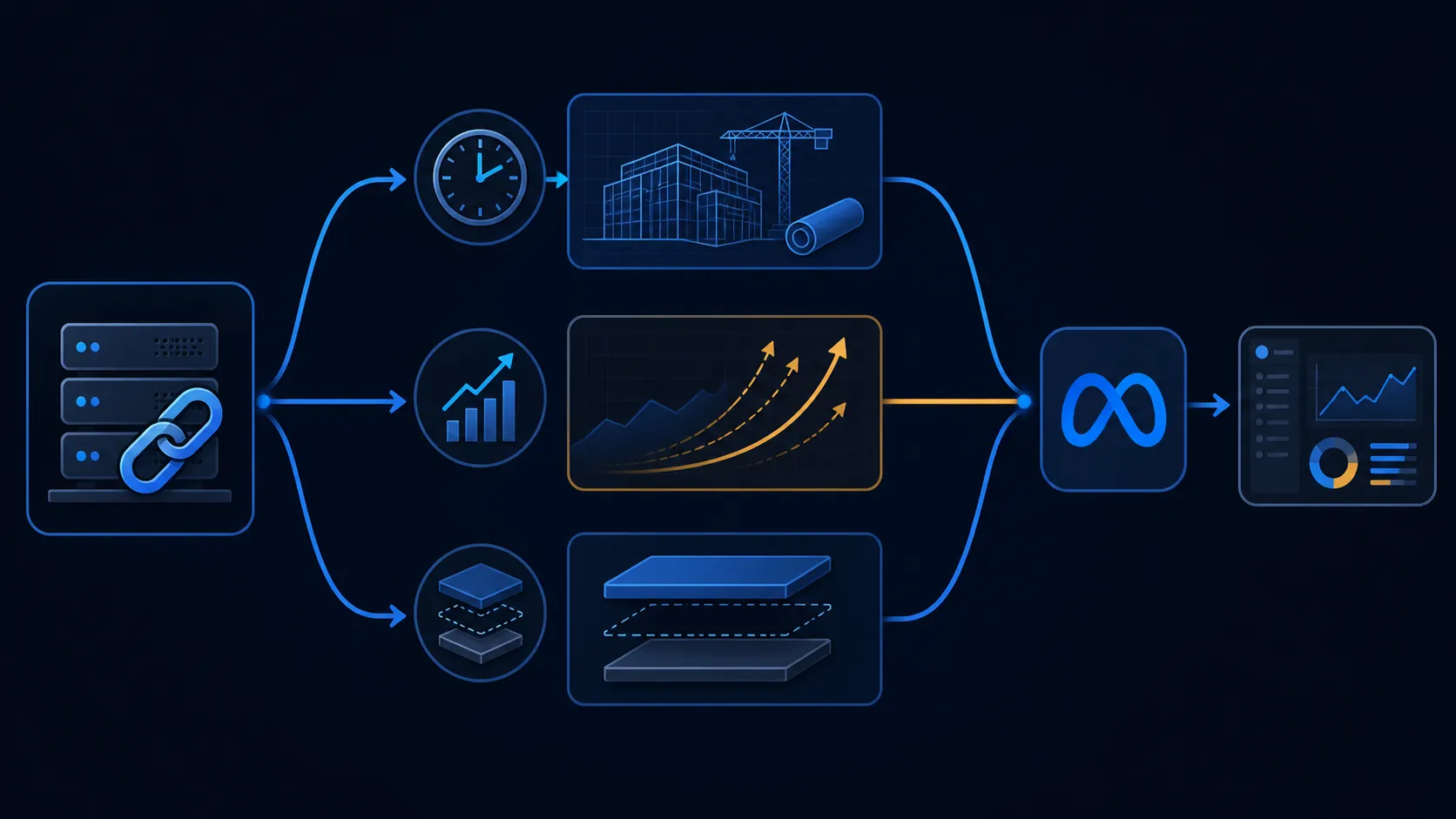
Service-Level Accountability Gets More Fragmented
The service-level risk has less direct public evidence than capacity and financing risk, so it should be framed carefully. The concern is not that partner-operated data centers are automatically unreliable. Large infrastructure partners can be excellent operators. The concern is that an asset-light chain creates more handoffs: partner to Nebius, Nebius to Meta, Meta to advertiser.
When performance advertisers experience a platform-side problem, accountability is already indirect. The advertiser talks to Meta or an agency partner. Meta controls the ad system. If the relevant bottleneck sits in Nebius-managed capacity running inside partner-operated facilities, the advertiser is several layers away from the operational root cause. Even if Meta has strong contracts in place, that does not give the buyer useful visibility inside Ads Manager.
This is not a reason to abandon Advantage+. It is a reason to stop treating platform automation as if it were sealed off from physical supply chains. The inference and auction-clock implications are different from ordinary SaaS downtime; this site’s earlier analysis of how Nebius and CoreWeave diverge for ad tech inference is the closer comparison than a generic cloud vendor outage.
What Would Actually Show Up In An Ad Account?
The honest answer is: not a clean diagnostic. Meta does not expose a field that says “model improvement delayed by upstream GPU supply.” If Nebius-linked capacity tightness affects Meta, advertisers would likely see ambiguous symptoms that overlap with ordinary account problems.
- Advantage+ campaigns take longer to stabilize even when creative volume, budget, and conversion signal quality have not materially changed.
- New automation features or ranking improvements arrive more slowly, unevenly, or with less clear performance lift than Meta’s product messaging implies.
- Auction costs become harder to explain when many advertisers push into the same automated inventory and Meta has less infrastructure flexibility to improve efficiency.
- Platform guidance stays generic, using labels such as learning, limited by budget, or creative fatigue while the root constraint sits outside advertiser controls.
None of those observations would prove Nebius caused the issue. A bad offer, weak creative, tracking degradation, seasonality, or conversion lag can produce the same surface pattern. The practical use of this analysis is not attribution certainty. It is knowing when a platform-wide infrastructure story deserves to be part of the explanation you give a founder, CMO, or client.
This is the same pattern covered in Will a Chinese AI Ban Raise Your CPC and CPA?. Infrastructure-layer shocks rarely announce themselves as neat line items in ad accounts. They move through capacity, cost, product cadence, and auction pressure before they become visible to buyers.
The Signals Worth Monitoring
The right posture is monitoring, not prediction. Nebius’s asset-light model does not guarantee Advantage+ deterioration. It does create a structural risk Meta cannot fully insulate advertisers from, because the supplier’s ability to deliver capacity now depends more visibly on partner-operated infrastructure and financing confidence.
- Nebius Q2 2026 earnings when released: revenue growth matters, but capex execution, cash burn, and capacity timing matter more for this question.
- Any revision to the $20B-$25B 2026 capex plan: a reduction, delay, or more cautious funding language would be a stronger signal than normal quarterly volatility.
- Language around the $15B Meta backstop: watch whether Nebius presents it as firm demand support, optional upside, or a less central financing anchor.
- Partner data center timelines: the asset-light model only works for Meta if partner-operated capacity arrives close to the schedule Nebius has implied.
- Capacity-allocation commentary: any repeat of “several customers compete for every GPU” means there is still little spare buffer.
- Meta infrastructure announcements: if Meta’s own cloud plans strengthen, weaken, or reroute Nebius’s role, the financing signal around the backstop changes.
The working rule is simple: when Meta’s automation becomes more compute-dependent, media buyers need to track more than the ad interface. Nebius’s asset-light pivot turns supplier execution into part of the Advantage+ risk map, even if the campaign dashboard never names it.
References
- Nebius signs new AI infrastructure agreement with Meta, Nebius
- Meta signs $27 billion AI infrastructure deal with Nebius, CNBC, March 16, 2026
- Nebius Asset-Light Data Center Model, AI Business
- Nebius Stock Plunges As Meta Cloud Plan Sparks AI Infrastructure Concerns, TECHi
- Nebius Q1 FY 2026 Earnings Show AI Cloud Capacity Scaling, Futurum Group
- Nebius-Meta AI deal raises customer concentration concerns, Yahoo Finance
Built on this evidence
No Bidding tactic or Creative record currently cites this case file. Compare it against other results in Benchmarks.
Related benchmark reading
Report a corroborating or contradicting result
Seeing something different in your own account? Feed the data-integrity loop instead of leaving an open comment.