
How Meta's AMD GPU Deal Could Lower Your Advantage+ Costs
Meta's 6GW AMD GPU commitment could reduce infrastructure costs and eventually lower ad prices for Advantage+ campaigns, but the earliest material impact is late 2026. This article explains what to track and when to expect changes.
- Platform
- Meta Ads
- Campaign type
- Advantage+
- Spend range
- General
- Timeframe
- Late Q0 2026
- CPA
- 0
- Verdict
- mixed
- Last reviewed
- 0-07-29
If you run Advantage+ campaigns, Meta’s AMD GPU deal does not give you a reason to lower CPA forecasts this quarter. The earliest useful milestone is late Q3 2026, when the first 1GW of AMD Helios racks is scheduled to ship, and even that only marks infrastructure entering the system, not lower auction prices appearing in Ads Manager. Meta has not confirmed that any chip-level savings will be passed through to advertisers.
That still makes the deal worth tracking. Meta committed in February 2026 to deploy up to 6GW of AMD Instinct GPUs, with the first 1GW tied to Helios racks shipping at the end of Q3 2026. The agreement also includes performance-based warrants for up to 160 million AMD shares, which means AMD’s upside is linked to Meta’s deployment progress rather than to a press release alone. [1]
For advertisers, the practical question is whether AMD’s data center growth could change AI advertising infrastructure in a way buyers can actually measure. More specifically, it is whether more inference capacity, bought from a second large GPU supplier, could change the economics or reliability of the systems that decide which ad gets shown, which creative variant gets assembled, and what Meta’s platform can afford to calculate in real time.

The Deal Is Infrastructure First, Ad Pricing Later
Meta is not replacing its ad system with AMD hardware tomorrow. It is adding AMD to a compute mix that already includes NVIDIA GPUs and Meta’s own MTIA chips. That distinction matters because the part of Meta’s ad stack most relevant to Advantage+ automation, Andromeda, was described by Meta as running on NVIDIA Grace Hopper Superchips, not AMD. [2]
Andromeda matters because it is not a background analytics project. Meta says it uses deep neural networks to retrieve, rank, and personalize ads in real time, and it links the system to Advantage+ creative selection and bid optimization. Meta reported an 8% increase in ads quality and a 22% ROAS lift from Advantage+ creative enhancements associated with Andromeda. [2]
That is the bridge from GPU procurement to media buying. Advantage+ is not just a campaign toggle; it is a compute-heavy retrieval and decisioning layer. If Meta can run more inference for less money, it could choose to do several things: make the same auction decisions at a lower infrastructure cost, evaluate more candidate ads and creative variants before each impression, improve reliability under heavy demand, or protect its own margin. Only one of those possibilities directly lowers advertiser costs, and it is the one Meta has not promised.
For a closer look at what Advantage+ is actually automating, the useful companion is Meta AI Advertising in 2026: What Advantage+ Automation Actually Does and Where to Keep Humans in Control. The settings-level version of the same question sits in the Meta Advantage+ Creative Enhancement Decision Matrix, where the buyer-facing controls are easier to see than the server-side machinery behind them.
How Cheaper Inference Could Reach an Advantage+ Auction
An Advantage+ auction does not become cheaper because a GPU has a lower sticker price. The path is longer: Meta buys compute, engineers deploy it, models run efficiently on that hardware, inference capacity becomes available to ad-serving systems, and only then can the platform decide whether to use the gain for pricing, quality, speed, resilience, or margin.
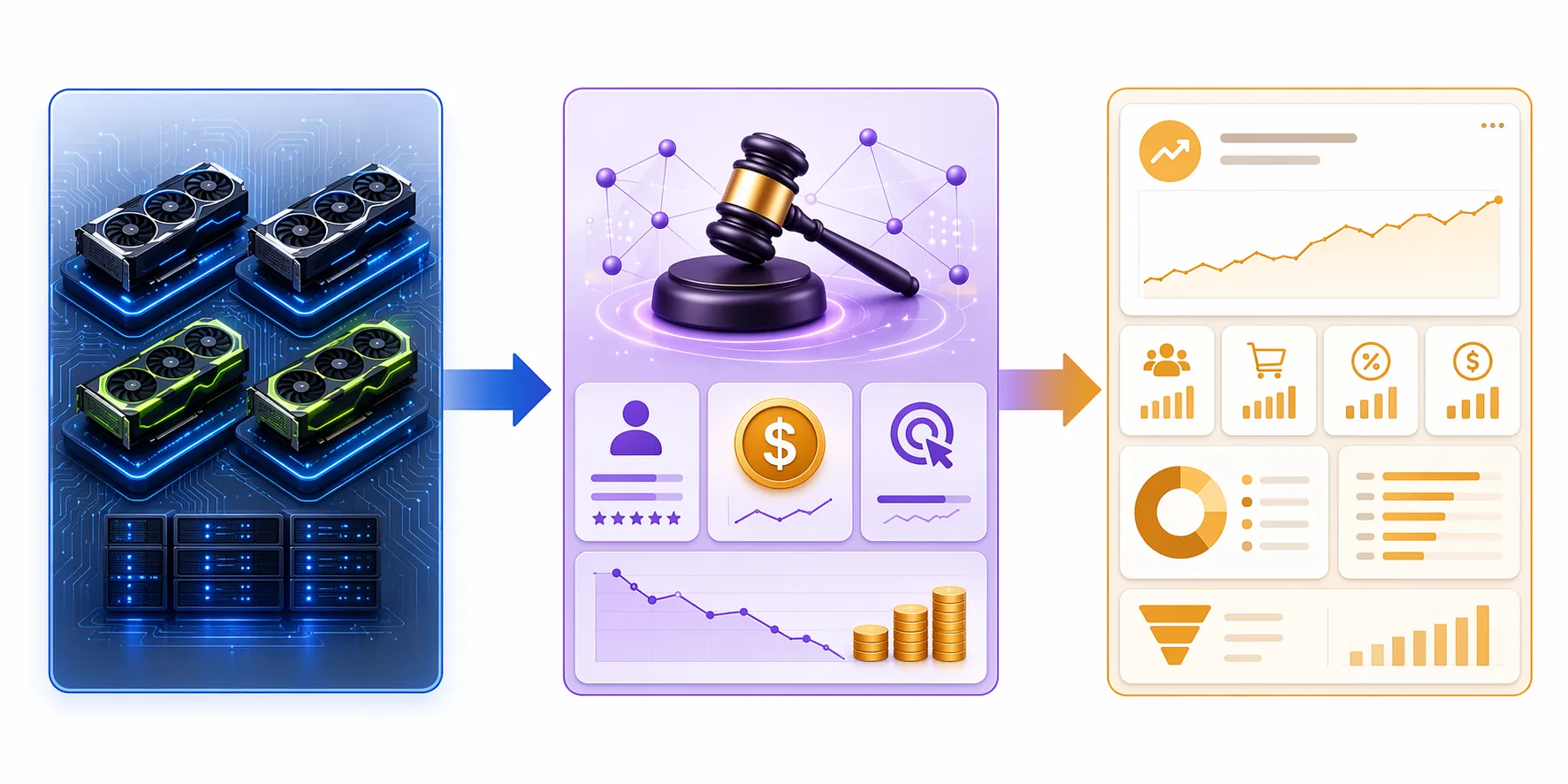
AMD’s argument is that the economics of that first step are improving. At its 2026 AI event, AMD claimed Helios rack systems could deliver up to 30% more tokens per dollar than competing systems. Public reporting also put AMD Instinct MI300X pricing at roughly $10,000 to $15,000 versus NVIDIA H100 pricing at roughly $25,000 to $40,000, and noted the MI350X’s 288GB HBM3E memory capacity compared with 192GB on NVIDIA’s B200. [3][4]
Those numbers are worth filing, not worshipping. The tokens-per-dollar comparison is vendor-framed and future-facing, and the useful cost gap in a real ad system depends on utilization, model shape, memory behavior, software maturity, engineering time, and how much of the workload can be moved without slowing the rest of the serving path. ROCm’s maturity relative to CUDA is still a deployment variable, not a footnote.
The closest public production proxy is not Meta. It is Character.ai running Qwen3-235B inference on AMD MI300X and MI325X through DigitalOcean. That deployment reported 2x throughput and 50% lower cost per token at production scale, serving 1 billion queries per day and 20,000 queries per second. [5]
That case matters because it shows non-NVIDIA inference can work at scale for a large consumer AI workload. It does not prove AMD will lower Meta ad prices. A chatbot inference stack and Meta’s ad retrieval, ranking, bidding, creative, and delivery systems are not interchangeable. The sensible takeaway is narrower: AMD hardware can be a credible production inference platform in at least one large public example, which makes Meta’s diversification less theoretical than it would have looked two years ago.
Why This Is Not Just Chip-Sector Noise
The scale is large enough that media buyers should not dismiss it as procurement trivia. AMD reported Data Center segment revenue of $5.8 billion in Q1 2026, up 57% year over year. [6] Data Center Knowledge, covering AMD’s AI infrastructure push, also reported AMD’s view that 60% of global AI compute capacity now serves inference rather than training. [7]
That inference split is the part advertisers should care about. Training gets the splashy model-launch coverage, but ad delivery lives in repeated, real-time decisions. Every impression can involve retrieval, ranking, personalization, bid calibration, creative assembly, and safety or policy checks. If inference is where more AI compute is being spent, then ad platforms sit close to the economic pressure point.
Meta’s own spending backdrop makes the question sharper. TIKR reported Meta’s 2026 capital expenditure outlook at up to $135 billion. [8] At that scale, infrastructure savings can be material to the platform even if advertisers never see a line item. The uncomfortable part for buyers is that the auction hides the handoff. A cheaper inference path could become lower CPM pressure, better matching, faster learning, steadier delivery, or simply a better gross margin for Meta.
That is why this story can sit beside the counterpoint in Is AMD's AI chip boom driving up ad platform costs? The cost-pressure version and the cost-offset version are not contradictions. AI infrastructure can become more expensive in total while a specific supplier mix makes some inference cheaper at the margin.
The Timeline Advertisers Should Actually Track
The tracking problem is that Ads Manager will not label an impression “served through AMD capacity.” So the right approach is not to hunt for a sudden September discount. It is to watch dated infrastructure milestones first, then campaign-level symptoms later.
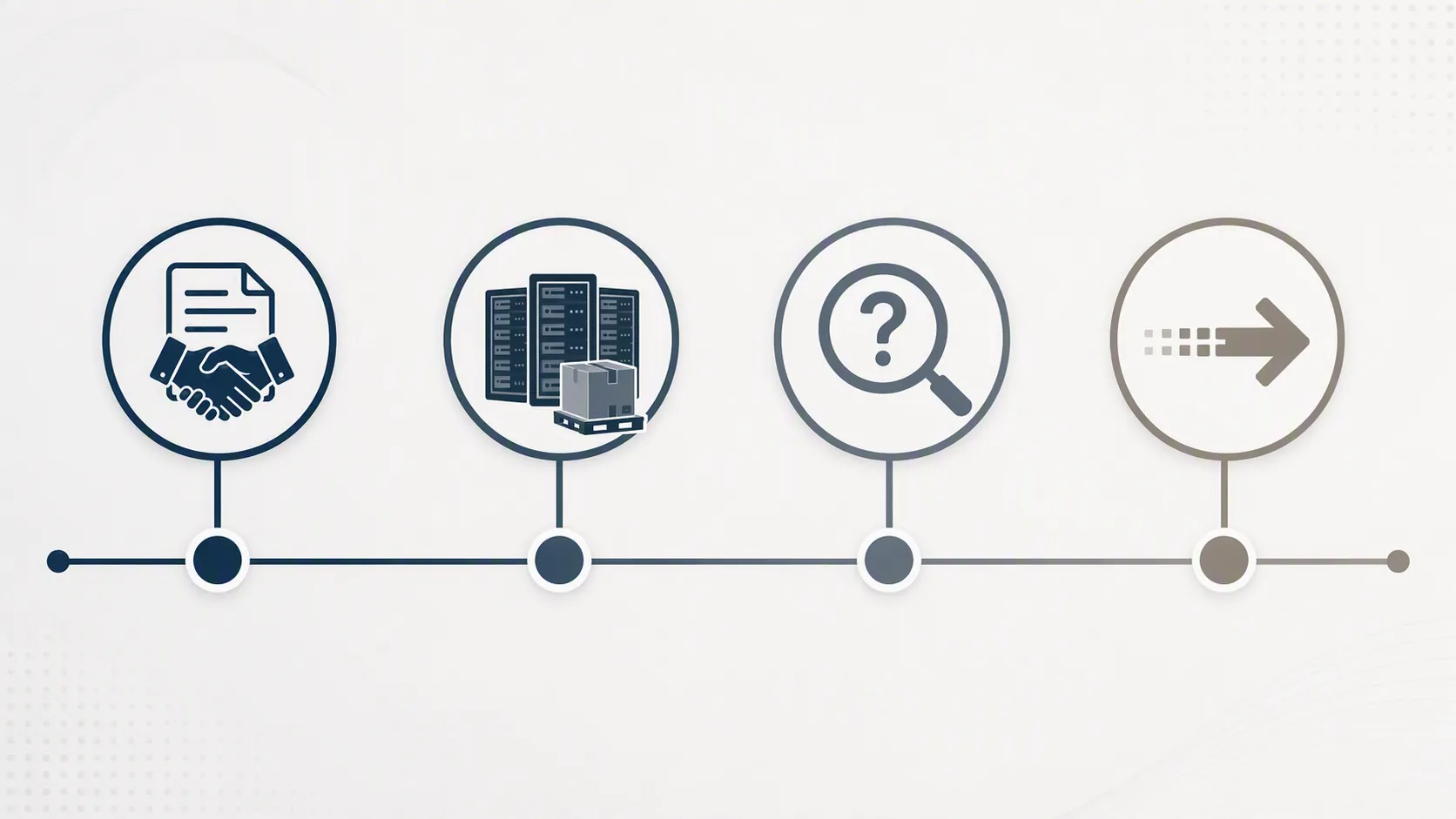
| Tracking point | Why it matters | What would count as useful evidence |
|---|---|---|
| Late Q3 2026 Helios shipment progress | This is the first material deployment marker in the Meta-AMD agreement. | Meta or AMD confirms the first 1GW shipment or deployment progress, not just repeats the 6GW headline. |
| Meta comments on AMD inference deployment | Advertiser impact requires AMD capacity to support production inference, not only general AI infrastructure. | Meta names inference, ranking, retrieval, recommendations, ads, or Advantage+ adjacent systems in deployment commentary. |
| Andromeda hardware disclosures | The public Andromeda description currently points to NVIDIA Grace Hopper, so any AMD involvement would be a meaningful change. | Meta updates engineering material or earnings commentary to describe a mixed GPU backend or new serving architecture. |
| Advantage+ delivery and reliability patterns | Extra capacity could show up as steadier delivery before it shows up as lower costs. | Fewer unexplained delivery stalls, less volatility after budget edits, or faster stabilization after creative changes across comparable accounts. |
| Benchmarks after late 2026 | Campaign data is only useful after deployment could plausibly affect serving systems. | Comparable CPM, CPA, ROAS, learning stability, and conversion volume trends improve across accounts without a matching creative, offer, or market explanation. |
| Any statement on cost pass-through | Cheaper infrastructure does not automatically become cheaper media. | Meta explicitly says infrastructure efficiency is affecting advertiser pricing, auction economics, or product pricing. |
The first row is the cleanest. If the 1GW Helios milestone slips, the advertiser timeline slips with it. If it lands, the next question is where the capacity goes. General AI, content ranking, assistants, recommendations, and ads can all compete for infrastructure. Advantage+ only becomes part of the story when Meta gives some signal that ad-serving inference is benefiting.
The campaign-level evidence will be messier. CPMs move for seasonality, competition, creative fatigue, auction density, measurement changes, and conversion lag. A buyer should not attribute a Q4 CPA improvement to AMD just because the calendar lines up. The more useful pattern would be broad and persistent: steadier delivery across Advantage+ campaigns, fewer odd learning resets, better creative exploration without worse CPA, or improved ROAS across accounts that did not all change offers or budgets at the same time.
Reliability belongs on the same tracker as cost. Hardware diversification can matter if it gives Meta more serving flexibility when demand spikes or when one supply path gets constrained. That does not replace an owned-audience plan, especially after platform outages; it just adds one infrastructure variable to watch alongside the resilience playbook in Owned-audience-first AI strategy after Meta outages.
What Not to Change Yet
Do not cut Advantage+ forecasts because Meta bought AMD capacity. Do not promise clients that auction costs will fall in 2026. Do not assume an AMD-backed infrastructure pool will favor any specific account type, vertical, objective, or creative format. Nothing in the public material supports that level of specificity.
The current operational decision is more boring and more useful: keep your Advantage+ testing discipline intact. Creative inputs, offer quality, budget pacing, conversion signal health, and account-level controls still explain far more of next week’s CPA than a future GPU deployment. Infrastructure can change the platform’s ceiling, but buyers still manage the part of the system they can touch.
It is also too early to treat AMD as a clean antidote to rising AI infrastructure costs. Memory supply, data center buildout, power, networking, and model complexity can all keep pressure on platform economics even when one GPU path gets cheaper. The broader cost backdrop in SK Hynix's Memory Surge Is Raising AI Ad Platform Costs is the reason a lower-cost accelerator does not automatically mean a lower-cost ad auction.
What should change is the tracker. Add the Meta-AMD Helios deployment timeline beside your Meta product-release notes, outage notes, and Advantage+ benchmark log. Late 2026 is the point where this stops being abstract chip news and starts becoming something campaign data might be able to detect.
References
- Meta to use 6GW of AMD GPUs, days after expanded Nvidia AI chip deal, CNBC, Feb. 24, 2026
- Meta Andromeda: Supercharging Advantage+ automation, Meta Engineering Blog, Dec. 2, 2024
- AMD Advancing AI 2026: Does AMD Now Build the World's Best CPUs and GPUs?, Futurum Group
- AMD Helios Microsoft AI Nvidia, CNBC, July 20, 2026
- DigitalOcean and AMD Prove Non-NVIDIA Inference Works at Scale, Introl, 2026
- AMD Reports First Quarter 2026 Financial Results, AMD
- AMD's AI Infrastructure Push Drives 57% Data Center Growth, Data Center Knowledge
- AMD Stock Is Up 145% in 2026, TIKR
Built on this evidence
No Bidding tactic or Creative record currently cites this case file. Compare it against other results in Benchmarks.
Related benchmark reading
Report a corroborating or contradicting result
Seeing something different in your own account? Feed the data-integrity loop instead of leaving an open comment.