
Can Athlete Cosmetics Brands Scale Without Paid Ads?
Examining Forta Cosmetics' organic-only launch ($10K+ revenue in 24 hours) against Proactiv's paid athlete-UGC campaign (2.5x ROAS), this case study shows that while athlete UGC drives high engagement, delaying paid ads creates an upper-funnel gap — making paid amplification of organic content the most effective path for scalable growth.
- Platform
- Meta Ads
- Campaign type
- UGC Whitelisting
- Spend range
- Agency-managed
- Timeframe
- 0
- ROAS
- 0x
- Verdict
- win
- Industry vertical
- cosmetics
- Last reviewed
- 0-07-29
Forta Cosmetics and Proactiv make the athlete-beauty paid ads question look simpler than it is. Forta launched in March 2026 with no paid ads, a $17,000 initial investment, a $25 product, and more than $10,000 in first-24-hour revenue.[1] Proactiv, working with MarketPryce, reported a 2.5x ROAS from whitelisted student-athlete UGC compared with other influencer content.[2]
Those are both useful numbers. They are not the same kind of number. Forta’s result measures launch demand from a warm audience. Proactiv’s result measures paid acquisition performance after media dollars were put behind athlete content. Treating them as proof that paid ads are either unnecessary or automatically superior would flatten the most important part of the case.
| Case | What Was Measured | Headline Result | What It Can Support | What It Cannot Prove |
|---|---|---|---|---|
| Forta Cosmetics | First-24-hour launch revenue without paid ads | $10K+ revenue on a $25 product after a $17K initial investment | Founder credibility and athlete seeding can convert early demand | That organic-only distribution can sustain cold-audience growth |
| Proactiv x MarketPryce | Agency-reported paid ROAS from whitelisted student-athlete UGC | 2.5x ROAS versus other influencer content | Athlete UGC can work as paid creative | That every athlete beauty campaign will clear the same ROAS |
The Forta Launch Proved Demand, Not a Full Acquisition System
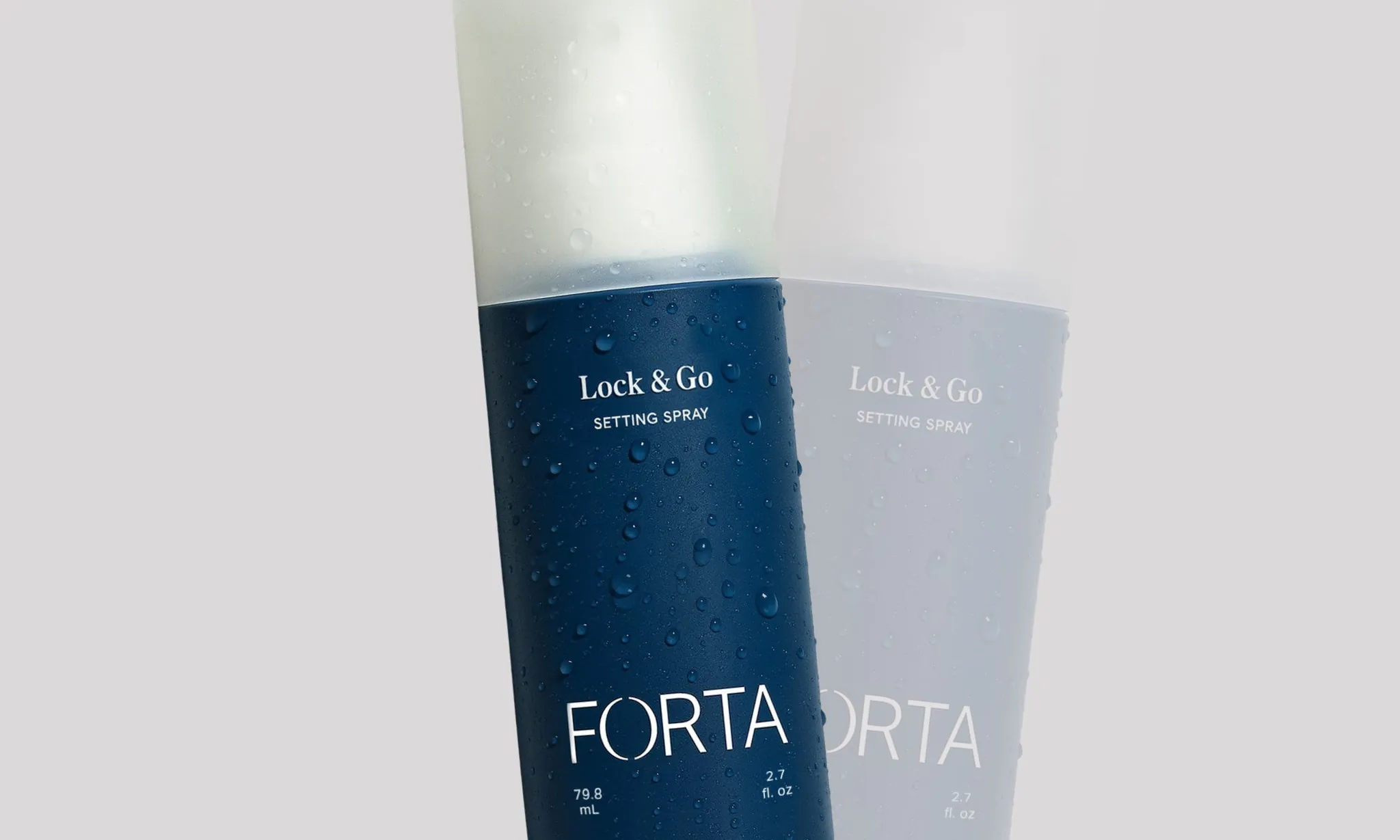
Forta is the cleaner cosmetics case because the product is performance makeup, not skincare. Lexie Hull’s brand entered the market with Lock & Go Setting Spray, a sweat-resistant product that makes immediate sense in an athlete context. The product-use case does not need much translation: makeup that stays on through movement belongs naturally in locker rooms, workouts, travel days, and game-day routines.
The launch mechanics were also unusually disciplined for a young beauty brand. Forta launched through Sephora Accelerate, skipped paid influencer campaigns, seeded product to athletes through Faves, and leaned on Hull’s organic TikTok activity rather than buying attention upfront.[1] Athletech News described the brand’s positioning as a bet on athlete credibility over paid influencer economics.[6]
That is a real operating advantage. A founder with audience trust can reduce the waste that often shows up when a new beauty brand pays for broad creator posts before it knows which product claim, use case, or customer segment is actually converting. Forta’s first day suggests that the audience did not need a long education cycle before buying.
But first-day revenue mostly answers one question: did the warm market believe the founder and the product enough to transact? It does not answer how many cold customers can be acquired at a tolerable CPA, how fast the creative fatigues, or whether the launch audience overlaps with the next cohort of buyers. A $10,000-plus first day is meaningful because it shows trust; it becomes risky only when it is treated as a substitute for distribution.
Why Athlete Seeding Changes the Paid Ads Math
Athlete seeding is not just a cheaper substitute for influencer posts. It changes the creative supply problem. If athletes are already using the product in settings where performance claims are visible, the brand gets content that can be tested before it commits meaningful media spend.
The engagement gap is large enough to matter. OpenSponsorship’s 2026 State of Athlete Marketing Report found that athletes generated a 10.97% engagement rate versus 4.92% for traditional influencers, a roughly 2.2x advantage.[3] That number does not mean athlete content automatically converts better. Engagement is not purchase behavior. But it does explain why athlete content deserves to be treated as potential paid creative inventory, not just organic social proof.
For Forta, the most valuable part of organic seeding may be the sorting mechanism. The brand can watch which athlete posts travel, which comments mention sweat resistance or wear time, which demos look credible on camera, and which product moments people save or share. Paid ads do not need to invent the story from scratch if organic distribution has already exposed the strongest angles.
That is different from saying a brand should stay organic indefinitely. Organic reach is uneven, and athlete audiences are not infinitely expandable. At some point, the founder’s launch crowd has either purchased, passed, or gone quiet. The next thousand customers usually require a system that can reach people who did not already follow the founder, the athletes, or the launch story.
The Proactiv Case Points to Amplification, With Caveats
Proactiv’s MarketPryce case is useful because it sits at the bridge between athlete credibility and paid acquisition. The reported winner was not polished brand creative. It was raw iPhone-shot student-athlete UGC, whitelisted and run through paid media, with a reported 2.5x ROAS versus other influencer content.[2]
That result supports a narrow but important claim: athlete-generated creative can carry its credibility into a paid environment. It does not prove that Proactiv’s outcome would transfer directly to Forta. Proactiv is an acne treatment skincare brand; Forta is a performance makeup brand. Acne treatment can carry a different level of problem urgency, replenishment behavior, and category intent than setting spray. The ROAS also comes from the executing agency, not an independent controlled benchmark.[2]
Still, the case should make growth teams pay attention. The weaker conclusion would be that athlete content is good for awareness. The more useful conclusion is that athlete content may lower the creative-risk side of paid social. If the brand already has credible, low-friction athlete UGC, paid spend can be used to test distribution instead of funding expensive creative guesswork.

Meta Benchmarks Make the Delay Decision Less Emotional
Beauty media buying is not cheap enough to treat paid social casually. AdLibrary’s 2026 cosmetics Meta benchmarks put CPMs at $18 to $34, described as 30% to 40% above the ecommerce average.[4] Pennock’s 2026 beauty Meta cost data places beauty CPA between $28 and $95.[5] At Forta’s $25 product price point, that CPA range matters immediately unless average order value, repeat purchase, or retention can carry the acquisition cost.
That context makes Forta’s no-paid launch look less like a purity move and more like cash control. Spending into cold traffic before the brand knows its strongest claim could be expensive. If CPMs are elevated and CPA can exceed the first-product price, waiting until real athlete content exists is a rational choice.
The same benchmarks also argue against waiting too long. AdLibrary reports that UGC creative delivers a 35% to 55% CTR lift in cold traffic and can stay active for 8 to 14 weeks, compared with a typical 3-to-6-week refresh cycle.[4] If athlete UGC can extend creative life while improving cold-traffic click-through, then the brand’s organic content is not just a launch asset. It is a paid testing asset.
| Paid Social Input | 2026 Beauty Context | Implication for an Athlete Cosmetics Brand |
|---|---|---|
| CPM | $18-$34 for cosmetics on Meta | Cold reach is expensive enough that weak creative burns cash quickly |
| CPA | $28-$95 for beauty brands on Meta | A $25 product needs AOV, repeat purchase, or retention support to scale profitably |
| UGC CTR | +35-55% in cold traffic | Athlete UGC may be worth amplifying once organic winners are visible |
| UGC creative life | 8-14 weeks versus a typical 3-6 week refresh | Credible athlete footage can reduce creative churn if it keeps performing |
A Practical Read on When to Turn Paid On
For an athlete cosmetics brand, skipping paid ads can be the right launch move when the goal is validation: prove the product claim, preserve cash, collect athlete content, and see whether the founder’s audience converts without a media budget. Forta’s launch fits that use case well.
The mistake is letting that first win define the whole growth plan. Paid infrastructure should start once the brand has enough organic signals to avoid blind testing. That does not require a massive budget. It does require clean naming conventions, creator usage rights, landing pages matched to the strongest use cases, basic cohort tracking, and a testing plan that separates prospecting from retargeting.
- Delay paid ads if the brand is still learning which product claim converts and the founder has enough warm demand to validate the first SKU.
- Start paid testing when athlete posts reveal repeatable hooks, such as sweat resistance, game-day wear, travel convenience, or post-workout touch-ups.
- Use paid spend to test cold audiences, not to re-celebrate the launch audience that already saw the founder’s content.
- Judge athlete UGC against beauty CPA and CPM reality, not against the zero-media-cost optics of organic launch revenue.
- Keep Forta-style launch revenue and Proactiv-style ROAS in separate columns until the brand has its own paid acquisition data.
The cleanest operating model is organic athlete seeding first, then paid amplification of the content that earns attention before spend. Organic identifies the believable angles. Paid tests whether those angles survive outside the founder’s circle.
What This Case Study Can and Cannot Conclude
Forta shows that an athlete-founded performance makeup brand can create meaningful launch revenue without paid ads. That matters more than a vanity awareness claim because buyers actually checked out. The brand also had a category-fit advantage: athletes are credible messengers for makeup designed to withstand sweat and movement.
Proactiv shows that athlete UGC can work when media dollars are placed behind it, but the evidence is narrower than a universal benchmark. It is an agency-reported skincare result, not Forta’s own paid data, and not a controlled study across athlete-founded cosmetics brands.
The provisional answer is that athlete cosmetics brands probably scale best when they do not choose between organic credibility and paid distribution. Forta’s launch argues for delaying paid long enough to validate demand and collect credible athlete creative. Proactiv’s paid result and the broader Meta benchmarks argue for turning that creative into a structured acquisition test before the warm-audience spike becomes the whole growth story.
References
- Forta Cosmetics launch data, Glossy, March 2026
- Proactiv x MarketPryce athlete-UGC whitelisting case study, MarketPryce
- 2026 State of Athlete Marketing Report, OpenSponsorship
- Cosmetics Meta Ad Benchmarks 2026, AdLibrary
- Meta Advertising Costs for Beauty Brands 2026, Pennock
- WNBA Player-Founded Beauty Brand Bets on Athlete Credibility Over Paid Influencers, Athletech News
Built on this evidence
No Bidding tactic or Creative record currently cites this case file. Compare it against other results in Benchmarks.
Related benchmark reading
Report a corroborating or contradicting result
Seeing something different in your own account? Feed the data-integrity loop instead of leaving an open comment.