
La Roche-Posay's Pond Naravit ads show why AI isn't the hero
For media buyers weighing AI-generated versus human-talent creative on premium accounts: the La Roche-Posay Effaclar x Pond Naravit campaign is a dated case of human-creator-led creative — a rational call per third-party 2026 benchmarks showing AI ads win CTR but lose conversion at higher AOVs and premium perception when viewers detect the AI. No public ROAS exists for the campaign, so every figure stays labeled as context, not proof.
- Platform
- Meta
- Creative type
- human talent campaign
- Last reviewed
- 0-08-25
For anyone looking up la roche-posay pond naravit campaign ads, the useful answer is not “human creative beats AI.” It is narrower and more useful for a buyer: in Q3 2026, a premium dermocosmetics account in Thailand choosing Pond Naravit-led creative, an offline fan event, Watsons co-promotion, UGC-style social content, and a Shopee live-commerce handoff looks rational. What it is not is a public performance benchmark. No public ROAS, CPA, CTR, or conversion-rate result has been published for the Effaclar x Pond campaign, so the AI numbers later in this piece stay where they belong: planning context, not campaign proof.
What actually shipped
The cleanest campaign record is La Roche-Posay Thailand’s own X recap. It documents “Effaclar Chemistry Class with Pond Naravit” on 21 July 2026 at Union Co-Event Space, Union Mall, Bangkok, with Watsons Thailand attached to the activation and #EffaclarxPondNaravit as the campaign tag.[1]
The same official campaign trail points to a Shopee live on 25 August 2026 at 12:00 Thailand time, with promo codes and signed-polaroid giveaways. That matters because it turns the campaign from a celebrity-recap asset into a media path: attention at the event, social proof in the feed, retailer availability, then a timed conversion surface.[1]
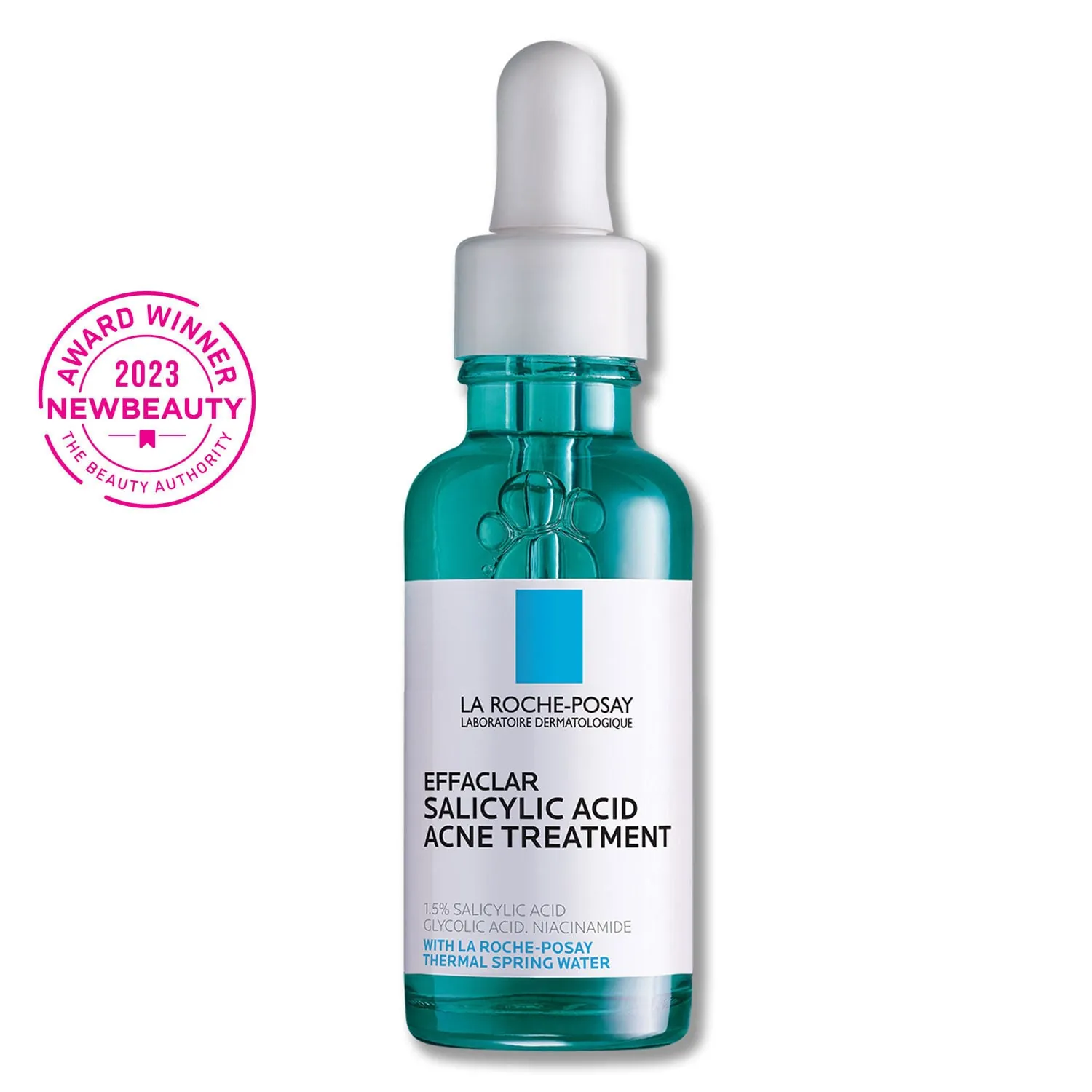
The product side is also specific enough to evaluate. The hero products in the campaign materials are Effaclar Serum, shown in the green bottle and positioned as Pond’s “skin secret,” and the reformulated Effaclar Duo+M with PHYLOBIOMA. The overnight-smoothness claim for the serum is tied to a 63-volunteer Eurofins satisfaction test in China from January 2020, which is much better than the usual beauty-ad mush of “glow,” “confidence,” and “freshness” with no checkable backing.[1]
There is one discipline point worth keeping visible: Pond Naravit’s official title should not be inflated unless the brand has confirmed it. Pond, born Naravit Lertratkosum, is a Thai actor, and Thai actors have become a visible part of regional beauty-endorser playbooks.[2][3] For this campaign record, “campaign talent” or “presenter” is safer than “brand ambassador” unless an official La Roche-Posay Thailand announcement says otherwise.
| Campaign component | Safe read |
|---|---|
| 21 July 2026 event | Official La Roche-Posay Thailand recap names Effaclar Chemistry Class with Pond Naravit at Union Co-Event Space, Union Mall, Bangkok. |
| Retailer layer | Watsons Thailand is part of the official campaign activation record. |
| Live-commerce handoff | Shopee live on 25 August 2026 at 12:00 TH, with promo codes and signed-polaroid giveaways. |
| Hashtag | #EffaclarxPondNaravit appears as the campaign tag. |
| Product proof | Effaclar Serum and Effaclar Duo+M are the cited product anchors; the serum’s overnight-smoothness claim is tied to the 63-volunteer Eurofins satisfaction test noted in the materials. |
| Unconfirmed material | Fan-account details around other appearances or adjacent Watsons/L’Oréal activity should not be folded into this campaign without matching official brand or retailer posts. |
The creative stack was not just “Pond plus skincare”
The campaign’s useful lesson is in the stack. Pond’s recognizability got the asset stopped. The dermocosmetic product claims gave the brand something more solid than beauty atmosphere. Watsons added a retailer trust layer. Shopee live gave the media plan a timed buying moment. Signed-polaroid giveaways and the campaign hashtag gave fans a reason to move content around without pretending the entire job was organic virality.

That is a different buy from a single celebrity key visual. The offline event made the campaign photographable and recap-friendly. The UGC-style social layer gave the campaign more native surfaces than a polished hero film. The Watsons connection reduced the distance between brand belief and shelf behavior. The Shopee live converted urgency into a scheduled action, not a vague “shop now” button sitting under a mood board.[1]
The fandom mechanics should not be written off as decoration. In Southeast Asian beauty media, signed-polaroid hooks, event attendance, live giveaways, and retailer co-promotions can change who distributes the asset and why. A fan sharing a recap is not the same signal as a cold audience clicking an AI-polished product render. It travels through a different trust environment, and a buyer needs to price that difference instead of filing it under “vibes.”
For a regional planning comparison, this also sits neatly inside the broader SEA brand pattern tracked in our Indonesian brands and global AI ads dossier: AI adoption is real, but brands still make category-specific calls when trust, skin claims, and creator familiarity sit close to the purchase.
Why AI creative belongs in the test plan, not automatically in the hero seat
The pro-AI argument is not imaginary. AI creative can make more variants, move faster through concept testing, and lower the cost of exploring angles that would be too slow to shoot manually. That is useful on paid social, especially when fatigue is the real daily enemy.
The problem starts when a CTR chart gets promoted into a brand strategy. Digital Applied’s 2026 synthesis, labeled here as claimed, third-party planning context and not Effaclar campaign data, claims about a 12% CTR lift for AI-generated ads on Meta, but also an 8% conversion decline above $100 AOV, a 14% decline above $500 AOV, and a 22% decline in luxury. The same synthesis claims roughly a 17% premium-perception decline and 14% purchase-intent decline among users who detect AI.[4]

That tension is exactly why the La Roche-Posay choice makes sense as a category call. Acne and dermocosmetic products ask the buyer to believe the face, the routine, the product proof, and the retailer. If a viewer notices that the face, skin texture, or usage scene has been synthetically generated, the cheaper click may not survive the next step. The campaign’s human-talent architecture avoids making the hero asset carry that detection risk.
Vendor-side numbers still have a place. Omneky claims 30–60% CTR gains and 68% A/B win rates when accounts run more than 50 variations, while Muscade AI’s 2026 recap points in the same broad direction: AI-generated creative can improve testing velocity and engagement signals.[5][6] A buyer can use those claims to justify variant generation. They should not use them to overwrite the harder question of premium trust.
This is where source labeling changes the media plan. If one deck contains vendor CTR gains, agency conversion penalties, and a live-commerce celebrity campaign with no public ROAS, those three things cannot sit on the same line as if they measure the same outcome. Our conflicting AI-number tracker is useful here because it separates adoption claims, engagement lifts, conversion results, and source type before anyone calls a trend “settled.”
| Planning signal | Useful interpretation | What it does not prove |
|---|---|---|
| AI ads can lift CTR | Use AI to increase concept and variant volume where speed matters. | That AI should replace human talent in premium dermocosmetic hero creative. |
| Conversion penalties appear in higher-AOV and luxury contexts in the cited synthesis | Watch the gap between attention and purchase, especially when credibility matters. | That the Effaclar x Pond campaign outperformed an AI version. |
| Premium perception and purchase intent can fall when viewers detect AI | Be cautious with synthetic faces, skin texture, and over-polished product-use scenes. | That all AI-assisted editing is harmful. |
| Human-talent campaigns can activate fan distribution and live commerce | Evaluate the full path from event asset to retailer to scheduled sale. | That any famous face is enough. |
What to copy from Effaclar x Pond, and what to leave alone
The part worth copying is the dated, multi-surface architecture. Start with a human anchor who can plausibly carry the category. Give the product a claim that can be checked. Tie the campaign to a retailer that removes purchase friction. Build one or two social-native formats that do not look like chopped-down TV. Then give the buyer a timed commerce moment with an offer, not just awareness exhaust.
- Copy the handoff: event recap to social content to retailer credibility to live commerce.
- Copy the proof discipline: product claims, test references, dates, channels, and official sources should be logged before the campaign is turned into a case study.
- Copy the fan incentive only if it has a distribution job. A signed-polaroid mechanic makes sense when it drives attention into a live or retail moment; it is weaker when it is just merch theater.
- Copy the testing mindset: use AI for cutdowns, hooks, captions, product-education variations, localized offer tests, and fatigue recovery.
- Do not copy the celebrity spend unless the talent, product proof, and commerce path fit together.
The guardrail is especially important when platforms make creative enhancement feel default-on. If a campaign depends on a real person’s face, skin, and familiarity, buyers should be careful about automatic alterations around people and likeness; the same concern shows up in our note on default-on Advantage+ Creative Enhancements and faces. The point is not to ban AI editing. The point is to know when the edit is touching the trust object.
AI is still useful around the edges of this kind of buy. It can help build offer variants for the Shopee live, test product-benefit phrasing, localize short social units, and explore fatigue replacements faster than a manual content calendar. Our creative-fatigue benchmark writeup is the better place to take that operating lesson, because fatigue management is where variant volume actually earns its keep.
What I would not copy is the lazy post-rationalization that “celebrity worked” or “AI would have been cheaper.” Neither statement is specific enough to buy media against. The better audit is the same one used when reviewing AI creative at scale claims: date the asset, identify the surface, separate engagement from conversion, and ask what risk the creative introduced or removed.
That risk is not theoretical for premium accounts. AI detection can become a performance variable, not just a comment-section nuisance; that is the thread running through our AI-ad backlash record. For Effaclar x Pond, the human-led route lowered one obvious risk: asking a high-consideration skincare buyer to trust a synthetic beauty scene before trusting the product.
So the disciplined read is simple. La Roche-Posay Effaclar x Pond Naravit is a creative-stack case study, not a public ROAS case study. For this category, in this market, with these retailer and live-commerce mechanics, human-talent-led creative was a rational anchor. The AI evidence belongs in the testing and risk framework, not in the hero seat.
References
- La Roche-Posay TH on X: Effaclar Chemistry Class with Pond Naravit recap, La Roche-Posay TH on X
- Naravit Lertratkosum - Wikipedia, Wikipedia
- Thai actors as beauty brand endorsers, Metro.Style/ABS-CBN, July 20, 2025
- AI Ad Creative Benchmark 2026: CTR & ROAS Data, Digital Applied
- AI Advertising Statistics 2026, Omneky
- AI-Generated Creative Marketing Performance 2026, Muscade AI
This is a record of what happened and what was tested, not legal advice. Compliance determinations require qualified counsel.