
Jayden James's MAC Campaign Debut Was Sequenced, Not Burst
MAC's Jayden James debut was sequenced across roughly 3.5 months rather than burst inside a 24-hour window, and the dated rollout — read against Launchmetrics' attention-decay baseline and MAC's own earned-media history — gives media buyers a transferable model for phasing a creator reveal. Verified events are kept separate from unmeasured claims, because no independent performance data exists for the debut itself.
- Platform
- MACzine
- Creative type
- editorial image
- Last reviewed
- 0-08-26
The useful version of the jayden james mac cosmetics campaign debut starts with the calendar, not the celebrity hook. MAC’s public reveal did not arrive as one isolated cover drop on Aug. 25. It accumulated across roughly three and a half months: a fashion appearance in May, a runway debut in June, editorial visibility in July, brand-event attendance in August, and then the MACzine cover. As of Aug. 26, 2026, no independent performance data for this debut is public, so the sequence can be studied as launch architecture rather than treated as a results claim.
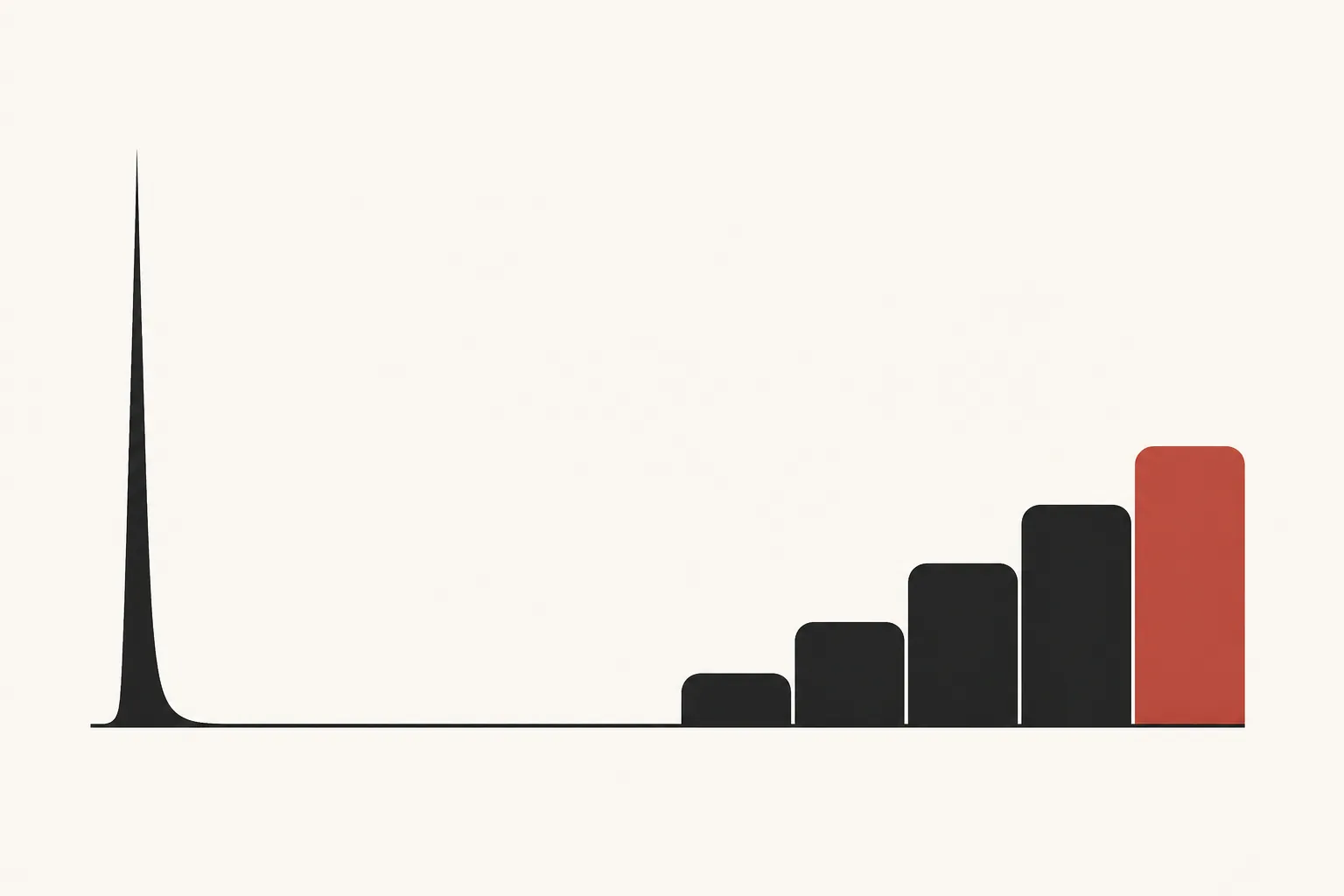
That matters because celebrity-campaign coverage usually overweights the last visible artifact — the cover, the post, the party photo — and underweights the staging that made the artifact easier to receive. Jayden James, identified in entertainment coverage as Britney Spears’s 19-year-old son, is enough to satisfy the search engine’s curiosity, but the campaign lesson is in the dated sequence that preceded the MACzine moment.
The dated rollout: five public proof points from May to the cover
Read as a launch file, the sequence looks less like a surprise debut and more like a staged reveal. The same name moved through fashion, editorial, event, and owned-brand contexts before the MACzine cover became the searchable headline.
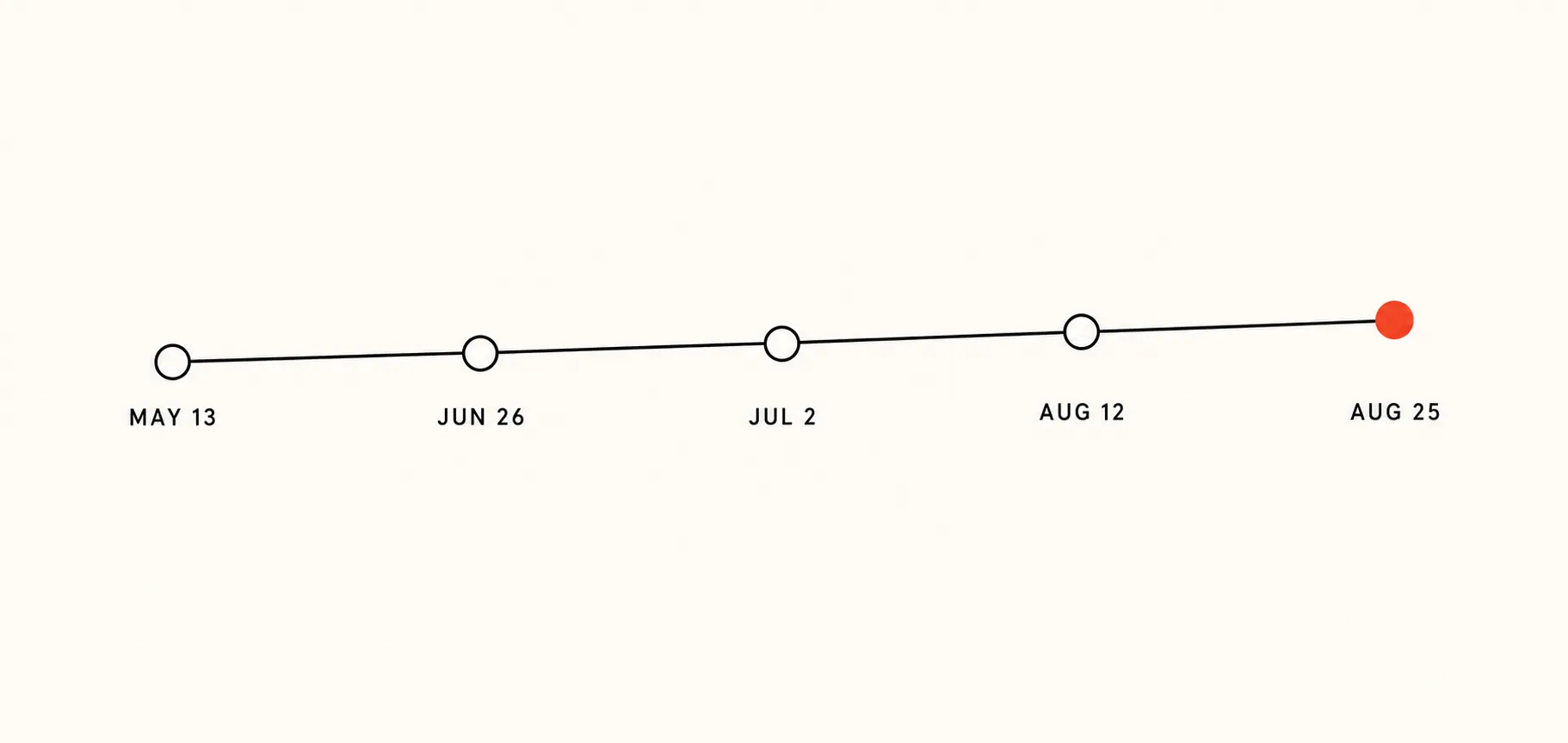
| Date | Verified public moment | What it did for launch pacing |
|---|---|---|
| May 13, 2026 | Jayden James appeared at Dior Cruise 2027, a fashion-context appearance later included in coverage of the MAC debut. [1] | This placed him in a fashion-adjacent public record before the cosmetics reveal had to carry the full introduction. |
| June 26, 2026 | He made his Vetements SS27 runway debut, another pre-cover visibility point cited around the MAC campaign coverage. [1][2] | The runway moment gave later beauty coverage a second dated reference instead of forcing the debut to explain everything at once. |
| July 2, 2026 | A Vogue interview entered the sequence before the MACzine cover, with Billboard later noting that music was being “held back.” [2] | The interview added editorial visibility while keeping another possible attention driver — music — out of the immediate reveal. |
| Aug. 12, 2026 | Jayden attended MAC’s “House of Glass” party, reported by People and Just Jared on Aug. 14. [3][4] | This was the bridge from general fashion visibility into a MAC-specific room before the owned editorial cover arrived. |
| Aug. 25, 2026 | People and Billboard reported the MAC editorial debut, and MAC published the MACzine cover feature. [1][2][5] | The cover became the campaign’s clearest owned-brand artifact, but it landed after several public context setters were already in place. |
The Aug. 25 coverage carried the expected entertainment-news framing, but the cleaner media-plan read is that MAC did not ask one launch-day placement to perform every job. May and June established visibility. July added an interview layer. Aug. 12 put him inside a MAC event environment. Aug. 25 gave the campaign its owned editorial object.
Billboard’s note that music was being “held back” is useful here because it implies restraint in the reveal stack, not just absence. A launch team can treat that as a sequencing choice: do not spend every adjacent storyline in the first wave if the cover is supposed to have room to register. It does not prove MAC controlled every piece of timing, but it does show that the public narrative was not collapsed into one all-purpose announcement.
One production detail should stay in the publication checklist, not the strategy argument: the photographer credit needs reconciliation before anyone reuses campaign imagery. People credits Sarah Pardini, while MAC’s social credit has been recorded as “JAMES SPEARS via MAC Cosmetics.” That is a rights and attribution check, not evidence that the sequencing worked. [1]
Why the first 24 hours are the wrong container
The reason to care about this sequence is not aesthetic neatness. Launchmetrics has reported that 46% of brand-ambassador placements typically drop within the first 24 hours, creating the familiar burst-then-silence shape that makes a campaign look loud and then suddenly unsupported. [6]
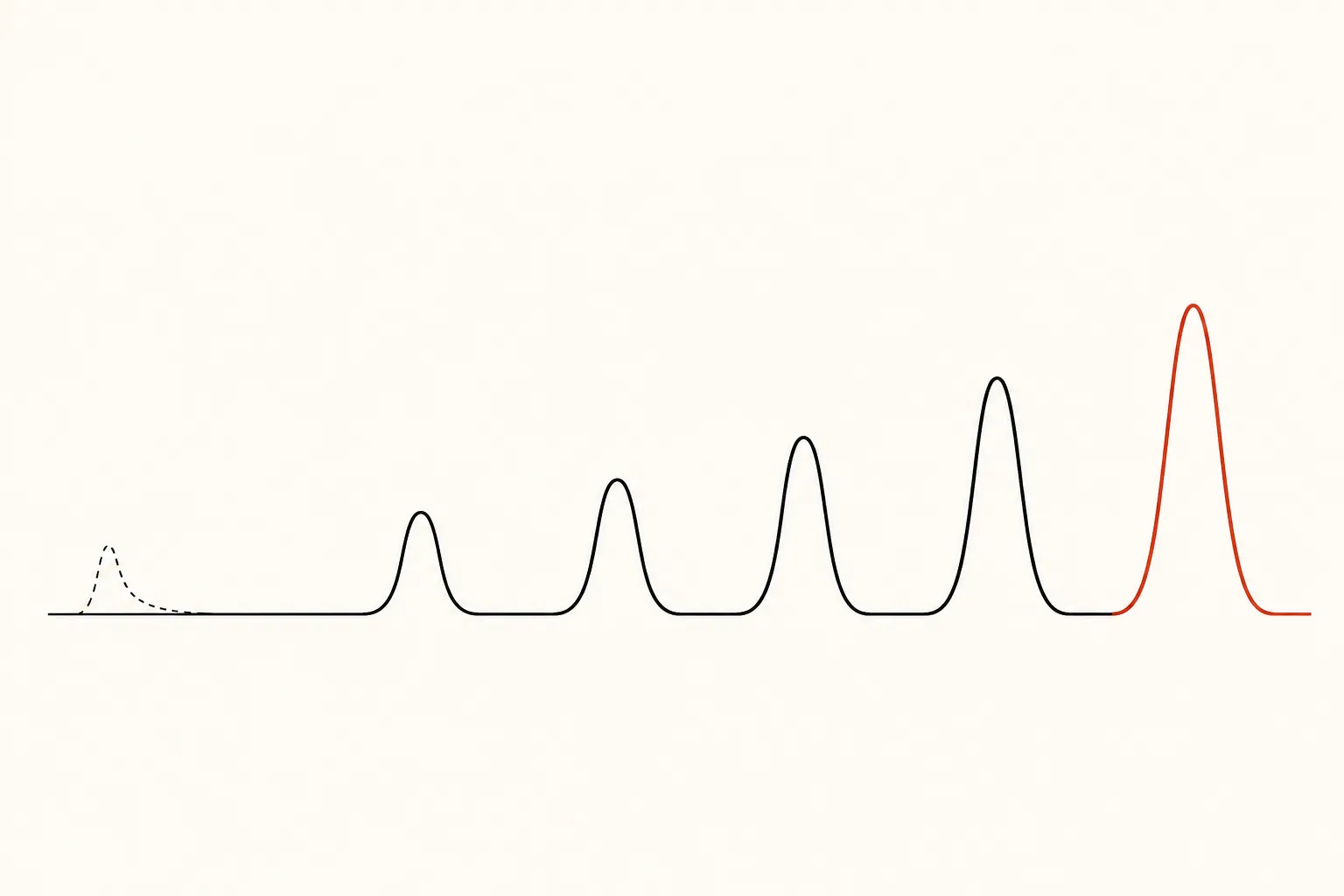
That 46% baseline does not say that every burst launch fails. It says the first day is a known decay risk. If the entire reveal depends on one cover, one embargo lift, or one celebrity repost, the media buyer inherits a short window and a hard question: what is left to amplify after the first wave has already peaked?
The Jayden James rollout gave paid, PR, social, and creative teams more than one possible entry point. A buyer could have supported fashion awareness after the runway context, retargeted around the Vogue interview, reserved social spend for the MAC event, or waited until the MACzine cover supplied the clearest brand-owned asset. Whether MAC actually bought media in those positions is not public. The planning value is that the calendar made those choices possible.
MAC’s earlier earned-media pattern is useful context, not Jayden James performance data
The strongest comparison point is MAC’s earlier “I Only Wear MAC” campaign coverage, because Launchmetrics published concrete Media Impact Value figures for that work. Those figures belong to the prior campaign. They should not be imported into the Jayden James debut as if they are results for Aug. 25.
In that earlier MAC case, a Kris Jenner teaser generated $1.9 million in MIV over three days, Doja Cat generated $1.3 million in MIV, and the Sept. 23 launch-day post produced $397,000 in MIV — 35 times MAC’s average Instagram placement value, according to Launchmetrics. The same report put the five-day campaign total at $4.9 million in MIV, with 72% coming from Owned Media and only 1% from celebrities posting. [6]
That is the relevant pattern: MAC has previously shown a way to stretch earned-media value across teaser, talent, launch-day, and owned-channel moments. The Shorty Awards entry for MAC’s related “I Wear MAC” work is also useful as a brand-submitted campaign record, but it should be read as self-reported award material rather than independent measurement. [7]
| What is documented | What it can support | What it cannot support |
|---|---|---|
| Jayden James had a dated public sequence from May 13 to Aug. 25. | MAC’s debut can be analyzed as a phased reveal rather than a single cover-day burst. | It cannot prove that phasing caused the volume or tone of coverage. |
| Launchmetrics reports a 46% 24-hour placement-drop baseline for brand-ambassador placements. | A launch team has a measurable reason to plan beyond the first day. | It cannot predict the exact decay curve for this specific debut. |
| MAC’s prior “I Only Wear MAC” case produced published MIV figures across multiple campaign moments. | MAC has used phased attention mechanics before, with measurable earned-media value in a different campaign. | Those MIV figures are not Jayden James MIV, EMV, sales, engagement, follower growth, or deal economics. |
| No independent Jayden James debut performance data is public as of Aug. 26, 2026. | The case can be used for launch-architecture planning. | It should not be sold internally as a proven performance benchmark. |
This separation is not pedantry. It changes the decision a marketer is allowed to make. The safe claim is that the Jayden James debut resembles a MAC sequencing pattern that has mattered in prior measured work. The unsafe claim is that the same mechanism generated a known return this time. There is no public independent MIV, EMV, sales, engagement, follower, paid-spend, or deal-term record for the Jayden James MAC debut as of Aug. 26, 2026.
What a non-celebrity launch team can actually take from it
Most brands do not have a MACzine cover, a celebrity-adjacent protagonist, or fashion-week visibility to borrow from. The transferable part is smaller and more useful: build the launch around dated public proof points that can be named, screenshotted, measured, and compared after the first coverage wave drops.
- Create more than one verified moment before the main reveal. A founder interview, category event, creator shoot, product sampling date, retail preview, or editorial placement can do this job if it is public and dated.
- Reserve at least one asset or announcement for after the first wave. If all product, talent, creative, and proof are released together, paid media has less to work with once earned placements decay.
- Decide measurement start points before launch. The first event, first brand-owned post, first press placement, and first paid flight may deserve separate clocks.
- Label unmeasured claims as unmeasured. If there is no independent MIV, EMV, sales lift, engagement benchmark, paid-spend disclosure, or creator-fee data, the case is a planning model, not a performance proof.
This is the same discipline used in dated campaign records where the event log is stronger than the performance record. The CeraVe Phuwin brand events case is useful for separating what happened from what was never published. Colgate’s IU campaign shows the same problem from another angle: visible influencer buzz without paid-spend disclosure. The Athlete Cosmetics paid-ads case is the closer operational cousin when the question becomes whether and when to amplify an organic launch moment.
The related Karina x Converse paid-ad verification case sits near this one, but the center of gravity is different. That case turns on the absence of public paid-ad numbers. This one turns on sequencing and attention decay: what a brand gives itself before the first 24-hour window starts to empty out.
Where paid support would enter if this were your launch
A phased reveal only helps if someone decides what each phase is for. Otherwise, the calendar is just a prettier version of the same burst.
| Phase | Likely media job | What to measure |
|---|---|---|
| Early public visibility | Build warm audiences before the main brand reveal. | Press pickup, social saves, site visits from category or editorial traffic, retargetable audience size. |
| Editorial or interview moment | Clarify the person, product angle, or creative frame before launch-day assets appear. | Referral quality, watch time, search lift, comment themes, creator-profile traffic. |
| Brand-event appearance | Move the story into the brand’s own environment. | Owned-channel engagement, earned pickup from event imagery, audience overlap with prior waves. |
| Owned cover or campaign asset | Convert accumulated attention into the clearest brand message. | Paid efficiency by audience segment, landing-page behavior, assisted conversions, post-view activity. |
| Post-launch reserved asset | Keep the second wave from becoming a repost of the first. | Decay rate versus the first 24 hours, incremental reach, frequency, cost per qualified action. |
The Jayden James MAC debut gives a clean example of the first four phases. It does not give public evidence for the fifth. If a brand wants the full benefit of this structure, the post-launch asset has to be planned before launch day, not invented after the earned press has already peaked.
For a smaller account, the practical media decision is usually not “celebrity or no celebrity.” It is whether the first press hit is also the only press hit, whether the first creator post is also the only usable asset, and whether paid media is being asked to rescue a decaying story instead of extending a staged one.
The honest read
MAC’s Jayden James debut is a useful model for phased creator-reveal sequencing. The public record shows a dated path from Dior Cruise 2027 on May 13 to the MACzine cover on Aug. 25, with runway, editorial, and brand-event moments in between. Launchmetrics’ 24-hour decay baseline gives a concrete reason to prefer that kind of staging over a one-day blast, and MAC’s prior “I Only Wear MAC” figures show that the brand has previously generated measurable value across multiple moments.
That is as far as the evidence goes. The sequencing is measurable because the dates, decay baseline, and prior earned-media pattern can be compared. The debut itself has no independent public performance record as of Aug. 26, 2026. Treat it as a transferable planning model, not a results claim.
References
- Britney Spears’ Son Jayden James, 19, Makes Editorial Debut for MAC Cosmetics — People — Aug. 25, 2026
- Britney Spears’ Son Jayden James Lands MAC Campaign, Talks Music — Billboard — Aug. 25, 2026
- Britney Spears’ Son Jayden James Steps Out for MAC Cosmetics Party — People — Aug. 14, 2026
- Britney Spears’ Son Jayden James Makes Rare Appearance at MAC Cosmetics Party — Just Jared — Aug. 14, 2026
- Jayden James Fix+ Tips — MAC Cosmetics — Aug. 25, 2026
- How I Only Wear MAC Earned $4.9M in MIV in 5 Days — Launchmetrics
- MAC Cosmetics I Wear MAC — 17th Annual Shorty Awards entry — Shorty Awards
This is a record of what happened and what was tested, not legal advice. Compliance determinations require qualified counsel.