
Karina x Converse's Campaign Has No Public Paid-Ad Numbers
The Karina x Converse global ambassador campaign is publicly documented only in product and calendar mechanics — announcement dates, two silhouettes, and regional release windows — with no paid spend, compensation, or attributed revenue on record. Media buyers get the disclosed-versus-not framing, a warning that the circulating 12.9M engagement claim is unverified, and a concrete surface for tracking the launch's real signals.
- Platform
- Meta Ads
- Creative type
- celebrity ambassador campaign
- Failure type
- unverified engagement metric
- Last reviewed
- 0-08-26
If the search is “karina aespa converse global ambassador campaign paid ads,” the public record answers only half of it. Converse has documented a Karina launch with dates, products, campaign copy, and retail timing. It has not publicly documented media spend, ambassador compensation, paid reach, attributed revenue, ROAS, or incrementality.
That distinction matters because this is not a random celebrity placement. Karina had a visible Converse history before the 2026 global appointment: coverage traces her public wearing of the brand back to 2020 and identifies her as a Converse Korea ambassador in January 2024 through the “Create Next, Nothing’s Wrong” campaign.[1] Converse then announced her global ambassador role on June 29, 2026, followed by a broader campaign debut on August 6, 2026.[2][3]

A buyer can fairly credit the launch for having a coherent cultural setup. The problem starts when that coherence gets converted into performance language without the missing media layer.
What is actually public
| Date or window | Publicly reported event | What it supports |
|---|---|---|
| 2020 onward | Karina is reported as publicly wearing Converse before any global appointment. | A pre-existing organic association, not a paid-media result. |
| January 2024 | Karina appears in Converse Korea’s “Create Next, Nothing’s Wrong” ambassador path. | A Korea-market relationship preceding the global role. |
| June 29, 2026 | Converse announces Karina as a global brand ambassador. | A talent and brand-positioning announcement. |
| June 29, 2026 | Chuck 70 X availability is reported first in Korea and China. | A staged regional product release. |
| August 6, 2026 | The global campaign debut is reported, with Chuck 70 X and Run Star Crush in focus. | The visible creative and product campaign launch. |
| August 27, 2026 | Converse messaging and sneaker retail coverage point to a Chuck 70 X global drop at 10 a.m. local time. | A scheduled retail event; as of August 26, 2026, this is still a forward-looking availability signal. |
| August 28, 2026 in some regional reporting | Some regional store-oriented coverage has used a later release date. | A reminder that market-level availability should be checked locally rather than flattened into one global date. |
The campaign’s product structure is more useful than the celebrity label for understanding what Converse put into market. Footwear News and WWD coverage frames the launch around two silhouettes: the Chuck 70 X and the Run Star Crush.[4] Converse’s own Chuck 70 X page uses the campaign copy “WELCOME TO THE FAMILY, KARINA” and “Stars align with KARINA and Chuck 70 X,” while also listing “Available 8.27.”[5] Sneaker Bar Detroit also reports the August 27 global release, after Korea and China availability tied to the June announcement.[6]
Billboard’s shopping coverage makes the product availability angle even clearer: this is a retail story that can be followed through where the shoes are sold, when links go live, and which pairs are shoppable by region.[7] Design coverage describes the Chuck 70 X with dual-star accents, an updated leather patch, an aged toe cap, and a tongue stabilizer, while the Run Star Crush carries the more visibly fashion-led platform profile through an exaggerated sculptural sole.[8]
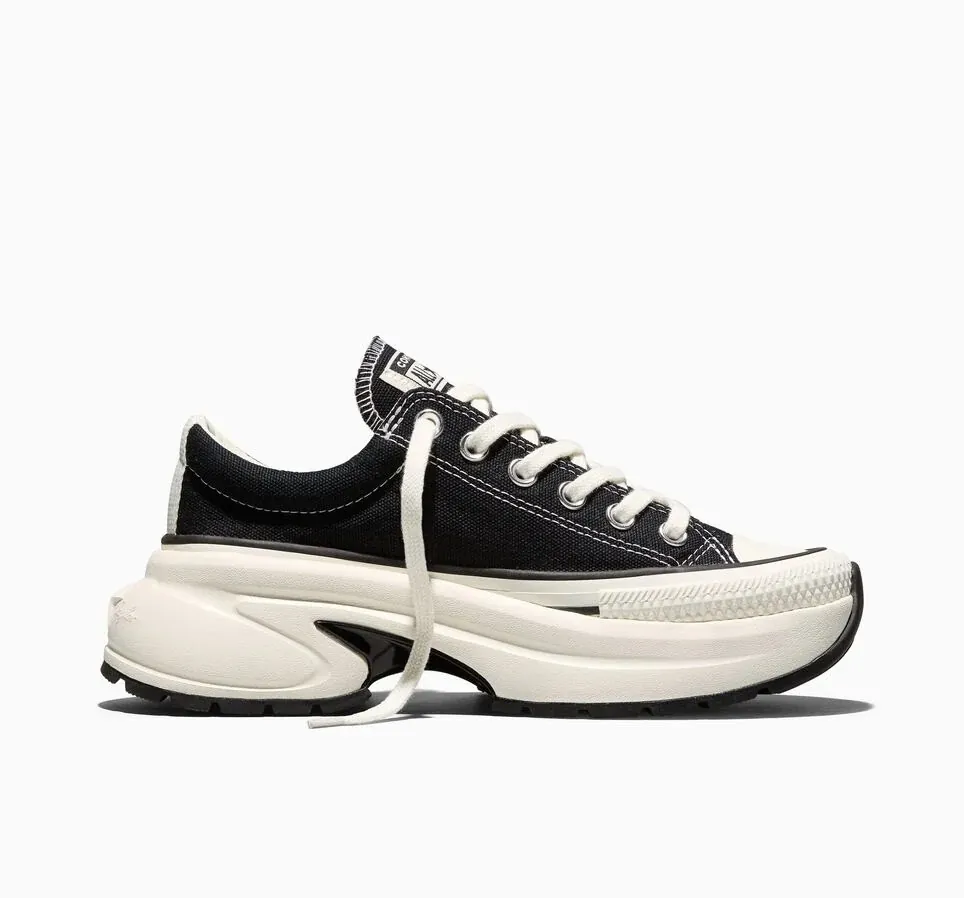
That contrast is not decorative. Chuck 70 X gives Converse the archive-adjacent lane: recognizable, low-top, and close enough to the brand’s core Chuck language to feel like a continuity play. Run Star Crush gives the same campaign a platform silhouette with a louder fashion signal. The pair lets Converse speak to two purchase moods without needing two separate ambassador narratives.
The roster context is useful only as a yardstick. Converse has operated with global-facing cultural talent before; Booking Agent Info identifies Tyler, The Creator and Charli XCX in the current ambassador context and names past associations including Billie Eilish, Ross Lynch, and G Flip.[9] That makes Karina’s appointment a continuation of a brand habit, not an unprecedented media invention.
Where the paid-media trail stops
The disclosed mechanics are enough to understand the launch. They are not enough to evaluate paid ads.
No source in the public record discloses Converse’s paid media budget for the Karina campaign. No source discloses Karina’s compensation terms. No source ties the ambassador announcement or August campaign debut to attributed revenue. No source gives a lift study, a holdout, a matched-market test, a post-purchase survey readout, or SKU-level sell-through against a control.
That does not mean the campaign failed. It means the public material cannot carry a paid-performance conclusion. A launch can create awareness, shape brand preference, increase search, move product, and still leave no public evidence that tells a buyer which dollars produced which outcome.
This is the place where celebrity campaigns often get misread. Organic association, official campaign attention, product availability, and paid distribution can all happen at the same time. They are not the same variable.
- Organic association: Karina already had a visible Converse relationship before the global appointment. That can make the partnership feel credible, but it does not measure incremental ad impact.
- Campaign attention: press, fan discussion, and social reposting can make the launch more visible. Visibility is not automatically paid reach.
- Product availability: release timing, retail pages, and stock movement show market access. They do not identify whether paid spend caused demand.
- Paid distribution: impressions, frequency, spend, audience, placements, creative variants, and conversion paths would belong here. Those numbers are not public.
A performance case file would need to keep those layers separate. That is why sourced campaign records belong closer to a Benchmarks standard than to a press roundup: date, scope, metric definition, measurement window, and attribution method all have to travel with the claim.
The 12.9M engagement claim is an audit lead, not evidence of ROAS
One circulating claim deserves special handling because it sounds like a case-study result. A Facebook repost says Converse Korea was “making the stars align with Karina,” reports “12.9M engagement points,” and cites a “1,168%” increase.[10]
That sentence should not be ignored. It should also not be promoted into proof.
The repost does not define “engagement points.” It does not show the original case-study page in the public material available here. It does not identify the denominator behind the 1,168% increase. It does not disclose the time window, market, platform mix, paid-versus-organic split, media spend, audience size, baseline, or attribution method. Without those pieces, a buyer cannot convert the figure into reach, CPM, CPC, CPA, ROAS, or incremental revenue.
The metric may still point to something worth investigating. If a buyer were auditing the campaign, the right next move would be to locate the original case study, identify the publisher, confirm whether Converse or an agency authorized it, and read the methodology. Until then, “12.9M engagement points” is a lead, not a benchmark.
This is where the wording matters. “Engagement points” could be a weighted index, a sum of visible interactions, an internal scoring model, or a platform-aggregated number. Those are materially different things. A 1,168% increase could compare against a quiet pre-period, a prior campaign, a brand baseline, a market baseline, or a modeled expectation. Those are also materially different.
A growth lead cannot put an undefined engagement index into a forecast. At most, the claim can justify a request for source files. If the original report cannot be retrieved and the metric cannot be defined, it should stay outside the paid-media model.
The launch is timed well; that still does not disclose paid impact
The timing is commercially smart. The August 6 campaign debut arrived days after aespa’s reported August 2 Lollapalooza debut and just before the August 7 SYNK: COMPLÆXITY tour launch.[3] Converse did not need to manufacture a cold attention moment around Karina; the brand placed the campaign near a period when aespa’s audience attention was already concentrated.
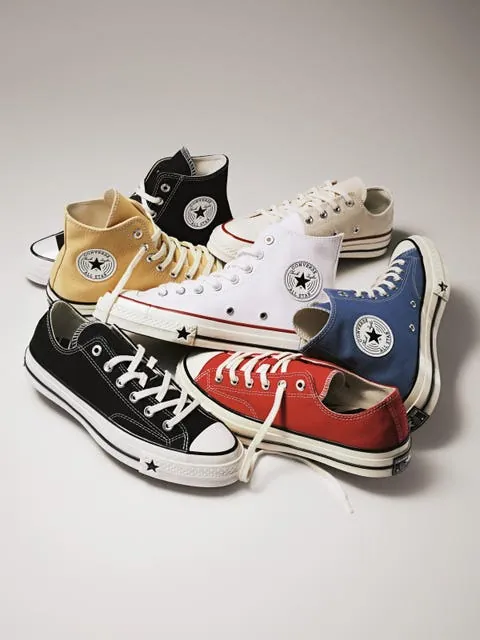
For a media buyer, that creates a measurement complication. If search volume rises, if product pages get traffic, or if a size run sells through quickly, the lift may reflect the global ambassador announcement, the campaign creative, aespa’s broader entertainment calendar, fan-organized attention, retail scarcity, paid promotion, or some combination of those factors.
The public evidence does not separate them. That is why the useful question is not “did Karina drive performance?” in the abstract. The useful question is what observable signals can be tracked without pretending they are causal proof.
| Signal to monitor | Why it is useful | What it cannot prove alone |
|---|---|---|
| Converse product-page status by market | Shows whether the scheduled drop went live, where, and when. | Does not prove paid ads drove visits or purchases. |
| SKU-level stock changes for Chuck 70 X and Run Star Crush | Helps distinguish broad campaign interest from silhouette-specific demand. | Does not reveal planned inventory depth. |
| Size availability over the first release window | Can show whether demand is concentrated in common sizes or spread across the run. | Does not separate organic fan demand from paid acquisition. |
| Retail partner listing timing | Surfaces regional availability differences, especially where dates differ. | Does not equal sell-through. |
| Ad-library sightings by region and creative | Can confirm whether paid creative is running in observable public libraries. | Does not provide full spend, reach, or conversion value. |
| Search and social trend timing around August 2, August 6, August 7, and August 27 | Helps place attention spikes against entertainment and retail events. | Does not establish incrementality without a baseline and controls. |
This is a place for dated evidence, not memory. A buyer tracking the drop should save screenshots or exports by market and time zone, then keep the sequence in a Tracker-style file: announcement, product page change, retail listing, ad-library observation, stock status, restock, and sellout signal. The value is not in making the file look busy. The value is in preventing a later deck from treating a fan-driven visibility spike as if it were a media-plan result.
How to evaluate the creative without pretending it is attribution
The creative direction is legible enough to evaluate on its own terms. The official copy turns on star language — “WELCOME TO THE FAMILY, KARINA” and “Stars align with KARINA and Chuck 70 X” — and the product split gives Converse one familiar sneaker code and one higher-impact platform code.[5] That is a reasonable ambassador launch system: identity, product, timing, and retail CTA all point in the same direction.
For paid testing, though, the relevant questions would be more specific. Did Converse run Karina-led creative against product-only creative? Did Chuck 70 X creative outperform Run Star Crush creative by region? Did existing Converse buyers respond differently from aespa-affinity audiences? Did the campaign optimize for traffic, sales, video views, or reach? None of those answers are public.
A clean Creative read would separate asset judgment from delivery judgment. The campaign can be visually coherent and commercially well-timed without telling outsiders whether paid ads were efficient.
There is also a disclosure discipline issue. If a public post, agency recap, or brand deck later uses this launch as a performance example, the burden is not high drama. It is basic sourcing: who published the number, what period it covers, which market it covers, whether it includes paid and organic activity, and what commercial outcome it is connected to.
What a buyer can legitimately conclude
Karina x Converse is publicly documented as a product-and-calendar launch. The known story is strong enough without dressing it up as paid-media proof: a Korea relationship, a June 29 global appointment, an August 6 campaign debut, two contrasting silhouettes, and a staged retail release led by an August 27 global Chuck 70 X window.
The paid layer remains opaque. No public source discloses spend, compensation, attributed revenue, or ROAS. The 12.9M engagement-points claim should be treated as a prompt to find the original methodology, not as a result to paste into a benchmark row. Until the missing variables are sourced, the campaign can be evaluated for launch design, timing, product architecture, and observable sell-through proxies — not for paid-ad efficiency.
References
- Karina Steps Into Converse as K-Pop’s Fashion Influence Continues to Reshape Global Style — House of Solo.
- Karina of aespa Named Converse Global Brand Ambassador — The Cool Hour.
- Karina Of aespa Named Newest Global Face Of Converse — Forbes, August 6, 2026.
- Karina Converse Campaign Chuck 70 X Run Star Crush — WWD / Footwear News.
- Chuck 70 X — Converse.
- Karina of aespa Signs With Converse — Sneaker Bar Detroit.
- Karina Converse Collab Shop Online — Billboard.
- aespa Karina Converse — DesignScene, August 2026.
- Karina Joins Converse as Newest Global Face — Booking Agent Info.
- Converse Korea Is Making the Stars Align With Karina for Its Latest Campaign — Facebook.
This is a record of what happened and what was tested, not legal advice. Compliance determinations require qualified counsel.