
How US AI Leadership Decline Reaches AI Ad Platforms
US AI leadership decline lands in ad accounts as dated platform changes, not headlines. This tracker maps each 2025–2027 leadership event to the Google, Meta, or TikTok change it produced, labeled fact, claim, or synthesis.
- Platform
- Google Ads
- Change category
- bidding
- Effective date
- 0-09
- Change type
- default-on change
- Impact level
- High
Last reviewed: 2026-08-03. This tracker answers how US AI leadership decline affects AI ad platforms by following dated events into account-level changes: AI Max and Performance Max in Google, Advantage+ in Meta, and documented AI-ad tooling or inventory pressure around TikTok where the supplied record supports it. The useful object is not the phrase “leadership decline.” It is the row: date, source event, platform change, account impact, source, and evidence label.

The word “decline” is used narrowly here. It means the US performance lead narrowed, AI researcher inflow weakened sharply, and policy moved through a mix of promotion, security designations, and export controls. It does not mean the US stopped leading on money or model production. Stanford HAI’s 2026 AI Index says the US–China model performance gap had “effectively closed,” with the top US model leading by 2.7% as of March 2026 after the lead traded several times since early 2025; the same report also says US private AI investment was $285.9 billion in 2025 versus China’s $12.4 billion, or about 23 times as much, while AI researchers relocating to the US had dropped 89% since 2017, including 80% in the last year alone [1][2].
How to read the evidence labels
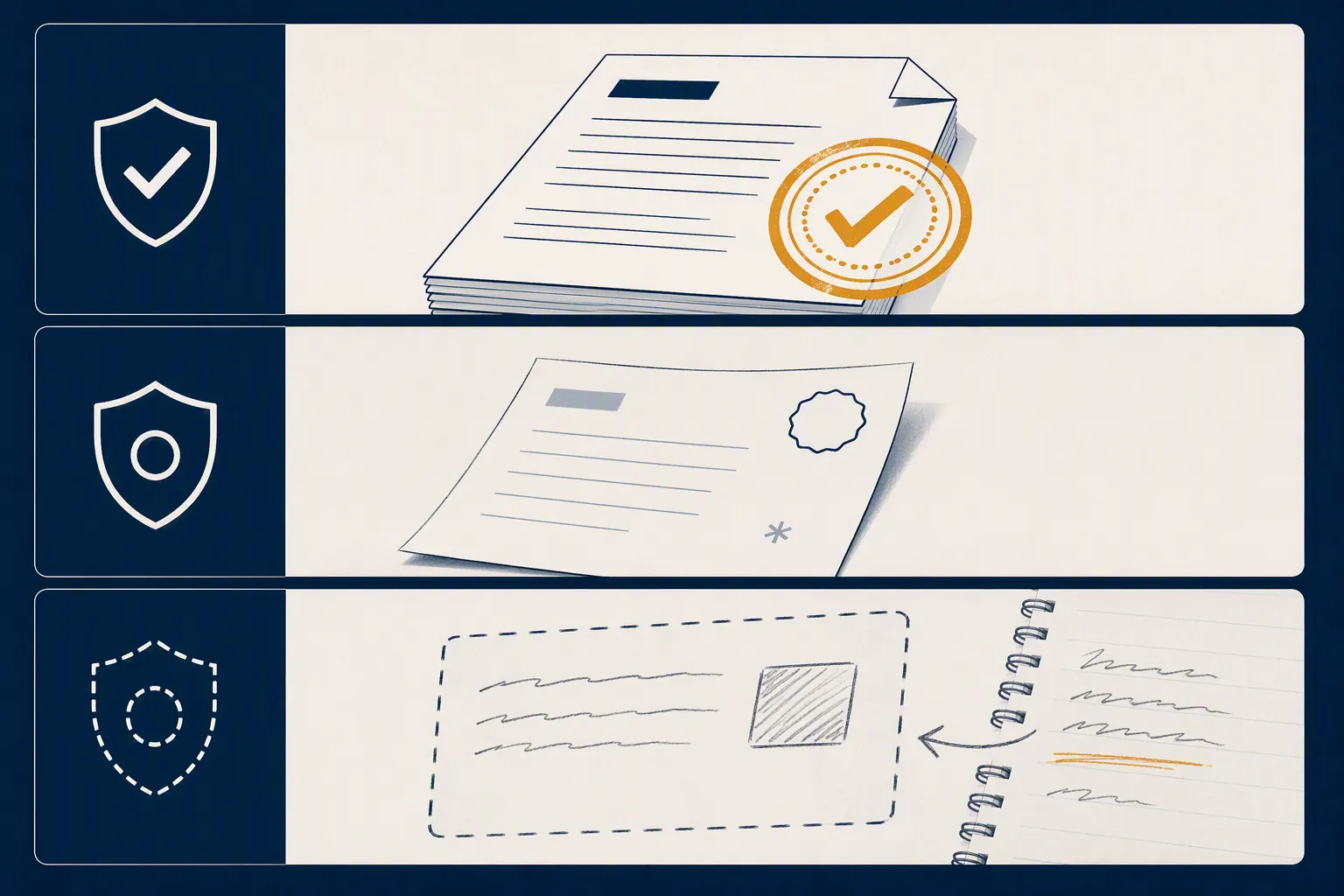
The tracker uses three labels. They are deliberately uneven because the sources are uneven.
- Source-recorded fact: the cited source directly records the macro event or the platform change. Example: Google stating that certain Dynamic Search Ads (DSA), automatically created assets (ACA), or broad-match workflows are moving into AI Max is a platform-recorded change.
- Vendor claim: the source is vendor-adjacent or reports a platform/vendor position without enough public methodology to treat performance lift as independently established. Meta lift numbers in this category should be read as claims unless the underlying test design is published.
- Author synthesis: the macro event and the platform change are both dated and sourced, but the causal bridge is not stated by the platform. This is the common case. It is still useful for operators, but it should not be laundered into a confirmed cause.
That distinction matters because the same row can contain two firm facts and one uncertain bridge. A Stanford HAI finding from April 2026 is firm as a macro measurement. A Google Ads update dated April 15 or July 9, 2026 is firm as a platform event if Google published it. The sentence “Google changed this because the US lead narrowed” is not firm unless Google says so. In this log, those rows are marked as synthesis.
The dated tracker: leadership signals to ad-platform impact
| Date | Source event | Platform change or observed ad-market change | Account-level impact | Source URL | Evidence label |
|---|---|---|---|---|---|
| Early 2025–Mar 2026 | Stanford HAI reports that the US–China model performance gap effectively closed; the top US model led by 2.7% as of March 2026 after the lead traded several times since early 2025 [1][2]. | No platform confirms a direct change caused by this model-performance compression. | Treat “better AI” claims inside campaign products as a competitive product response, not proof of US decline. Buyers still need to inspect actual defaults, controls, labels, and reporting. | https://hai.stanford.edu/ai-index/2026-ai-index-report | Author synthesis |
| 2025 | US private AI investment reaches $285.9B versus China’s $12.4B, about 23x, even as performance gaps narrow [1]. | Google, Meta, and other platforms continue pushing AI-heavy ad automation, but the investment figure alone does not prove any one campaign change. | Use investment pressure as context for why platforms keep monetizing AI automation, not as a forecast for CPCs or CPMs. | https://hai.stanford.edu/ai-index/2026-ai-index-report | Source-recorded macro fact; platform bridge is author synthesis |
| May 5, 2025 | ITIF argues that US export controls risk accelerating China’s domestic chip push and cites a $5.5B Nvidia hit [3]. | No Google, Meta, or TikTok campaign setting is tied directly to this publication. | Relevant mainly to the cost and supply-side backdrop behind AI infrastructure, not to a Monday-morning Ads Manager change. | https://itif.org/publications/2025/05/05/export-controls-chip-away-us-ai-leadership/ | Author synthesis |
| Sep 10, 2025 | Fitch Ratings cites Similarweb data showing roughly a 15% global search-traffic decline from AI disruption [4]. | Search inventory pressure becomes a live planning issue, especially for Google Search, AI Mode shopping formats, and search-adjacent AI spend. | Search teams should separate query-volume or traffic-mix movement from campaign-type migration. Lower web traffic does not automatically mean lower paid-search spend. | https://www.fitchratings.com/research/corporate-finance/us-digital-advertising-pressured-by-ai-disruption-web-traffic-decline-10-09-2025 | Source-recorded citation of Similarweb data; platform bridge is author synthesis |
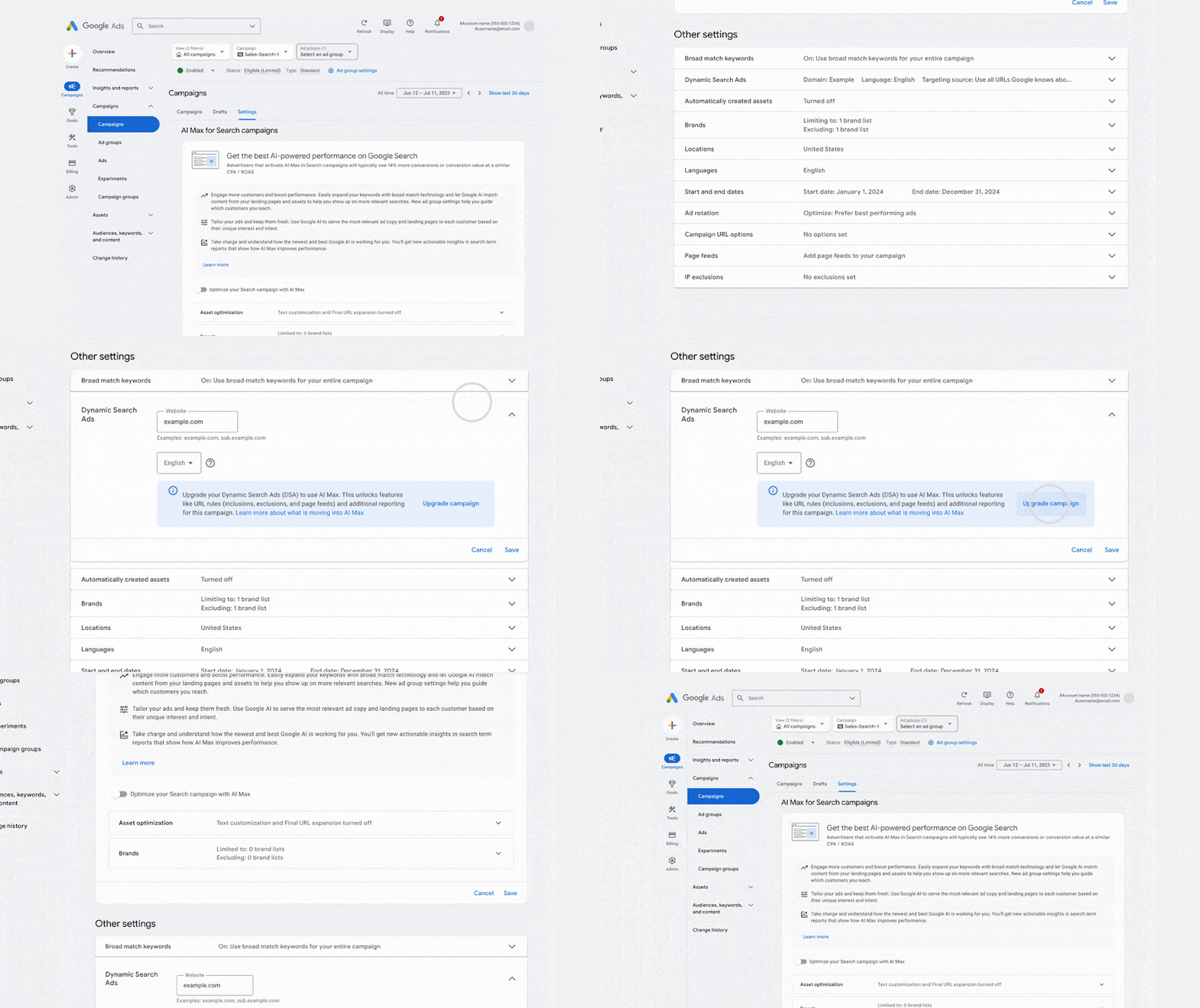
| Apr 15, 2026 | Google announces that DSA, automatically created assets (ACA), and broad-match-related Search workflows will auto-upgrade to AI Max starting September 2026; Google later extends the DSA sunset to February 2027 [5]. | AI Max becomes the migration path for legacy Search automation. | Search managers need to audit which accounts are exposed to auto-upgrade, which DSAs are still active, what landing-page or asset coverage AI Max will inherit, and whether client approvals are needed before September 2026 and February 2027. | https://blog.google/products/ads-commerce/dsa-upgrade-to-ai-max-2026/ | Source-recorded platform fact |
| Apr 2026 | Stanford HAI publishes the 2026 AI Index, combining performance-gap closure, investment imbalance, and talent-inflow deterioration in the same record [1][2]. | No single ad-platform release is attributed by Google, Meta, or TikTok to this report. | Useful as a dated macro checkpoint beside April 2026 platform releases. It should not be treated as the stated cause of those releases. | https://hai.stanford.edu/ai-index/2026-ai-index-report | Source-recorded macro fact; platform bridge is author synthesis |
| Apr 30, 2026 | Google announces AI Max expansion to Shopping and travel and introduces the AI Brief tool [6]. | AI Max moves further from a Search-only automation frame into commerce and verticalized planning. | Retail and travel advertisers need to check whether AI Max changes creative, feed, landing-page, and query-matching review paths that previously sat in separate Search or Shopping routines. | https://blog.google/products/ads-commerce/ai-max-new-features/ | Source-recorded platform fact |
| May 2026 | A dated Meta changes log records enterprise AI features in Meta ads [7]. | Meta continues expanding AI tooling around Advantage+ and account workflows. | Treat as a platform-change log entry, not independent proof of performance lift. If a rep cites efficiency gains, ask for account-level methodology. | https://commonthreadco.com/blogs/coachs-corner/meta-ads-changes-2026 | Vendor-adjacent platform log |
| Jun 2, 2026 | EO 14409, “Promoting Advanced Artificial Intelligence Innovation and Security,” creates a “covered frontier model” designation and a voluntary secure-deployment framework [8]. | No cited Google, Meta, or TikTok ad product change is explicitly tied to EO 14409. | Compliance teams should watch whether model governance language later appears in ad policy, disclosure review, or partner requirements. As of this review, the direct account effect is not established. | https://www.whitehouse.gov/presidential-actions/2026/06/promoting-advanced-artificial-intelligence-innovation-and-security/ | Source-recorded policy fact; platform bridge is author synthesis |
| Jun 2026 | Commerce expands export-control coverage to require licenses for certain frontier AI models, according to Axios; Anthropic is named in the reporting [9]. | No direct Ads Manager setting or campaign migration is documented from this export-control move. | Relevant to model availability and vendor operations, not a confirmed campaign-level change. Do not use it to explain a rejection or delivery swing unless a platform policy cites it. | https://www.axios.com/2026/06/16/trump-ai-export-strategy-export-control | Source-recorded policy report; platform bridge is author synthesis |
| Jun 2026 | A Meta 2026 changes log records Cannes announcements including Live Video Ads, Virtual Cards, DMA deprecation, and Brand Memory [7]. | Meta’s ad stack continues shifting toward AI-assisted creative, commerce, and persistent brand inputs. | Creative and commerce teams should track which Advantage+ assets are generated, remembered, or adapted by Meta systems, especially where client brand approvals are strict. | https://commonthreadco.com/blogs/coachs-corner/meta-ads-changes-2026 | Vendor-adjacent platform log |
| Jul 2026 | Meta makes AI disclosure mandatory, adds automatic “AI info” labels through C2PA detection, and treats undisclosed AI as an ad-rejection reason, according to a Common Thread report [10]. | AI creative disclosure becomes an operational review item inside Meta ad submission. | Media buyers need a pre-flight check for synthetic or AI-assisted creative before launch. The consequence is not just a label; the cited report says undisclosed AI can become a rejection reason. | https://commonthreadco.com/blogs/coachs-corner/meta-ai-ad-labels-mandatory-disclosure-ecommerce-2026 | Vendor-adjacent report of platform compliance change |
| Jul 2026 | A Meta 2026 changes log records EU location fees and Muse Image entering Advantage+ Creative [7]. | Meta monetization and creative automation both become account-level issues. | The fee specifics need re-verification before being used in forecasts. The safer account action is to flag EU-location cost lines for billing review and separate them from auction-performance changes. | https://commonthreadco.com/blogs/coachs-corner/meta-ads-changes-2026 | Vendor-adjacent platform log; fee details not independently verified here |
| Jul 9, 2026 | Google updates AI labeling policy and cites EU, India, and New York rules [11]. | AI disclosure moves into Google ad-policy review, not just brand governance. | Advertisers using synthetic media, AI-generated endorsements, or materially altered creative need to check Google’s policy language before blaming disapprovals on generic review volatility. | https://support.google.com/adspolicy/answer/17257106?hl=en | Source-recorded platform policy fact |
| Jan 2026–Jul 2026 | A compliance report says the FTC established a dedicated AI enforcement unit in January 2026 and lists penalties at $53,088 per violation [12]. | US enforcement pressure sits behind platform disclosure updates, but the cited materials do not prove a one-to-one cause for each platform rule. | Legal and media teams should document AI creative provenance before upload. Platform labels reduce ambiguity, but they do not replace advertiser responsibility. | https://www.humanadsai.com/blog/ftc-ai-generated-content-disclosure | Compliance report; platform bridge is author synthesis |
| Jun 4–Jul 14, 2026 | eMarketer’s US AI advertising forecast is reported as $32.03B in 2026, rising to $68.25B by 2030, with more than 80% of 2026 spend search-adjacent rather than in chatbots; the original is paywalled and the figures are available through Forbes and PPC Land reprints [13][14]. | The spend base is still mostly adjacent to paid search, which puts Google Search, AI Max, PMax, and AI Mode inventory closer to the money than chatbot media buys. | Budget owners should not read “AI ad spend” as mostly conversational inventory. In the accessible reprints, the near-term operational burden sits with search teams already running automation. | https://www.forbes.com/sites/gabrielalinzainescu/2026/07/14/ai-ad-spending-will-reach-32-billion-in-2026-and-paid-search-teams-are-already-running-it/ | Reprinted forecast context; access caveat |
| Jul 20, 2026 | The Guardian reports on free and open-weight Chinese AI releases supported by state-subsidized compute [15]. | No Google, Meta, or TikTok ad-platform control is directly tied to this report. | This is relevant to creative-generation cost pressure and model competition. It is not enough, by itself, to explain a campaign-type migration or policy rejection. | https://www.theguardian.com/technology/2026/jul/20/china-google-ai-race | Source-recorded context; platform bridge is author synthesis |
| Sep 2026 | Google’s April 15 announcement sets September 2026 as the start of AI Max auto-upgrades for affected Search workflows [5]. | Legacy Search automation paths begin moving into AI Max. | This is one of the clearest account-level dates in the log. Check opt-in or auto-upgrade status, query controls, landing-page matching, brand exclusions, conversion goals, and reporting deltas before the migration window opens. | https://blog.google/products/ads-commerce/dsa-upgrade-to-ai-max-2026/ | Source-recorded platform fact |
| Feb 2027 | Google later extends the DSA sunset to February 2027 [5]. | DSA does not disappear on the earlier migration timetable. | Teams get more time to compare DSA coverage against AI Max behavior. The extension should change test calendars, not become an excuse to leave legacy campaigns unaudited. | https://blog.google/products/ads-commerce/dsa-upgrade-to-ai-max-2026/ | Source-recorded platform fact |
Where the chain is firm, and where it is only useful
The firmest rows are the rows where the platform itself states the platform change. Google’s April 15 AI Max migration notice and April 30 expansion announcement can be handled as operational facts: a buyer can open an account, look for exposed campaigns, and plan around September 2026 and February 2027 dates [5][6]. Google’s July 9 labeling update is also a policy fact because the cited page itself describes the labeling update and the jurisdictions driving it [11].
Those Google rows should not be inflated into a claim that Stanford HAI caused AI Max. The dates are close enough to put side by side: Stanford’s 2026 AI Index appears in April, Google announces AI Max migration on April 15, and Google expands AI Max on April 30 [1][5][6]. The bridge remains inferred. A cleaner reading is that model competition, search-behavior disruption, and AI spend concentration all form the operating environment in which Google is making AI Max more central.
For Meta, the July 2026 disclosure row is operationally important but sourced differently. The cited material reports mandatory AI disclosure, automatic “AI info” labels using C2PA detection, and undisclosed AI as an ad-rejection reason [10]. That is enough to change launch QA. It is not enough to accept every Advantage+ performance statistic circulating around the same period. Vendor-adjacent lift claims without published methodology should stay in the claim bucket.
The Meta fee row is even narrower. The supplied record supports that a dated 2026 Meta changes log records EU location fees in July 2026 [7]. It does not provide a crawled, platform-primary fee schedule here. That means the action is billing review and source re-checking, not a modeled surcharge forecast. A media buyer can still add a note to the account log: “EU-location fee reported; verify against invoice and platform docs before explaining CPA movement.”
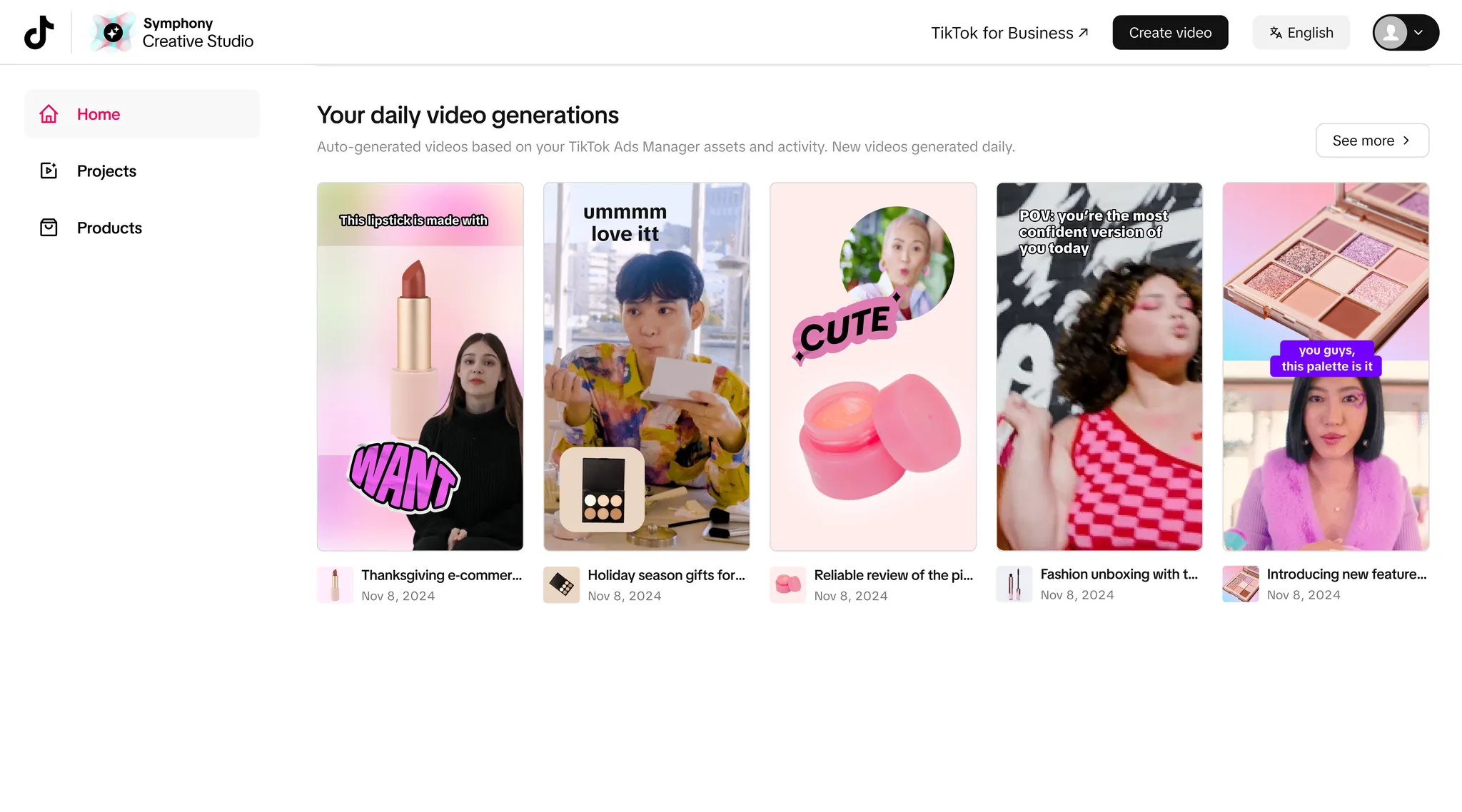
TikTok is quieter in this source set. Symphony belongs in the watchlist because AI creative tooling affects testing volume, provenance, and disclosure discipline, but the supplied materials do not document a specific 2025–2027 US-leadership event that caused a Symphony setting change. That absence matters. A tracker should be allowed to say “no confirmed bridge yet.”
What “leadership decline” changes inside accounts
Inside accounts, the macro story shows up through four practical channels: automation defaults, disclosure enforcement, monetization pressure, and inventory mix. Each channel has a different evidence quality.
| Channel | What changes for the operator | Evidence quality in this tracker |
|---|---|---|
| Automation defaults | Google’s AI Max migration and DSA sunset timing change campaign audit calendars, testing plans, and client approval paths. | Strongest. Google directly records the relevant AI Max dates [5][6]. |
| Disclosure enforcement | Meta and Google AI labels move AI creative provenance into pre-flight review and rejection diagnosis. | Moderate to strong. Google is platform-primary; Meta is vendor-adjacent in the supplied record [10][11]. |
| Monetization pressure | AI capex, infrastructure limits, and fee-line changes may affect platform economics, but most account-level cost claims need invoice or platform confirmation. | Mixed. Investment and policy context is sourced; fee specifics require re-checking [1][7]. |
| Inventory mix | AI search disruption and search-adjacent AI spend make Search, AI Max, PMax, and AI Mode formats the first place many buyers will feel the shift. | Contextual. Forecast and traffic data are useful, but not causal proof for an individual account [4][13][14]. |
The automation channel is the least ambiguous. When Google says affected workflows start upgrading to AI Max in September 2026 and that DSA sunset timing later moves to February 2027, the account impact does not depend on a theory about national AI leadership [5]. The work is concrete: export affected campaigns, document current query and landing-page behavior, set a test window, and decide who approves any change in automation scope.
The disclosure channel is more fragmented but still operational. Google’s July 9 policy update gives buyers a platform-primary page to cite when creative is rejected or labeled [11]. Meta’s July 2026 disclosure reporting gives teams a reason to add AI-origin checks to the same pre-flight path that already catches prohibited claims, missing disclaimers, and landing-page mismatches [10]. The point is not to debate whether a generated image is “really AI.” The point is to avoid discovering the platform’s answer after budget was supposed to go live.
The monetization channel is where overclaiming is easiest. Stanford’s investment data shows that US private AI investment still dwarfed China’s in 2025 [1]. That supports the idea that US platforms have both the incentive and the capacity to keep building AI-heavy ad systems. It does not prove that a July invoice line, a CPM move, or an Advantage+ delivery change was caused by US–China model competition. For that, the source needs to be closer to the account: platform billing docs, invoices, or a dated policy page.
Inventory mix sits between context and account work. Fitch’s report, citing Similarweb, puts a roughly 15% global search-traffic decline on the table as AI disruption pressure [4]. eMarketer’s forecast, as accessible through Forbes and PPC Land, says US AI advertising will reach $32.03 billion in 2026 and $68.25 billion by 2030, with more than 80% of 2026 spend search-adjacent rather than chatbot-based [13][14]. Those two facts point toward search teams carrying much of the near-term operational load. They do not tell a single advertiser whether a PMax or Search campaign lost volume because of AI summaries, auction competition, tracking changes, or seasonality.
The April–July 2026 cluster needs separate handling
The densest part of the log is April through July 2026. In that window, Stanford publishes a leadership signal, Google publishes AI Max migration and expansion updates, EO 14409 creates a frontier-model governance frame, export-control coverage expands, Meta disclosure reporting turns AI creative into a rejection issue, Google updates AI labeling, and AI-ad spend forecasts circulate through accessible reprints [1][5][6][8][9][10][11][13][14].
A sloppy reading would flatten that cluster into one story: the US lead slipped, so platforms changed the rules. The dates do not justify that. The better account note is more precise: “Multiple AI leadership and governance signals clustered in Q2–Q3 2026; during the same period, Google and Meta made AI automation and labeling more operationally visible. Causality mostly unconfirmed.”
That note is still useful. It tells a search lead why September 2026 cannot be treated like an ordinary feature rollout. It tells a paid social lead why AI creative provenance belongs in launch QA. It tells finance why fee lines and AI-related cost claims should be checked against invoices instead of explained by a headline. It also prevents the team from treating every AI platform change as evidence of national decline.
Account checks to attach to the tracker
The tracker is more useful if each row gets an account check next to it. The checks do not need a grand framework; they need ownership and dates.
- For Google AI Max: identify campaigns exposed to September 2026 auto-upgrade, document current DSA coverage, check whether landing-page expansion and asset generation change approval requirements, and schedule a DSA-to-AI-Max comparison before the February 2027 sunset.
- For Google AI labels: keep the July 9, 2026 policy page in the rejection-diagnosis folder and record whether disapprovals mention AI-generated or synthetic content.
- For Meta Advantage+ and AI creative: add an AI-origin field to creative intake, mark whether C2PA metadata is present where relevant, and record whether “AI info” labeling affects approval, delivery, or client review.
- For Meta fees: verify any EU-location fee against platform billing records before adding it to performance commentary.
- For TikTok Symphony: watch for dated platform-primary disclosure, labeling, or campaign-setting changes before mapping it to the US leadership-decline chain.
- For spend forecasts: treat AI ad-spend growth as context for where platforms are investing, not as a reason to reforecast CPCs without account data.
This site has used the same discipline in adjacent tracker work: macro-model events do not automatically become ad-platform changes, and capex pressure does not automatically become a media-cost forecast. The closest sibling logs are the AI rout ad-spend timeline, the Cuban AI data-center warning tracker, and the Apple AI ad-platform changelog. The shared rule is simple enough to keep: shipped, announced, signaled, claimed, or inferred are not the same label.
What this tracker supports as of 2026-08-03
As of this review, US AI leadership decline reaches AI ad platforms unevenly. The clearest account impacts are Google’s AI Max migration dates, Google’s AI labeling update, reported Meta AI disclosure enforcement, and Meta’s logged Advantage+ and fee-related changes. The broader leadership signals—performance-gap closure, talent-inflow collapse, export-control tension, and Chinese open-weight pressure—explain why the environment feels compressed and competitive, but they rarely arrive with a platform-confirmed causal bridge.
That is enough to maintain the log. It is not enough to turn the log into a theory of who wins AI, or a forecast of ad costs. Each row should stay dated, sourced, and relabeled when a better source appears.
References
- 2026 AI Index Report, Stanford HAI, Apr 2026.
- Inside the AI Index: 12 takeaways from the 2026 report, Stanford HAI.
- Export Controls Chip Away at U.S. AI Leadership, ITIF, May 5, 2025.
- U.S. Digital Advertising Pressured by AI Disruption, Web Traffic Decline, Fitch Ratings, Sep 10, 2025.
- DSA upgrade to AI Max 2026, Google, Apr 15, 2026.
- AI Max new features, Google, Apr 30, 2026.
- Meta Ads Changes 2026, Common Thread Collective.
- Promoting Advanced Artificial Intelligence Innovation and Security, The White House, Jun 2, 2026.
- Trump AI export strategy export control, Axios, Jun 16, 2026.
- Meta AI Ad Labels Mandatory Disclosure Ecommerce 2026, Common Thread Collective.
- Google Ads policy update on AI labeling, Google Ads Help, Jul 9, 2026.
- FTC AI-Generated Content Disclosure, Human Ads AI.
- AI Ad Spending Will Reach $32 Billion In 2026, And Paid Search Teams Are Already Running It, Forbes, Jul 14, 2026.
- eMarketer says US AI ad spend hits $68bn by 2030 and ChatGPT misses most of it, PPC Land.
- China Google AI race, The Guardian, Jul 20, 2026.
Primary source: https://blog.google/products/ads-commerce/dsa-upgrade-to-ai-max-2026/