
What OpenAI open-sourcing Codex means for AI ad automation
A dated change-by-change log of what OpenAI open-sourcing Codex actually changed for AI ad automation — from the Apache-2.0 CLI to role plugins, scheduled automations, and fake-download malware. Every entry separates verified facts from vendor claims so paid-media buyers can judge what Codex does, and doesn't, change for their stack.
- Platform
- OpenAI
- Change category
- creative
- Effective date
- 2025-04-16
- Change type
- opt-in feature
- Impact level
- low
Tracker status: August 26, 2026
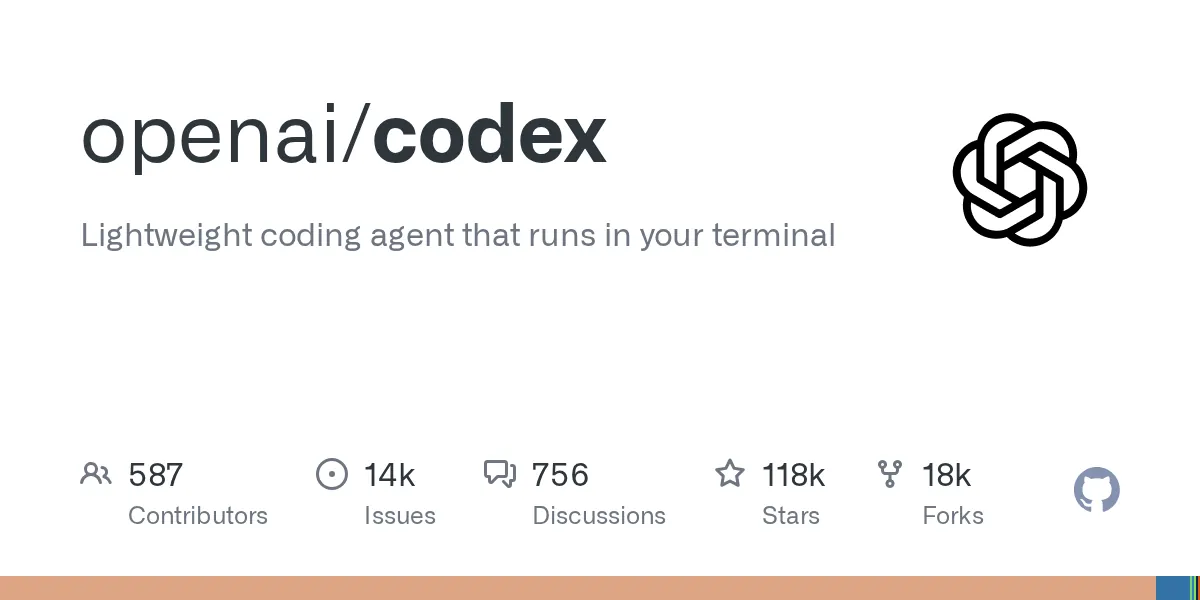
Start with the correction: OpenAI did not open-source the whole Codex product. The Apache-2.0 evidence sits in the openai/codex GitHub repo, which describes a lightweight terminal coding agent — the CLI harness paid-media teams might inspect, fork, or wire into internal tooling [1]. The April 16, 2025 launch coverage tied that CLI release to OpenAI’s o3 and o4-mini models and to a $1 million open-source fund distributed in $25,000 grants [2]. OpenAI’s own fund page supports the grant program, not any paid-media performance claim [3].
That boundary is not a footnote. The desktop app and cloud agent remain outside the Apache-2.0 scope; the public record treats those as proprietary parts of the Codex product family [4]. So “OpenAI open-sourced Codex” is usable shorthand only if everyone in the room knows it means the CLI harness, not open access to the full agent service, hosted execution layer, or product UI.

For a paid-media buyer, the license line changes the due-diligence question. The inspectable part can matter for campaign-board maintenance, report generation, QA scripts, creative-variant file handling, and integrations that sit near ad accounts. It does not, by itself, prove that a Codex-assisted workflow lowers CPA, raises ROAS, or improves auction outcomes. Those are account-level claims, and none of the public sources in this record provide named-account performance results from Codex-run ad workflows.
Change log
April 16, 2025 — The Codex CLI becomes inspectable automation plumbing
Verified: OpenAI released Codex CLI as an open-source terminal coding tool under Apache-2.0, alongside the o3 and o4-mini model announcements [1][2]. OpenAI also committed the $1 million Codex open-source fund, structured as $25,000 grants [2][3].
What it means for ad automation: teams can inspect and adapt the CLI layer that runs local terminal tasks. That is relevant if the media org already uses scripts for naming checks, feed transformations, spreadsheet cleanup, QA diffs, report assembly, or pushing files between internal systems. It also gives engineering and marketing-ops teams a cleaner artifact to review than a black-box demo.
What it does not mean: it does not make the hosted Codex agent, desktop app, or OpenAI’s execution environment open source. It does not turn a workflow automation story into a media-efficiency story. A script that reduces manual QA time is valuable; it is still not evidence that Google Ads, Meta, or any retail-media platform will buy better inventory.
Around April 2026 — Scheduled and triggered automations enter the workflow picture
The scheduled-automation item is useful, but it needs a red flag in the margin. The available source is secondary: The Starr Conspiracy described automations for reports and recurring workflows, citing OpenAI Academy on April 23, 2026 [5]. Before treating that date as an OpenAI launch date, it should be checked against OpenAI’s own changelog or announcement trail.
If confirmed, the buyer read is straightforward. Scheduled and triggered automations are the kind of Codex capability that can reduce waiting, copying, and rechecking: Monday pacing pulls, anomaly summaries, creative-folder audits, naming-policy checks, export cleanup, or recurring report drafts. That is operational leverage. The evidence here still stops before account performance. A scheduled report can be more reliable than a human reminder and still say nothing about whether the account’s CPA moved for the right reason.
June 2, 2026 — “Codex for every role” makes the ad-ops relevance harder to ignore
OpenAI’s June 2, 2026 announcement moved Codex out of the narrow “developer tool only” bucket. OpenAI said Codex had more than 5 million weekly users, that non-developers were about 20% of users, and that non-developer usage was growing more than three times faster than developer usage [6]. Those are adoption claims from OpenAI. They are not evidence that marketers are getting better ROAS from Codex-managed workflows.
The same announcement introduced role plugins and included a creative-production plugin that could work with campaign boards and display-ad variations [6]. That is the first Codex item in this record that looks plainly adjacent to paid-media operations rather than merely useful to the engineers supporting them. Campaign boards, variant production, review steps, file naming, destination checks, and handoffs between creative and media teams are exactly where automation can remove repetitive work without pretending to be a bidding strategy.
The creative plugin also belongs in the same caution bucket as other AI-creative-at-scale claims. More variants can mean more review load, more compliance exposure, and more ways for weak assets to be distributed quickly. That is why creative-volume claims should be checked against actual buyer response, like the evidence standards used in The AI ad creative backlash is real — and measurable and the narrower creative-method read in What’s actually AI about Dr Pepper’s Fansville ads?.
Buyer read: this is a workflow-design release. It can change who safely touches campaign-adjacent systems if permissions, review gates, and rollback rules are designed well. It does not remove the need for media approval, platform QA, legal review, or named-account measurement.
June 25, 2026 — The usage paper shows agentic behavior, with a representativeness warning
The June 25, 2026 arXiv paper, “The Shift to Agentic AI: Evidence from Codex,” is useful because it measures behavior inside Codex rather than just listing shipped features. It reports that weekly active usage grew more than fivefold in the first half of 2026, that 26.6% of active users were invoking skills by June 11, 2026, and that more than 10% were running three or more concurrent agents [7].
That sounds relevant to ad operations because campaign work often breaks into parallel chores: check landing pages, reconcile spend files, draft a status note, resize creative, update a board, compare yesterday’s pacing, prepare a client-facing explanation. Concurrent agents and skills are a better fit for that reality than a single chatbot waiting for prompts.
The limitation is just as important as the signal. The paper is OpenAI-affiliated and describes OpenAI-internal Codex usage that should not be treated as representative of the broader paid-media market [7]. It supports a narrower claim: Codex users are adopting more agentic patterns inside the product. It does not show that agencies or in-house growth teams are using Codex at the same rate, or that the resulting ad workflows improve performance.
Third-party MCP and marketer-tool claims — ecosystem context, not benchmark evidence
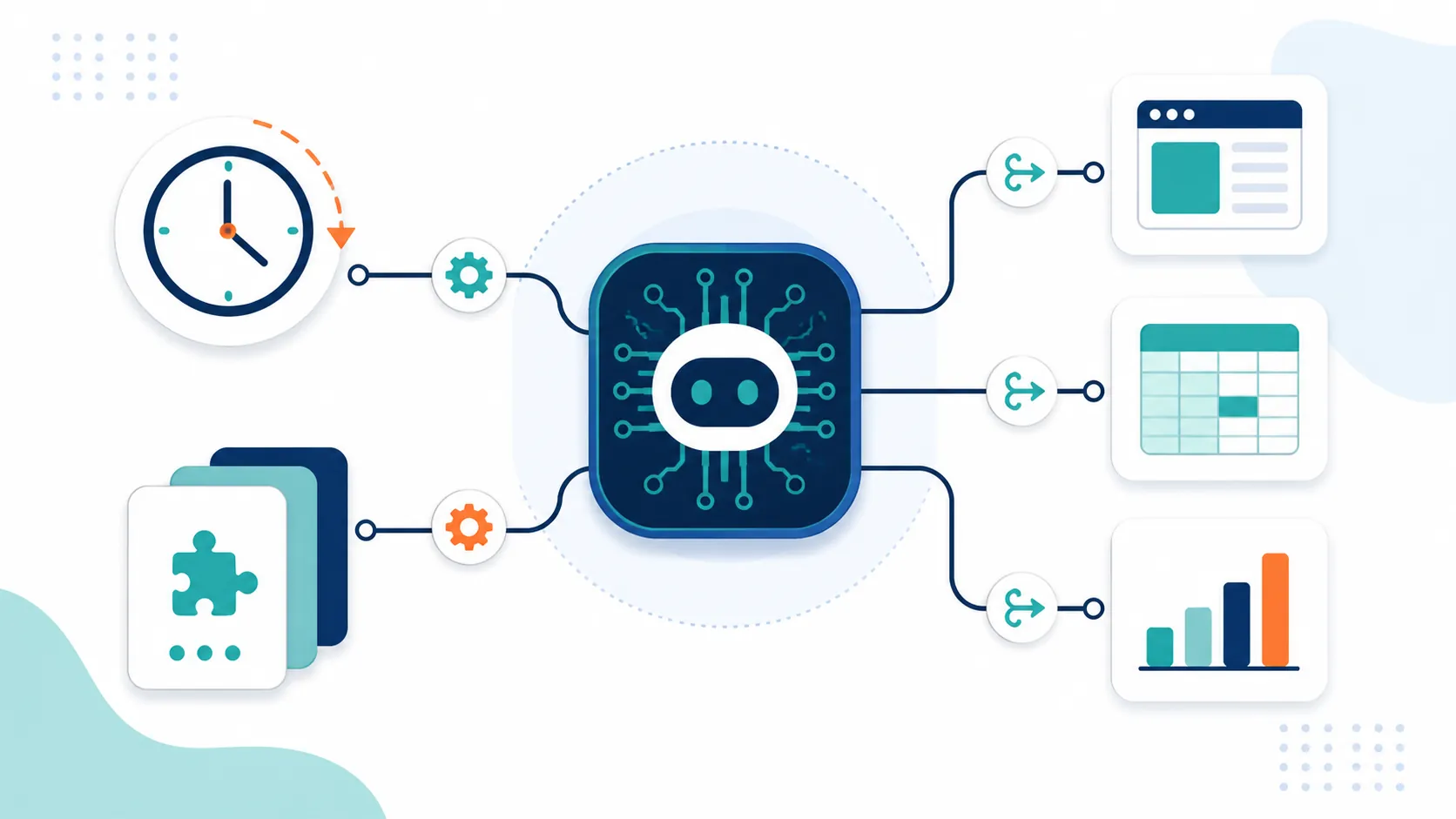
Vendor documentation now points Codex toward marketer workflows through MCP and app integrations. Adspirer describes an MCP setup with more than 400 ad tools and says campaigns default to PAUSED [8]. Composio presents a Codex marketer-app starter kit [9]. Social Media Examiner gives practitioner guidance on getting started with Codex for business use and safety habits [10].
Those claims are worth tracking because they show where the ecosystem wants Codex to sit: between the agent, the campaign system, the creative library, the spreadsheet, and the reporting surface. They are not independent benchmarks. A vendor saying an agent can connect to ad tools, or that it defaults campaigns to paused, is a capability claim. The buyer still has to test scopes, logs, approval states, account permissions, rollback, and whether the connector can create a mess faster than a junior buyer could.
This is the same diligence pattern that applies to agentic campaign-management vendors after security incidents and ecosystem hacks. The related Tracker record, Did the Hugging Face–OpenAI hack affect AI ad platforms?, is the better mental model than a launch-post victory lap: what touched the workflow, what had permissions, what evidence exists, and what remains unverified.
August 25, 2026 — Fake Codex downloads turn search-ad trust into part of the Codex file
The August 25, 2026 security item is not about Codex improving ad automation. It is about Codex becoming recognizable enough to impersonate in paid search. The Register reported that sponsored Google ads pushed fake OpenAI Codex downloads that led Mac users into a ClickFix multi-stage malware infection; the report also said a Claude Code decoy shared infrastructure [11].
That matters to paid-media teams in two ways. First, branded search and download queries are now part of the risk surface for AI tooling. Second, the buyer who approves automation tools may also inherit the cleanup if a fake download route enters a team’s workflow. Codex’s ad impact is therefore not only productivity. It also touches search-ad hygiene, tool verification, employee download behavior, and the uncomfortable fact that a tool’s brand demand can become an attack path.
Verification table for paid-media buyers
Use this table as the stop line before anyone converts “Codex can automate part of the workflow” into “Codex improves ROAS.” Codex matters for AI ad automation infrastructure and workflow design. The public record does not yet prove performance lift.
| Capability or claim | Current evidence status | Buyer read |
|---|---|---|
| Codex CLI is open source | Verified. The GitHub repo carries the Apache-2.0 scope for the terminal coding agent; April 16, 2025 launch coverage identifies the CLI release [1][2]. | Inspectable automation plumbing. Useful for internal scripts and workflow tooling; not the full Codex product. |
| Desktop app and cloud agent are open source | Not supported by the cited record. The desktop app and cloud agent remain outside the Apache-2.0 boundary and are treated as proprietary [4]. | Do not audit or govern them as if they were open-source infrastructure. |
| o3, o4-mini, and the $1M fund changed ad automation | Verified as launch context, with $25,000 grants described in the public materials [2][3]. | Important for ecosystem momentum. Not evidence of ad-account performance. |
| Scheduled or triggered Codex automations for recurring reports and workflows | Secondary-sourced from The Starr Conspiracy, citing OpenAI Academy on April 23, 2026 [5]. | Potentially valuable for report and QA cadence. Confirm against OpenAI before treating the date as canonical. |
| Role plugins, including creative production for campaign boards and display-ad variations | Verified as an OpenAI-announced capability on June 2, 2026 [6]. | Relevant to creative ops and campaign handoffs. Still requires review gates and does not prove better CPA. |
| 5M+ weekly Codex users and about 20% non-developer users | OpenAI-reported adoption data [6]. | Shows Codex moving beyond developers. Adoption is not effectiveness. |
| Skills and concurrent agents are becoming normal Codex behavior | OpenAI-affiliated arXiv paper reports more than fivefold weekly-active growth in H1 2026, 26.6% of active users invoking skills by June 11, 2026, and more than 10% running three or more concurrent agents [7]. | Useful signal for multi-step ad-ops workflows. Not representative proof for the broader buyer market. |
| MCP and marketer-app integrations can touch ad-tool workflows | Vendor-claimed and practitioner-documented. Adspirer claims 400+ ad tools and paused campaign defaults; Composio and Social Media Examiner describe marketer/business workflows [8][9][10]. | Treat as integration leads to test in sandboxes, not benchmarked outcomes. |
| Codex-related search ads created a security issue | Reported August 25, 2026: sponsored Google ads promoted fake Codex downloads leading to ClickFix malware on Macs, with a Claude Code decoy sharing infrastructure [11]. | Add download verification and branded-search monitoring to the AI-tool ops checklist. |
| Named-account ROAS or CPA gains from Codex-run ad workflows | Unknown. No public source in this record provides named-account ROAS/CPA results from Codex-run paid-media workflows. | Keep performance claims out of client decks until they are tied to real accounts, controls, and attribution windows. |
References
- openai/codex, GitHub.
- OpenAI debuts Codex CLI, an open source coding tool for terminals, TechCrunch, April 16, 2025.
- Codex Open Source Fund, OpenAI.
- OpenAI Codex (AI agent), Wikipedia.
- Automations, The Starr Conspiracy, April 23, 2026.
- Codex for every role, tool, and workflow, OpenAI, June 2, 2026.
- The Shift to Agentic AI: Evidence from Codex, arXiv, June 25, 2026.
- Setup AI Marketing Agent Codex, Adspirer.
- Best Apps for Codex Marketers, Composio.
- Getting Started with Codex by OpenAI: The Future of Business, Social Media Examiner.
- Crooks push Mac malware through fake OpenAI Codex ads, The Register, August 25, 2026.
Primary source: https://github.com/openai/codex