
Does Voice AI Replacing Typing Matter for Paid Ads?
Voice AI replacing typing is a real input trend, but dated usage data shows it is not the force reshaping the paid search auction. This article separates the Altman anecdote and preference surveys from measured CTR and auction changes, so you can test the claim in your own account before restructuring keywords or bids.
- Platform
- Google Ads
- Bid strategy
- Smart Bidding
- Difficulty
- Intermediate
- Last reviewed
- 0-08-26
Grounded in benchmark case file: Altman paid-ads disruption tracker
The budget question usually arrives as a forwarded headline: voice AI is replacing typing, Sam Altman says he talks to ChatGPT more than he types, and therefore paid search needs to be rebuilt before next month’s plan locks. The answer is shorter than the trend deck: voice AI replacing typing matters for paid ads only when it changes the search surface where ads are shown, measured, and clicked.
Right now, the mechanism worth auditing is not the microphone. It is AI-generated answers on search results pages, especially Google AI Overviews and newer AI Mode experiences. A user can type a long conversational prompt and trigger an answer surface that pushes paid listings into a different visual and decision path. Another user can speak a query and land in a familiar commercial results page where the auction behaves normally. Paid search performance follows the surface and the intent, not the input method by itself.

The paid-search evidence points to AI answers, not voice input
The strongest dated evidence is Seer Interactive’s September 2025 v2 study of AI Overview impact on Google CTR. It analyzed 3,119 informational terms across 42 client organizations. In the paid sample, Seer reported that CTR on AI Overview-affected queries fell 68%, from 19.70% in June 2024 to 6.34% in September 2025. Paid CTR on non-AIO queries also fell, but less sharply: down 32%, from 19.1% to 13.04% over the same window. [1]
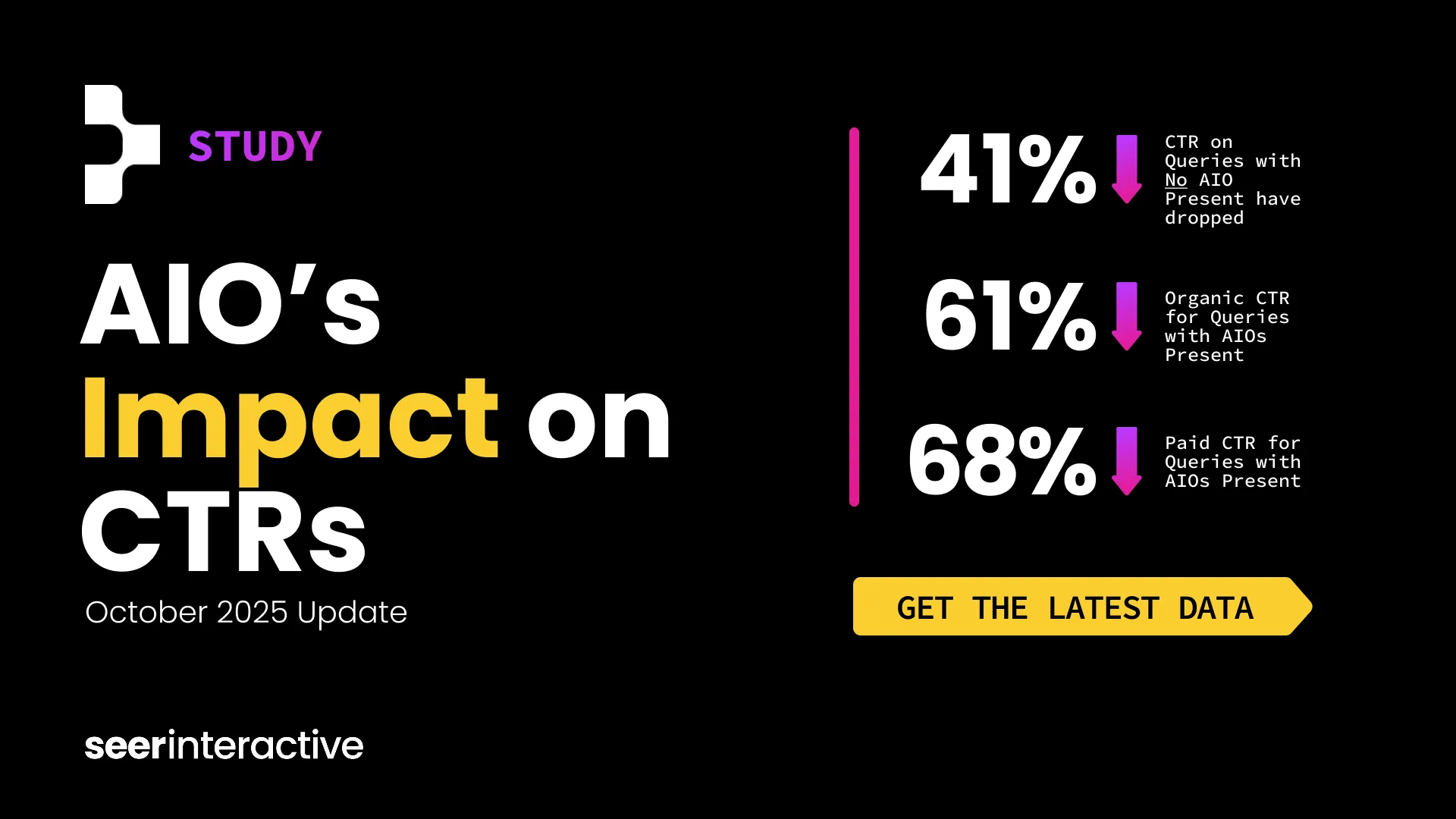
That is the kind of evidence that belongs in a budget conversation because it sits near the auction: queries, impressions, paid CTR, and a dated before-and-after window. It still needs care. Seer’s v2 paid sample contained 1.1 million paid impressions, much smaller than its 25.1 million organic-impression sample, so the paid findings should be treated as a serious account-audit trigger rather than a universal CTR forecast. [1]
The more interesting point is that even non-AIO paid CTR declined. That does not make AIO irrelevant; it makes the audit more specific. AIO presence is one candidate explanation for sharper deterioration on affected informational queries, while broader SERP changes, query mix, ad position, and intent composition may also be moving paid clicks. None of that requires the user to have spoken the query.
Separate the evidence before changing the account
The phrase “voice AI is replacing typing” blends several kinds of evidence that should not carry the same weight. Some of it explains why the topic is loud. Some of it explains how query language may evolve. Only a narrower slice explains why paid CTR, CPC, impression share, or conversions might move.
| Material | What it actually measures | How far it should move paid-search planning |
|---|---|---|
| Sam Altman’s July 2026 voice-over-typing comment | One prominent user’s stated behavior and a reason the topic re-entered budget threads | Useful as a prompt to investigate, not as auction evidence. Cross-check it against measurable disruption before changing bids. |
| The circulating 71% prefer-voice-over-typing statistic | Stated preference, not observed query share or paid click behavior | A weak planning input unless it connects to search-term mix, CTR, CPC, impression share, or conversion data. DemandSage includes this kind of voice-stat aggregation, but it should not be read as paid-search performance evidence. [2] |
| Voice-search usage estimates | A behavior-share signal: DemandSage reports current voice-search usage around 20.5% of internet users and shows usage holding roughly within a 19–22% band since Q2 2022. [2] | Relevant for watching conversational phrasing, but the plateau makes it a poor standalone reason to restructure search campaigns. |
| Voice-assistant installed base and query length | DemandSage reports 8.4 billion voice assistants and an average voice query of about 29 words versus about 4 words for typed queries. [2] | Useful background for query-shape and creative thinking; not a bidding instruction. |
| Seer’s AIO CTR study | Observed CTR movement on Google queries with and without AI Overviews | Strong enough to justify an account-level AIO and intent audit, with the paid-sample caveat noted. |
The plateau matters. If global voice-search usage has been sitting in roughly the same band since Q2 2022, the responsible question is not “are people ever using voice?” They are. The responsible question is whether voice usage is newly strong enough in 2026 to explain a paid-search performance break. The available usage data does not get there on its own. [2]
Longer spoken queries can still matter operationally. A 29-word average voice query implies more natural-language phrasing, more embedded context, and more multi-part intent than a four-word typed query. But paid accounts usually do not expose a clean “spoken versus typed” dimension that can be isolated in standard campaign controls. If the input method is invisible in the reporting layer, it cannot be the primary lever for budget movement. [2]
That is why preference surveys deserve a smaller role than they often get. A person can prefer speaking for some tasks and still type high-value commercial searches at work, in public, or when comparing products. A person can ask a voice assistant an informational question and never enter an ad auction that resembles Google Search. Preference is a signal about interface comfort. It is not a paid-media metric.
If the current pressure started with Altman’s comment, keep it in the right drawer. It is a useful anecdote about how a power user interacts with AI. It should be checked against measurable paid-media disruptions, not treated as the disruption itself. For that kind of cross-check, use an evidence tracker such as the Altman paid-ads disruption tracker rather than moving budget because a quote traveled well.
Where conversational behavior does connect to paid ads
Conversational search is not irrelevant. It becomes relevant when the ad product is built for conversational, multi-turn answer experiences. Google’s May 20, 2026 announcement described a new generation of Search ads for the AI era, including Gemini-built formats such as Conversational Discovery ads and Highlighted Answers. Those formats are tied to AI Mode and answer-style experiences, not to a requirement that the user tap a microphone. [3]
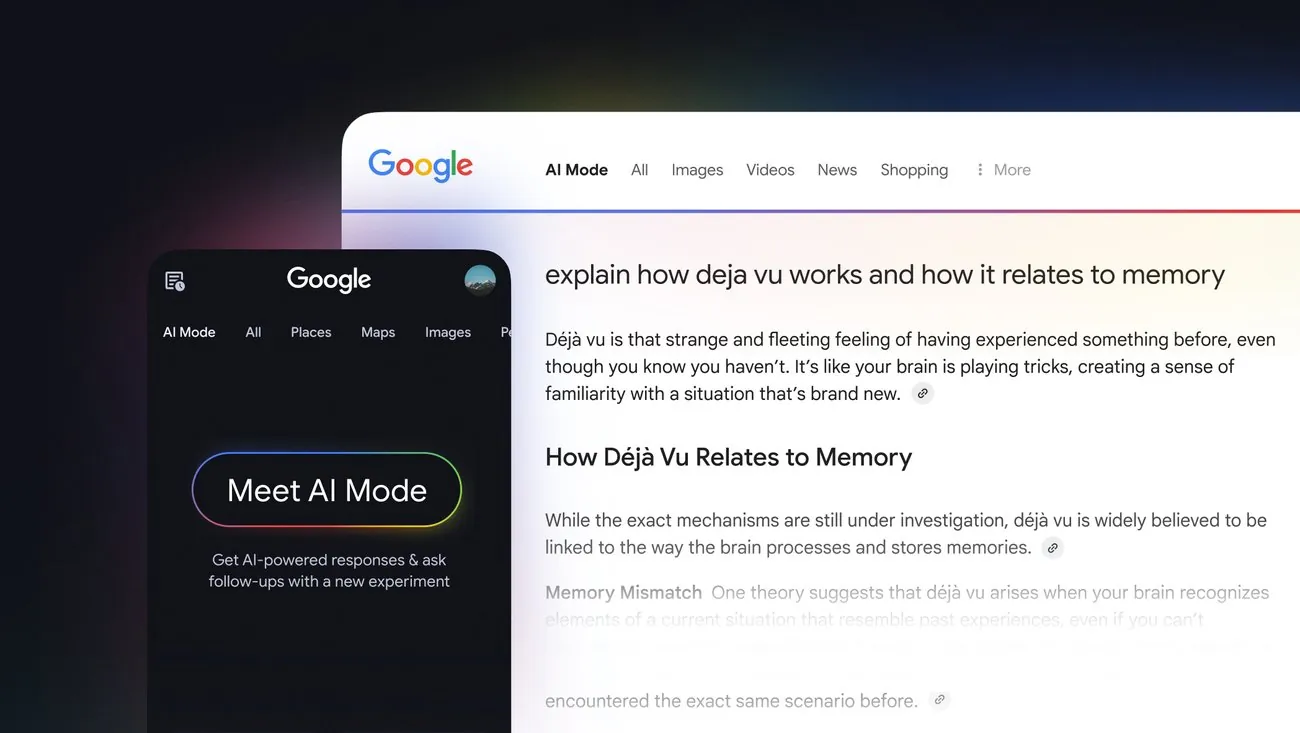
Search Engine Land’s coverage of the same testing direction makes the practical point clear: Google is testing conversational ad formats in AI Mode and Search. The advertising opportunity attaches to the AI search experience where the prompt, answer, and sponsored unit are assembled, whether the prompt began as speech or text. [4]
That is the bridge between the voice headline and the account work. Voice-like behavior may produce longer, more specific, more question-shaped searches. AI Mode may encourage follow-up prompts and comparison-style interactions. But the paid-search question is still: did those behaviors enter a surface where your ad visibility, CTR, CPC, or conversion path changed?
This also changes how to read vendor confidence claims. Google’s announcement says users report faster and more confident decisions with AI Mode, but that is a first-party product disclosure, not independent evidence that your account’s CPA will improve or decline. [3]
The same caution applies to broad “AI ad spend” narratives. Some spend labeled as AI may still be search-adjacent inventory near AI Overviews or answer surfaces, not a clean new channel with independent economics. Before treating AI search as a separate budget universe, compare the claim with benchmarks such as the AI ad-spend relabel analysis.
What this means for keywords, bids, and measurement
Do not build a “voice campaign” simply because spoken prompts are longer. In most paid-search accounts, the safer first move is to segment existing query performance by intent and AI-surface exposure. A long natural-language query that triggers an AI answer and produces lower paid CTR deserves different attention from a long commercial query that still clicks normally.
Match-type decisions should follow observed query quality, not the assumption that voice is messy. Broad match may pick up conversational variants that exact match misses, but it can also expand into informational intent that AI answers satisfy before the user reaches a paid click. Phrase and exact structures can still be useful where commercial wording is stable. The deciding evidence is the search-term report joined to outcomes, not the input device.
Bids should move only after the performance break is visible. If an informational query class loses paid CTR on pages with AI Overviews, raising bids may only buy a more expensive version of a shrinking click path. If a commercial comparison query remains click-active inside or near an AI search experience, the same account may justify testing ad copy, landing-page alignment, and bid pressure. Those are different situations, even though both can be described as “conversational search.”
Measurement also has to avoid the easy mistake of blaming voice for everything that moves. A CTR decline can come from AIO placement, ad position, competitor density, query mix, device mix, or intent dilution. CPC can rise while CTR falls if competitors are still bidding into the same shrinking click pool. Impression share can look stable while the value of the visible page changes. The audit has to hold those pieces apart.
For Q3 and Q4 2026 budget work, the useful adjacent reading is not another adoption forecast. It is account-level verification: how to test aggregate AI claims against your own auction data. The same discipline appears in the Alphabet AI strategy and Google Ads budget framework and in the AI-valuation bidding hype audit.
A Q3 2026 account checklist before restructuring search
Before changing campaign architecture, match types, or bid strategy because voice AI is replacing typing, run the account through a dated verification pass. The goal is not to prove that voice does not matter. The goal is to find whether AI answer surfaces are already changing paid visibility where your money is spent.
- Mark AI Overview presence by query or query group. Start with high-impression informational and comparison terms, then check commercially close categories where an answer panel could intercept research clicks.
- Split paid CTR by intent class. Do not average brand, bottom-funnel product terms, informational questions, and broad research queries into one “search CTR” line.
- Compare AIO-affected and non-AIO query groups over the same time windows. If both decline, look for broader SERP, position, competitor, or query-mix changes before assigning the full move to AI answers.
- Check CPC alongside CTR. A lower CTR with flat or rising CPC is a different budget problem from a lower CTR with cheaper clicks and stable conversion economics.
- Inspect impression share and top-of-page rate. Visibility can appear steady while the page around the ad becomes less click-friendly.
- Read the search terms for conversational expansion, but classify by intent. Longer wording is not automatically higher value; it may be more specific, or it may be a question the AI answer satisfies.
- Hold landing-page and creative tests to the same standard. If AI Mode or answer-ad formats enter the account, isolate them where possible instead of letting them disappear into a blended Search line.
- Document the decision date. A Q3 2026 restructuring should say which queries, surfaces, CTR deltas, CPC moves, and conversion changes justified the move.
The planning rule is simple enough to put in the budget notes: do not restructure paid search because “typing is dead.” Restructure only where AI answer surfaces are changing paid visibility in your own account.
References
- AIO Impact on Google CTR: September 2025 Update - Seer Interactive, Seer Interactive, September 2025
- 57 Voice Search Statistics 2026 [Trends & Market Size] - DemandSage, DemandSage
- A new generation of ads for the AI era of Search, Google, May 20, 2026
- Google tests new conversational ad formats in AI Mode and Search, Search Engine Land