
How AIPAC allocates its $100M+ political advertising budget
This article breaks down AIPAC's $100M+ political advertising war chest using FEC records, revealing a concentrated-spend playbook, opaque vendor pass-throughs, and a stark performance gap between direct independent expenditures and broad PAC donations. Media buyers can use this as an auditable real-world case study of single-issue ad spending at scale.
- Platform
- Broadcast, CTV, digital
- Bid strategy
- Race-level concentration
- Last reviewed
- 2026-08-03
No specific Benchmarks record is cited for this tactic yet — treat it as directional, not evidence-backed.
The useful starting point for AIPAC political advertising spending strategy is not the slogan, the controversy, or the total rumored budget. It is the committee ledger. As of the Federal Election Commission coverage period ending June 30, 2026, United Democracy Project, the AIPAC-aligned super PAC registered as committee C00799031, had raised $103,988,109.27 and disbursed $52,535,827.45 since Jan. 1, 2025. The same filing record shows $27,928,913.21 in independent expenditures, $9,331,200 in transfers to other committees, and roughly $15.3 million in operating expenditures. Those are not the same kind of money, and treating them as one “ad budget” hides the mechanics that matter. [1]
| Bucket | Amount / status | What it can support |
|---|---|---|
| UDP receipts, Jan. 1, 2025–June 30, 2026 | $103,988,109.27 | War-chest scale, not proof of media actually bought [1] |
| UDP disbursements, Jan. 1, 2025–June 30, 2026 | $52,535,827.45 | Money that has left the committee during the covered period [1] |
| Independent expenditures | $27,928,913.21 | Direct race intervention spend, the cleanest bucket for campaign-level analysis [1] |
| Transfers to other committees | $9,331,200 | Network routing, not necessarily direct voter-contact spend by UDP [1] |
| Operating expenditures | About $15.3 million | Vendor, consulting, production, compliance, and related operational costs; some may function as pass-through buying [1] |
| Michigan Democratic Senate primary investment | $30,638,639.63, described as AIPAC’s largest-ever single-race spend | Race-level concentration; voting was scheduled for Aug. 4, 2026, so the result was unresolved as of Aug. 3 [2] |
Three kinds of evidence have to stay separated. The FEC record is the primary-source ledger for receipts, disbursements, transfers, committee IDs, and coverage dates. Outlet analyses can aggregate and interpret filings, but those are syntheses. Market-wide channel forecasts, such as AdImpact’s 2026 projection, are useful context for political media buying but do not provide AIPAC-specific Google, Meta, CTV, or broadcast line items. [1][3]
The budget behaves like an escalation fund, not a broad persuasion program
A $100 million-plus committee can look, from a distance, like a national awareness machine. UDP’s spend pattern looks narrower. The money piles into a small number of Democratic primaries where a candidate’s position, coalition, or vulnerability makes the race worth changing, while much of the broader AIPAC political operation works through contributions and access rather than independent-expenditure saturation.
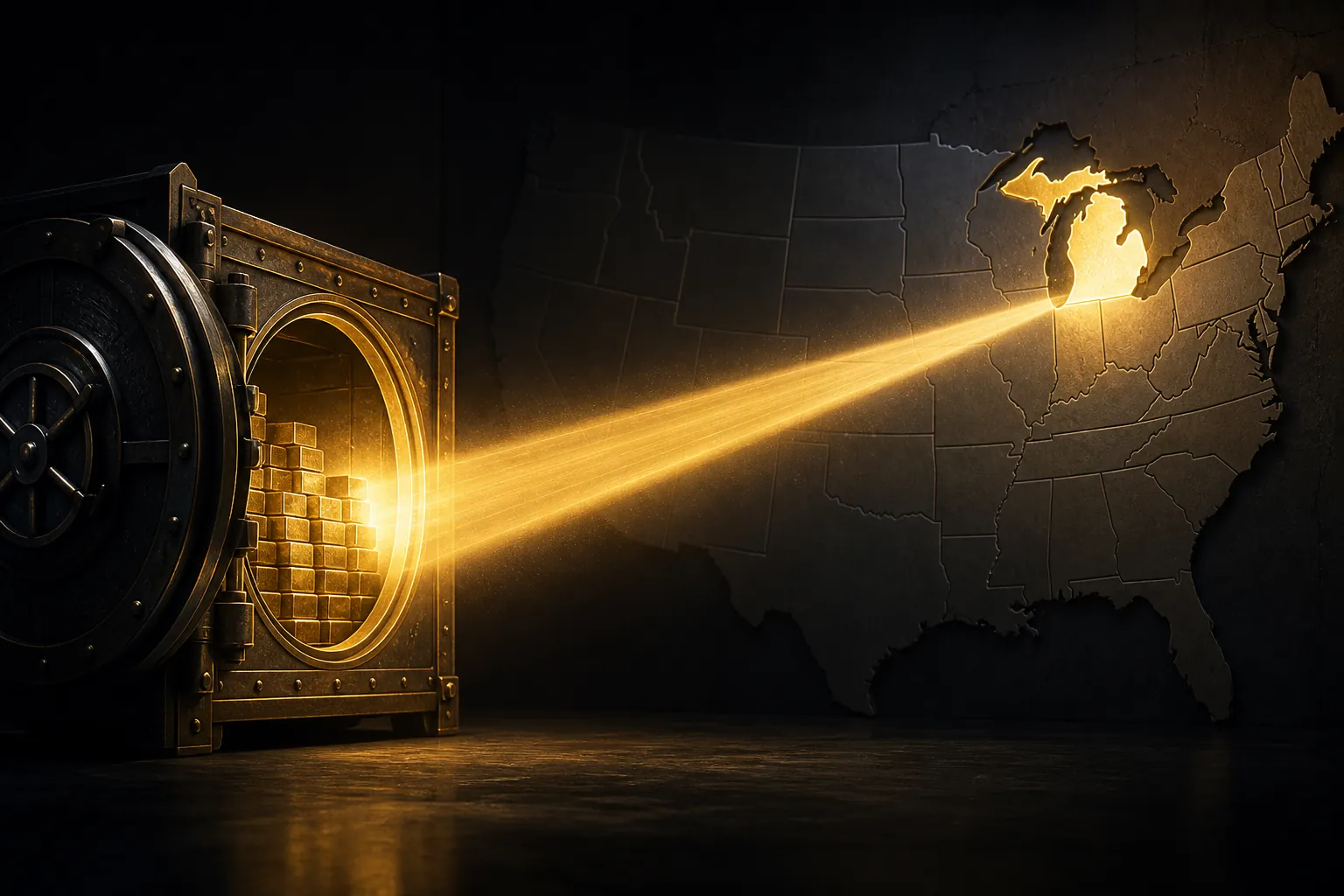
The Michigan Senate primary is the cleanest example because the number is out of scale with the rest of the ledger. Al Jazeera reported that AIPAC had invested $30,638,639.63 in the race against Abdul El-Sayed, calling it the group’s largest-ever single-race expenditure; the same report said AIPAC itself supplied $30 million of the roughly $100 million UDP raised. The primary had not happened yet as of Aug. 3, 2026. [2]
That Michigan buy also resets the benchmark for what “heavy” means. Earlier reference points were already large: about $15 million in the 2024 Jamaal Bowman race, $8.6 million in the 2024 Cori Bush race, and $4.1 million in the 2026 Thomas Massie race. Michigan is not just another expensive contest on that list; it is the case where the single-race number starts to resemble a statewide brand launch, except the objective is narrower and the calendar is shorter. [2][4][5]
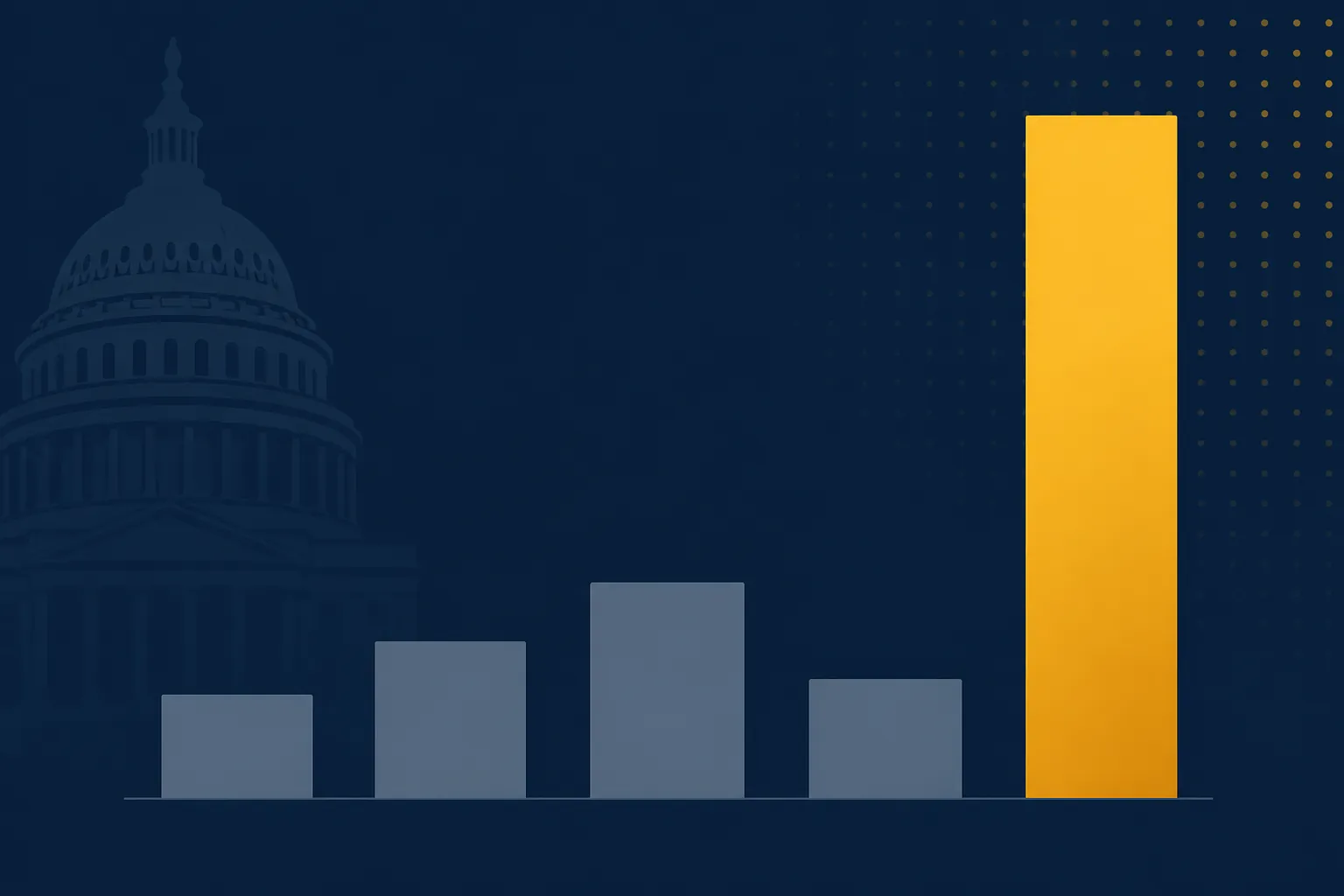
The concentration is the strategy. A buyer looking at this allocation would not describe it as even coverage against a national electorate. It is closer to a selective intervention model: wait for a race where the candidate field, issue salience, and outside-money rules create leverage, then buy enough attention to change the paid-media environment for everyone else in the primary.
That makes the denominator important. UDP’s $103,988,109.27 raised through June 30 is not the same thing as $103,988,109.27 spent on ads. Its $52,535,827.45 in disbursements is not the same thing as direct independent expenditures. And the $27,928,913.21 independent-expenditure bucket is not the whole AIPAC political apparatus. The race-level buys are where strategy becomes visible, because that is where the committee stops being a large balance sheet and starts becoming an opponent’s media environment. [1]
The broad PAC strategy is a different instrument
The direct-spend model should not be confused with AIPAC’s wider contribution network. In 2024, The Intercept reported that AIPAC’s PAC touched more than 80% of the 469 House and Senate seats up that cycle: 389 races, with more than $17 million to 233 Republicans and more than $28 million to 152 Democrats. That is a reach strategy, not a saturation strategy. [6]
Those two instruments buy different things. Broad PAC giving buys access, alignment, and relationship coverage across a very large share of Congress. UDP-style independent expenditures buy a shorter-term change in the paid-media balance inside selected races. If the two are blended into one “AIPAC spending” figure, the most important distinction disappears: one side is high-success, wide-distribution political capital; the other is more volatile direct intervention.
Shell names and neutral creative are part of the media plan
The next layer is not simply that money is spent. It is how the buyer appears to the voter while the money is moving. Reporting in 2026 described AIPAC-linked spending through groups with names that did not foreground Israel, including groups such as the Center for Democratic Priorities, and noted that some ads avoided mentioning Israel at all while attacking or supporting candidates on other issues. [7]
For voter perception, that changes the source cue. For an opposing campaign, it changes response timing. For anyone auditing after the fact, it introduces a routing problem: the ad may be visible before the sponsor relationship is cleanly filed, and the committee name in the creative may not explain the strategic sponsor to an ordinary viewer.
Detroit Metro Times reported that a mysterious pro-Israel-linked group spent $5.3 million to boost Haley Stevens in Michigan, while noting the opacity around the group’s filing status. The research boundary matters here: if a group had not yet filed with the FEC, the correct conclusion is not that every dollar can already be reconciled. The correct conclusion is that disclosure timing itself becomes part of the operating environment. [8]
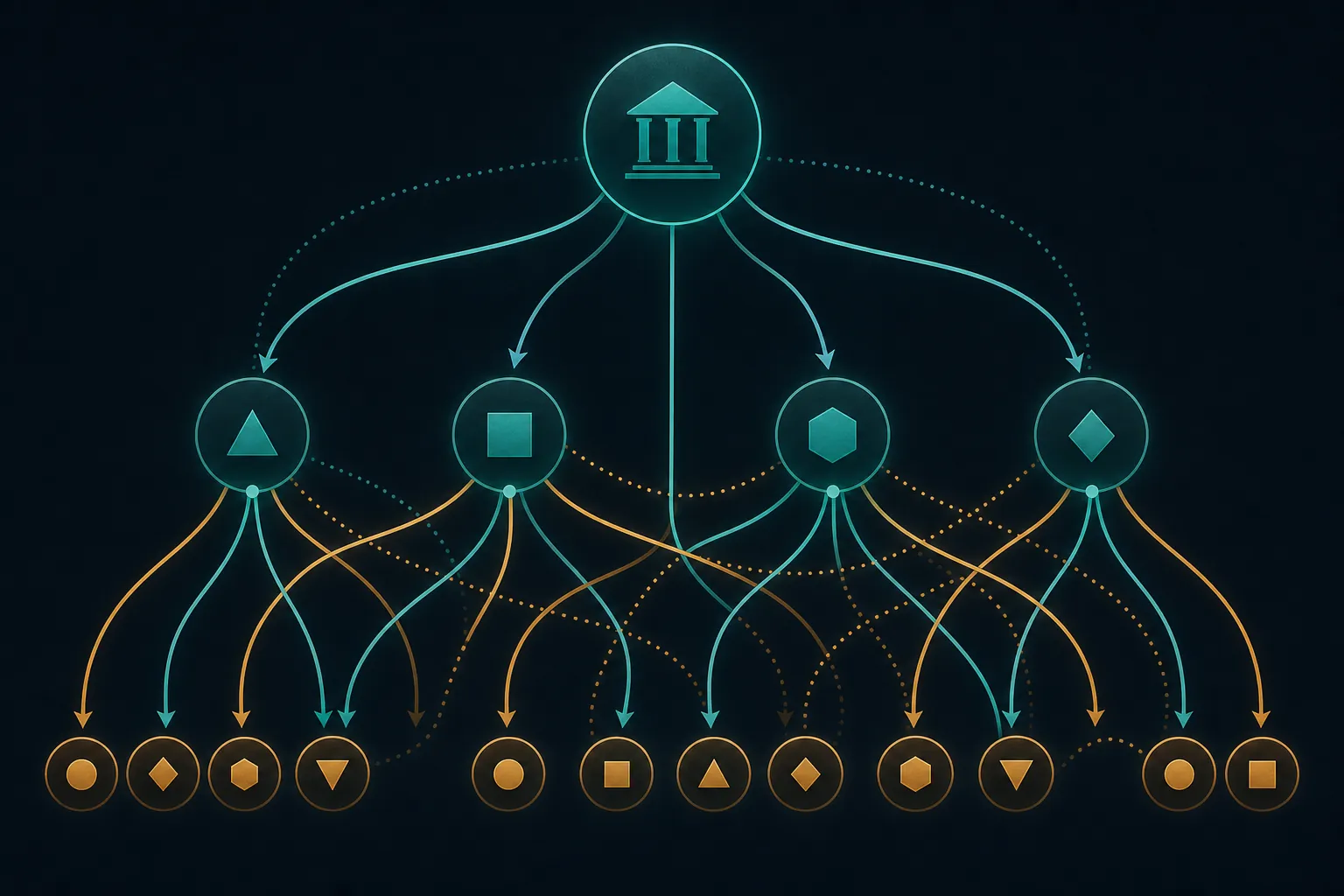
This is where “dark money” is too blunt a phrase to be very useful. The operational question is narrower: which committee filed, which entity paid the vendor, which vendor bought or produced the media, which creative reached voters, and when those facts became visible relative to the election calendar.
The vendor trail is visible, but not clean enough for platform attribution
Vendor pass-throughs are the layer that most often gets flattened in public arguments about outside spending. Sludge reported in May 2026 that Targeted Platform Media, affiliated with Buying Time, had collected about $32.5 million from UDP since 2022. The same reporting identified other firms in the pro-Israel campaign-spending ecosystem, including OnMessage, MVAR, SKDKnickerbocker, and programmatic digital work through Grapeseed. [9]
That tells us where large checks landed. It does not automatically tell us the final media mix. A payment to a media-buying firm can include planning, placement, production coordination, commissions, and pass-through ad inventory. Unless the downstream invoices or platform libraries are available at the right level of detail, the public ledger can show the mouth of the pipe without showing every outlet at the end of it.
That is why a neat AIPAC-specific platform split would be overconfident. AdImpact projected record 2026 political ad spending of $11.6 billion overall, with broadcast television at 48%, or $5.6 billion; CTV at $2.7 billion, or 23%; and digital platforms including Meta, Google, Snap, and X at $1.6 billion. Those numbers are useful for market context, especially because they show how much political money is still tied to television and CTV inventory. They do not prove UDP’s own channel allocation. [3]
The same distinction shows up in ordinary commercial media auditing. A top-line digital number is not a platform ledger, and a vendor payment is not a placement report. Signal & Convert’s tracker on AI capex and digital ad spend verification makes the same methodological point in another market: the most tempting allocation chart is often the one the available records cannot actually support.
Channel economics still matter. A dollar in late broadcast inventory, a CTV buy, and a platform video buy do not deliver the same reach curve, frequency control, disclosure surface, or audit trail. For that layer, the best comparison is not a moral argument about outside spending; it is a media-buy benchmark like Ramaswamy’s $10 million TV ad strategy, where the dated buy and the medium are visible enough to evaluate together. For digital video pricing and pressure, the separate YouTube ad economics context is relevant only as channel mechanics, not as evidence of UDP’s own YouTube spend.
Disclosure deadlines function like timing constraints
In commercial paid media, reporting lag is usually an analytics nuisance. In a primary, reporting lag can be strategic terrain. A late outside buy can change what voters see before the public record fully explains who financed it, which committee routed it, or how much more is queued behind it.
The important point is not that every delayed disclosure is illegal or even unusual. The point is that disclosure calendars shape the response window. If an opponent, newsroom, or analyst learns the sponsor relationship after the ad has already accumulated reach, the reconciliation arrives after the persuasion event. That is an attribution problem before it is a messaging problem.
This is also why dated records matter so much. A figure through May 31, a filing through June 30, and a primary on Aug. 4 describe three different moments. Combining them without dates makes the buy look more settled than it is.
The direct-spend outcome ledger is much less dominant than the access ledger
Once the buckets are separated, the performance gap becomes easier to read. The American Prospect’s analysis of UDP’s direct independent-expenditure record through May 31, 2026 described a mixed ledger: roughly one win in Kentucky’s 4th District, one loss in Illinois’s 7th District, one backfire in New Jersey’s 7th District, and two pending races. That synthesis implies about a 50% hit rate for the direct-intervention side of the operation at that point in the cycle. [10]
That is not a contradiction of AIPAC’s broader political strength. It is a reminder that direct independent expenditures are exposed to race quality, candidate fit, local voter sentiment, and counter-mobilization in a way that access-oriented PAC donations are not. A broad contribution strategy can look nearly perfect because it is spread across likely winners and incumbents. A massive primary intervention has to win the argument inside a specific electorate.
The Kentucky Massie race shows one version of successful escalation. Louisville Public Media reported that a record-shattering $37 million was spent on the Massie-Gallrein race, with AIPAC-linked spending accounting for $4.1 million against Massie. That is a large intervention, but still small beside the Michigan Senate number. [4]
The Michigan case was the larger test still open as of this article’s date. The Associated Press described AIPAC’s record spending in Michigan’s Senate primary as the biggest test of its influence yet, and that framing is useful because the result was not yet available on Aug. 3, 2026. The spend was known; the outcome was not. [11]
What the allocation says about the strategy
The cleanest read of AIPAC’s political advertising spending strategy is that the organization runs two different systems at once. The first is broad political coverage through PAC contributions across a large share of federal races. The second is a concentrated independent-expenditure machine that escalates hard in selected primaries, often through committee and vendor structures that make the final sponsor, channel mix, and creative intent harder to see in real time.
Its strength is concentration. A small number of races can suddenly face spending levels that change the media baseline for the entire contest. Its second strength is political access, visible in the breadth of AIPAC PAC giving across congressional races. Its weakness is volatility: direct race spending does not convert into wins with the same reliability as broad donations to likely winners. Its least auditable layer is not the existence of the money; it is the routing from committee disbursement to vendor to channel to voter impression.
That makes UDP unusually useful as a real-world media-buying case file. The public record is detailed enough to show scale, dates, committees, transfers, vendors, and race concentration. It is not detailed enough to justify a precise AIPAC-specific Meta-versus-Google-versus-CTV allocation. The serious audit stops at that boundary.
References
- United Democracy Project committee profile, Federal Election Commission, https://www.fec.gov/data/committee/C00799031/
- How much has AIPAC spent against Michigan’s Abdul El-Sayed and why, Al Jazeera, Aug. 2, 2026, https://www.aljazeera.com/news/2026/8/2/how-much-has-aipac-spent-against-michigans-abdul-el-sayed-and-why
- AdImpact Reveals 2026 Election Cycle to Reach Record $11.6 Billion in Ad Spending, AdImpact, June 11, 2026, https://adimpact.com/blogs/adimpact-reveals-2026-election-cycle-to-reach-record-11.6-billion-in-ad-spending
- A record-shattering $37M was spent on Kentucky’s Massie-Gallrein race. Here’s who funded it, Louisville Public Media, July 17, 2026, https://www.lpm.org/news/2026-07-17/a-record-shattering-37m-was-spent-on-kentuckys-massie-gallrein-race-heres-who-funded-it
- AIPAC Officially Surpasses $100 Million in Spending on 2024 Elections, Sludge, Aug. 27, 2024, https://readsludge.com/2024/08/27/aipac-officially-surpasses-100-million-in-spending-on-2024-elections/
- AIPAC spending in Congress elections shows Israel lobby’s influence, The Intercept, Oct. 24, 2024, https://theintercept.com/2024/10/24/aipac-spending-congress-elections-israel/
- As AIPAC becomes toxic, it is trying to conceal spending in US elections, Al Jazeera, May 20, 2026, https://www.aljazeera.com/news/2026/5/20/as-aipac-becomes-toxic-it-is-trying-to-conceal-spending-in-us-elections
- Mysterious pro-Israel-linked group spends $5.3M to boost Haley Stevens, Detroit Metro Times, https://www.metrotimes.com/news/politics-elections/mysterious-pro-israel-linked-group-spends-5-3m-to-boost-haley-stevens/
- The Consultants Cashing In on Pro-Israel Campaign Spending, Sludge, May 26, 2026, https://readsludge.com/2026/05/26/the-consultants-cashing-in-on-pro-israel-campaign-spending/
- Pro-Israel Super PAC Cinematic Universe, The American Prospect, June 22, 2026, https://prospect.org/2026/06/22/pro-israel-super-pac-cinematic-universe/
- AIPAC has spent a record amount on Michigan’s Senate primary, the biggest test of its influence yet, AP, 2026, https://www.ap.org/news-highlights/elections/2026/aipac-has-spent-a-record-amount-on-michigans-senate-primary-the-biggest-test-of-its-influence-yet/