
AI data center capex is real. Ad auction impact is unproven
AI data center capex is documented fact; the pass-through to ad auction prices is not proven. Buyers get the dated Q1 2026 earnings records, the verdict on what remains unproven, and the evidence trail that would establish the link.
- Platform
- Meta, Google
- Bid strategy
- Cross-strategy
- Last reviewed
- 2026-08-31
No specific Benchmarks record is cited for this tactic yet — treat it as directional, not evidence-backed.
For anyone assessing the AI data center expansion impact on ad platforms, April 29, 2026 is the useful starting point. Meta and Alphabet both put substantially higher infrastructure spending into dated Q1 earnings records. Those disclosures verify the capex boom and some of its cost pressure. They do not verify that CPM, CPC, or CPA increased because of it.
| Company | April 29, 2026 disclosure | Previous comparison | What the record establishes |
|---|---|---|---|
| Meta | 2026 capital expenditures of as much as $145 billion [1] | $72.2 billion in 2025 [1] | A sharp increase in planned infrastructure investment |
| Alphabet | 2026 capital expenditures of $180 billion–$190 billion [2] | Previous guidance of $175 billion–$185 billion [2] | A higher spending range associated with AI infrastructure demand |
Meta’s release is the cleanest primary record for its guidance. Alphabet’s revised range was reported alongside management’s discussion of an AI-driven memory shortage.[1][2] The distinction matters: a capex guide measures expected investment, not an advertiser’s clearing price in an auction.

What the April earnings records actually establish
The cost-side evidence goes beyond planned construction. Meta reported that Q1 2026 expenses rose 35% to $33.4 billion. CFO Susan Li attributed the increase in part to higher depreciation, data-center operating costs, and third-party cloud spending.[3] Those are recognized expenses moving through the company’s accounts, not merely projections about future server campuses.
That gives buyers a defensible first half of the chain:
- Meta and Alphabet are committing more capital to AI infrastructure.
- At least some infrastructure-related costs are already appearing in Meta’s operating expenses.
- Component constraints can change the amount or timing of the investment.
The records stop before the step that matters in an account review. Neither company states that infrastructure costs caused an increase in ad auction clearing prices, changed advertiser billing, reduced available ad inventory, or altered delivery in a way measured by CPM, CPC, or CPA. This review located no dated primary source that supplies that connection.
That is a bounded absence finding, not proof that infrastructure can never affect advertising economics. A relevant platform notice, methodological index, status archive, or later filing could exist outside the reviewed record or appear after the April earnings window. The current evidence simply does not support reporting the pass-through as an observed fact.
The missing bridge from infrastructure cost to auction price
A plausible transmission mechanism is easy to sketch. More spending can produce higher depreciation, cloud charges, power costs, and data-center operating expenses. Management could seek better margins from the advertising business, modify product allocation, or change how aggressively systems optimize monetization. Capacity constraints could also affect the resources available for model training, inference, ranking, or campaign tools.
Plausibility is not measurement. Meta does not set one universal CPM by adding a data-center surcharge to every impression. Auction outcomes reflect advertiser demand, available inventory, audience competition, objective, placement, geography, seasonality, predicted action rates, creative quality, and platform rules. A cost increase can coexist with a higher CPM without causing it.
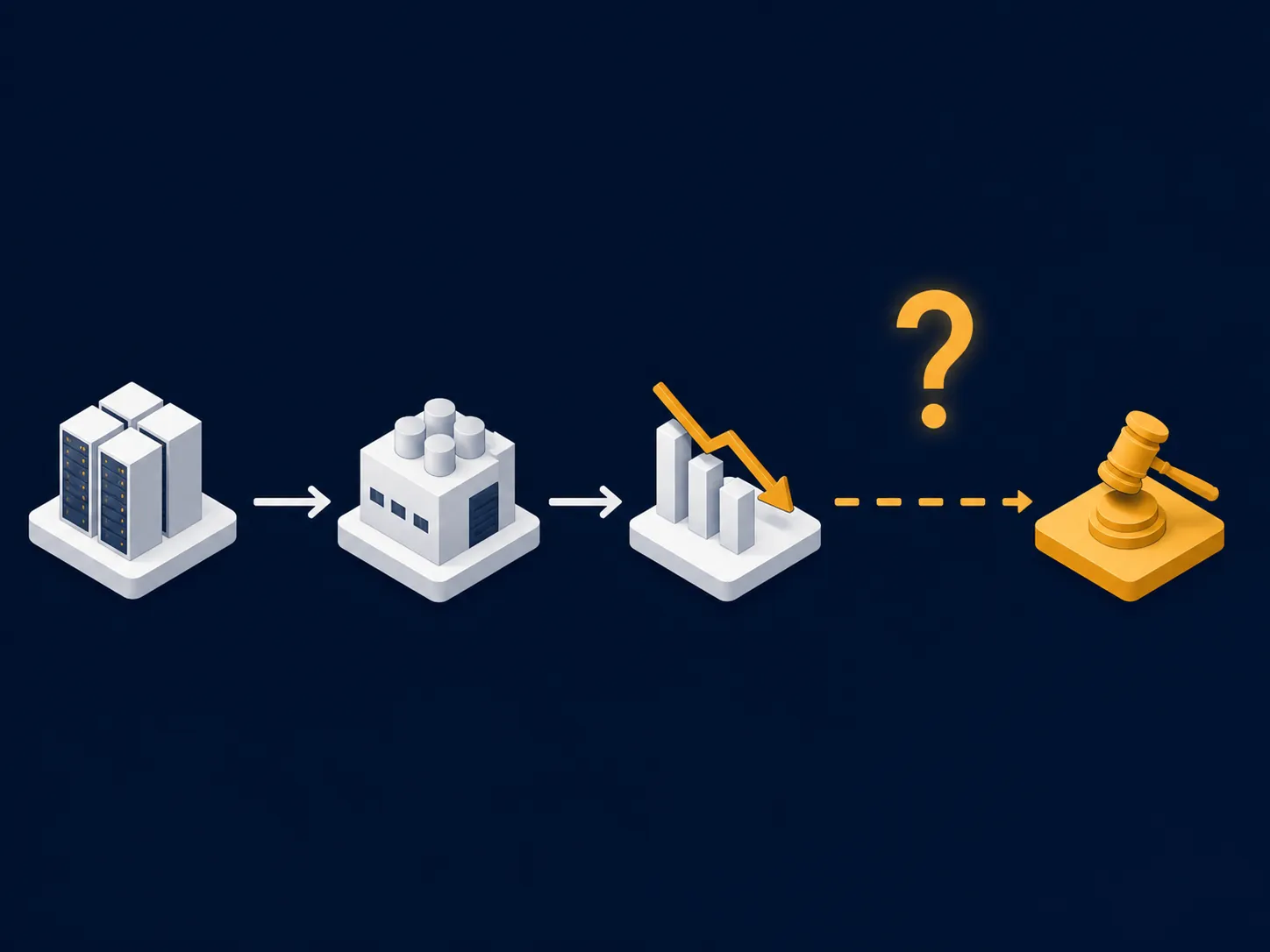
| Claim | Evidence available by the April 29 window | Verdict |
|---|---|---|
| AI infrastructure capex has increased | Dated company guidance and earnings reporting [1][2] | Documented |
| Infrastructure is contributing to operating-cost pressure | Meta identified depreciation, data-center operations, and third-party cloud spending [3] | Partly documented |
| Those costs changed ad auction prices | No located primary notice, disclosure, or methodological CPM/CPC index ties the two | Unproven |
| An account’s CPA drift came from data centers | No platform record isolates that cause; CPA also includes click and conversion behavior | Unsupported at account level |
The metric also determines how much evidence is needed. CPM is closest to impression pricing, although a change in CPM still needs a controlled comparison or a platform-level record. CPC combines impression cost with click-through rate. CPA sits farther downstream, adding conversion rate, attribution, landing-page performance, offer quality, and sales conditions. Even a documented infrastructure-related CPM effect would not automatically explain a client’s CPA.
Readers who need the theoretical routes can use the broader analysis of how AI data center growth could reach paid-ad costs. Energy claims require the same discipline; the separate measured-versus-claimed energy pass-through analysis addresses that channel without treating power-system pressure as an observed change in ad delivery.
The market reaction separates infrastructure returns from ad monetization
Meta shares fell more than 6% in after-hours trading following its results and spending outlook.[3] By contrast, investors responded more favorably to Alphabet and Amazon as cloud and AI revenue offered a clearer return narrative.[2] That divergence deserves attention because it conflicts with the shortcut that all AI infrastructure spending produces the same economic response.
The reaction is an interpretive signal, not platform proof. Stock prices do not reveal auction mechanics, and investors can react simultaneously to guidance, margins, revenue, risk, and expectations. Still, the contrast suggests that the market was evaluating infrastructure investment according to where returns were visible. Cloud revenue and ad-backed investment were not treated as interchangeable.
That divergence weakens the assumption that infrastructure spending alone proves an effect on ad prices. The more cautious reading is that infrastructure cost, infrastructure return, and advertising monetization remain separate analytical questions.
What would move the claim from plausible to established
A buyer does not need access to every internal server allocation. The evidence does need to identify the metric, period, population, and proposed connection. Any of the following would materially advance the case:
- A dated Meta or Google disclosure explicitly connecting data-center, compute, memory, cloud, or energy costs to advertising delivery economics.
- A platform pricing, billing, or product notice that names infrastructure costs as the reason for a fee, auction, inventory, or delivery change.
- A CPM or CPC index with a published methodology, stable account cohort, defined markets and placements, and enough history to separate the claimed effect from seasonality and advertiser demand.
- A documented platform experiment or operational incident showing that a compute constraint changed auction participation, latency, inventory availability, or delivery—and quantifying the result.
- A company filing that attributes an advertising margin or pricing change to the infrastructure buildout rather than merely listing both in the same reporting period.
A useful index would also define what “CPM increased” means. A blended global figure can move because spending shifts toward expensive markets or placements. A same-account cohort can still be distorted by changing campaign objectives. A clean claim should say whether the number is a median or mean, whether it is weighted by spend or impressions, which channels it covers, and how the comparison handles account turnover.
Why “CPM has doubled” is not enough
Merkelijkheid publishes a LinkedIn advertising benchmark page that says CPM has doubled.[4] In this evidence trail, it is third-party context with no recoverable methodology and no demonstrated connection to AI infrastructure costs. It should not be presented as an independent platform-wide index, much less as proof that data-center expansion caused the movement.
Even if the reported movement accurately describes the agency’s observations, three separate claims would still need support: that CPM changed across a defined population, that the change was not explained by demand or mix, and that AI infrastructure costs caused it. A headline completes none of those steps by itself.
How to report 2026 account drift without inventing a cause
When CPM rises in an account, start with evidence available inside the platform: auction competition, audience and placement mix, reach and frequency, campaign objective, bid strategy, budget constraints, creative fatigue, conversion tracking, and dated product or policy changes. For CPC, isolate the contribution from CPM and click-through rate. For CPA, continue through conversion rate and attribution before assigning an external cause.
A defensible client note can separate observation from hypothesis: “CPM increased during the measured period. Meta has documented substantially higher AI infrastructure investment and related operating expenses, but no located platform record connects those costs to this account’s auction prices. We are treating infrastructure pass-through as a watch item while testing account-level drivers.”
The watch item should have a trigger. Revisit the verdict when a named platform disclosure, pricing notice, methodological benchmark, or documented delivery event connects infrastructure costs to advertising outcomes. Until then, the dated record supports saying that AI data-center capex is real and costly. It does not support telling a growth lead that data centers caused the account’s CPM, CPC, or CPA movement.
References
- Meta Reports First Quarter 2026 Results. Meta, April 29, 2026.
- Investors trust Google more than Meta when it comes to spending on AI. CNBC, April 29, 2026.
- Meta Zuckerberg $145 Billion AI Spending ROI. Fortune, April 29, 2026.
- Benchmark CPM 2026. Merkelijkheid.