
Price Twitch game sponsorships by CCV, not followers
Most Twitch sponsorship deals are priced on follower counts and routinely overpay. Per-stream fees by CCV tier, per-game cost ranges, and effective-CPM math give media buyers and streamers a way to benchmark a deal by actual reach before committing spend.
- Platform
- Twitch
- Campaign type
- Sponsored stream
- Spend range
- $0–$80,000 per sponsorship
- Timeframe
- Q0 2026
- Effective CPM
- $0
- Verdict
- mixed
- Industry vertical
- Gaming
- Last reviewed
- 0-07-31
The fastest way to overpay for a Twitch game sponsorship is to start with follower count. Followers are useful for finding creators, but they are a weak pricing unit because they do not tell you how many people are actually present during the sponsored segment. For a buyer approving spend before a stream goes live, the defensible unit is average concurrent viewers, stream length, and the resulting cost per viewer-hour.
This Q3 2026 benchmark treats Twitch sponsorships as media buys, not creator popularity contests. The rate numbers below are third-party marketplace and agency benchmarks, not Twitch-published primary pricing data. They are still useful because most buyers and streamer managers have to judge a rate card before they have perfect evidence.
| Average CCV tier | Common per-stream sponsorship fee | How to read it |
|---|---|---|
| 50–500 CCV | $100–$800 | Small creator inventory. The fee only works if the category fit is tight and the activation does not require heavy production. [1] |
| 500–5,000 CCV | $500–$5,000 | The practical middle of many gaming buys. This is where viewer-hour pricing starts to matter more than profile size. [1] |
| 5,000–20,000 CCV | $3,000–$20,000 | Large creator inventory. Buyers should expect better reporting, clearer deliverables, and stronger category justification. [1] |
| 20,000+ CCV | $15,000–$80,000+ | Premium live reach. At this level, usage rights, exclusivity, and launch timing usually decide whether the fee is media value or celebrity pricing. [1] |
A better first-pass rate card is simpler: multiply average CCV by sponsored hours, then apply a cost per viewer-hour. StreamScheme’s Twitch sponsorship rate card puts the baseline around $0.80–$1.20 per CCV-hour, with premium placements at $1.50 or more per CCV-hour; Launchpoint’s 2026 gaming streamer guide gives a similar dedicated gameplay range, with 2-hour mid-tier sponsorships at $1,000–$4,000, or roughly $1.00–$2.00 per viewer-hour. [2][3]

Convert the quote into viewer-hours before debating the creator
The working formula is:
Effective live CPM = sponsorship fee / (average CCV × sponsored hours / 1,000)

Cost per viewer-hour = sponsorship fee / (average CCV × sponsored hours)
This is not the same as a display-ad CPM, and it should not be sold that way. It is a live-exposure benchmark based on average concurrent reach and time watched. If a creator can provide reliable unique viewers, chat participation, VOD views, or click data, those can be layered in. They should not replace the CCV math at the first pricing pass.
A hypothetical 1,000-CCV streamer quoting $2,000 for two sponsored hours is charging $1.00 per viewer-hour and an effective live CPM of $1,000 when measured against viewer-hours. That sounds high if someone is lazily comparing it with programmatic ad CPM, but a live creator integration is not a passive banner. The useful question is whether that $1.00 per viewer-hour is justified by the category, creator trust, deliverables, and rights.
The buyer problem usually starts when this math is skipped. Sociavault documented a sponsorship-selection case where follower-based buying produced a $238 effective CPM; after restructuring selection around CCV, effective CPM fell to $54 while total concurrent reach increased. That is not proof every campaign will improve by the same amount, but it is a clean example of why profile size is a dangerous proxy for deliverable reach. [4]
The base fee is only the floor
A fair Twitch sponsorship quote starts with CCV and sponsored duration. Then the quote should move up only when the buyer is asking for something that changes the creator’s opportunity cost or creates additional media value.
| Pricing component | Benchmark | Buyer test |
|---|---|---|
| Base live integration | $0.80–$1.20 per CCV-hour; $1.50+ for premium placements | Does the creator’s recent average CCV support the fee, or is the rate really being justified by followers? [2][3] |
| Game-launch activation | Often 1.5–2x base fee | Is the sponsor buying scarce launch-week attention, or just labeling a normal stream as a launch campaign? [1][3] |
| Usage or whitelisting rights | +20–50% | Will the sponsor use the creator’s content or handle outside the live stream? If yes, pay for that separately. [1][2][3] |
| Category exclusivity | Up to 2x | Is the streamer restricted from competitive games, hardware, energy drinks, VPNs, or other sponsor categories long enough to lose real income? [1][2][3] |
| Longer-term partnership | Launchpoint cites the Porter Wills Esports Influencer Marketing Guide 2025 as finding long-term Twitch partnerships can beat one-off sponsorships by 3–5x total ROI | Is the campaign buying repeated exposure and creator familiarity, or simply spreading a one-off idea over more dates? [3] |
This is also where streamers should be stricter, not cheaper. If a sponsor wants whitelisting, paid social usage, category exclusivity, launch-week priority, or a dedicated block of gameplay, that is not the same product as a casual mid-roll mention. A creator with modest but consistent CCV can defend a higher fee when the deliverables are broader. A creator with a large dormant follower base cannot defend a premium fee without live reach to match.
Viewer-to-follower health catches inflated inventory early
Before negotiating the fee, compare recent average CCV with follower count. Sociavault gives 1–5% as a healthy viewer-to-follower range, flags under 0.5% as a signal of follower inflation, and describes above 3% as unusually engaged. The exact cutoff should not be treated as a law across every creator size and category, but it is a useful screen for rate cards that lead with a big profile number and bury the live audience. [4]
- Ask for average CCV over recent comparable streams, not a single peak screenshot.
- Check stream length. A 90-minute sponsored block and a six-hour stream do not create the same viewer-hour inventory.
- Separate category average from creator average. A creator may outperform or underperform the category depending on game, schedule, and audience habit.
- Label the date of any third-party viewership pull. Twitch audiences move quickly around patches, tournaments, drops, and launches.
For buyers, this protects the junior person who later has to explain why a creator with a large-looking profile delivered thin live reach. For streamers, it makes the sales conversation cleaner: the rate is not “because I have followers,” but “because I reliably deliver this many concurrent viewers for this many sponsored hours, in this category, with these rights.”
The “best games” are not the biggest categories
The surface keyword asks for the best games for Twitch streamers’ ad revenue and sponsorships. For a media buyer, the better version is narrower: which game category has enough live reach, enough audience intent, and a price that still works after effective-CPM math?
Raw category size is a bad answer. On TwitchTracker’s games page captured Aug. 1, 2026 UTC, Just Chatting showed about 324,000 average concurrent viewers and roughly 15% share, far ahead of League of Legends at about 107,000 average concurrent viewers. That proves where a lot of Twitch attention sits; it does not prove where a gaming sponsor should spend. [5]
A gaming peripheral brand, esports sponsor, or game publisher may pay more for a smaller stream if the viewers are actively watching the right game, using the right hardware, and reacting to gameplay decisions in real time. A lifestyle brand may find Just Chatting more useful because the content is broader, the host relationship may be more conversational, and the buying intent is not tied to one title. Sociavault’s category-alignment guidance makes the same distinction: gaming and peripheral brands tend to favor game-specific viewers, while lifestyle brands can have a better fit in broader categories such as Just Chatting. [4]
This is where many “best games to stream” lists become useless for sponsorship pricing. A high-average-CCV category can be expensive, crowded, and only loosely relevant to the sponsor. A smaller category can be a better buy if the creator’s viewer-to-follower health is strong and the product naturally belongs in the stream. Category popularity helps with supply discovery; it does not settle value.
How category fit changes the same rate
Take two hypothetical creators with the same 1,500 average CCV and the same two-hour sponsored slot. At a $1.20 CCV-hour baseline, both point to a $3,600 starting fee. The quote should not stay identical if one creator is streaming the sponsor’s exact game genre to viewers who already buy that type of title, while the other is in a broad social category where the integration feels incidental.
The reverse can also be true. If the sponsor is a snack, fintech app, apparel brand, or entertainment release, a broad conversational stream may carry more useful attention than a game-specific stream where viewers are focused on mechanics, rank, or competitive play. Do not rank categories once; require a sponsor-specific reason for any category premium.
Ad revenue explains why sponsorships matter, but it should not price them
Programmatic Twitch ads give useful context for streamer economics. Vidpros and AWISEE put Twitch average ad CPM around $3.50 gross per 1,000 ad views in 2025, with streamers keeping about 50–55%, or roughly $1.75–$1.93. Those figures are broad estimates, not a clean substitute for a sponsorship rate card. [6][7]
That gap is why sponsorships matter to creators. A dedicated live integration, game launch, or creator-led gameplay segment can command more than standard ad inventory because the sponsor is buying attention inside the content, not just a pre-roll or mid-roll impression. But that same logic is exactly why buyers need stricter math. If the fee is many times higher than ad revenue, the buyer needs evidence of live reach, fit, and deliverables before approving it.
The ROI boundary is uncomfortable
Even a well-priced stream can be a bad buy. Kellogg Insight’s coverage of research by Huang and Morozov, using sponsored-stream data from May–Dec. 2021, reported that sponsored streams delivered a median ROI of −95% for most games, with positive returns concentrated among little-known games and titles with strong critic ratings. The time window matters: the study is not a live 2026 campaign tracker. The finding still deserves weight because it separates sponsorship activity from sponsorship effectiveness. [8]
The practical read is not that Twitch sponsorships are bad. It is that game publishers should be careful about buying streams for already-visible titles where incremental sales are hard to move, or for weak titles where exposure simply reveals the product problem faster. A smaller unknown game with strong quality signals may benefit more from a trusted creator actually playing it in front of an attentive audience.
This is also the limit of CPM discipline. It is possible to overvalue measurable reach and undervalue brand lift, creator trust, community goodwill, or the value of chat watching a creator discover a product live. Those effects are real enough to consider. They are not a reason to accept a follower-based rate card without CCV, duration, and category fit.
Compliance and monetization are part of the quote
Twitch’s branded-content infrastructure should be treated as a basic operating requirement, not an optional polish layer. Twitch announced expanded sponsorship opportunities in 2025, including a Branded Content tool and monetization changes that let streamers start earning from day one. That matters for smaller creators and new programs, but it does not remove the need to disclose paid relationships clearly and structure the deal around actual deliverables. [9]
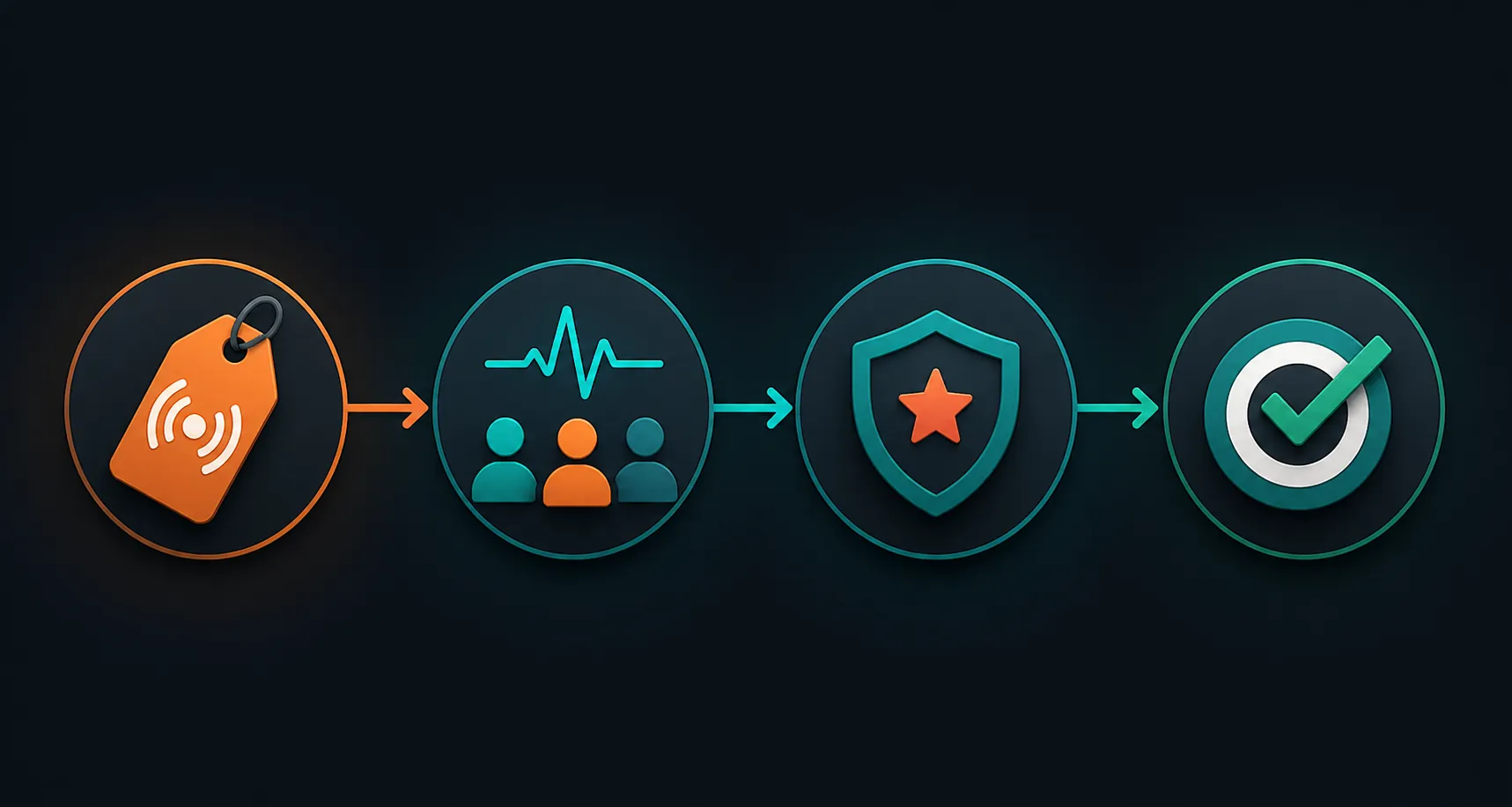
A buyer-ready Twitch sponsorship check is short: price the stream by average CCV and viewer-hours, verify viewer-to-follower health, pay multipliers only for real launch value or rights, and reject even a clean-looking CPM when the category and audience do not fit the brand. A streamer-ready quote follows the same structure. The rate is strongest when it explains what live reach is being delivered, how long the sponsor owns the moment, and what extra rights the sponsor is actually buying.
References
- Twitch Sponsorship Rates 2026: CPM Rates + Live Stream Deal Pricing, InfluencerFee, reviewed Jul. 31, 2026.
- Twitch Sponsorship Rate Card, StreamScheme, Dec. 26, 2025.
- How Much Do Gaming Twitch Streamers Charge in 2026?, LaunchpointHQ.
- How Esports Teams and Agencies Use Twitch Data for Sponsorship Decisions, Sociavault, June 2026.
- Games, TwitchTracker, captured Aug. 1, 2026 UTC.
- How Much Does Twitch Pay?, Vidpros.
- Twitch CPM Rates, AWISEE.
- Video Game Companies Are Spending Big on Sponsored Streams, Kellogg Insight.
- Expanding your sponsorship opportunities on Twitch, Twitch Blog, Feb. 25, 2025.
Built on this evidence
No Bidding tactic or Creative record currently cites this case file. Compare it against other results in Benchmarks.
Related benchmark reading
Report a corroborating or contradicting result
Seeing something different in your own account? Feed the data-integrity loop instead of leaving an open comment.