
How Taco Bell's Digital Silence Cost in Paid Ad Performance
When a food-safety crisis hits a major QSR brand, the absence of visible digital crisis communications can cost measurable traffic and ad performance. This benchmark case study of Taco Bell's cyclospora outbreak quantifies the impact—a 19% visit decline and $4.3B market cap loss—and offers media buyers a framework for advising clients on paid-ad brand defense.
- Platform
- Google Ads
- Campaign type
- Search
- Spend range
- High
- Timeframe
- July 0–19, 2026
- Store visits
- 0%
- Verdict
- loss
- Industry vertical
- QSR
- Last reviewed
- 0-07-23
On July 17, Taco Bell visits fell 19% in a single day while the broader fast-food category was down 1.9%. Yum! Brands had also fallen about 10% from a five-month high of $167.49 on July 7, erasing roughly $4.3 billion in market value.[1] For anyone buying media against local intent, branded search, store visits, or QSR conversion proxies, that is the useful benchmark: a brand can move fast inside the supply chain and still leave paid media with almost nothing credible to defend.
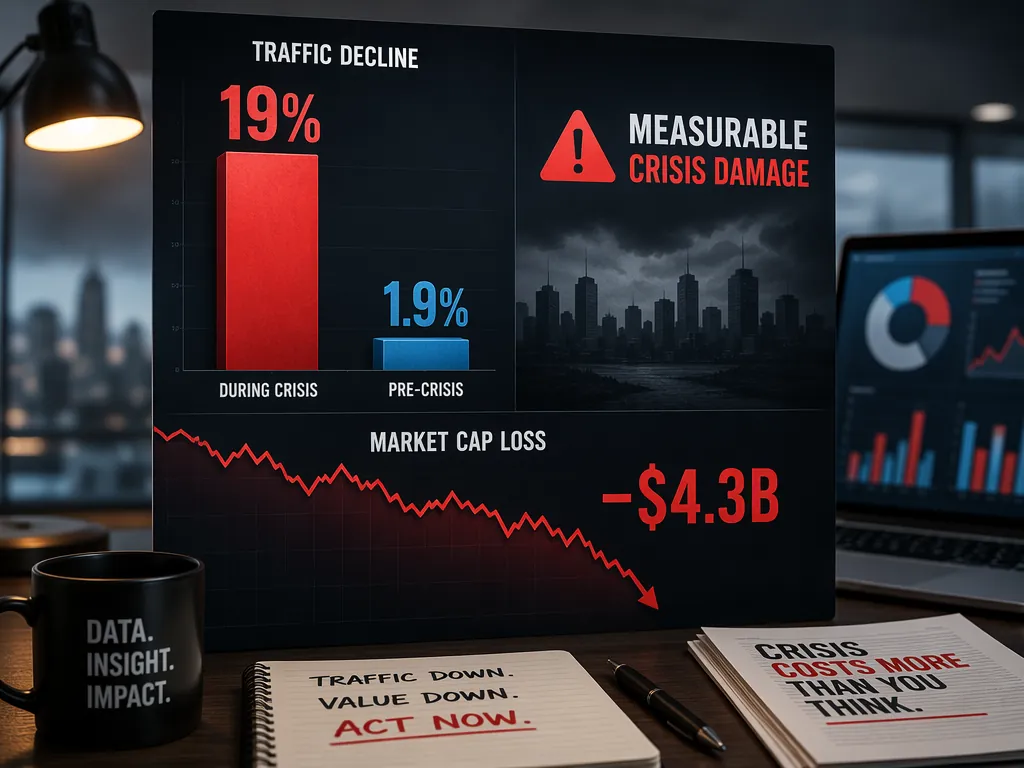
That is the part many post-crisis writeups blur. Taco Bell’s menu changes after the cyclospora outbreak were not, on their own, the failure. Pulling ingredients quickly was the right operational move. The problem was that anxious customers searching for what changed, whether their local restaurant was affected, or whether it was safe to come back did not get a visible consumer-facing digital answer in the first critical week.
There is no public CPC, CTR, CPA, impression-share, or conversion-rate dataset for Taco Bell’s paid campaigns during the outbreak. So the paid-media read has to stay disciplined: the 19% visit decline, the 1.9% category comparison, and the stock movement are crisis-performance proxies, not direct ad-platform metrics. They still matter because store traffic is where QSR media eventually has to prove itself.
The Timeline That Made the Ad Problem Worse
The outbreak was not a small rumor that only industry watchers could see. The CDC reported 1,645 confirmed cases and more than 5,100 suspected cases across 34 states, while Michigan alone reported more than 4,312 cases and 102 hospitalizations in the reporting cited during the coverage window.[3] Consumer anxiety was not irrational; the public had enough information to worry, and not enough brand-owned information to resolve the worry.
Taco Bell did act operationally. Coverage on July 15 reported that the company pulled affected ingredients from menus after the cyclospora link emerged.[4] That matters. In a food-safety scare, the restaurant operator has to protect customers first, and no media buyer should pretend a landing page is more important than removing a suspected ingredient from the system.
But the customer-facing surfaces did not move with the same urgency. Crisis communications analyst Edward Segal wrote on July 15 that Taco Bell had issued a statement to journalists but, as of his review, had no website banner, no pinned social post, and no consumer-facing landing page addressing the outbreak. His sharper line is the one paid teams should keep in their client decks: “silence does not buy you time — it gives everyone else time to define the crisis for you.”[2]
Two days later, visits were down 19% against a fast-food category decline of 1.9%.[1] Placer.ai’s location analytics are based on mobile-device signals, not Taco Bell’s internal sales or footfall file, so the number should not be treated as a perfect same-store sales read. It is still a hard public benchmark for how far the brand’s in-market demand fell relative to its category while the communications gap was visible.
The earlier daily data points show pressure before the steepest drop: Forbes reported Taco Bell visits down 4.6% on July 10 and 5.8% on July 11 before the July 17 plunge.[1] That sequence is important for media buyers because performance does not usually collapse only at the moment a headline peaks. It degrades while search results fill, social comments accumulate, local intent gets nervous, and ad copy keeps asking people to order as if nothing has changed.
Operational Speed Still Left Paid Media Without a Destination
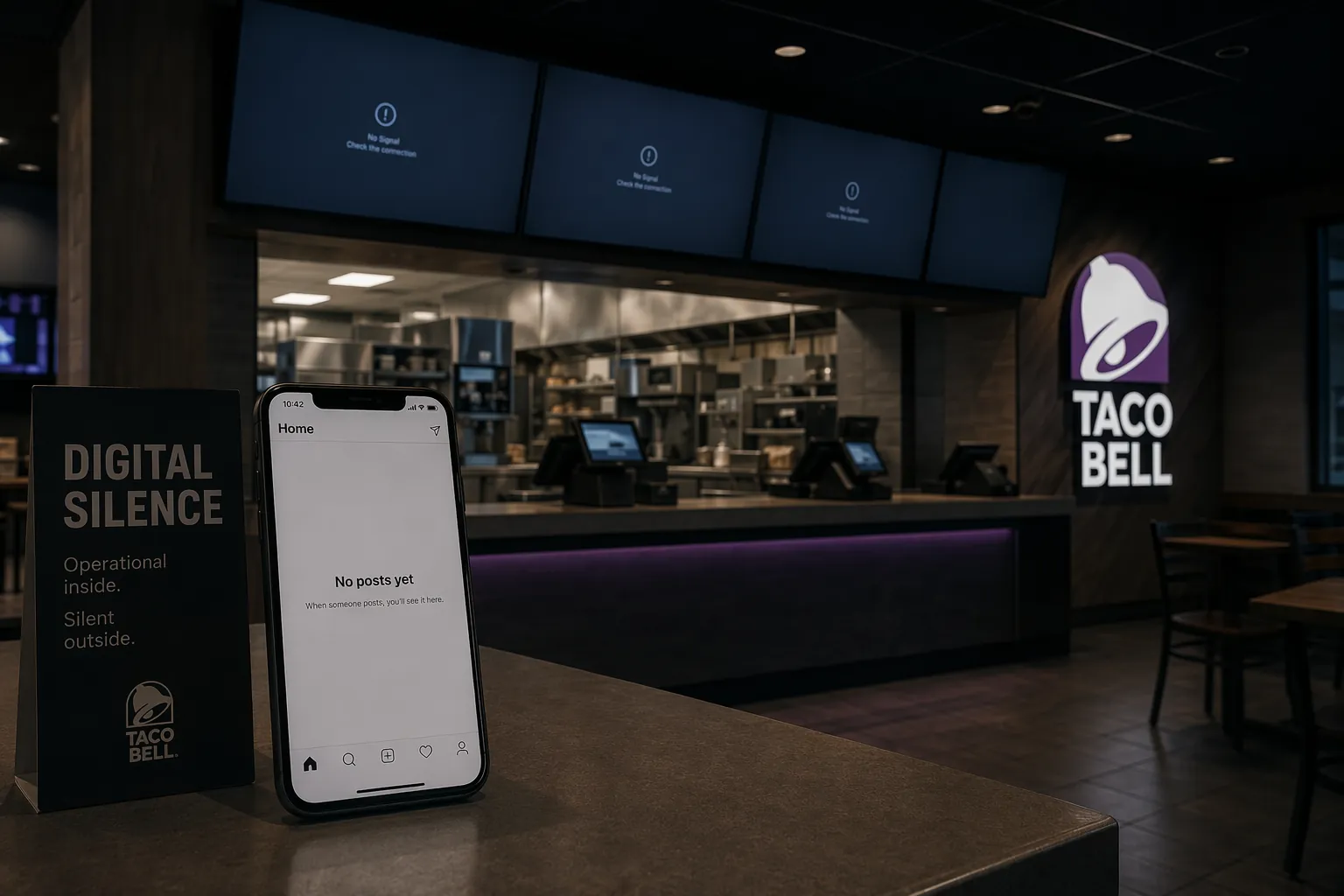
The missing asset was not a beautifully written apology. It was a dated, findable, consumer-facing page that could answer the basic paid-media questions: what was pulled, what locations or ingredients were involved if disclosed, what the company had done, where updates would appear, and what customers should do if they were concerned.
Without that page, branded search has to land somewhere awkward. The homepage may still be selling cravings. The menu page may show items that customers now associate with the outbreak. A newsroom statement may be written for journalists, not someone deciding whether to eat lunch. A social post, if it is not pinned, gets buried under normal content and angry replies.
That leaves the media buyer choosing among bad options. Keep promotional campaigns live and look tone-deaf. Pause too aggressively and surrender demand to third-party coverage, competitors, and speculation. Send traffic to a generic homepage and watch anxious users bounce. Rewrite ads with reassurance claims legal has not approved. None of those choices is a media strategy; they are symptoms of not having an approved crisis surface ready.
The same problem hits paid social and retargeting. A customer who visited the site before the outbreak may now see an offer instead of an update. A lapsed customer may be retargeted with a product message while news coverage is still answering the safety question more prominently than the brand is. Local campaigns optimized toward store visits may continue to deliver impressions into markets where the consumer objection has changed from price or convenience to trust.
Ad Age captured the brand-side awkwardness by noting that the communications effort was “only beginning” as the outbreak tested Taco Bell’s brand.[5] That is exactly where paid media gets exposed. Buying attention is easy. Buying attention when the brand has not built the answer people are looking for is how an efficient account turns into a very expensive traffic leak.
Why the July 19 Retraction Matters More Than It First Appears
On July 19, the FDA retracted the Taylor Farms lettuce link as a “false positive.”[1] That did not erase the July 17 traffic decline. It made the communications gap more expensive, because the largest public damage had already occurred before the government record shifted.
This is the point worth separating from blame. The retraction does not mean Taco Bell could have known the final answer earlier. Food-safety investigations move through uncertainty, and brands cannot responsibly claim certainty they do not have. But uncertainty is exactly why owned digital surfaces matter. A crisis page does not need to say, “we know everything.” It can say, “here is what we know today, here is what we changed, here is when we will update this page, and here is where customers should go for public-health guidance.”
That kind of page gives paid media a defensible destination while facts are still moving. It also gives the brand a place to update the record when facts change. If the only visible artifacts are news stories, analyst commentary, and social chatter, then the correction has to fight through the same channels that carried the fear.
The market reaction should be handled carefully too. Yum! Brands’ roughly 10% decline from its July 7 five-month high and the estimated $4.3 billion market-value loss occurred during the outbreak timeline, but public stock movement can reflect more than one factor.[1] Still, for a crisis benchmark, the combination of stock pressure and a 10-times-worse traffic decline than the category is hard to wave away as ordinary QSR volatility.
What the Paid Account Actually Loses
A food-safety crisis changes the job of paid media before it changes the campaign settings. The account is no longer only competing for preference; it is competing for confidence. If the brand has no visible answer, the auction environment still runs, but the landing environment gets worse.
| Paid-media surface | What breaks when no owned crisis page exists | What the buyer needs instead |
|---|---|---|
| Branded search | The highest-intent users see news results, speculation, and ordinary brand pages competing for the crisis query. | A dated crisis landing page that can be used in sitelinks, paid search copy, and organic navigation. |
| Local and store-visit campaigns | Campaigns may keep optimizing toward visits while the real barrier is safety confidence. | A rule for shifting from promotion-led traffic to reassurance-led traffic in affected periods. |
| Paid social | Offer creative can look disconnected from what customers are asking in comments and feeds. | Pinned organic updates and paid copy that point to the same current source of truth. |
| Retargeting | Recent site visitors may receive normal product reminders while the crisis remains unresolved. | Segment-level suppression or reassurance sequencing before promotional reminders resume. |
| Reporting | Traffic loss gets explained as media inefficiency even when demand quality has changed. | A crisis annotation layer tying spend, visits, search interest, and public updates to the same timeline. |
None of that proves Taco Bell’s CPA rose by a specific amount. It does give a media buyer a practical way to talk about risk with executives who otherwise treat crisis communications as a PR lane. When visits fall 19% while the category falls 1.9%, the media plan is not operating in normal conditions.[1]
The Prep Work QSR, CPG, and Retail Clients Need Before the Week Goes Bad
The lesson is not to publish faster than legal, public health, or operations can support. The lesson is to remove avoidable production delays before the crisis exists. A media team does not need final outbreak facts in advance; it needs approved rails for what can go live when facts are incomplete.
- Preapproved landing-page shell: a hidden crisis-update template with fields for date, affected products or locations when known, operational actions taken, customer guidance, public-health links, and next update timing.
- Pinned channel protocol: a rule for when the homepage, app, social profiles, and local pages stop behaving like normal promotional surfaces and begin pointing to the current update.
- Branded-search defense copy: approved language that can acknowledge concern without overstating certainty, plus sitelinks to the update page and customer-support route.
- Promotion-to-reassurance trigger: a threshold for when campaigns stop leading with deals, menu items, or store traffic and start leading with safety updates or operational changes.
- Crisis reporting annotations: a shared log of public statements, ingredient pulls, agency updates, media coverage spikes, budget changes, and store-visit movement.
The trigger matters because most waste happens in the gap between “something is wrong” and “leadership has approved the perfect statement.” In that gap, search demand does not wait. Social comments do not wait. Location behavior does not wait. A shell page with careful language is not a complete reputation strategy, but it is enough to keep paid traffic from being sent into a void.
For multi-location brands, the page also needs a local answer. If every market receives the same generic message, store-level media teams still cannot tell whether to suppress, redirect, or keep campaigns active. The page does not need to publish unverified local claims. It does need a structure for stating what is known, what is not known, and where customers can check for updates.
The Benchmark to Keep
Taco Bell’s cyclospora case does not prove the exact paid-search or paid-social cost of digital silence. The public record does not include platform-level performance data, and the available numbers are proxies. But the proxy is unusually checkable: a 19% single-day visit decline, a category decline of 1.9%, a roughly $4.3 billion market-value loss during the outbreak timeline, and an FDA false-positive retraction two days after the steepest traffic drop.[1]
That is enough to make the planning conversation concrete. Operational speed protected the system. Communications speed would have given customers, and the paid media pointed at them, somewhere credible to go while the facts were still moving.
References
- Taco Bell Customer Visits Plunge 19% Amid Cyclosporiasis Outbreak — Forbes, July 20, 2026
- Crisis Lessons From Taco Bell's Response To A Cyclosporiasis Outbreak — Forbes, July 15, 2026
- Iceberg lettuce at Taco Bell linked to Cyclospora outbreak — NPR, July 17, 2026
- Taco Bell pulls ingredients from menu amid cyclosporiasis outbreak — USA Today, July 15, 2026
- How the cyclosporiasis outbreak is testing Taco Bell's brand — Ad Age
Built on this evidence
No Bidding tactic or Creative record currently cites this case file. Compare it against other results in Benchmarks.
Related benchmark reading
Report a corroborating or contradicting result
Seeing something different in your own account? Feed the data-integrity loop instead of leaving an open comment.