
The App-Install Funnel Behind Taco Bell's $1 Deal
A benchmark of Taco Bell's July 22 $1 Enchirito and Nacho Fries app-exclusive promotion, analyzing whether its ~10x download spike and loyalty-driven LTV offset the per-transaction subsidy compared to paid-social app-install campaigns. Based on third-party estimates from prior campaigns, the results offer a directional CPA comparison and structural tactics for media buyers exploring owned-audience acquisition.
- Platform
- Google Ads
- Campaign type
- Performance Max
- Spend range
- Low
- Timeframe
- 0-07-22
- CPA
- 0
- Verdict
- mixed result
- Industry vertical
- Quick Service Restaurant
- Last reviewed
- 0-07-23
The useful read on Taco Bell's July 22 $1 Enchirito and Nacho Fries promotion is not that Taco Bell sold cheap food for a day. It is that the offer split one retail event into two acquisition jobs: a $1 Enchirito for broad traffic capture, available without an app requirement, and $1 Nacho Fries gated behind Taco Bell Rewards for the conversion event. Bought together, the two items cost $2 against a stated combined regular price of $6.98, an effective discount of about 71% before any store-level variation or attach behavior enters the model.[1]
That is a blunt instrument, but it is a legible one. The Enchirito lowers the threshold for anyone already near a store. The fries put the better acquisition mechanic behind the app. If the customer wants the full bargain, Taco Bell gets a Rewards account, an app session, and a future retargetable user rather than a one-off store visit that disappears into the POS.
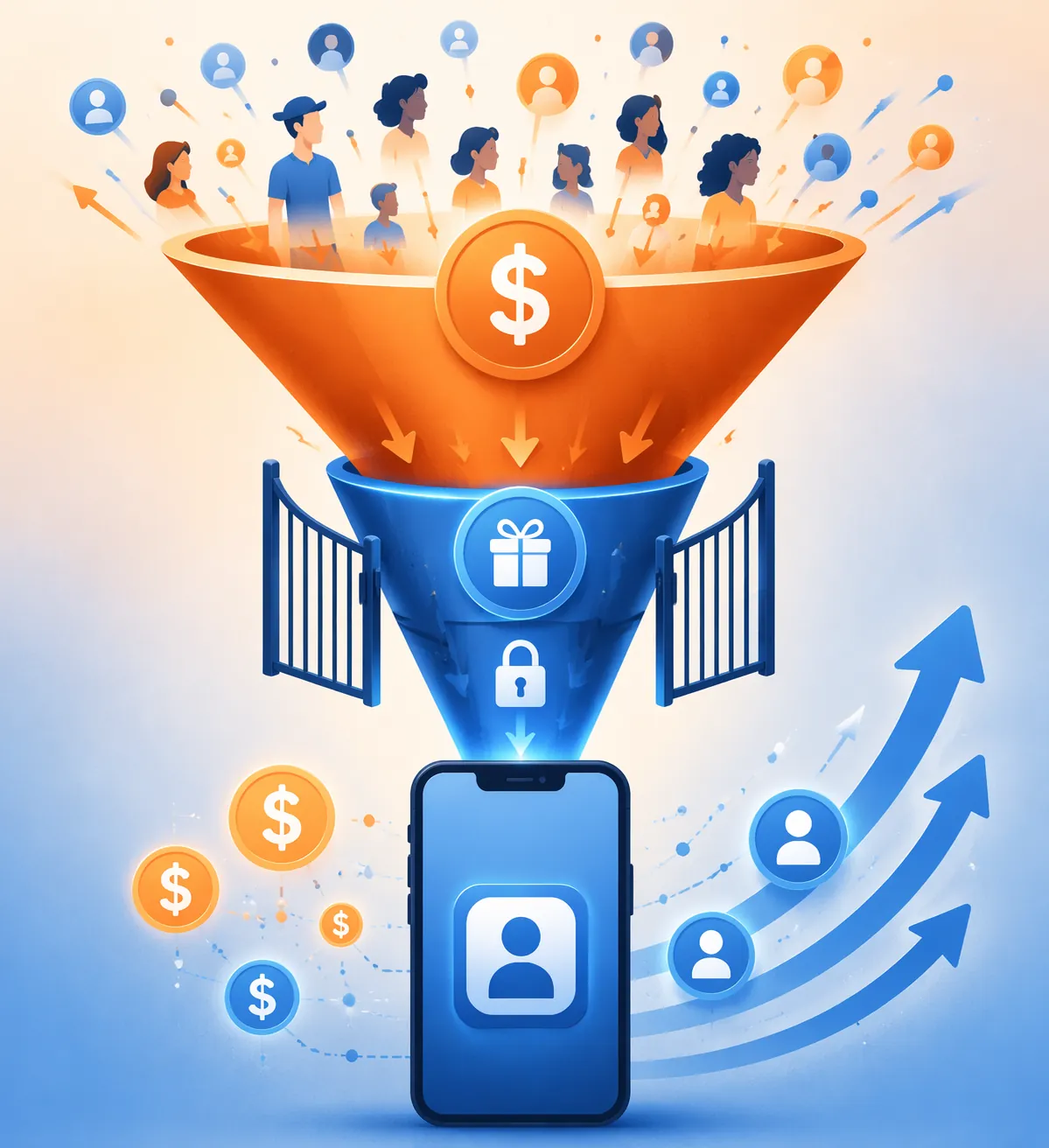
The hard caveat comes immediately: as of July 23, 2026, there are no official July 22 post-promotion results in the provided materials. The install benchmark available here comes from AppFigures estimates for a comparable prior Taco Bell taco campaign cycle, not from this Enchirito and Nacho Fries drop itself. That prior cycle reportedly pushed Taco Bell to about 120,000 downloads per day versus a baseline of about 12,000, roughly a 10x lift, with more than 571,000 installs in a single week.[2]
The CPA Math Starts With the Subsidy
A paid-social app-install buyer can work with this kind of promotion only if the food discount is treated like acquisition spend, not like brand generosity. On the face of the offer, the customer pays $2 for items with a combined regular price of $6.98. That implies $4.98 of headline value given up per two-item transaction, before food cost, franchise economics, basket expansion, taxes, operational constraints, and redemption limits are modeled.[1]
That does not mean the true CPA is $4.98. It means the media buyer has a starting line. If a Rewards-only item drives an app install, the effective acquisition cost depends on how many discounted redemptions produce incremental installs, how many redeemers were already active Rewards users, how many customers would have bought anyway, and how much full-price food rides along in the basket.
| Promotion element | Funnel job | What a media buyer should count |
|---|---|---|
| $1 Enchirito | Broad traffic capture with low friction | Store visits, incremental basket, non-app demand created |
| $1 Nacho Fries for Rewards members | App and loyalty conversion lever | New installs, new Rewards accounts, reactivated users, redemption rate |
| Short July 22 window | Urgency and scarcity | Install timing, redemption concentration, operational load |
| $2 combined customer price | Visible value exchange | Subsidy per redemption and attach revenue needed to offset it |
The AppFigures comparison is what makes the model worth taking seriously. A 10x app-download spike from an offer-driven campaign is not the same thing as a clean paid-social CPI report, and AppFigures data is third-party intelligence rather than Taco Bell internal reporting. Still, it gives a directional benchmark for the budget question: if a food subsidy can pull hundreds of thousands of installs in a week, does it beat buying those installs through auction platforms?
The answer cannot be declared from the download number alone. Cheap installs are only useful if they land inside a system that can identify, segment, message, and monetize them. Anyone who has paid for app installs has seen the ugly version of this: low CPI, high day-one curiosity, thin retention, and a user base that technically exists but never behaves like an asset.
Why the Loyalty Offset Is the Real Argument
The better case for Taco Bell is not that a dollar drop creates excitement. It is that the discount pushes customers into a measurable loyalty environment where existing member economics look meaningfully stronger than anonymous traffic. Circana data cited by Business Insider says Taco Bell Rewards members account for 39% of restaurant visits, visit 22% more often, and spend 20% more per visit.[3]
Those figures do not prove the July 22 drop paid back. They do explain why the CPA comparison is plausible. If the promotion only creates a discounted meal, the economics are fragile. If it creates a Rewards member who behaves more like the existing loyalty population, the subsidy can be modeled against future visit frequency, higher spend per visit, and owned-channel reach.
The growth trend matters too. Taco Bell’s active members reportedly grew 31% in 2025, while loyalty sales grew 30% year over year.[4] Again, that is not July 22 attribution. It is the reason a media buyer would even put a food-subsidy funnel in the same planning conversation as paid social. The brand is not just collecting installs; it has a loyalty base large enough for member behavior to matter to restaurant demand.
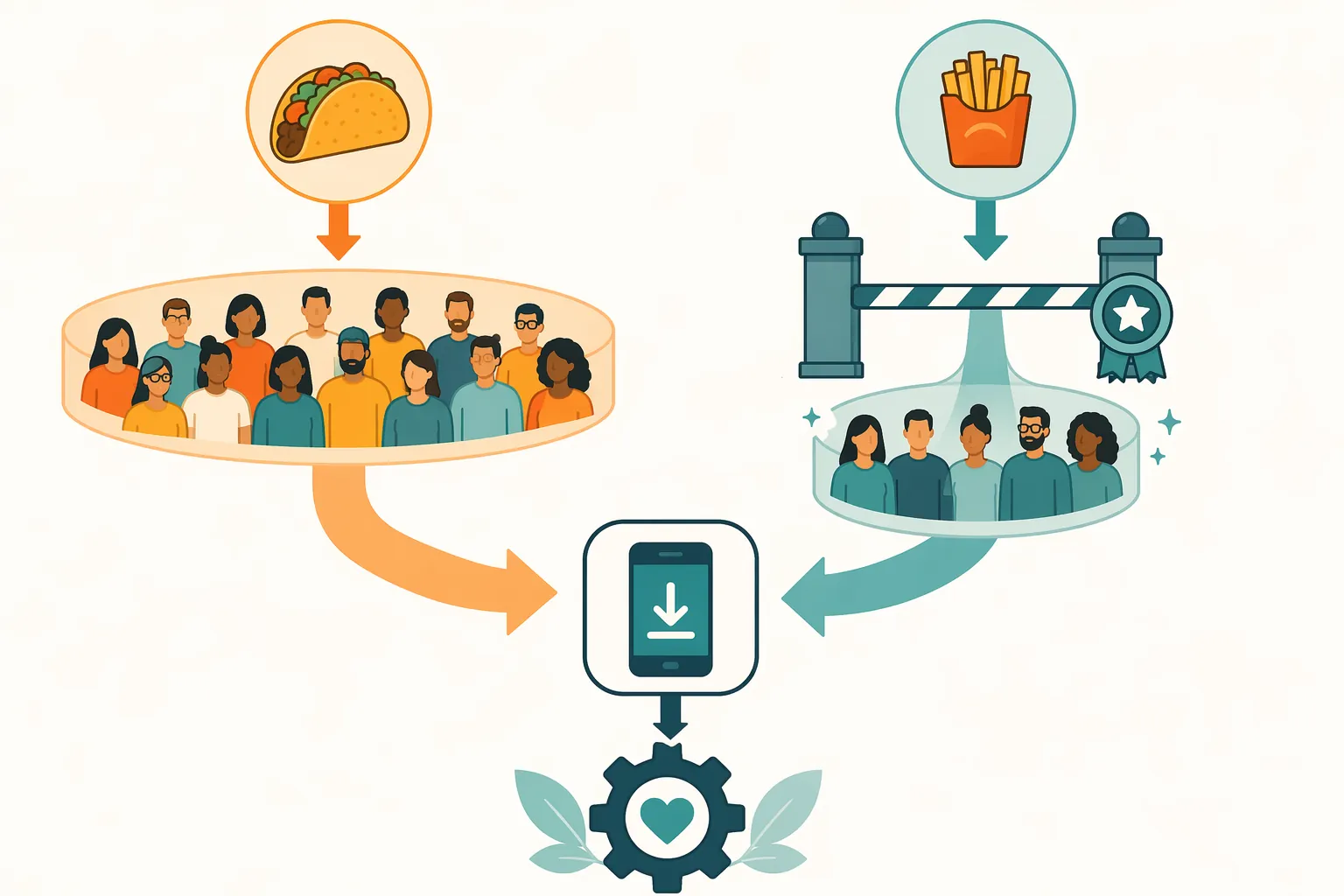
This is where the offer is cleaner than a normal limited-time menu push. A broad LTO can drive trial and still leave the marketer guessing about who came in. A pure app-exclusive offer can cap reach because the gate appears too early. Taco Bell used both. The Enchirito gave the event public surface area; the fries made the richer value conditional on Rewards.
The Paid-Social Comparison Has to Stay Directional
There is no clean Meta, Google, Performance Max, or Advantage+ CPI benchmark in the provided materials, so inventing one would make the comparison look more precise than it is. The useful bridge is budget logic. A growth team already has money assigned to app installs, reactivation, owned audience growth, and promotional discounts. The Taco Bell structure asks whether some of that money performs better as a controlled retail subsidy than as auction spend.
Paid social gives targeting, delivery speed, creative testing, and platform reporting. It also gives noise: view-through optimism, incrementality fights, modeled conversions, and audiences that live largely inside someone else’s machine. A Rewards-gated drop is messier operationally, but the customer action is tangible. Someone installs, logs in or joins, redeems, and can be messaged again through a first-party channel.
That owned-audience angle is the strategic reason the structure deserves attention alongside other QSR mechanics, not because Taco Bell found a magic discount depth. Signal & Convert’s owned-audience-first strategy piece is the broader frame: when paid-platform reliability weakens, the channel that gives a brand durable reach becomes more valuable. A dollar drop is one way to buy that reach with food value instead of impressions.
The closest internal companion is the McDonald’s LTO marketing system benchmark, which treats limited-time offers as a repeatable demand engine rather than a one-off menu story. The Taco Bell case is narrower: it is the app-install-funnel version of that problem.
What Makes the July 22 Structure Transferable
The structure is more portable than the specific menu items. Enchirito nostalgia may help, and Nacho Fries have their own history, but neither is the main asset for a performance marketer. The transferable pattern is simpler: one offer creates reach, one offer captures identity, the window compresses action, and the account gives the brand a second touch.
- Use the broad item to create public demand without asking for too much too soon.
- Put the highest-perceived value behind login, app install, or loyalty enrollment.
- Keep the window short enough that customers act before the offer becomes background noise.
- Measure new accounts separately from existing-member redemptions and app opens.
- Judge the promotion on retained customer value, not launch-day downloads alone.
Dairy Queen’s app-exclusive promotion playbook offers a useful structural comparison because it also uses gated mobile value to shift customers toward owned channels. The relevant comparison is not whose free or discounted item is more generous; it is how clearly the promotion separates awareness, install, loyalty activation, and repeat reach. Signal & Convert’s Dairy Queen National Ice Cream Day loyalty playbook and Dairy Queen promotion analysis sit in that same family of app-gated QSR acquisition tactics.
A more mature loyalty asset changes the ceiling. The Jersey Mike’s IPO marketing strategy analysis is useful for that reason: once a restaurant chain has a large loyalty audience and a meaningful digital mix, promotions can be evaluated as audience monetization events, not only traffic stunts.
The Friction Points Before Anyone Copies It
The obvious mistake is to take the AppFigures prior-cycle spike, paste it onto July 22, and call the Enchirito and Nacho Fries event a win. The cleaner use is as a benchmark record with a caveat label: comparable Taco Bell scarcity campaigns have produced large third-party-estimated install spikes, and this July 22 structure had a similar app-gated acquisition mechanic, but its actual performance is not yet confirmed.[2]
Before shifting budget from paid social into a food-subsidy acquisition event, the model needs several uncomfortable rows:
- Discount depth: the visible value was about a 71% discount on the two-item comparison, but the true cost depends on food cost, franchise participation, basket attach, and operational waste.[1]
- Redemption limits: without limits, the campaign can overpay existing loyalists; with too much friction, it can suppress new-user conversion.
- Install attribution: app downloads, Rewards signups, offer views, redemptions, and first incremental purchases are different events.
- Bargain-hunter leakage: some users will install for the dollar item and never return, which makes the CPI look better than the customer value.
- Post-install activation: the subsidy only behaves like acquisition spend if the new user receives relevant follow-up and has a reason to transact again.
- Owned-audience usage: an app install that is never segmented, messaged, or tied to future offers is just a more expensive vanity metric.
The bounded verdict is favorable but not celebratory. Taco Bell’s dollar-drop model can undercut paid social when the subsidy is booked as acquisition cost, the app gate produces measurable new loyalty users, and member LTV is strong enough to pay back the discount. The available loyalty data makes that argument plausible; the prior AppFigures install spike makes the acquisition channel worth benchmarking. The July 22 Enchirito and Nacho Fries promotion itself is still unconfirmed performance, not a completed proof point.
References
- Taco Bell $1 Enchirito and Nacho Fries promotion, Living On The Cheap
- Taco Bell app download estimates, AppFigures
- Taco Bell CEO Tresvant strategy and Circana loyalty data, Business Insider
- Q1 2026 Yum earnings coverage, NRN
Built on this evidence
No Bidding tactic or Creative record currently cites this case file. Compare it against other results in Benchmarks.
Related benchmark reading
Report a corroborating or contradicting result
Seeing something different in your own account? Feed the data-integrity loop instead of leaving an open comment.