
RTX Spark N1X reality check for performance marketers
NVIDIA's RTX Spark N1X promises local AI inference for ad workflows, but does it solve real bottlenecks for performance marketers running platform-managed campaigns? This evaluation finds the hardware excels at high-volume creative production yet leaves bidding, attribution, and platform-side constraints unchanged.
- Platform
- Google Ads
- Campaign type
- Performance Max
- Spend range
- ~$1,000/month cloud AI tooling
- Timeframe
- 2026-07-25
- CTR
- 7.1-19.3 days above baseline
- Verdict
- mixed
- Last reviewed
- 2026-07-25
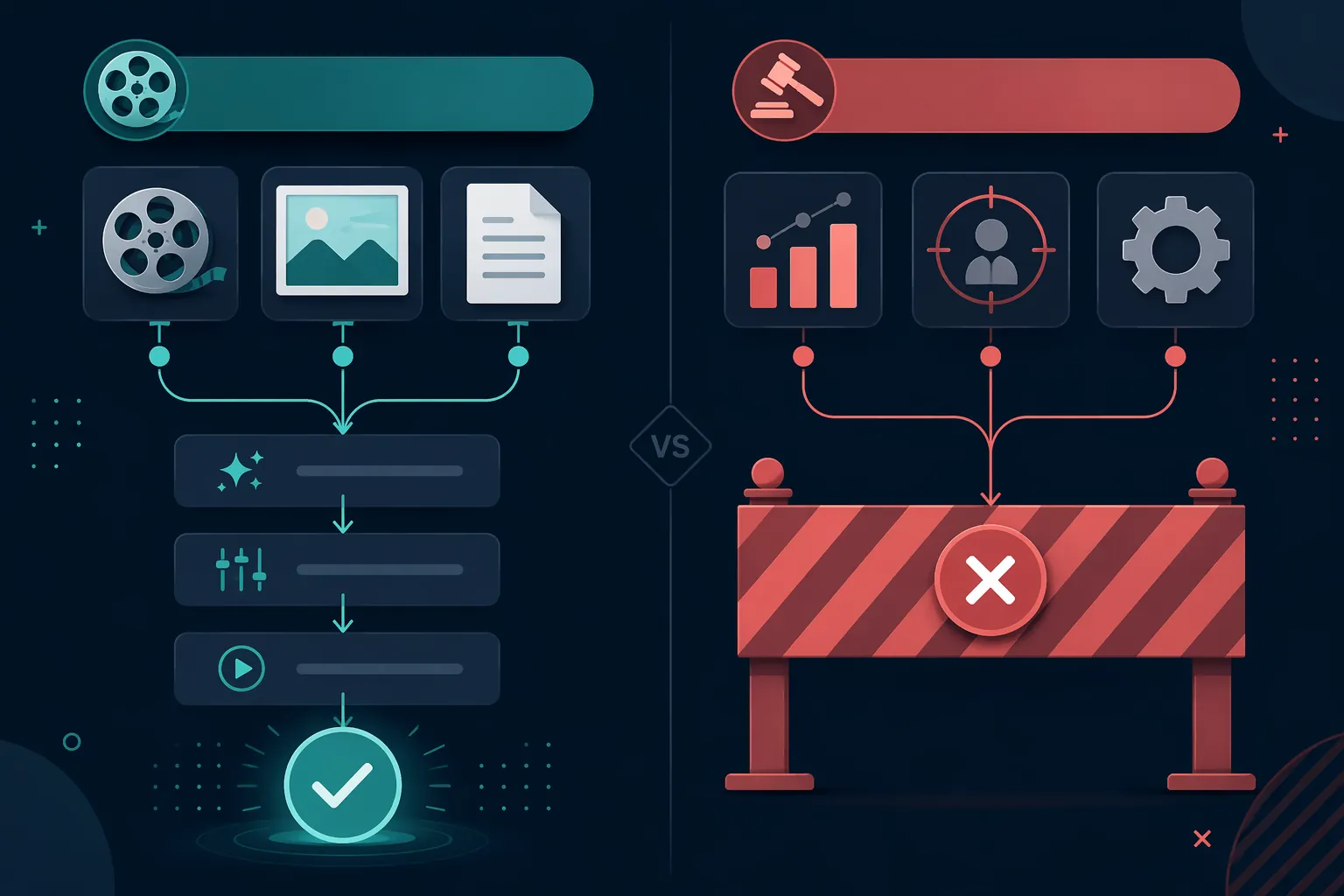
If your team is not generating hundreds of ad variants a week, RTX Spark N1X probably does not change your account. It may make local image, video, and copy production faster, cheaper at the margin, and easier to keep private. It will not make PMax explain itself, make Advantage+ test assets the way you want, fix attribution, or give a DSP more than its auction window allows.
The current buying answer is conditional. Shortlist it if creative production is already the weekly bottleneck: ComfyUI video queues, large local copy models, client data that should not leave the machine, or cloud AI bills that keep climbing with every variant. Wait if the pain is campaign learning, reporting opacity, platform creative acceptance, or bidding control. As of July 25, 2026, the N1X has been announced but has not shipped, the most useful price is still an analyst estimate, and independent benchmarks are not available.
The spec sheet only matters where it changes the workflow
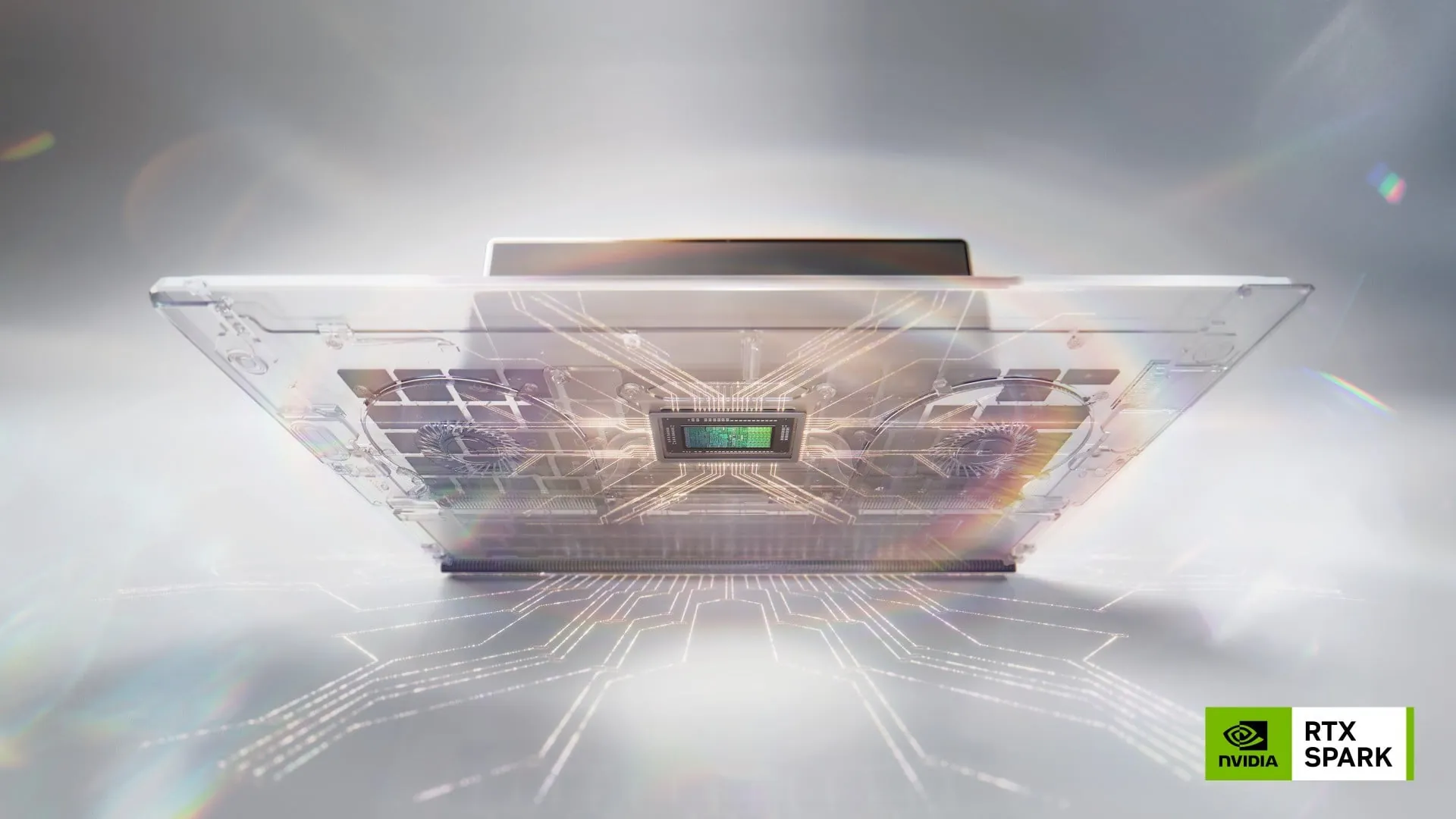
The RTX Spark N1X is not interesting because performance marketers need another expensive machine on the desk. It is interesting because its announced configuration attacks a real local-compute ceiling: a 20-core Arm CPU, 6,144 CUDA cores, 128 GB of unified memory, and 1 PFLOP of FP4 inference in a workstation-class platform expected to ship in fall 2026 through ASUS, Dell, HP, Lenovo, Microsoft, and MSI systems.[1]
That 128 GB number is the part to notice. A lot of current creative operators can already run small image workflows on a good laptop. The frustration starts when video nodes, larger local models, upscaling, control workflows, and review exports all collide with 16 GB or 32 GB machines. The N1X is aimed at that collision, not at someone writing three Meta headlines and calling it a test plan.
| Buying variable | Current status |
|---|---|
| Availability | Announced in 2026; shipping window is fall 2026 |
| Estimated N1X price | About $2,899, based on Morgan Stanley analyst checks rather than official NVIDIA retail pricing |
| Most relevant hardware difference | 128 GB unified memory plus local FP4 inference capacity |
| What it can improve | Local generation, iteration, privacy, and zero marginal inference cost after purchase |
| What it cannot improve | Platform bidding, attribution, acceptance rules, server-side enhancements, and auction latency |
The estimated $2,899 N1X price is useful for planning, but it is not official pricing. It comes from Morgan Stanley analyst checks around Computex coverage, with the smaller N1 discussed around $1,799.[2] Treat those numbers as procurement placeholders, not purchase orders.
Where local inference actually earns its keep
The strongest case is not “AI on device” as a strategy line. It is a production room with a weekly asset quota, a review queue, and too many browser tabs open because every generation, resize, prompt variation, caption pass, and export is happening across cloud tools that charge per run or throttle at the wrong moment.
Local ComfyUI video generation is the cleanest example. More memory does not magically create better ads, but it changes what the operator can attempt without waiting on cloud queues or cutting the workflow down to fit a laptop. Heavier video graphs, larger intermediate files, and more simultaneous creative branches become local problems instead of vendor queue problems. For a team refreshing paid social or YouTube assets every week, that matters.
Copy generation is less glamorous but often more repeatable. NVIDIA’s materials position RTX Spark-class systems for running large local models, including 120B-parameter LLMs, which makes local headline, hook, description, and landing-page angle generation plausible at scale without sending client inputs to third-party APIs.[1] The output still has to be edited, de-duplicated, matched to offer claims, and submitted into platform fields. The hardware only removes one choke point: getting enough raw material produced privately and cheaply enough to be worth reviewing.
Adobe’s work is relevant for the same reason. NVIDIA and Adobe have described RTX Spark optimization work for Photoshop and Premiere, including up to 2x faster AI performance in those applications.[3] That is vendor-disclosed performance language, not a substitute for independent workflow benchmarks. Still, if the same person is generating, masking, resizing, editing, captioning, and exporting short-form ad assets, shaving waiting time inside familiar tools is more useful than a benchmark that never touches a creative review board.
The TCO math only works at real variant volume
The break-even case starts to make sense around sustained high-volume production. Adenslab’s 2026 comparison puts AI-generated ad creative at about $0.90 to $1.97 per ad, compared with $30 to $50 for traditional design work.[4] That comparison is about production cost, not ad performance, and it does not mean cheap variants are automatically usable variants.
The hardware case gets stronger when a team is already spending like a small render farm. The N1X estimate is about $2,899 upfront, with an estimated $150 to $300 per year in electricity, while cloud economics cited in the research put H100-equivalent GPU inference around $2 to $3 per GPU-hour and token inference around $0.40 per million tokens.[2][5] If a team is producing 500 or more variants a week and that maps to roughly $1,000 a month in cloud AI tooling, the payback window lands around 12 to 18 months. Below that, the purchase starts to look like convenience, privacy, or experimentation budget rather than obvious cost displacement.
Zero marginal inference cost is the practical change. Once the machine is bought, the next prompt does not need a token-budget conversation, and the next failed video attempt does not feel like lighting a small invoice on fire. That can make teams test more directions before they bother the media buyer, designer, legal reviewer, or client lead.
More variants are useful only if the platforms can absorb them
Variant volume matters because modern ad delivery keeps rewarding fresh combinations, but the evidence should be handled carefully. A 2026 AI-generated ad creative statistics roundup cites vendor-reported findings that AI-powered creative testing reached significance in 4.2 days versus 21.6 days for traditional A/B testing.[6] The same roundup reports Smartly.io figures across 6.7 million Instagram and TikTok placements, where AI creative rotation reduced frequency-related performance decay by 38.4% and extended above-baseline CTR from 7.1 to 19.3 days.[6]
Those figures are useful context, not proof that an RTX Spark N1X improves ROAS. They support a narrower point: creative refresh capacity can become a competitive constraint when accounts need many assets, many angles, and faster fatigue response. The workstation helps only if your team can turn local output into approved, compliant, correctly formatted assets that platforms will actually take and test.
The same caveat applies to very large variant examples. The Persado/Jasper benchmark cited in the roundup describes brands running more than 14,300 ad variants per campaign.[6] That number is a reminder of where the market is headed for some large advertisers. It is not a reason for every DTC account, B2B lead-gen team, or regional agency to buy hardware before proving that its review and trafficking process can keep up.
The wall: bidding, attribution, acceptance, and latency stay where they are
Owning faster local inference does not move the most annoying platform-side constraints. PMax still decides how it serves assets inside Google’s system. Advantage+ still pushes much of the optimization logic into Meta’s environment. Symphony and other platform-managed systems still process creative and bidding through their own rules. Local hardware can generate candidates; the platforms decide what is accepted, transformed, delivered, and reported.
This is the boundary that tends to get blurred in hardware launches. A local model can propose new creative rotations, cluster audience notes, summarize account changes, or prepare bid-adjustment recommendations for a human to review. It cannot reach into a platform-managed auction and replace the platform’s bidding algorithm. It also cannot make black-box reporting more transparent after the fact.
Real-time programmatic bidding is even less forgiving. Auction windows are typically under 100 milliseconds, which leaves no practical room for a round trip to a local workstation model before a bid decision has to be made. On-device intelligence can support campaign management before and after the auction; it is not a substitute for in-auction infrastructure.
Meta’s Advantage+ Creative Enhancements make the same point from another angle. When enhancements run server-side and are on by default, the advertiser’s local machine does not control how the platform crops, adjusts, combines, or presents the final creative. A faster local workflow may give the platform better inputs. It does not give the advertiser ownership of the platform’s transformation layer.
Local agents are campaign support, not campaign control
The July 2026 OpenShell angle is worth watching because it fits a real agency and in-house need: running campaign-support agents locally without sending advertiser data through another API. NVIDIA has described OpenShell runtime work and Windows integrations involving Hermes Agent and OpenClaw, with use cases around bid adjustment, creative rotation, and audience analysis.[7]
That can be useful if the agent is doing the boring middle work: reading exported data, flagging decaying creatives, grouping weak hooks, drafting new variants, or preparing a change log for a buyer to approve. It should not be described as local AI taking over PMax, Advantage+, AI Max, Symphony, or a DSP’s live auction logic.
NVIDIA also highlighted a Higgsfield AI claim that nearly 400 Fortune 500 companies were using AI agents across the marketing lifecycle at Cannes Lions 2026.[8] That is an attributed vendor claim, not an independently verified adoption study. It says enterprise interest is real. It does not establish effectiveness, payback, or whether those workflows depend on RTX Spark hardware.
What vendor performance claims can and cannot tell you
The Criteo example is useful but easy to overread. NVIDIA says Criteo achieved about a 2x training speedup on Blackwell GPUs and freed roughly 17,000 GPU hours per year.[8] That is NVIDIA-described methodology, not an independent audit, and it concerns large-scale GPU training efficiency rather than a performance marketer’s local creative workstation.
Still, it points to the right procurement question. If GPU time is already a recurring line item, reducing dependence on metered compute can be financially meaningful. If the team is mostly blocked by stakeholder approvals, platform learning periods, weak offers, measurement disputes, or creative policy rejections, a faster box will mostly make the upstream pile grow faster.
The procurement rule
Buy or shortlist RTX Spark N1X if the team is already constrained by high-volume creative generation, privacy requirements, cloud inference cost, or heavy local video and model workflows. The clearest fit is a group producing 500 or more creative variants a week, especially when cloud tooling is already costing around $1,000 a month and review capacity exists to turn generated material into platform-ready ads.
Wait if the real problem is bidding, attribution, campaign learning, platform reporting, creative acceptance, or server-side creative transformations. RTX Spark N1X can improve the production side of the ad workflow. It does not improve the platform side just because the workstation is faster.
As of July 25, 2026, that recommendation has to stay conditional: the machine has not shipped, the $2,899 figure is still estimated, and independent benchmarks are absent.
References
- NVIDIA RTX Spark, NVIDIA.
- WCCFTech pricing analysis, WCCFTech, June 2026.
- NVIDIA and Adobe joint RTX Spark announcement, NVIDIA and Adobe, May 2026.
- AI vs. Designers cost comparison, Adenslab, 2026.
- On-device vs. cloud economics article, MindStudio.
- 2026 AI-generated ad creative statistics roundup, Amra & Elma, 2026.
- NVIDIA OpenShell runtime announcement, NVIDIA Newsroom, July 2026.
- NVIDIA Cannes Lions blog post, NVIDIA, 2026.
Built on this evidence
No Bidding tactic or Creative record currently cites this case file. Compare it against other results in Benchmarks.
Related benchmark reading
Report a corroborating or contradicting result
Seeing something different in your own account? Feed the data-integrity loop instead of leaving an open comment.